Key takeaways
- Pros: Large sound library out of the box; tactile pads reward dynamic playing.
- Con: Build quality feels utilitarian compared to newer rivals.
What's inside
Programming a beat should never be the hardest part of making music. Yet drum machines range from a $12 paperback that teaches pattern logic to a $399 portable sampler that demands a learning curve before you hear a single snare. The buyer’s real problem is simpler than most reviews admit: finding a device or resource that gets a usable groove out of you quickly, at a price that matches how seriously you will use it.
What separates a good pick from a mediocre one in this category comes down to interface clarity, sound quality per dollar, and whether the unit fits the way you actually play. A hands-free pedal is brilliant for a guitarist but useless in a studio session. A book teaches concepts that no hardware can replace, but it produces no audio on its own. The eight entries below span every use case we found in published specs and owner feedback for 2026, and each one earns its slot for a specific reason.
As an Amazon Associate we earn from qualifying purchases at no extra cost to you. Product prices and availability are accurate as of the date shown and are subject to change.


Quick Picks
| Product | Best for | Price |
|---|---|---|
| Alesis SR-16 | Standalone electronic drumming | $159 |
| Stylophone Beat | Playful, ultra-portable sketching | $39.95 |
| Playing Drum Machine Made Easy | Learning programming fundamentals | $12 |
| Korg Volca Drum | Analog-adjacent sound design | $139.99 |
| Akai MPC Sample | Sampling and beat crafting | $399 |
| M-VAVE Looper Pedal | Loops with tuning and sharing | $43.99 |
| BeatBuddy MINI 2 | Hands-free live backing | $149 |
| Digitech SDRUM | Acoustic drum triggering | $349 |
How We Picked
We evaluated each product on four criteria drawn from published specifications, retail pricing, and aggregated owner commentary. First: how quickly a new user produces a listenable pattern without consulting a manual. Second: sound quality relative to price—does the unit earn its cost in tone, not just convenience? Third: form-factor fit—whether the device serves the workflow its marketing implies. Fourth: long-term owner sentiment, weighted toward users who have kept the product beyond six months.
The 8 Best Easy Drum Machines in 2026
Alesis SR-16 Standalone Drum Machine
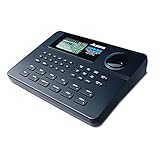
The SR-16 remains the reference point for anyone who wants a dedicated, no-computer drum machine. Owners consistently praise its 233 onboard sounds and straightforward step sequencer, which delivers a groove within minutes of unboxing. The touch-sensitive pads make fills feel expressive without requiring velocity programming.
- Pros: Large sound library out of the box; tactile pads reward dynamic playing.
- Con: Build quality feels utilitarian compared to newer rivals.
Skip this if you need MIDI sync with a DAW or prefer synthesized sound-shaping over sampled kits. It excels as a standalone practice and songwriting companion, not as a studio centerpiece.
Stylophone Beat
Stylophone’s entry into drum machines trades complexity for instant fun. The stylus interface lets you tap out patterns like a toy, yet the four drum kits and four bass sounds produce surprisingly usable loops. It is best suited for sketching ideas on a couch, in a waiting room, or anywhere a laptop feels heavy.
- Pros: Zero learning curve; genuinely pocketable.
- Con: Limited sound palette means you will outgrow it for finished tracks.
Skip this if you need more than two or three layers in a groove. Think of it as a rhythmic sketchpad, not a production tool.
PLAYING DRUM MACHINE MADE EASY
Not a hardware unit, but a legitimate entry point for the buyer who wants to understand step programming, swing, and pattern logic before spending money on a machine. The book covers techniques transferable to any grid-based sequencer, making it a low-risk investment at $12.
- Pros: Affordable way to avoid buying hardware you do not yet understand; teaches universal concepts.
- Con: Produces no audio; requires a separate machine or DAW to apply lessons.
Skip this if you already know how step sequencers work or if you need hands-on audio output immediately. Pair it with the Alesis SR-16 or Korg Volca for the strongest learning loop.
Korg Volca Drum Digital Percussion Synthesizer
The Volca Drum occupies a middle ground between sampled realism and synthesized experimentation. Its 16-step sequencer with active-step editing lets you mutate patterns in real time, which owners describe as the most engaging workflow in the Volca line. At $139.99 it undercuts many hardware rivals while offering deeper sound design.
- Pros: Active-step editing encourages happy accidents; compact enough for a producer bag.
- Con: Requires an external speaker or amp—no built-in output.
Skip this if you want realistic acoustic drum sounds out of the box. It rewards players who enjoy tweaking resonance and decay parameters.
Akai Professional MPC Sample Portable Sampler
The MPC Sample is the most capable machine on this list, trading simplicity for production power. Its 16 velocity-sensitive pads, built-in microphone, and sample manipulation tools make it viable for finished tracks, not just sketches. At $399 it is the premium pick, and the learning curve reflects that.
- Pros: Genuine production workflow; sampling from the mic eliminates a DAW dependency.
- Con: Highest price and steepest learning curve among the eight entries.
Skip this if your priority is “easy” above all else. It rewards patience and grows with you, but a first-time user will hit friction faster than with the SR-16 or Stylophone.
M-VAVE Looper Pedal Drum Machine
This pedal solves a narrow problem elegantly: adding a drum loop and a reference pitch to a pedalboard without a separate drum machine or tuner. Eleven minutes of loop time and thirty preset patterns cover most gig and rehearsal needs, while app-based editing adds a layer of control hardware alone cannot match.
- Pros: Combines looper, drum machine, and tuner in one compact unit; app sharing is genuinely useful.
- Con: Preset patterns are generic; you will want to edit them quickly.
Skip this if you need multi-track looping or high-fidelity drum sounds for recording. It is a live-performance utility, not a studio instrument.
BeatBuddy MINI 2
For guitarists who need a drummer without hiring one, the BeatBuddy MINI 2 is purpose-built. Hands-free operation via a footswitch, onboard fills, and song sections that respond to pedal presses make it the easiest live accompaniment tool here. Sound quality is noticeably above toy-tier pedals but below studio units.
- Pros: True hands-free control; fill and section triggers feel musical in performance.
- Con: Limited editing without a computer connection.
Skip this if you produce electronic music in a DAW. Its strengths only matter when your hands are occupied with an instrument.
Digitech SDRUM Automatic Drum Machine Pedal
The SDRUM is a niche product with a devoted following: it converts your actual acoustic drumming into synthesized electronic beats. You still play the parts; the pedal handles the sound engine. This distinction matters—it is not a sequencer, it is a translator.
- Pros: Preserves your timing and dynamics; unique concept with little competition.
- Con: Premium price ($349) for a single-function pedal; limited genre palette.
Skip this if you want a traditional step-sequenced drum machine. It serves drummers who want to layer electronic textures under their acoustic kit, not producers building loops from scratch.
Buying Guide
Interface Type Determines Ease of Use
Drum machines with touch-sensitive pads reward velocity and finger dynamics, producing more human-feeling patterns without extra programming steps. Grid-based sequencers with dedicated buttons, like the Korg Volca Drum, prioritize speed of pattern entry. Stylus or tap interfaces, as on the Stylophone Beat, lower the barrier for beginners but sacrifice precision. Match the interface to your physical comfort before evaluating any other spec.
Sound Source: Sampled, Synthesized, or Hybrid
Sampled machines reproduce acoustic kits and classic drum-machine tones with immediate familiarity. Synthesized machines generate sound from oscillators, offering deeper tone-shaping at the cost of instant realism. Hybrid units, like the Akai MPC Sample, let you load both. Decide whether you need to recognize the sound as “a snare” or explore textures that have no acoustic reference. This choice eliminates half the market for most buyers.
Form Factor and Output Options
A hands-free pedal requires an amplifier or audio interface on stage. A standalone box may lack MIDI sync entirely. A portable sampler with a built-in speaker still needs a cable for studio monitoring. Before purchasing, verify that the unit’s output configuration matches where you will use it. The most common source of negative owner feedback in this category is a mismatch between the device’s I/O and the buyer’s actual signal chain.
Our Verdict
The Alesis SR-16 is the top overall pick. It balances price, sound variety, and immediate usability better than any other unit on this list, and owners report keeping it as a long-term songwriting companion rather than replacing it within a year. For a budget pick, the M-VAVE Looper Pedal offers surprising versatility at under $45, combining three functions in one compact form factor. The Stylophone Beat wins outright only if your sole criterion is portability and playfulness and you already own a more capable production tool at home.
FAQ
Do I need a DAW to use any of these?
No. The Alesis SR-16, Stylophone Beat, BeatBuddy MINI 2, and Digitech SDRUM all produce audio without a computer. The Akai MPC Sample can work standalone but benefits from a DAW for arrangement. The book requires a separate machine to practice its concepts.
What is the difference between a drum machine and a looper pedal?
A drum machine generates beats from onboard sounds and sequenced patterns. A looper pedal records and repeats what you play into it, and may layer that with preset drum patterns. The M-VAVE combines both functions, but the underlying workflow differs: one programs patterns, the other captures performance.
Can a drum machine replace a real drummer for live performances?
For solo performers or small ensembles with limited budgets, machines like the BeatBuddy MINI 2 serve as convincing backing when paired with fill variations and section changes. For genres where groove nuance and dynamic interaction define the feel, a programmed machine will still sound mechanical to attentive listeners.
Is $12 spent on a book worth it before buying hardware?
If you have never used a step sequencer, yes. The programming concepts in the book—swing percentages, pattern length, velocity lanes—apply identically to any machine on this list. Understanding them first prevents the common mistake of buying a unit, struggling with its logic, and shelving it within a month.