Key takeaways
- Manual controls: best for repeating your own hill protocol and avoiding subscriptions.
- Preset programs: useful for variety without requiring a phone or account.
- Automatic interactive control: convenient when the treadmill changes incline and speed during coached or mapped workouts.
The best incline treadmills for uphill training are the NordicTrack Commercial X24 for steep, programmed climbs, the Sole TT8 for a durable incline-and-decline platform, and the 3G Cardio Elite Runner for a spacious, stable deck with relatively simple controls.
Our top picks
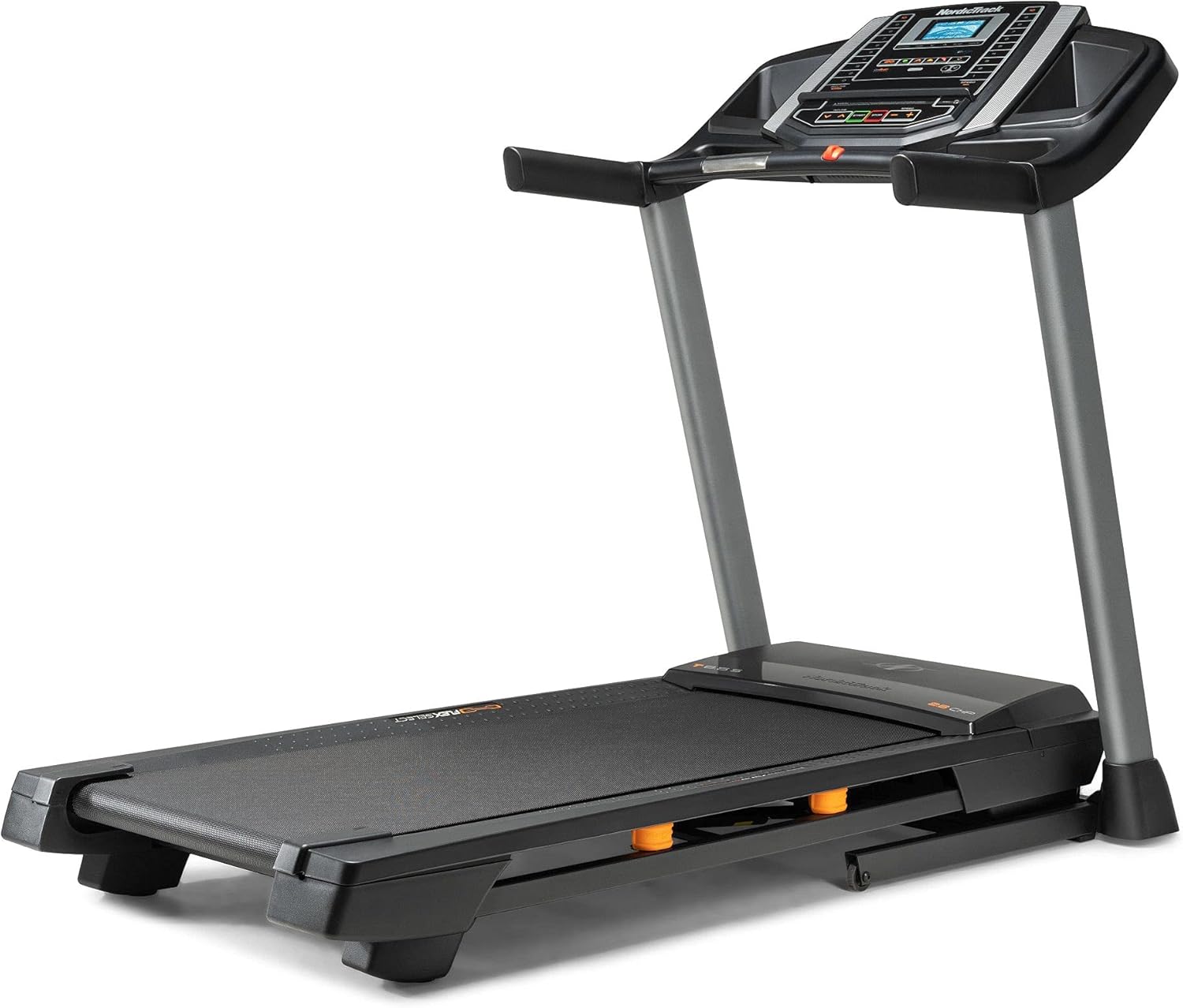 NordicTrack T Series 6.5 S Treadmill
- Maximum Speed: 10 miles_per_hour
- Maximum Horsepower: 2.8 hp
- Maximum Incline Percentage: 10


As an Amazon Associate we earn from qualifying purchases at no extra cost to you. Ratings are shown as listed on Amazon.
Quick comparison: the best incline treadmills in 2026
| Model | Incline / decline | Motor and speed | Running surface | Approx. assembled footprint | Best for |
|---|---|---|---|---|---|
| NordicTrack Commercial X24 | Up to 40% / down to -6% | Commercial-class motor; up to 12 mph | 22 x 60 in | About 80 x 39 in | Interactive hill workouts and very steep grades |
| Sole TT8 | Up to 15% / down to -6% | 4.0 CHP-rated motor; up to 12 mph | 22 x 60 in | About 82 x 37 in | Frequent running and users who want straightforward controls |
| 3G Cardio Elite Runner | Up to 15% / down to about -3% | 4.0 HP-class motor; up to 12 mph | 22 x 62 in | About 84 x 35 in | Large, firm deck and heavier users |
| Horizon 7.8 AT | Up to 15% / typically no decline | 4.0 HP-class motor; up to 12 mph | 22 x 60 in | About 77 x 37 in | Value-focused interval training |
Dimensions and specifications can change by revision or region, so confirm the current manufacturer sheet before ordering. The footprint column is the machine’s approximate assembled size, not the complete operating area you should reserve around it.
Our picks by training situation
Best for the steepest uphill training: NordicTrack Commercial X24
The X24 is the clear choice when “uphill” means more than a conventional 10–15% treadmill incline. Its maximum incline of approximately 40% creates a much steeper hiking stimulus, while the negative incline setting adds downhill work. The 22-by-60-inch deck is suitable for most runners, and the large touchscreen is designed around guided and automatically controlled workouts.
Its main trade-off is ownership complexity. The motorized elevation system, large display, internet-dependent features, and substantial frame make it heavier and less convenient to relocate than a basic treadmill. The machine also needs more overhead clearance at maximum elevation. Choose it when steep grade variety is central to your training, rather than paying for the feature merely because the headline incline is impressive.
Best for frequent running and dependable controls: Sole TT8
The Sole TT8 is a better fit for someone who wants to press a button, set a grade, and run without relying on a subscription or elaborate guided-training ecosystem. It offers both positive and negative incline, a wide 22-inch belt, and a 4.0 CHP-rated motor intended for regular use. Its robust frame and relatively heavy construction help limit deck movement during faster running.
The 15% maximum incline is enough for hill intervals, sustained climbing, and most road-running workouts, but it will not reproduce the extreme grade of the NordicTrack. It is also long and heavy, so measure doorways, stair turns, and the final room—not just the advertised treadmill area.
Best for a stable, roomy platform: 3G Cardio Elite Runner
The Elite Runner prioritizes a firm feel, a long 22-by-62-inch belt, and a substantial frame. That extra two inches of deck length can be useful for taller runners or anyone who tends to drift backward while climbing. Its incline and limited decline settings provide more terrain variation than a flat treadmill, while the console remains less technology-heavy than an interactive-screen model.
This is a sensible choice for frequent walking, running, and uphill intervals when deck stability matters more than maximum grade or entertainment features. Its longer frame requires particular attention to front and rear clearance.
Best value-oriented option: Horizon 7.8 AT
The Horizon 7.8 AT is aimed at runners who want a responsive motor and quick speed or incline changes for interval sessions. Its 15% incline handles conventional hill workouts, and its simple design usually makes it easier to use without a recurring training membership.
The compromise is the lack of a meaningful decline function on typical versions. If downhill conditioning is a requirement, select the Sole TT8 or another model with a verified negative-incline range instead.
What matters more than the maximum incline?
Motor performance under load
Horsepower labels are not perfectly standardized, especially when manufacturers mix continuous-duty, peak, and “HP-class” descriptions. For uphill training, look for a motor with a published continuous-duty rating, a sturdy cooling system, and a warranty that covers frequent use. A treadmill that reaches 40% incline but bogs down when a heavier user runs may be less useful than a well-built 15% model.
Use the belt speed, user-weight rating, and intended-use warranty together. Leave a margin below the maximum capacity rather than selecting a machine exactly at the stated limit. A person who runs several times per week should favor a commercial-style frame and belt system over a lightweight folding model.
Deck stability and belt behavior
At high incline, your foot strike shifts toward the front of the deck, increasing the importance of a rigid frame, stable side rails, and a belt that does not hesitate during grade changes. A wider 22-inch belt provides more lateral room; a 60- or 62-inch belt is preferable for running, particularly for taller users or long-stride intervals.
Test reports are not necessary to identify warning signs: excessive console vibration, side-rail flex, belt surging, and a deck that sounds hollow under load all deserve caution. A heavier machine is inconvenient to move, but often feels more planted.
Workout programming
There are three useful programming approaches:
- Manual controls: best for repeating your own hill protocol and avoiding subscriptions.
- Preset programs: useful for variety without requiring a phone or account.
- Automatic interactive control: convenient when the treadmill changes incline and speed during coached or mapped workouts.
Check whether basic speed and incline controls work without Wi-Fi, whether saved workouts remain available offline, and whether the screen can display simple metrics clearly. A large display is not a substitute for quick physical controls during intervals.
How much room does an incline treadmill need?
The treadmill’s floor footprint does not normally become longer as it rises, but the elevated deck requires more overhead space and changes how close you can safely place it to walls, shelving, or ceiling fixtures. Use the manufacturer’s front, rear, and side-clearance instructions first.
For a rough calculation, the vertical rise at the front of a 60-inch deck is:
Rise = deck length × sine of the incline angle.
A 15% grade is approximately 8.5 degrees, so a 60-inch deck rises about 9 inches from its low position. A 40% grade is approximately 21.8 degrees, producing about 22 inches of rise. This is only the deck’s geometric rise; the console, handrails, and a tall user’s head require additional clearance.
For example, if a room has an 88-inch ceiling and the treadmill’s highest handhold reaches 60 inches when flat, a 40% elevation could add roughly 22 inches, leaving only about 6 inches before the ceiling. That is too little for comfortable use. Measure from the finished floor to the highest point of the treadmill at maximum elevation, then add headroom for the tallest person using it.
Decision matrix
| Your situation | Best direction | Why |
|---|---|---|
| Small room or low ceiling | 15% incline treadmill with compact console | Extreme-grade models can create a difficult overhead-clearance problem. |
| Training for steep hiking | NordicTrack Commercial X24 | Its approximately 40% incline offers a substantially wider grade range. |
| Running four or more days weekly | Sole TT8 or 3G Cardio Elite Runner | Wide decks, substantial frames, and simpler long-term operation. |
| Beginner who mainly walks | 15% model with clear manual controls | Lower complexity and cost without sacrificing ordinary hill workouts. |
| Need downhill simulation | Model with verified negative incline | Many otherwise capable treadmills only rise and do not decline. |
| Limited budget | Value 15% incline treadmill | Extreme incline, large screens, and subscription features raise purchase and ownership costs. |
Ownership costs and maintenance realities
Expect a durable incline treadmill to occupy a large, heavy footprint and require two or more people—or professional delivery—for installation. General market pricing is roughly $1,500–$2,500 for stronger value models, $2,500–$4,000 for premium conventional incline treadmills, and $4,000 or more for advanced interactive or extreme-incline machines. Subscription fees, if required for full programming, are separate.
The belt and deck surface are the parts most likely to need attention. Keep dust and pet hair away from the motor compartment, vacuum around the machine, check belt alignment, and use only the lubricant specified by the manufacturer. Over-lubricating can cause slipping and attract debris. Do not place the treadmill on thick, soft carpet without checking ventilation requirements, because restricted airflow can increase heat buildup.
Before buying, verify replacement-belt availability, labor coverage, service availability in your area, and whether the warranty covers parts and in-home labor separately. A treadmill with excellent specifications but difficult service access can cost more over several years than a slightly less powerful model with better support.
Bottom line
Choose the NordicTrack Commercial X24 if steep grade variety and guided training are your priorities. Choose the Sole TT8 for a balanced incline-and-decline treadmill that is well suited to regular running. Choose the 3G Cardio Elite Runner for a spacious, stable deck, and the Horizon 7.8 AT for practical 15% hill intervals at a more value-oriented level. Whichever model you select, measure the room at maximum elevation, leave clearance around the belt, and match the motor and frame to how often and how hard you will train.