Key takeaways
- The best rebounders for most home users are 40–44-inch bungee models with a stable six- or eight-leg frame; choose a spring rebounder for a firmer, more responsive bounce, a folding model when storage matters most, or a larger 48-inch platform…
The best rebounders for most home users are 40–44-inch bungee models with a stable six- or eight-leg frame; choose a spring rebounder for a firmer, more responsive bounce, a folding model when storage matters most, or a larger 48-inch platform when balance and exercise space take priority.
Our top picks

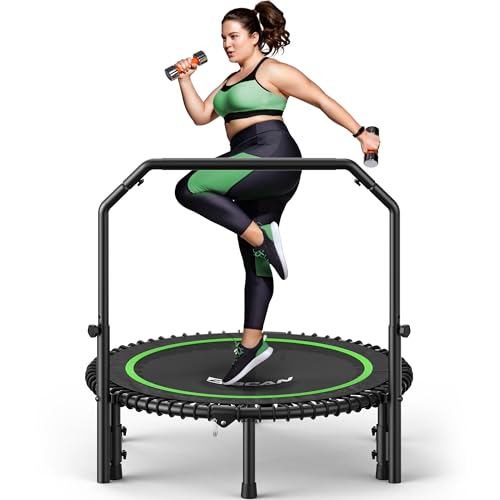


As an Amazon Associate we earn from qualifying purchases at no extra cost to you. Ratings are shown as listed on Amazon.
Best rebounders by situation
| Situation | Best choice | Why it fits | Typical price range |
|---|---|---|---|
| First-time buyer on a budget | 40-inch spring rebounder | Firm, predictable bounce and inexpensive replacement parts | $100–$180 |
| Frequent workouts and quieter operation | 40–44-inch bungee rebounder | Smoother landing, less metal noise, and lower impact sensation | $250–$700 |
| Limited storage space | Folding 36–40-inch rebounder | Folds or collapses for a closet, though usually with a smaller jumping area | $150–$450 |
| Balance-focused beginner | 44–48-inch bungee model with optional handle | More usable mat area and less need to stay precisely centered | $300–$800 |
| High-frequency, vigorous workouts | Commercial-style 44-inch bungee rebounder | Heavier frame, replaceable suspension, and better resistance to loosening | $500–$1,200+ |
What separates the best rebounders
Mat diameter: 36, 40, 44, or 48 inches?
Diameter affects usable space more than many buyers expect. A 36-inch mat can work for compact vertical bouncing, but it leaves less room for lateral movements and makes off-center landings more consequential. A 40-inch rebounder is the practical minimum for many general home workouts. A 44-inch platform offers a noticeable comfort margin without becoming difficult to store. A 48-inch model is preferable for beginners, taller users, and routines involving wider foot positions, but it needs a larger clear area.
Remember that the advertised diameter describes the outside frame, not the actual jumping surface. A 40-inch frame may provide roughly 32–34 inches of usable mat, depending on the frame width and suspension design. Measure the open floor area before buying. Leave at least 24 inches of unobstructed space around the frame, and more if you plan to use arm movements or a balance handle.
Spring versus bungee suspension
Spring rebounders use steel coils attached directly between the frame and mat. They generally feel firmer and more reactive, which suits jogging, quick intervals, and users who prefer a crisp push back from the surface. Springs can also make a distinct squeaking or rattling sound, particularly when the frame is not level or the springs need lubrication according to the manufacturer’s instructions.
Bungee rebounders use elastic cords, often enclosed in fabric sleeves. Their bounce is usually quieter and more progressive: the mat sinks farther under load before returning energy. That feel can be more comfortable for low-impact routines, although a soft bungee platform may feel less lively during rapid jumping. Bungees also age from ultraviolet exposure, heat, and repeated stretching, so replacement-cord availability matters.
Neither system is automatically safer or better. Suspension tension, mat quality, frame stability, and the user’s technique matter more than the label. Avoid choosing solely by the number of springs or bungees; those components differ substantially in length and stiffness.
Frame stability and bounce feel
A stable rebounder should stay planted when you perform a controlled side step, not only when you bounce in the center. Look for six or more wide legs, non-slip feet, a rigid circular frame, and a stated user-capacity margin above your body weight. Threaded or locking legs are preferable to loosely press-fit parts.
Heavier frames tend to move less, but weight can make storage harder. As a useful comparison, a compact 36-inch model may weigh about 15–22 pounds, a robust 40–44-inch model about 25–40 pounds, and a commercial-style frame 40 pounds or more. If you will put the rebounder away after every session, consider whether you can comfortably lift and carry it without twisting.
Bounce feel is partly a matter of setup. A rebounder on a hard, level floor often feels quicker and more stable than one placed on a thick carpet. Carpet can conceal an uneven leg and allow rocking. A thin, firm exercise mat may protect the floor, but avoid soft foam that lets the feet sink or slide.
Folding options: useful compromise or unnecessary complexity?
Folding rebounders are valuable when the equipment must fit under a bed, behind a sofa, or in a small closet. The trade-off is additional hinges, locking points, and assembly steps. Those parts need periodic inspection because looseness can create frame movement and noise.
A folding design is most worthwhile when you genuinely need to store the rebounder after each use. If it will remain open in a dedicated workout area, a fixed-frame model usually offers a simpler structure and fewer parts to maintain. Check the folded dimensions, not just the open diameter. Some models fold in half; others require the legs to be removed first, which can make “quick storage” less convenient than expected.
Assembly and setup: what to check before the first workout
-
Inspect every leg and connector. Confirm that threads engage fully and that each rubber foot sits flat. Do not use a rebounder with a bent leg or incomplete locking mechanism.
-
Install the suspension evenly. With spring designs, attach opposing springs in a star pattern rather than working around one side. With bungee designs, distribute cord tension gradually around the frame. This keeps the mat centered and reduces uneven loading.
-
Check the mat alignment. The gap between mat and frame should be consistent around the circle. An uneven gap can indicate a missing spring, twisted cord, or incorrectly routed strap.
-
Test the frame without jumping. Press down at several points near the edge. The rebounder should compress and return without rocking, sliding, or producing a sharp metal-on-metal sound.
-
Start with a low bounce. Keep both feet close to the mat and gradually increase height. This reveals instability and lets you learn the rebound timing before adding jogging or directional movements.
Many rebounders require significant force during assembly, especially when stretching bungees or attaching the final springs. Follow the supplied instructions and use the recommended tool. If the last connection appears impossible without bending the frame, stop rather than forcing it.
Ownership costs and durability realities
The mat is often the first visible wear point: look for fading, frayed stitching, stretching, or a surface that no longer returns evenly. On spring models, springs may squeak, stretch, or rust in damp storage. On bungee models, cords may lose tension or develop cracks and flattened sections. Frames can last much longer than suspension parts, so a manufacturer’s replacement-mat, spring, and bungee availability is a meaningful buying criterion.
As a simple ownership calculation, suppose a $360 rebounder is used three times per week for three years. That is approximately 468 sessions, or about $0.77 per session before replacement parts. A $140 model used once weekly for one year provides about 52 sessions, or $2.69 per session. The less expensive product is not necessarily the lower-cost choice if it is uncomfortable, unstable, or difficult to store.
Keep the rebounder indoors or away from direct sunlight and moisture. Wipe the mat and frame with a slightly damp cloth, then dry them fully. Do not apply household oil to bungee cords or mat fabric. For spring models, use lubrication only if the manufacturer specifies a compatible product and application method. Recheck leg tightness and folding locks every few weeks if the rebounder is used frequently.
Which size and suspension should you buy?
Choose a 40-inch spring rebounder if your budget is limited, you want a firm athletic feel, and noise is not a major concern. Choose a 40- or 44-inch bungee model if smoothness, quiet operation, and frequent use matter more than the lowest purchase price. Choose 44–48 inches if you are new to rebounding, have balance concerns, or want space for wider movements. Choose a folding model only when storage constraints justify its extra hardware.
Whatever the format, verify the actual weight limit, open and folded dimensions, replacement-part policy, leg design, and warranty before buying. The published capacity is not a promise that every user will find the bounce comfortable; a model with a substantial margin above your body weight generally maintains a more consistent feel.
Safety and technique notes
Use the rebounder on a level, uncluttered surface and begin with small, controlled movements. A balance bar can provide confidence, but it should not replace good footing or be used to pull aggressively against the frame. Stop if you experience pain, dizziness, unusual shortness of breath, or joint instability. People with injuries, balance limitations, or medical conditions should ask a qualified health professional whether rebounding is appropriate for them and how to begin.