Key takeaways
- Near a model’s weight limit: Favor a higher-capacity machine with a broad margin, then confirm that its belt dimensions fit your stride. Do not rely on a motor number alone.
- Walking several times a week: A stable frame, accessible controls, and a suitable deck are more useful than advanced training features you will not use.
- Running regularly: Look for a 60-inch belt, adequate width, a robust frame, and clear continuous-duty motor information. If your stride is long, test whether 58 inches is enough.
- Limited floor space: A folding model such as the F85 may help between workouts. Measure the folded height and the space required to lower the deck, not just the stored footprint.
- Shared household use: Add capacity margin and consider how often the treadmill will run. More frequent use increases wear on the belt, deck, rollers, and motor components.
Best Treadmills for Heavy People: Sturdy Picks for Home
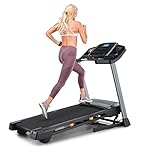
The best treadmills for heavy people are models with a maximum user weight comfortably above the runner’s weight, a wide, long belt, a stable frame, and a warranty that covers the frame and motor for years—not just months. For a strong all-around choice, consider the Sole F85; for a higher stated weight capacity, the Landice L7; and for a tighter budget, compare the Horizon 7.0 AT while checking its capacity and warranty against your needs.
Capacities, dimensions, and warranty terms below are manufacturer-published specifications available for these models; configurations and terms can vary by model year and region. Confirm the exact version before buying. A treadmill’s weight limit is not a promise that every user will find its belt comfortable or its frame quiet at a particular pace.
Our top picks


As an Amazon Associate we earn from qualifying purchases at no extra cost to you. Ratings are shown as listed on Amazon.
| Model | Maximum user weight | Running surface | Motor | Footprint, approximately | Warranty considerations |
|---|---|---|---|---|---|
| Sole F85 | 400 lb | 22 × 60 in | 4.0 CHP | 82 × 37 in | Long frame and motor coverage; verify parts, labor, and registration terms |
| Landice L7 | 500 lb | 20 × 58 in | 4.0 HP, continuous-duty rating | about 76 × 35 in | Known for extended structural coverage; check the current residential warranty details |
| Horizon 7.0 AT | 325 lb | 20 × 60 in | 3.0 CHP | about 76 × 35 in | Frame and motor coverage are longer than labor coverage; check current terms |
| NordicTrack Commercial 1750 | 300 lb | 20 × 60 in | 3.5 CHP | about 80 × 35 in | Warranty coverage varies by component and registration; review before purchase |
Footprints are approximate and do not include clearance for safe access, ventilation, or folding. Motor ratings are not always directly comparable across brands: check whether a figure is continuous-duty horsepower (CHP), horsepower, or a differently stated rating.
Best picks by situation
Best all-around: Sole F85
The F85 pairs a 400 lb capacity with a 22-inch-wide, 60-inch-long belt and a 4.0 CHP motor. That combination gives many walkers and runners more room to move than a standard 20-inch belt, while the foldable deck can help when floor space is limited. Choose it if you want a substantial home treadmill but do not need the highest available weight rating.
Folding does not make the treadmill small during use, and the deck and frame are heavy to move. Measure doorways and stair turns, and check delivery and assembly arrangements before ordering. Treat the published capacity as a ceiling, not a target: a larger margin may make sense if several people will use the machine frequently.
Best for the highest stated capacity: Landice L7
With a 500 lb user-weight rating and a continuous-duty motor specification, the L7 is the clearest pick here when the top priority is published capacity. Its 20 × 58-inch belt is shorter and narrower than the F85’s, though, so people with a long stride or a tendency to drift sideways should compare belt dimensions in person if possible. The trade-off is a sturdy, commercial-style design rather than a compact, easy-to-store treadmill.
Landice models often cost more than entry-level home treadmills; check current configurations and warranty terms rather than assuming every L7 package has identical coverage. It is a better fit for frequent use and a permanent workout space than for someone who needs to fold the machine away after each session.
Best lower-cost option for moderate use: Horizon 7.0 AT
The 7.0 AT has a 325 lb capacity, a 20 × 60-inch belt, and a 3.0 CHP motor. It can suit a household that wants a full-length running surface and has a user comfortably below its stated limit, without stepping up to a premium model. Its capacity is lower than the F85 and L7, so it is not the right compromise if the user is near 325 lb or expects frequent, hard running.
Compare the full warranty and service availability where you live. A lower purchase price can be less attractive if local repair support is limited or labor coverage is brief.
Best for guided workouts: NordicTrack Commercial 1750
The Commercial 1750 offers a 20 × 60-inch surface, incline and decline features, and a 300 lb stated limit. Its guided-workout features may appeal to someone who will use the training programs, but the capacity is the lowest in this shortlist. Prioritize fit, frame stability, and warranty before paying extra for a screen or subscription features.
Choose by fit, frequency, and room
- Near a model’s weight limit: Favor a higher-capacity machine with a broad margin, then confirm that its belt dimensions fit your stride. Do not rely on a motor number alone.
- Walking several times a week: A stable frame, accessible controls, and a suitable deck are more useful than advanced training features you will not use.
- Running regularly: Look for a 60-inch belt, adequate width, a robust frame, and clear continuous-duty motor information. If your stride is long, test whether 58 inches is enough.
- Limited floor space: A folding model such as the F85 may help between workouts. Measure the folded height and the space required to lower the deck, not just the stored footprint.
- Shared household use: Add capacity margin and consider how often the treadmill will run. More frequent use increases wear on the belt, deck, rollers, and motor components.
Measure the whole setup, not just the machine
A treadmill’s listed length and width are only the starting point. Leave the manufacturer-recommended clearance around and behind the deck, keep the power cord safely routed, and make sure the ceiling is high enough for the user’s head at the highest incline. A simple fit check is to compare the available room with the treadmill footprint plus the manual’s clearance requirements; do not count a doorway or walkway as workout clearance.
Before delivery, measure the narrowest doorway, hallway, and stair landing on the route to the workout area. The assembled treadmill may not fit through them, and heavy frames can be awkward to pivot. Ask whether delivery includes room placement and assembly, and whether the installer will remove packaging. If the treadmill must go upstairs, confirm the route and load requirements with the seller or delivery team.
What matters after the first workout
Deck cushioning can make a treadmill feel less harsh, but comfort is subjective and cushioning does not eliminate impact. Try the machine at your normal walking or running pace when possible. Listen for frame movement and belt noise, check that the handrails feel secure, and make sure the emergency stop is easy to reach.
The belt and deck are wear items. Sweat and dust can collect around the belt and motor cover; follow the manual for cleaning, lubrication, and belt-centering checks. Some belts are pre-lubricated or require a specific lubricant, so adding oil without checking instructions can cause problems. Keep the floor under the machine level and stable, and avoid placing it on thick, soft carpet unless the manufacturer permits it.
Warranty length alone can be misleading. Compare coverage for the frame, motor, parts, and labor separately, and check whether registration, maintenance, or residential-use conditions apply. A long frame warranty does not necessarily cover a worn belt, service visits, or damage from improper setup.
Bottom line
For most buyers wanting a roomy belt and strong capacity, the Sole F85 is the balanced pick. Choose the Landice L7 when its 500 lb rating and permanent-installation design matter most. The Horizon 7.0 AT is a more budget-conscious option for users with ample capacity margin, while the NordicTrack Commercial 1750 is best considered for its guided-workout features—not for maximum weight capacity. Verify the exact model specifications, warranty, delivery route, and required clearances before committing.
If you have a health condition, pain, balance concerns, or are returning to exercise after an injury, ask a qualified health professional what activity and pace are appropriate for you.