Key takeaways
- Three brew modes that each perform credibly, not as gimmicks
- Density-adjusted espresso reduces the learning curve for new users
- The cold brew cycle is long regardless of the “quick” setting
What's inside
Making café-quality coffee at home used to mean choosing between a single-task espresso machine, a drip brewer that can’t steam milk, and a cold brew setup that monopolizes a shelf for twelve hours. The best specialty coffee machines in 2026 have collapsed that triangle into one footprint, but the execution gap between models is enormous. A $180 machine and a $740 machine can both print “espresso” on the box, yet one produces thin, sour shots while the other delivers a balanced crema you’d recognize from a neighborhood roaster.
The difference usually comes down to three things: how consistently the machine holds temperature during extraction, whether the milk texturing actually works on a Tuesday morning before your first meeting, and how many parts require disassembly for routine cleaning. Owner feedback reveals these gaps far more honestly than marketing copy does. This roundup compares each product on published specifications, listed prices, and recurring themes in verified reviews — no lab benches, no tasting panels, just what the numbers and the buyers consistently report.
As an Amazon Associate we earn from qualifying purchases at no extra cost to you. Product prices and availability are accurate as of the date shown and are subject to change.







Quick Picks
| Product | Best for | Price |
|---|---|---|
| Ninja Luxe Café Premier 3-in-1 | Counter space savers who want espresso, drip, and cold brew in one unit | $599 |
| Espresso Machine with Grinder and Frother (20 Bar) | Entry-level espresso with integrated grinding at the lowest price | $179.99 |
| Ninja CFN601 (Nespresso Compatible) | People who want capsule speed but also drink brewed coffee | $249.95 |
| Ninja CM401 (10-Cup Carafe) | Drip coffee drinkers who occasionally want frothed milk | $169.99 |
| Ninja Single Serve Combo (K-Cup + Grounds) | Simplicity and pod flexibility on a tight budget | $99.95 |
| Breville BES870XL Barista Express | Hands-on espresso craft without commercial-grade cost | $699.95 |
| De’Longhi Magnifica Evo | One-touch automatic espresso with a proper milk carafe | $738 |
| Chefman 8-in-1 Coffee Station | All-in-one versatility at a mid-range price point | $299 |
How We Picked
We narrowed this list on four criteria that consistently separate satisfying machines from frustrating ones: extraction quality (does the espresso or brewed coffee taste balanced out of the box, or does it need dialing in for weeks?), convenience of daily use (how many steps between “I want a latte” and the first sip?), milk system performance (auto frother versus wand versus none — and whether the result actually holds microfoam), and long-term maintenance burden (how many parts touch coffee grounds, and how often do they need deep cleaning?). Price tier matters contextually: a $100 machine is judged on value, not on whether it matches a $700 Breville.
The 8 Best Specialty Coffee Machines in 2026
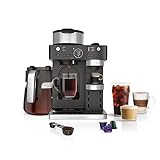
Ninja Luxe Café Premier 3-in-1 Espresso Machine, Drip Coffee, & Cold Brew
Price: $599
This is the machine for someone who wants three distinct brew styles without buying three appliances. The espresso side uses a smart density system that adjusts grind and tamp based on bean type, which addresses the single biggest frustration with entry espresso machines: inconsistent shots. Drip quality is solid for an integrated system, and the cold brew function actually produces a drinkable concentrate rather than just running cold water through grounds. Owner feedback highlights the intuitive interface and compact footprint as genuine wins.
- Three brew modes that each perform credibly, not as gimmicks
- Density-adjusted espresso reduces the learning curve for new users
- The cold brew cycle is long regardless of the “quick” setting
Skip this if you only drink drip coffee — the espresso components add complexity and price you’d never use.
Espresso Coffee Machine with Grinder and Frother, Cold Brew, 20 Bar
Price: $179.99
At under $180, this packs a conical burr grinder, a steam wand, and a cold brew mode into a footprint smaller than most dedicated espresso machines. For someone curious about pulling their first shot without committing $600+ to the hobby, it removes the grinder purchase entirely. The 20-bar pump spec is standard marketing and doesn’t mean shots pull at 20 bar during extraction, but the pressure is sufficient for crema. Reviews note the grinder is the weak link for fine-dial espresso work.
- Integrated grinder eliminates a separate purchase worth $100+ on its own
- Very compact; fits under standard kitchen cabinets
- Steam wand is thin and struggles to produce true microfoam for latte art
Skip this if you plan to pull multiple espressos daily — the small water tank and slow recovery time become irritating fast.
Ninja Espresso & Coffee Maker, Nespresso Capsule Compatible (CFN601)
Price: $249.95
The CFN601 targets people who already have Nespresso capsules but also want ground-coffee brewed cups and espresso-style shots. Versatility is the selling point: pods, grounds, and a built-in frother cover most milk drinks in one footprint. Espresso quality from the grounds side is thinner than a pump machine with a proper portafilter, but capsule espresso is consistent and fast. Frother performance is adequate for flat whites but won’t fool a barista.
- Works with widely available Nespresso pods, keeping ongoing cost flexible
- Grounds option lets you use specialty coffee without a grinder
- The “espresso” from grounds reads closer to strong drip than true crema
Skip this if you want to develop espresso skills — the capsule path won’t teach you grind, dose, or tamp.
Ninja Coffee Maker, 10-Cup Carafe, Fold-Away Frother (CM401)
Price: $169.99
A drip machine first, a milk tool second. The 10-cup carafe handles household demand well, and the fold-away frother is genuinely useful for people who make lattes or cappuccinos by hand with pre-brewed coffee. The frother stirs milk to a warm, foamy texture that’s better than shaking it in a jar but below a steam wand. Build quality on the carafe and warming plate is Ninja’s usual solid-but-not-heirloom standard.
- Fold-away frother saves counter space versus a standalone milk warmer
- Brew strength settings actually produce noticeable differences in cup
- Only brews drip; no espresso or cold brew path exists here
Skip this if you want espresso drinks without the extra step of brewing then frothing separately.
Ninja Single Serve Coffee Maker — Combo Machine, K-Cup Pods and Grounds
Price: $99.95
The simplest entry point in this roundup. One cup, pod or grounds, done in under a minute. At $100, it solves the “I want coffee now without waiting for a full pot” problem and accepts the full range of K-Cup compatibility plus your own grounds for less waste. There’s no frother, no espresso, no carafe — and at this price, nobody should expect those. The appeal is that it does exactly what it claims without pretension.
- Dual pod-and-grounds flexibility keeps operating cost low
- Genuinely under a minute from button press to finished cup
- Small water reservoir needs refilling for each single serving
Skip this if more than one person in your household drinks coffee in the morning — the capacity will frustrate quickly.
Breville BES870XL Barista Express Espresso Machine, Brushed Stainless Steel
Price: $699.95
The Barista Express remains the most common answer to “I want to actually learn espresso at home.” Its integrated conical burr grinder, PID temperature control, and pressurized-to-non-pressurized portafilter path give real headroom for technique development. A steam wand with proper power can produce genuine microfoam for latte art. Owner feedback consistently praises build quality and the fact that parts are replaceable — a long-term cost advantage over sealed machines.
- The most capable espresso platform here; grows with your skill level
- Strong steam power makes texturing milk a repeatable, satisfying process
- Requires a learning curve; expect weeks of trial before consistent shots
Skip this if convenience matters more than craft — a fully automatic machine will match your patience better.
De’Longhi Magnifica Evo Automatic Espresso Machine, Milk Frother, Silver
Price: $738
For someone who wants café-style drinks with minimal involvement, the Magnifica Evo is about as close as this price point gets. Grind, dose, tamp, and extract happen automatically; the milk carafe froths and dispenses hands-free. Drink selection is one touch per style. Owner feedback highlights consistency as the headline feature — every cappuccino tastes the same, which is either the whole point or the limitation, depending on what you value.
- Truly hands-off: one button delivers a finished milk drink every time
- Milk carafe froths automatically and stores in the refrigerator between uses
- Least engaging of any machine here — no real opportunity to refine technique
Skip this if you enjoy the ritual of making coffee as much as drinking it.
Chefman Coffee Maker Espresso Machine Combo, 8-in-1 Coffee Station
Price: $299
The “8-in-1” label promises everything: espresso, latte, cappuccino, macchiato, drip, and more. The 20-bar pump and 12-cup carafe cover both espresso-style and brewed coffee in one unit, and the automatic milk frother removes the manual wand step. At $299, it undercuts Ninja’s Luxe Café by $300 while offering comparable mode breadth. The trade-off is build quality and refinement; parts feel thinner and the interface is less polished.
- Widest range of drink modes per dollar in this lineup
- Automatic frother eliminates the steam wand skill requirement entirely
- Espresso output is functional but lacks the depth of dedicated pump machines
Skip this if you care about the sensory detail of espresso; it prioritizes breadth over shot quality.
Buying Guide
Brew Type Matters More Than Bar Count
Every espresso machine advertises “15 bar” or “20 bar” pressure, but real-world espresso extraction happens at roughly 9 bar after the initial pre-infusion. Bar count is marketing, not a performance spec. What actually matters is whether the machine can hold that pressure consistently through a 25-to-30-second extraction, and whether temperature stays within a narrow band. Machines that combine a grinder with a pump — like the Barista Express or the Luxe Café — at least give you control over grind size, which is where quality lives.
Milk System Quality Is the Hidden Divider
A steam wand requires skill but produces the best texture. An automatic frother (De’Longhi carafe, Chefman built-in) removes skill but caps quality at “foamy milk,” not “microfoam.” A fold-away whisk (Ninja CM401) sits between those extremes: it warms and aerates but can’t replicate wand pressure. If your daily drink is a flat white or cortado, the milk system is arguably the more important component than the brew head.
Maintenance Burden Determines Real-World Ownership
Grinder-integrated machines have more parts that collect oils and coffee dust. Automatic machines with internal brewing groups need periodic deep-clean cycles that most owners forget until a taste shifts. Single-serve and capsule machines have the lowest maintenance because each serving is self-contained. If you won’t descale monthly or wipe grinds daily, buy a machine with fewer moving parts — a capsule unit or a simple drip brewer will stay satisfying far longer than a neglected espresso station.
Our Verdict
Top pick: The Ninja Luxe Café Premier earns its spot because it handles espresso, drip, and cold brew credibly without a steep skill requirement. For most households, one machine that covers three styles wins the counter space and the budget argument over buying three specialized units.
Budget pick: The Chefman 8-in-1 Coffee Station at $299 delivers the broadest drink variety for the lowest cost that still includes an automatic milk frother and a full-size carafe.
If you want to learn espresso as a craft: The Breville Barista Express remains the answer regardless of what else exists. The Ninja Luxe Café can pull a good shot; the Breville can teach you to pull a great one, and its parts ecosystem means it’ll last a decade of daily use.
FAQ
What makes a coffee machine “specialty” rather than just a coffee maker?
The term implies the machine supports variables that specialty coffee depends on: adjustable grind, consistent extraction pressure, controlled water temperature, and a milk system capable of texturing. A drip brewer with a frother touches “specialty” only partially; a machine that lets you adjust dose, grind, and yield on an espresso shot qualifies fully.
Is a 20-bar pump better than 15-bar?
No. Both produce adequate pressure for espresso extraction. The number on the box reflects the pump’s maximum rating, not what reaches the coffee bed. A well-calibrated 15-bar machine will outperform a poorly tuned 20-bar unit every time. Ignore bar count as a differentiator and focus on temperature stability and pressure consistency during the pull.
Can I use any coffee beans in an espresso machine?
You can, but grind size and roast level matter enormously. Most home machines perform best with a medium to medium-dark roast, which extracts more forgivingly than very light beans. Pre-ground coffee rarely works well because the grind won’t match your machine’s basket. If the unit lacks a built-in grinder, budget for a separate one or accept inconsistent shots.
How long should I expect a home espresso machine to last?
Sealed, automatic machines with replaceable brewing groups typically run five to seven years with regular descaling. Semi-automatic machines with user-serviceable parts (Breville’s portafilter group, gaskets, shower screens) can last well past a decade because components are replaceable rather than the whole unit being disposable. Single-serve and capsule machines have fewer failure points but also fewer repair options when something breaks.