Key takeaways
- Claims of “medical-grade” accuracy without regulatory information, test conditions, or clear limitations.
- No named sensors, battery estimate, water rating, app requirements, or supported phone platforms.
- Promises of unlimited health features but no explanation of whether a subscription is required.
- A ring sold without a sizing method or exchange policy.
- A bike sensor that does not specify speed, cadence, distance, wireless protocol, or compatible apps.
- Unusually precise accuracy claims presented as guaranteed results. Movement, fit, skin contact, and device placement all affect readings.
- Reviews mentioning charging failures, loose mounts, syncing problems, or inconsistent data that the product page does not address.
What's inside
- Decide These 3 Things First
- Size: Match the Sensor to Your Routine
- Material: Prioritize Skin Contact and Water Resistance
- Construction: Inspect the Sensor System, Not Just the Feature List
- Comfort and Performance: Fit Determines Useful Data
- Price Tiers: Pay for the Sensors You Will Use
- Warranty: Check What Is Actually Covered
- Delivery and Assembly: Avoid Compatibility Surprises
- Spec Checklist
- Red Flags
- FAQ
Buying a fitness tracker based on the longest feature list is an easy mistake. A device may promise heart-rate monitoring, blood-oxygen readings, sleep analysis, workout modes, and smartphone notifications, yet still be a poor fit if its sensor is uncomfortable, its app is unreliable, or its measurements are difficult to interpret.
- Decide These 3 Things First
- Size: Match the Sensor to Your Routine
- Material: Prioritize Skin Contact and Water Resistance
- Construction: Inspect the Sensor System, Not Just the Feature List
- Comfort and Performance: Fit Determines Useful Data
- Price Tiers: Pay for the Sensors You Will Use
- Warranty: Check What Is Actually Covered
- Delivery and Assembly: Avoid Compatibility Surprises
- Spec Checklist
- Red Flags
- FAQ
Another common error is assuming that more sensors automatically mean better tracking. A simple step counter can be a sensible choice for someone who wants walking totals, while a smart ring may suit a buyer who wants discreet sleep and recovery information. Indoor cyclists have different needs again: a bike-mounted sensor must detect cadence or speed consistently and communicate with the intended app.
As an Amazon Associate we earn from qualifying purchases at no extra cost to you. Product prices and availability are accurate as of the date shown and are subject to change.



This guide explains what to look for in fitness tracker sensors in 2026, with practical specifications to compare before you buy. Treat advertised readings as wellness information rather than a medical diagnosis, and prioritize a device you will actually wear or use every day.
Decide These 3 Things First
- What do you want to measure? For basic walking, look for an accelerometer and a clear step display. For broader wellness tracking, consider heart rate, sleep, blood oxygen, and movement sensors. For an exercise bike, verify whether the sensor measures speed, cadence, distance, or all three.
- Where will the sensor be worn? Wrist trackers are visible and versatile, rings are discreet, clip-on pedometers are lightweight, and bike sensors stay on the equipment. The best location is the one that maintains contact or alignment without becoming annoying.
- How much setup and maintenance will you accept? A $15-$25 clip-on device may require almost no setup. A $30-$90 ring may need app pairing and regular charging. A $75-$150 cycling sensor may involve mounting, calibration, and compatibility checks.
Size: Match the Sensor to Your Routine
Small sensors are easier to wear, but compact dimensions can mean a smaller display, fewer controls, or a shorter battery. A clip-on pedometer weighing about 0.5-1.5 ounces is suitable for a pocket, waistband, or lanyard. The display should be at least 0.6 inches diagonally if you expect to read steps without opening an app.
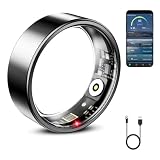
Smart rings typically weigh about 2-6 grams and measure roughly 0.08-0.14 inches thick. Check the manufacturer’s sizing kit or measurement instructions before ordering: ring sizes are not interchangeable with every jewelry brand, and finger swelling can change throughout the day. A ring that feels comfortable for 10 minutes may feel tight after exercise or overnight wear.
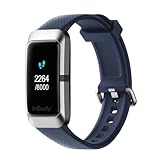
Wrist devices commonly measure about 1.5-2.0 inches long and weigh 0.8-1.5 ounces without the strap. For bike sensors, confirm the mounting area and clearance first. A cadence sensor may measure only 1.5-2.5 inches across, but the crank arm or frame must provide a secure, unobstructed mounting position.
Material: Prioritize Skin Contact and Water Resistance
For wearable sensors, look for smooth medical-grade silicone, TPU, stainless steel, titanium, or clearly identified polymer components. Silicone and TPU straps are usually practical for workouts because they flex and wipe clean. Metal rings can feel more substantial, but buyers with sensitive skin should check whether the interior includes a coating and whether the manufacturer identifies the contact material.
Water resistance is not the same as waterproofing. An IP67 rating generally indicates protection from dust and temporary immersion, while IP68 usually indicates stronger immersion protection under stated manufacturer conditions. Neither rating automatically means a device is suitable for hot tubs, diving, or high-pressure water. A tracker rated for 5 ATM is generally designed for swimming conditions, but confirm the specific product guidance.
For bike-mounted equipment, material affects stability more than skin comfort. Look for a rigid, impact-resistant housing and mounting bands that remain flexible without becoming brittle. If the sensor uses magnets, make sure the mount cannot shift during hard pedaling.
Construction: Inspect the Sensor System, Not Just the Feature List
The most useful fitness trackers combine the right sensor with sensible placement and software. An accelerometer detects movement and supports step counting. A gyroscope can improve motion and orientation detection. Optical heart-rate sensors use LEDs and photodiodes to estimate pulse through the skin. Blood-oxygen features commonly use red and infrared light, but performance can vary with fit, skin contact, motion, temperature, and circulation.
For general activity tracking, two or three optical sensor elements are a reasonable minimum to look for, although the number alone does not prove accuracy. A tracker should also offer a way to review readings over time, not just display a single number. For cycling, check whether the product uses Bluetooth, ANT+, or a proprietary connection, and whether your phone, bike computer, or app supports it.
Look for a sealed body, protected charging contacts, a replaceable or well-secured strap, and buttons that do not feel loose. If the listing only says “health monitoring” without identifying the measurements, connection method, battery capacity, or water rating, treat that as incomplete construction information.
Comfort and Performance: Fit Determines Useful Data
A sensor can be technically capable and still produce poor results if it moves. A wrist tracker should sit about one finger-width above the wrist bone and remain snug without leaving deep marks. During exercise, optical readings are usually more consistent when the device does not slide or bounce. A ring should rotate as little as possible and should not pinch when your hands warm up.
For a clip-on pedometer, secure attachment matters more than advanced analytics. The clip should grip fabric firmly, and the unit should remain vertically oriented if the instructions specify that position. A lanyard can reduce the chance of loss, but a device swinging freely may count movement differently than one fixed to a waistband.
Battery life is another performance factor. For a basic display pedometer, a replaceable coin cell lasting 6-12 months is convenient. Rechargeable wearables should provide at least 4-7 days for ordinary use; continuous heart-rate tracking, bright displays, and frequent workouts can reduce that figure. Bike sensors often last 6-12 months on a coin cell, while app-connected systems may require more frequent charging.
Price Tiers: Pay for the Sensors You Will Use
Budget, about $15-$35: Expect step counting, distance estimates, a basic display, or a single-purpose motion sensor. An OZO-style clip-on pedometer priced around $16.99 may make sense for a walker or senior who values large numbers and minimal setup. At this level, do not expect robust sleep analysis, GPS, or sophisticated heart-rate trends.
Midrange, about $35-$100: This tier commonly includes a smart ring or entry-level wearable with app syncing, sleep tracking, heart rate, and sometimes blood-oxygen estimates. Listed examples include rings priced around $29.99 and $69.99. Compare app support, charging method, sizing availability, and whether a subscription is required rather than choosing solely by sensor count.
Specialized or premium, about $100-$250 and up: Equipment-specific systems may cost more because they include a mount, communication hardware, and software ecosystem. A Jbike-style exercise-bike sensor listed around $99.99 may be more useful to an indoor cyclist than a general-purpose wearable, provided it supports the rider’s bike and preferred app. Premium wearables can add GPS, advanced training metrics, brighter displays, and stronger materials, but those extras are unnecessary for basic step goals.
Warranty: Check What Is Actually Covered
Look for at least a 12-month limited warranty on the sensor, charging hardware, and mounting components. Some products cover manufacturing defects but exclude water damage, cracked displays, worn straps, depleted batteries, or incorrect installation. A warranty is more useful when the seller clearly identifies the support contact and return process.
Also check the return window, which is often 30 days but may be shorter for opened wearable products. For smart rings, confirm whether sizing exchanges are allowed. For bike sensors, ask whether replacement adhesive, bands, magnets, or brackets are available separately. A low-cost device with no replacement mount may become disposable after one broken accessory.
Delivery and Assembly: Avoid Compatibility Surprises
Before ordering, confirm what arrives in the box. A wearable should include its charger or charging cable, while a bike sensor may need mounting bands, adhesive pads, magnets, or a separate app. Basic clip-on pedometers generally require no assembly. Smart rings may require sizing before the final unit ships, adding several days to delivery.
Allow 10-20 minutes for most wearable setup and 20-45 minutes for a bike sensor, including pairing and calibration. Measure your bike’s crank arm or frame before ordering, and confirm the required clearance. If an app is essential, check that it supports your phone’s current operating system and that core readings remain available without a paid membership.
Spec Checklist
| Spec | Budget | Mid | Premium |
|---|---|---|---|
| Typical price | $15-$35 | $35-$100 | $100-$250+ |
| Best for | Steps and simple movement | Daily wellness and sleep trends | Training, GPS, or specialized equipment |
| Approximate weight | 0.5-1.5 oz | 2-6 g for rings; 0.8-1.5 oz for wrist units | 0.8-2 oz, depending on features |
| Core sensors | Accelerometer or pedometer | Accelerometer, optical heart rate, optional oxygen sensor | Multiple optical sensors, gyroscope, GPS, or cycling sensor |
| Battery expectation | 6-12 months for coin-cell models | 4-7 days rechargeable | 2-10 days, depending on GPS and display use |
| Water protection | Splash resistance or IP rating | IP67/IP68 is common | IP68 or 5 ATM, if specifically stated |
| Setup time | 0-10 minutes | 10-20 minutes | 20-45 minutes for specialized systems |
Red Flags
- Claims of “medical-grade” accuracy without regulatory information, test conditions, or clear limitations.
- No named sensors, battery estimate, water rating, app requirements, or supported phone platforms.
- Promises of unlimited health features but no explanation of whether a subscription is required.
- A ring sold without a sizing method or exchange policy.
- A bike sensor that does not specify speed, cadence, distance, wireless protocol, or compatible apps.
- Unusually precise accuracy claims presented as guaranteed results. Movement, fit, skin contact, and device placement all affect readings.
- Reviews mentioning charging failures, loose mounts, syncing problems, or inconsistent data that the product page does not address.
FAQ
Which sensor is most important for counting steps?
An accelerometer is the key component for step detection. Placement and software matter just as much: a secure waistband clip or correctly worn wrist device can outperform a feature-rich tracker that moves excessively. If steps are your only goal, a simple pedometer may offer better value than a smartwatch.
Are smart-ring heart-rate and blood-oxygen readings reliable?
They can be useful for observing general trends, but readings may change with fit, movement, temperature, circulation, and skin contact. Do not use consumer wearable measurements to diagnose a condition or replace professional medical advice. Choose a ring with clear limitations, a comfortable fit, and an app that shows trends rather than isolated numbers.
Do I need GPS in a fitness tracker?
You need GPS only if you want route maps, outdoor distance, or pace without carrying a phone. For indoor workouts, walking totals, sleep, and general heart-rate trends, an accelerometer and optical sensor may be sufficient. GPS also uses more battery, so it can reduce charging intervals.
Is a more expensive tracker always better?
No. Spend more when you need a specific capability, such as cycling compatibility, GPS, stronger water protection, or a brighter display. For basic walking, a $16-$35 clip-on tracker can be adequate. For broader wellness tracking, a $35-$100 ring or wrist device may provide the right balance of features, comfort, and price.