Key takeaways
- Choosing between a fitness tracker ring vs wrist tracker is less about which device has more sensors and more about how you live at home. A ring disappears into your routine: it takes up almost no room on a nightstand,…
What's inside
Choosing between a fitness tracker ring vs wrist tracker is less about which device has more sensors and more about how you live at home. A ring disappears into your routine: it takes up almost no room on a nightstand, does not add another screen to your day, and can feel natural while cooking, cleaning, or sleeping. A wrist tracker is more visible, but that visibility can make step counts, workouts, alarms, and incoming notifications easier to use.
The real decision is whether you want quiet, passive health tracking or a more interactive device. Your budget, tolerance for charging, work around the house, and preference for a watch-like display all matter. Here is how the two categories compare for a home in 2026.
As an Amazon Associate we earn from qualifying purchases at no extra cost to you. Product prices and availability are accurate as of the date shown and are subject to change.


Quick Verdict
Choose a fitness tracker ring if comfort, sleep tracking, discretion, and minimal visual clutter are your priorities. Rings are especially appealing in small bedrooms, shared homes, and spaces where you do not want another bright screen. They are usually lighter than a watch and often last several days between charges.
Choose a wrist tracker if you want an at-a-glance display, workout controls, timers, notifications, or easier access for the whole household. A wrist device is generally simpler to read during a walk or workout, and inexpensive models can provide many of the basic features shoppers expect without the higher price of premium rings.
For many buyers, the best value is a simple wrist tracker. The best lifestyle fit, however, may be a ring that you actually wear consistently.
Side by Side
| Factor | Fitness tracker ring | Wrist tracker |
|---|---|---|
| Comfort | Usually 2.5–6 grams; unobtrusive for sleep and daily chores | Typically 15–35 grams plus a band; easier to notice while sleeping |
| Durability | Resists everyday wear, but can be scratched or squeezed during lifting and repairs | Generally handles routine bumps well; the screen and band are vulnerable to damage |
| Price range | About $30–$400, with premium models at the top end | About $29–$300, depending on display, sensors, and smartwatch features |
| Maintenance | Wipe regularly; remove for heavy gripping, harsh chemicals, or some manual work | Clean the band and sensor area; replace bands or charging cables as needed |
| Space needed | Roughly 7–13 mm wide; charging cases are usually compact | Often a 35–45 mm face and 10–14 mm thick; needs a dedicated charging spot |
| Look | Jewelry-like, subtle, and screen-free | Sporty or watch-like; more noticeable in a room or at a table |
| Resale | Limited by ring size, finish, battery condition, and account compatibility | Usually easier to resell because bands fit a wider range of users |
| Best for | Sleep, recovery trends, passive tracking, and low-clutter living | Workouts, steps, timers, notifications, and quick on-device feedback |
Where Fitness Tracker Ring Wins
Comfort during sleep is the biggest advantage. A ring has no band pressing against the wrist and no watch face catching on bedding. Its small profile also works well for people who dislike sleeping with a watch. Since sleep and recovery measurements are most useful when collected consistently, a comfortable form can be more important than a long list of features.
It keeps the home visually calmer. A ring does not add a glowing display to a nightstand, kitchen counter, or charging shelf. Most charging cases occupy only a few inches of counter space. That can make a difference in a studio apartment or a bedroom shared with a partner who prefers a dark room.
It is discreet for everyday wear. A ring can look like ordinary jewelry and is less likely to invite questions or tempt you to check notifications during dinner. This screen-free quality is also useful if your goal is to monitor activity without turning every walk into a data session.
It can be comfortable during routine movement. Folding laundry, typing, commuting, and light housework are often less awkward without a watch case on the wrist. Rings are not ideal for every chore, though. Remove one before handling abrasive tools, heavy weights, strong cleaning products, or materials that could trap moisture underneath.
Pricing varies dramatically. A basic Milavan Smart Health Ring Fitness Tracker for Men Women, Rose Gold 8 is listed at $39.99, while the Oura Ring 5 Smart Wearable in silver, size 9, is listed at $399. Those prices illustrate the category’s wide spread: inexpensive rings can cover basic activity and wellness functions, while premium options cost as much as a small tablet or entry-level smartwatch.
Where Wrist Tracker Wins
The display provides immediate feedback. You can glance at steps, heart rate readings, workout duration, or a timer without opening a phone. That is useful while following a walking goal, checking a cooking timer, or deciding whether to take another lap around the block.
Workouts are easier to control. A wrist device is generally simpler for starting and ending an exercise session, changing screens, or checking progress mid-workout. Physical buttons or a touchscreen can be more practical than opening a companion app, although wet fingers and gloves may limit touchscreen use.
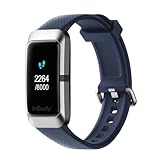
It is often the affordable choice. Basic wrist trackers commonly cost about $29–$80, while feature-rich models may run $100–$300. The listed $28.99 fitness tracker with a 1.10-inch AMOLED touch screen represents the low end of the category. The $99 Fitbit Google Air, a screenless activity tracker, shows that not every wrist-worn product includes a display; its appeal is lighter, simpler tracking rather than watch-style interaction.
It can be easier to share the concept with a family. A wrist tracker is familiar to children and adults, and its screen makes the purpose obvious. It is also easier to identify at a glance in a drawer or charging station. Keep in mind that fitness data is personal, so sharing a device between people is usually impractical unless each person has a separate account and the device can be reset cleanly.
The tradeoff is physical presence. A wrist tracker may bump against counters, get wet while washing dishes, or be removed for sleep. A device left in a drawer cannot collect useful trends, regardless of its sensor list.
Cost Over 5 Years
A five-year comparison should include more than the purchase price. It should account for charging accessories, replacement bands, ring sizing, and the possibility that a battery or device will need replacement.
For a basic wrist tracker costing $29–$80, an illustrative five-year ownership total might be $58–$240 if you replace the device once and spend $0–$80 on bands or charging accessories. A midrange wrist tracker bought for $99 could total about $140–$220 over five years under the same general assumptions.
A basic ring costing $30–$100 might total $60–$200 if replaced once. A premium $399 ring could remain a $399 purchase, but its five-year value depends heavily on battery longevity, sizing, charging hardware, and whether the manufacturer continues supporting the app. Some premium services may also involve optional subscriptions, so check the current terms before comparing prices.
These are planning ranges, not guarantees. Water exposure, scratches, lost chargers, changes in ring size, and discontinued software can alter the total. The lowest upfront price is not automatically the lowest cost if the product is uncomfortable and rarely worn.
Which One for Your Home
Small apartment
A fitness tracker ring usually fits better when storage and charging space are limited. Its case can live in a small drawer or on a narrow shelf, and the device does not compete with a phone, tablet, or smart speaker for counter space. Choose a wrist tracker if you specifically need a display for timers, walking goals, or quick readings.
Family with kids or pets
A wrist tracker is the practical choice for active households. Its display and controls are easier to use while supervising play, walking a dog, or moving between rooms. Look for a secure band and water resistance appropriate to your routine. A ring can work well for an adult focused on sleep and recovery, but remove it for rough play, lifting, or tasks where a small ring could be damaged.
Rental
Both devices are renter-friendly because neither requires installation. A ring has an advantage if you want fewer visible electronics and no permanent charging station. A wrist tracker is better if you want a simple household routine: place it on the same small tray each night and recharge it there. Keep chargers organized rather than attaching mounts or cable hardware to walls.
Long-term home
Think about the habits you want to maintain for years. A ring is a strong choice for quiet, continuous wear and sleep-focused tracking. A wrist tracker offers more flexibility if your exercise routine changes or you expect to use alarms, notifications, and on-device workouts. In either case, prioritize a company and app that appear likely to support data export and replacement accessories.
FAQ
Is a fitness tracker ring more accurate than a wrist tracker?
Neither form is automatically more accurate for every measurement. Fit, skin contact, movement, firmware, and the specific sensor design all matter. Rings may be convenient for overnight wear, while wrist trackers can be easier to position during exercise. Treat readings as wellness estimates, not medical diagnoses.
Can you wear a fitness tracker ring and a wrist tracker together?
Yes, but their readings may not match. Each device can interpret movement and heart-rate data differently, and wearing both may be unnecessary unless you are comparing comfort or features. Pick one as your primary source so your long-term trends remain easier to understand.
Which is better for sleep tracking?
A ring often wins on comfort because it is small and screen-free. A wrist tracker can still be effective if its band does not irritate you and you remember to wear it overnight. Consistent use matters more than the category name.
Should I buy a cheap ring or a cheap wrist tracker?
Buy the form you will wear. A roughly $30 ring can be a sensible low-cost experiment if you prefer discreet tracking, while a roughly $29–$80 wrist tracker is usually the better budget pick for a display and workout controls. Check return policies, sizing, water resistance, app compatibility, and charging requirements before purchasing.