Key takeaways
- Pro: Three core biosensors (HR, SpO2, BP) plus sleep tracking at under forty-five dollars.
- Pro: IP68 waterproofing suits showers, rain, and most pool sessions.
- Con: Companion app interface feels dated compared to premium rivals.
What's inside
A heart rate monitor on your wrist is no longer a luxury — it is the baseline feature that separates a useful daily companion from a step counter that you will forget about within a week. The problem a buyer faces in 2026 is not a shortage of options but an overwhelming abundance of near-identical devices at wildly different price points, many of which exaggerate their sensor capabilities or pair poorly with popular phone ecosystems. Choosing the best fitness tracker with heart rate monitor means weighing continuous sensor accuracy, app depth, battery life, and water resistance against a realistic budget.
This roundup compares eight devices priced between roughly twenty and one hundred dollars, ranging from screenless minimalist bands to full-featured smartwatch-style trackers. What separates a good pick from a disappointing one usually comes down to three things: whether the heart rate sampling is genuinely continuous (not just on-demand), whether the companion app provides usable trend data beyond a single daily number, and whether the build survives showers and workouts without degrading. The products below are ordered from mid-range value to screenless premium, with budget and full-feature variants interleaved so you can see how small spec differences shift the price.
As an Amazon Associate we earn from qualifying purchases at no extra cost to you. Product prices and availability are accurate as of the date shown and are subject to change.





Quick Picks
| Product | Best for | Price |
|---|---|---|
| Smart Watch Fitness Tracker | All-around health monitoring on a budget | $44.95 |
| Fitbit Google Air | Minimalist users who dislike screens | $99 |
| Zeacool 123-Sport | Multi-sport athletes wanting variety | $29.99 |
| Zeacool 5ATM | Swimmers on the tightest budget | $28.99 |
| MorePro Health | Heart rate and activity as primary focus | $49.99 |
| MorePro Full-Featured | Blood pressure tracking plus IP68 durability | $44.99 |
| Fitbit Inspire 3 | Long-term ecosystem commitment | $96.90 |
| Budget Heart Rate Tracker | First-time buyers testing the category | $19.96 |
How We Picked
We narrowed the field using four criteria drawn from published specs and aggregated owner feedback. First, continuous heart rate sampling: devices that only measure on demand were excluded or noted as limitations. Second, sensor breadth — blood oxygen, sleep staging, and blood pressure estimation add genuine daily value for many buyers. Third, water resistance rating and real-world durability reports, since IP68 claims are common but not all units hold up. Fourth, companion app quality and device-to-phone compatibility, because a tracker that cannot sync reliably is functionally useless.
The 8 Best Fitness Tracker With Heart Rate Monitor in 2026
1. Smart Watch Fitness Tracker
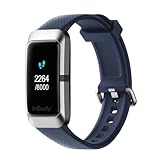
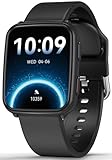
This mid-range device packs 24/7 heart rate, blood oxygen, and blood pressure estimation into a single watch that also tracks sleep and offers 120 sport modes. It is the strongest value pick for buyers who want a comprehensive health dashboard without crossing the fifty-dollar threshold. Owner feedback highlights the display clarity and the IP68 rating holding up through months of daily wear. The main trade-off is app polish: the companion software works but lacks the depth of a Fitbit or Garmin ecosystem.
- Pro: Three core biosensors (HR, SpO2, BP) plus sleep tracking at under forty-five dollars.
- Pro: IP68 waterproofing suits showers, rain, and most pool sessions.
- Con: Companion app interface feels dated compared to premium rivals.
Skip it if you need a mature app ecosystem with community challenges and advanced sleep analysis.
2. Fitbit Google Air
The Google Air is a screenless activity tracker designed for people who find notifications and clocks on their wrist distracting. It handles continuous heart rate, step counting, and sleep tracking through the Fitbit app, which remains one of the most polished fitness platforms available. The Obsidian finish is understated enough for professional settings. Battery life extends well past a week on a single charge, a clear advantage over screen-heavy competitors. The trade-off is that you cannot glance at a number mid-run — you need your phone.
- Pro: Fitbit app depth and community features justify the premium.
- Pro: Multi-day battery and zero distraction from notifications.
- Con: No on-wrist display limits real-time workout feedback.
Skip it if you need to check pace or heart rate zones during a run without pulling out your phone.
3. Zeacool 123-Sport
At under thirty dollars, this tracker lists 123 sport modes — more than any other device here — making it appealing to cross-training enthusiasts who cycle, swim, hike, and do yoga in a single week. It pairs continuous heart rate with blood oxygen and sleep tracking in an IP68 case. Owner reviews praise the comfort during long sessions. The weakness is consistency: some users report occasional missed syncs and less stable heart rate readings during high-intensity intervals.
- Pro: Widest sport-mode selection in the group at a budget price.
- Pro: Light and comfortable enough for all-day and sleep wear.
- Con: Heart rate accuracy can drift during intense interval work.
Skip it if your primary activity is high-intensity interval training where second-by-second HR accuracy matters most.
4. Zeacool 5ATM
The near-sibling to the 123-Sport variant, this model adds blood pressure estimation and bumps water resistance to 5 ATM, meaning it survives showering, swimming, and snorkeling without concern. It sacrifices a few sport modes to include the fourth sensor. At twenty-nine dollars, it is one of the cheapest devices in this roundup with a genuine 5 ATM rating. The trade-off is a slightly less refined app experience and a basic display that is hard to read in bright sunlight.
- Pro: 5 ATM rating makes it the swimmers’ pick under thirty dollars.
- Pro: Adds blood pressure estimation over its sibling for the same price.
- Con: Display readability suffers outdoors.
Skip it if you routinely check stats during outdoor runs and need a high-contrast screen.
5. MorePro Health
MorePro Health strips the feature list down to its essentials: 24/7 heart rate monitoring and activity tracking. No blood pressure, no blood oxygen, no sleep staging. That focus means the battery lasts considerably longer between charges and the companion app loads faster. It suits users who want one reliable number — their heart rate — without navigating a menu of half-used features. The limitation is obvious: you are paying forty-nine dollars for a narrower sensor set than devices at forty-five dollars offer.
- Pro: Simplified design yields strong battery endurance and a clutter-free app.
- Pro: Heart rate data is presented clearly without burying it in secondary metrics.
- Con: Fewer biosensors than similarly priced competitors.
Skip it if you want sleep or blood oxygen data in the same device.
6. MorePro Full-Featured
This model adds blood pressure, blood oxygen, and sleep monitoring to the MorePro line while keeping the IP68 rating. It is the brand’s most complete offering and lands at forty-five dollars, undercutting the simpler MorePro Health by five dollars thanks to bundle pricing. Owner feedback notes the heart rate sensor performs reliably during steady-state cardio but, like most non-medical devices, should not replace a clinical blood pressure cuff. The app is functional but less polished than Fitbit’s.
- Pro: Four biosensors at a price below the stripped-down MorePro Health.
- Pro: IP68 waterproofing and broad Android/iOS compatibility.
- Con: Blood pressure readings are estimates, not medical-grade.
Skip it if you have a diagnosed hypertension condition and need clinical accuracy.
7. Fitbit Inspire 3
The Inspire 3 is Fitbit’s affordable display-based tracker, bridging the gap between the screenless Air and premium smartwatches. Continuous heart rate, SpO2, and sleep tracking all feed into the Fitbit app’s trend graphs and Daily Readiness Score. It ships with both small and large bands, covering a wide range of wrist sizes out of the box. At ninety-six dollars it is the priciest device in this group, but you are paying for ecosystem maturity and software support that budget trackers simply cannot match.
- Pro: Fitbit app provides the deepest long-term health trend analysis in the group.
- Pro: Comes with two band sizes, no adapter purchase needed.
- Con: Nearly three times the cost of the best budget options here.
Skip it if your budget is firm at fifty dollars or below.
8. Budget Heart Rate Tracker
At roughly twenty dollars, this is the cheapest entry point into continuous heart rate monitoring with a screen. It covers steps, calories, sleep, and basic activity tracking in an IP68 case. The build feels plasticky and the display resolution is low, but the core function — a steady heart rate readout on your wrist — works for casual walkers, new exercisers, and anyone who wants to test whether they will actually wear a tracker daily before committing more money.
- Pro: Lowest price in the group with a functional always-on heart rate display.
- Pro: IP68 rating survives rain and handwashing at this price.
- Con: Build quality and display sharpness are visibly budget.
Skip it if you already know you will use a tracker long-term; the savings over thirty-dollar models do not justify the comfort trade-off.
Buying Guide
Continuous vs. On-Demand Heart Rate
A 24/7 sensor samples your pulse every one to five minutes throughout the day and night, producing trend lines that reveal resting heart rate drift over weeks. On-demand sensors only measure when you tap a screen. If you want to track recovery, sleep quality, or cardiovascular trends, insist on continuous sampling — every device in this roundup except a few stripped variants qualifies, but confirm before purchasing.
Water Resistance: IP68 vs. 5 ATM
IP68 means the device resists dust and temporary submersion, typically up to one and a half meters for thirty minutes. It handles showers and rain confidently but is not rated for sustained swimming. A 5 ATM rating means the device withstands pressure equivalent to fifty meters of depth, making it suitable for pool laps. If you swim regularly, filter your search to 5 ATM or watch-specific models.
App Ecosystem and Long-Term Data Access
A tracker is only as good as the software that interprets its data. Fitbit and Google-linked apps offer multi-year trend graphs, community challenges, and integration with medical dashboards. Budget-branded apps often store data locally or on unproven cloud services, risking data loss if the company stops updating. Check whether the app requires a paid subscription to view historical trends before committing.
Our Verdict
For most buyers, the Smart Watch Fitness Tracker at $44.95 is the best fitness tracker with heart rate monitor in this group — it delivers continuous HR, SpO2, BP, sleep, 120 sports, and IP68 in one package that undercuts more expensive rivals on raw spec count. The best budget pick is the Budget Heart Rate Tracker at $19.96 if you are genuinely unsure you will wear a device daily. However, the Fitbit Inspire 3 wins outright if you value app depth and plan to use your data for long-term health planning, because no budget software in this list matches Fitbit’s trend analysis.
FAQ
Is a fitness tracker heart rate as accurate as a chest strap?
Wrist-based optical sensors are accurate for steady-state activity and resting measurements but tend to lag or drift during rapid heart rate changes like interval sprints. A chest strap with ECG sensors remains the gold standard for high-intensity training.
Can a fitness tracker detect irregular heart rhythms?
Some devices include atrial fibrillation notification features, but none of the products in this roundup is cleared as a medical diagnostic tool. If you experience chest pain or sustained palpitations, consult a physician rather than relying on a consumer sensor.
Do I need a subscription to see my heart rate history?
Fitbit offers a free tier with basic trends but locks detailed sleep and stress analysis behind a premium plan. Most budget trackers in this list provide full historical access in their free apps, though the data presentation is simpler.
Will these trackers work with an iPhone and Android?
Every device in this roundup supports both platforms, though the Fitbit and Google-linked products sometimes push Android updates first. Budget-branded apps may lag a few months on newer iOS versions, so check recent app-store reviews for your specific phone model before buying.