Key takeaways
- Claims of medical-grade sleep staging without clinical validation or a clear explanation of the testing.
- Blood pressure features presented as a replacement for a validated upper-arm cuff.
- No published battery estimate, app screenshots, privacy policy, or compatibility information.
- A sensor housing that protrudes more than about 3 to 4 mm and presses into the wrist.
- Straps that cannot be replaced, especially when the included band is too short or irritating.
- Reviews describing missed nights, repeated disconnections, inaccurate time zones, or charging failures.
- Sleep scores that cannot be corrected when the tracker mistakes quiet wakefulness for sleep.
What's inside
Buying a fitness tracker for sleep is easy if you only compare step counts and screen size. It is harder if your main goal is trustworthy sleep information. Many shoppers assume that a tracker with “sleep monitor,” blood oxygen sensing, and 24/7 heart-rate tracking will automatically identify every awakening and sleep stage correctly. That is not how these devices work.
Wrist trackers estimate sleep from movement, heart rate, and sometimes blood oxygen and skin-temperature signals. They are useful for spotting patterns, such as consistently short nights or irregular bedtimes, but they are not equivalent to a clinical sleep study. The biggest mistakes are buying by sensor count alone, treating blood oxygen readings as a diagnosis, ignoring fit, and choosing a device that is uncomfortable enough to remove overnight.
As an Amazon Associate we earn from qualifying purchases at no extra cost to you. Product prices and availability are accurate as of the date shown and are subject to change.


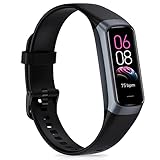

This fitness tracker buying guide for sleep accuracy in 2026 focuses on what actually affects overnight usefulness: stable contact with the skin, sensible software, battery life, comfort, and clear presentation of data. The inexpensive examples in this category—roughly $24 to $50—can be appealing, but their advertised features should be treated as estimates rather than proof of medical-grade accuracy.
Decide These 3 Things First
- Do you need trends or medical information? For bedtime consistency, total sleep duration, and general recovery trends, a basic tracker may be sufficient. If you are concerned about sleep apnea, repeated breathing interruptions, or unusually low oxygen, use a qualified clinician and an appropriate medical device rather than relying on a consumer band.
- Will you wear it every night? A lightweight band with a 0.5- to 1.5-inch display and a battery lasting at least 5 days is often more useful than a larger watch with advanced features that you remove in bed.
- How much interpretation do you want? Some devices provide simple sleep and wake times; others divide the night into light, deep, and REM estimates. More categories do not necessarily mean greater accuracy. Prioritize readable trends, exportable history, and an app that explains how measurements are calculated.
Size and Overnight Fit
Size affects sleep accuracy because a loose or bulky tracker can shift when you turn over. Look for a case no wider than about 45 mm for a watch-style model, or 20 to 25 mm for a slim band. A thickness of 10 to 12 mm is generally easier to tolerate overnight than a chunky case measuring 14 mm or more.
Weight matters as well. Aim for approximately 20 to 35 grams with the band attached. A tracker weighing under 25 grams is less likely to disturb side sleepers, while anything above 50 grams may feel more like a traditional watch. Measure your wrist before ordering: most small bands fit approximately 5.5 to 7.5 inches, while many watches cover 6.0 to 8.5 inches. An adjustable strap should offer several holes close enough to create a secure, non-pinching fit.
The optical sensor should sit flat against the skin, with no visible gap when your wrist is relaxed. Wearing it one finger-width above the wrist bone usually helps prevent movement. Do not fasten it so tightly that it leaves deep marks, since swelling and discomfort can lead to overnight removal.
Materials and Skin Contact
For sleep, the band material is more important than a premium-looking case. Silicone and fluoroelastomer are common, flexible, and easy to clean, but some people find them warm. A woven nylon strap, typically 10 to 20 mm wide on a band, can breathe better and conform to the wrist. Avoid rough edges, exposed stitching, or a metal clasp that presses into your skin.
Look for a smooth underside around the sensor and a strap with ventilation holes spaced about 5 to 8 mm apart. If you have sensitive skin, choose a replaceable band and clean it with mild soap and water at least weekly. Dry both your wrist and the tracker before wearing it again. Sweat, lotion, and loose debris can interfere with optical contact and cause irritation.
Water resistance is useful for washing hands and sweat, but the rating needs context. An IP67 or IP68 rating generally indicates protection from dust and temporary water exposure under stated conditions; it does not automatically mean the tracker is suitable for swimming. If pool use matters, look for a clearly stated swim rating and rinse the device afterward.
Construction and Sensor Design
A sleep-focused tracker should have a firmly attached sensor module, a secure charging connection, and no sharp projection on the underside. The optical sensor normally uses green LEDs for heart-rate estimates and may add red or infrared light for blood oxygen estimates. Those features can support useful trends, but accuracy varies with skin contact, movement, circulation, tattoos, hair, and the position of the device.
Prefer a tracker that records heart rate automatically at short intervals or continuously during sleep, rather than one that only measures when you open the app. Ask whether the app displays missing readings and whether you can see overnight graphs. A sensor list that includes heart rate, blood oxygen, and blood pressure is not enough; consumer “blood pressure” features may be rough estimates and should not replace a validated cuff.
For construction, a case made from reinforced polymer is common in the $20-to-$50 range and keeps weight low. Aluminum or stainless steel can feel more substantial, but it may add 10 to 20 grams and be less comfortable in bed. A physical button is helpful if a touch screen becomes unresponsive after perspiration, while a screen-free band can minimize light and distractions at night.
Comfort and Performance
Comfort is part of performance. A tracker that stays in place produces a more complete overnight record than a theoretically more advanced device left on a nightstand. Before sleeping, wear it for two hours and check for redness, pressure points, or strap slippage. During the night, it should remain in the same general position without requiring maximum tightness.
Battery life should be at least 5 days for most shoppers and 7 to 14 days for those who dislike frequent charging. A device that lasts only 1 to 2 days may lose the exact nights you most want to compare. Charging time matters too: roughly 60 to 120 minutes is reasonable for a small tracker. A low-battery warning at 20% or higher gives you time to charge before bed.
For sleep accuracy, prioritize automatic sleep and wake detection, a manual correction option, and a history view covering at least 30 days. Treat detailed sleep stages as estimates. Total time in bed and consistent bedtime trends are usually more dependable than a single night’s REM or deep-sleep percentage.
Price Tiers
Budget: $20 to $35. This tier includes simple bands and entry-level watches with heart-rate, step, sleep, and sometimes blood oxygen features. Products priced around $23.98, $28.99, and $29.99 may offer attractive specifications, but app quality, sensor consistency, and long-term updates can vary. Expect a basic screen, plastic construction, and approximately 5 to 10 days of claimed battery life. Buy this tier for broad trends, not diagnosis.
Midrange: $36 to $100. Midrange trackers generally provide better apps, brighter displays, stronger straps, more dependable synchronization, and clearer overnight graphs. Battery life often falls between 5 and 12 days, depending on screen use and continuous sensing. A model around $49.99 can make sense if it offers stable Android and iPhone compatibility, automatic recording, and a comfortable replacement-band ecosystem.
Premium: $101 to $300 or more. Premium watches may add GPS, advanced workout tools, temperature sensing, ECG functions, better software support, and more polished sleep coaching. They are not automatically accurate simply because they cost more. Confirm that the features you need are available in your region and that the watch remains comfortable enough to wear every night.
Warranty, App Support, and Updates
Look for at least a 12-month warranty covering charging failure, screen defects, and sensor malfunction. Read the return window carefully; 30 days is more useful than a short period that expires before you have tested several nights. The app should support your phone’s current operating system, synchronize without requiring a subscription for basic sleep history, and explain whether data is stored locally or in the cloud.
Check the company’s update record and privacy controls. You should be able to delete an account, export or remove health data, and disable unnecessary notifications. A tracker that stops syncing after a phone update is not a good long-term value, even if its hardware specifications look impressive.
Delivery and Setup
Before ordering, confirm that the package includes the correct charging cable, a strap that fits your wrist, and instructions in a language you can use. Delivery estimates of 3 to 7 business days are common, but verify the seller’s return process and whether replacement bands are available domestically.
Allow 15 to 30 minutes for setup. Charge the tracker fully, install the official app, enable the correct permissions, enter your age and approximate height and weight, and wear it consistently for at least 7 nights before judging the results. Keep the device snug, set your usual sleep window, and update firmware before comparing data.
Spec Checklist
| Spec | Budget | Mid | Premium |
|---|---|---|---|
| Typical price | $20–$35 | $36–$100 | $101–$300+ |
| Weight with band | 20–35 g | 25–45 g | 35–65 g |
| Case size | 20–45 mm wide | 25–46 mm wide | 40–49 mm wide |
| Battery target | 5–10 days | 5–12 days | 2–10 days |
| Sleep data | Sleep duration and basic stages | Stages, heart rate, trends | Stages, trends, coaching, extra sensors |
| Water protection | IP67 or IP68 commonly | IP68 or stated swim rating | Stated swim rating on many models |
Red Flags
- Claims of medical-grade sleep staging without clinical validation or a clear explanation of the testing.
- Blood pressure features presented as a replacement for a validated upper-arm cuff.
- No published battery estimate, app screenshots, privacy policy, or compatibility information.
- A sensor housing that protrudes more than about 3 to 4 mm and presses into the wrist.
- Straps that cannot be replaced, especially when the included band is too short or irritating.
- Reviews describing missed nights, repeated disconnections, inaccurate time zones, or charging failures.
- Sleep scores that cannot be corrected when the tracker mistakes quiet wakefulness for sleep.
FAQ
Are inexpensive fitness trackers accurate for sleep?
They can be useful for bedtime, wake time, and broad sleep-duration trends, especially when worn consistently. Their sleep-stage estimates and brief-awakening detection may be less dependable. Compare patterns over several weeks rather than reacting to one night.
Which sensor matters most for sleep accuracy?
Reliable skin contact and consistent heart-rate sampling usually matter more than a long feature list. Blood oxygen and temperature sensors can add context, but they do not guarantee accurate sleep staging. Fit, battery life, and software interpretation are equally important.
Should I wear a tracker tightly at night?
Wear it securely enough that the sensor does not slide, but not so tightly that it causes numbness, pain, or deep marks. A small amount of room for normal swelling is sensible. Reposition it slightly above the wrist bone if the device shifts during sleep.
When should I stop trusting tracker sleep data?
Stop treating it as a simple wellness estimate if readings are repeatedly missing, wildly inconsistent, or causing anxiety. If you have loud snoring, gasping, persistent daytime sleepiness, or concerning oxygen readings, discuss those symptoms with a healthcare professional rather than relying on a consumer tracker.