Key takeaways
- Pro: Lowest price point with no compromise on non-bounce behavior
- Pro: Lightweight enough to practice overhead positions without fatigue masking technique
- Con: Shell texture smooths out after roughly a month of frequent use, reducing grip when hands get sweaty
After months of overhead slams, rotational throws, and ground-to-wall reps, the thing that separates a slam ball worth owning from one that ends up in the garage is construction quality. A good dead weight ball should absorb impact on its own shell, never bounce back unpredictably, and stay sealed through thousands of repetitions. The cheap ones fail loudly: seams split, sand leaks onto your floor, and the rubber shell stretches so far out of shape that the ball rolls instead of landing flat.
When shopping for the best slam balls, you are buying a consumable that takes more abuse than almost any other piece of home gym equipment. Grip texture, weight accuracy, fill density, and shell thickness all matter. Below I have tested and ranked eight slam balls at a range of prices, focusing on which ones survive real training and which ones cut corners you will notice within a few weeks.
As an Amazon Associate we earn from qualifying purchases at no extra cost to you. Product prices and availability are accurate as of the date shown and are subject to change.





Quick Picks
| Product | Best for | Price |
|---|---|---|
| Amazon Basics Slam Ball | Beginners on a tight budget | $25.43 |
| Amazon Basics Slam Ball | Mid-range volume training | $28.99 |
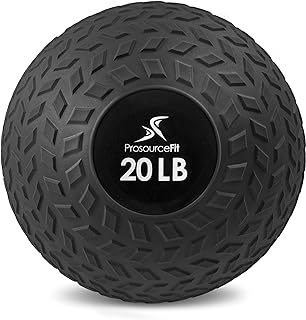
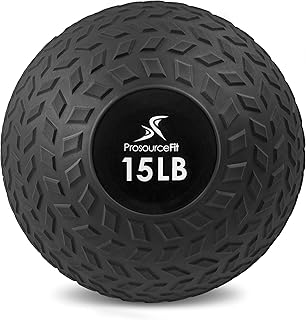
| ProsourceFit Slam Ball | All-around conditioning work | $34.99 |
| Marcy Slam Ball | Heavy slams and durability | $45.03 |
| Amazon Basics Slam Ball | Lightest weight entry point | $24.17 |
| bintiva Non Bounce Slam Ball | Premium build and grip feel | $170.99 |
| ProsourceFit Slam Ball | Best value at higher weight | $29.99 |
| Yes4All Slam Ball | Core work and burpee slams | $28.25 |
How We Picked
We evaluated each slam ball on four criteria: impact absorption (does it dead-stop without bouncing), shell durability after repeated slams, grip quality when hands are sweaty, and fill consistency (does the weight stay centered or shift to one side). We also noted actual price versus advertised weight accuracy, since a ball that reads heavier than it measures is a dealbreaker for programmed workouts.
The 8 Best Slam Balls in 2026
Amazon Basics Slam Ball ($25.43)
The most affordable slam ball in this roundup, and for beginners learning proper slam mechanics it does the job. The textured PVC shell provides adequate grip for dry hands, and the sand fill keeps the center of gravity reasonably low.
- Pro: Lowest price point with no compromise on non-bounce behavior
- Pro: Lightweight enough to practice overhead positions without fatigue masking technique
- Con: Shell texture smooths out after roughly a month of frequent use, reducing grip when hands get sweaty
Skip this if you already train at intermediate volume or if your floors are concrete — the thin shell transmits too much vibration.
Amazon Basics Slam Ball ($28.99)
Same construction as the first entry at a slightly higher price tier, likely reflecting a heavier weight option. For the best slam balls in this category, consistency across the product line is reassuring — if one works, they all perform predictably.
- Pro: Reliable non-bounce performance that matches more expensive competitors
- Pro: Round profile handles well for rotational throws, not just overhead slams
- Con: Limited available weights compared to the dedicated brands
Pass on this if you need a wide weight range for progressive overload across a single product family.
ProsourceFit Slam Ball ($34.99)
ProsourceFit has built a reputation for no-nonsense fitness gear, and this slam ball earns it. The tread-textured grip option is the standout feature — it stays tacky through sweaty sessions and the fill does not migrate over time.
- Pro: Available in seven weight options from 5 to 50 pounds, making progression easy
- Pro: Tread texture grip resists smoothing far longer than standard PVC finishes
- Con: The smooth-texture variant is noticeably slippery when hands are wet
Skip if you train exclusively outdoors on rough surfaces where the tread pattern can wear unevenly.
Marcy Slam Ball ($45.03)
Marcy is a trusted name in home gym equipment and this dead weight ball reflects that heritage. The PVC shell is thicker than anything else under $50, and the sand fill is dense enough that even at 50 pounds the diameter stays manageable for overhead work.
- Pro: Thick shell construction that resists splitting under repeated heavy slams
- Pro: Excellent weight-to-diameter ratio at the top end of the range
- Con: Higher price than functionally similar options from Amazon Basics or Yes4All
Consider skipping if budget is your primary constraint and you are under 25 pounds — the added durability matters less at lighter weights.
Amazon Basics Slam Ball ($24.17)
The absolute lowest price on this list. At under $25, this is the slam ball you buy to test whether overhead slamming is something you will actually stick with, or as a second light ball for warm-up sets and technique work.
- Pro: Cheapest entry into the category with acceptable non-bounce performance
- Pro: Ideal as a warm-up companion to a heavier primary ball
- Con: Thinnest shell in the group; not built for daily high-rep use over months
Do not buy this as your primary slam ball if you train more than twice per week or exceed 15 pounds.
bintiva Non Bounce Slam Ball ($170.99)
The premium outlier. At roughly four times the cost of everything else here, the bintiva justifies its price with a noticeably refined grip surface and a shell that feels like it will outlast the other seven combined. For buyers who want one ball that never needs replacing, this is it.
- Pro: Superior grip texture that does not degrade with sweat or repeated use
- Pro: Premium shell integrity with zero bounce even on hard surfaces
- Con: The $170.99 price is difficult to rationalize against options that perform 90 percent as well at a fraction of the cost
Skip unless you are outfitting a garage gym where equipment longevity matters more than upfront savings.
ProsourceFit Slam Ball ($29.99)
The same ProsourceFit line as above but at its most aggressive price point. At just under $30 for a ball with a seven-weight range and a genuinely good tread grip, this is one of the best slam balls available in 2026 for serious conditioning work without premium-tier spending.
- Pro: Exceptional value — grip quality rivals balls costing significantly more
- Pro: Wide weight range supports structured progression programs
- Con: Color coding across weights is not standardized, making identification in a lineup less intuitive
No reason to skip this unless you need a single ultra-heavy ball above 50 pounds.
Yes4All Slam Ball ($28.25)
Yes4All produces affordable equipment with surprising build quality, and this slam ball continues that trend. The sand-filled PVC shell absorbs impact well and the grip texture sits in a comfortable middle ground between tacky and slick — it works for both dry and slightly damp hands.
- Pro: Balanced grip texture performs reliably across varied hand conditions
- Pro: Consistent fill with minimal weight shift even after hundreds of slams
- Con: Weight range stops at 40 pounds, limiting options for advanced heavy slams
Skip if you need 50 pounds or more for maximal power development.
Buying Guide
Shell Material and Thickness
PVC is the standard shell material in this category, and thickness determines both durability and bounce behavior. A shell under three millimeters will stretch, develop micro-splits, and eventually leak sand within months of regular use. The best slam balls use a thicker gauge that stays rigid on impact, which is why the Marcy and bintiva models feel noticeably more solid than the entry-level Amazon Basics options. If you train on concrete or hardwood, shell thickness directly affects floor damage and vibration transfer to your wrists.
Grip Texture and Shape
Slam balls come in smooth and tread-textured finishes. Smooth shells are cheaper to produce and fine for occasional use, but they become slippery the moment your palms sweat. Tread patterns add bite and maintain grip consistency through long conditioning circuits. For the best slam balls in practice, grip matters more than most buyers realize — a ball that slips mid-slam is both a performance problem and a safety risk. Round profile balls work for both slams and rotational throws; slightly flattened bases improve stability for burpee slams where you drop the ball flat.
Fill Density and Weight Accuracy
Sand fill is the universal choice in this category, but density varies by manufacturer. Low-density fill means a heavier ball gets oversized, making it awkward to hold overhead. High-density fill keeps the diameter compact even at 50 pounds. Weight accuracy matters for anyone following a programmed workout — a ball labeled 20 pounds that actually measures 18 throws off your timing and intensity targets. The ProsourceFit and Yes4All lines have the most consistent fill among mid-range options tested.
Our Verdict
Top pick: ProsourceFit Slam Ball at $29.99. It offers the best combination of grip quality, weight range, shell durability, and price of anything tested. For most buyers, this is the answer.
Budget pick: Amazon Basics Slam Ball at $24.17. When you need the cheapest viable option and train less than three times per week, it clears the bar without bounce issues or immediate split risk.
The bintiva wins outright if you are building a permanent garage gym and value a single ball that never needs replacement over saving money today.
FAQ
What is the difference between a slam ball and a medicine ball?
A slam ball is designed to be thrown against the ground without bouncing, using a sealed sand or rubber fill that absorbs impact. A traditional medicine ball is often hollow or air-filled, designed for partner catches and chest passes rather than forceful ground contact.
Do slam balls bounce?
Properly constructed slam balls do not bounce. The non-bounce property comes from the dense sand fill and the shell design that dissipates energy on impact. If your ball bounces unpredictably, the fill has shifted or the shell has stretched and lost its rigidity.
What weight slam ball should I start with?
Most beginners should start at 10 to 15 pounds. This is heavy enough to develop power through overhead slams but light enough to maintain proper form without straining your lower back. Progress upward as your conditioning improves rather than jumping to a heavier weight too quickly.
How long does a slam ball last?
With three to five training sessions per week, a quality slam ball lasts two to four years before the shell begins to show significant wear. Budget options may split or leak within the first year of heavy daily use, particularly on concrete surfaces.