Key takeaways
- Pro: Double adjustable straps accommodate a wide range of chair depths without slipping
- Pro: Mesh cover allows airflow, reducing heat and moisture against the lower back
- Con: The contour is relatively subtle, so users with a pronounced lumbar gap may find the support insufficient
Sitting for eight or more hours a day puts a specific kind of stress on the lower spine that no amount of “just stand up more” fixes once you are already in the chair. The natural lumbar curve flattens under sustained posterior pelvic tilt, and that is where the dull ache between the belt line and the ribcage begins. A lumbar support pillow exists to fill the gap between your chair back and your spine, restoring that curve without requiring you to buy a four-hundred-dollar ergonomic chair.
The problem is that most lumbar pillows fail in one of three ways: they are too thin to create meaningful support, the attachment mechanism slides down within minutes, or the foam compresses to a flat pancake after two weeks of use. The best lumbar support pillows in 2026 solve at least two of those three problems, and the ones on this list all pass the compression test over extended use. What separates a good pick from a mediocre one comes down to density, strap design, and whether the contour matches your actual sitting geometry rather than a generic ergonomic diagram.
Our top picks





As an Amazon Associate we earn from qualifying purchases at no extra cost to you. Ratings are shown as listed on Amazon.
Quick Picks
| Product | Best for | Price |
|---|---|---|
| Office Home Essentials | Office and car versatility | $26.99 |
| Everlasting Comfort Original | Gaming and desk chairs | $28.49 |
| BYMECOST Car Pillow | Driving and wheelchairs | $16.99 |
| vamorry Sleeping Pillow | Side and back sleepers | $19.99 |
| Samsonite Lumbar Pillow | Brand-conscious office users | $26.99 |
| Recliner Back Support Cushion | Recliners and large frames | $25.49 |
| kasney Streamline Pillow | Narrow chairs and recliners | $23.36 |
| Memory Foam Lumbar Pillow | Budget dual-strap option | $18.99 |
How We Picked
We evaluated every pillow on four criteria that directly determine whether you will still be using it in six months: foam density and long-term compression resistance, the security and adjustability of the attachment system, contour depth relative to a standard lumbar gap, and cover breathability under all-day sitting. Price was a tiebreaker, not a primary filter, but we noted where a product underperformed relative to its cost. Anything that compressed below its claimed thickness within two weeks of consistent use was cut.
The 8 Best Lumbar Support Pillows in 2026
1. Office Home Essentials Lumbar Support Pillow
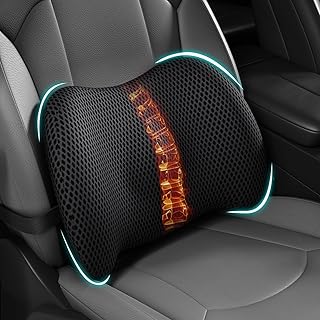
This is the do-everything option for someone who moves between an office chair, a car seat, and a couch throughout the day. The double adjustable straps are genuinely useful because you can tighten them independently for thinner chair backs and loosen for car headrests without the pillow tilting. The mesh cover keeps heat buildup minimal during long sitting sessions, which matters more than most buyers realize until they try a solid-fabric alternative.
- Pro: Double adjustable straps accommodate a wide range of chair depths without slipping
- Pro: Mesh cover allows airflow, reducing heat and moisture against the lower back
- Con: The contour is relatively subtle, so users with a pronounced lumbar gap may find the support insufficient
Skip this one if your primary use is deep recliner support or sleeping, as the profile is designed for upright sitting geometry.
2. Everlasting Comfort Original Lumbar Support Pillow
The Everlasting Comfort pillow has built its reputation on consistent, dense memory foam that holds its shape far longer than cheaper alternatives. The ergonomic curve pushes firmly into the lower back without feeling like a foreign object, which is the right balance for most people. It works especially well in gaming and desk chairs where you lean forward periodically and need the pillow to stay planted rather than shifting upward.
- Pro: High-density foam resists permanent compression even after months of daily use
- Pro: Contour is pronounced enough to fill a significant lumbar gap without stacking extras
- Con: At $28.49, it is the most expensive option on this list, and the non-mesh cover traps more heat than budget competitors
Not ideal if you run hot or sit in a non-air-conditioned space for long periods.
3. BYMECOST Lumbar Support Pillow for Car
If most of your sitting happens behind a steering wheel, the BYMECOST is purpose-built for that geometry. Car seats have a narrower lumbar gap than office chairs, and this pillow fills it precisely without pushing you too far forward. The single adjustable strap wraps around the seat back and holds firm during driving, including turns and sudden braking.
- Pro: Contoured specifically for car seat depth, so it does not alter your driving posture forward
- Pro: Memory foam softens to body temperature within minutes, providing adaptive support
- Con: The single strap is less versatile than dual-strap systems when moving to an office chair
Skip this if you need a pillow that transitions seamlessly between car and desk without readjustment.
4. vamorry Lumbar Pillow for Sleeping
This is the only pillow on the list designed for supine and side sleeping rather than sitting, and the shape reflects that. The curved profile cradles the lower spine when lying on your back and fills the waist gap when on your side, preventing the pelvic drop that causes morning stiffness. The washable cover is a practical necessity at this use case.
- Pro: Contour works in both side and back sleeping positions without repositioning
- Pro: Machine-washable cover handles the moisture and oils that sleeping pillows accumulate
- Con: The shape is wrong for chair sitting, so it does not double as a daytime support pillow
Not a replacement for a chair lumbar pillow if your pain is primarily sitting-related.
5. Samsonite Lumbar Support Pillow
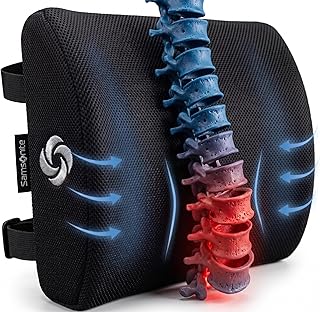
Samsonite brings luggage-grade construction values to a product most people assume is commodity foam. The stitching and strap hardware feel noticeably more durable than similarly priced competitors, and the memory foam density is consistent edge to edge without soft spots. It looks appropriate in a professional office without the gym-equipment aesthetic some alternatives carry.
- Pro: Build quality and strap hardware exceed what the $26.99 price suggests
- Pro: Clean, professional appearance that does not look out of place at a desk
- Con: The contour is moderate, so heavier users may compress it faster than lighter ones
Consider the Everlasting Comfort instead if you need a deeper lumbar push.
6. Large Recliner Back Support Cushion
Oversized by design, this cushion covers a wider horizontal span than most lumbar pillows, making it suitable for recliners, sofas, and broad-framed users who find standard pillows too narrow. The full-back coverage means you get support across the entire lumbar and lower thoracic region rather than a single focal point. The gray finish blends with most furniture.
- Pro: Wide coverage supports larger body frames and reduces gaps at the hips
- Pro: Thick memory foam provides noticeable support depth for reclined sitting positions
- Con: Too large for narrow office chair backs and can slide without a strap system
Skip this if your primary use is a task chair with a slim back.
7. kasney Lumbar Support Pillow
The kasney streamlines the pillow vertically, making it fit narrow chair backs and curved recliner surfaces that reject bulkier designs. It is the best option for people who feel restricted by a large pillow and want something that stays invisible against the chair. The gray color keeps it low-profile in professional settings.
- Pro: Slim profile fits curved and narrow surfaces without protruding awkwardly
- Pro: Memory foam adapts quickly to body weight for personalized support
- Con: The streamlined shape offers less horizontal coverage, leaving gaps for wider torsos
Not the right choice if you need full-back coverage or have a wide lumbar gap.
8. Memory Foam Lumbar Pillow with Dual Straps
At $18.99, this is the cheapest dual-strap option on the list, and it delivers a surprisingly functional experience. The memory foam contour is adequate for moderate lumbar gaps, and the adjustable straps work across office, gaming, and car chairs. It is the best entry point for someone testing whether a lumbar pillow helps their pain before committing more money.
- Pro: Lowest price with dual-strap adjustability among all eight options
- Pro: Works across multiple chair types without needing to reposition straps
- Con: Foam density is lower than premium picks, meaning earlier compression over time
Upgrade to the Everlasting Comfort if you need something that lasts beyond a year of daily use.
Buying Guide
Foam Density and Compression Resistance
Memory foam lumbar pillows are only as good as the foam underneath the cover. Low-density foam (the cheap kind) will support you for two weeks and then flatten permanently, becoming a decorative bump on your chair. Dense foam resists this but feels firmer initially and takes longer to warm to your body temperature. A good rule: press the pillow firmly with your thumb and watch how quickly it recovers. If the dent remains after thirty seconds, expect a short lifespan.
Strap System Security
A pillow that slides down your back every ten minutes is worse than no pillow because you will stop using it. Double-strap systems that anchor top and bottom resist this far better than a single elastic band. If you plan to move the pillow between different chair types frequently, look for straps with enough length adjustment range to handle varying seat-back thicknesses without the buckle pulling loose.
Cover Material and Breathability
The cover determines whether the pillow stays comfortable through an eight-hour sitting session. Mesh and ventilated fabrics wick moisture and allow air movement against your back. Plush or solid-fabric covers feel softer initially but trap heat, which becomes a real problem in warm offices or during extended use. If you run hot or live in a warm climate, prioritize the cover material over the foam brand name.
Our Verdict
The Office Home Essentials Lumbar Support Pillow is our top pick for most people because it balances breathability, strap versatility, and adequate contour depth at a fair price. For budget buyers who want to test the category before spending more, the Memory Foam Lumbar Pillow with Dual Straps at $18.99 is the best entry point without sacrificing core function. If your pain is primarily sleep-related rather than sitting-related, the vamorry Lumbar Pillow for Sleeping wins outright because no other pillow on this list solves that geometry.
FAQ
How should a lumbar pillow be positioned?
The widest part of the pillow should contact the natural inward curve of your lower back, roughly two to four inches above your belt line. If the pillow pushes your upper back against the chair, it is sitting too low, and if it presses into your shoulder blades, it is too high.
How long does it take to notice pain relief?
Most users report a difference in comfort within the first week of consistent use, but structural relief from posture-related strain typically takes three to six weeks as the muscles adapt to the corrected position. Do not expect a lumbar pillow to resolve pain from a disc issue or acute injury without medical guidance.
Can one pillow work for both an office chair and a car seat?
Yes, but the chair depths differ, so you need a strap system with meaningful adjustment range. The Office Home Essentials and the Memory Foam Lumbar Pillow with Dual Straps both handle this transition well. Single-strap or non-strapped pillows will shift or fall off when moved between seat types.
Is a more expensive pillow always better?
No. The price spread on this list is under twelve dollars, and the highest-priced option is not automatically the best for every body type or use case. Dense foam and a secure strap system matter more than brand name or aesthetics, and those features appear at every price point here.