Key takeaways
- Choosing between a massage gun and a foam roller for recovery is less about finding a universal winner and more about matching the tool to your space, habits, and tolerance for pressure. A massage gun is an active electronic device…
What's inside
Choosing between a massage gun and a foam roller for recovery is less about finding a universal winner and more about matching the tool to your space, habits, and tolerance for pressure. A massage gun is an active electronic device that delivers rapid percussion to a targeted muscle. A foam roller is a simple, body-weight-driven cylinder that lets you work over larger areas while also challenging mobility and control.
For a home buyer, the real decision is whether you want fast, focused relief with a little charging and noise—or a low-maintenance recovery tool that takes up more floor space but costs less to own. The best choice can also change depending on whether you live in a small apartment, share your home with children and pets, or expect to use the same equipment for many years.
As an Amazon Associate we earn from qualifying purchases at no extra cost to you. Product prices and availability are accurate as of the date shown and are subject to change.


Quick Verdict
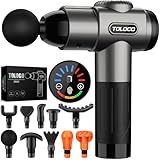
Choose a massage gun if you want targeted relief for calves, shoulders, glutes, or lower legs, prefer not to get down on the floor, and value portability. Most consumer models cost about $40 to $250, weigh roughly 1.5 to 3 pounds, and use rechargeable batteries. A basic option such as the $39.99 TOLOCO Massage Gun in black or the similarly priced gray version can fit a modest recovery budget without requiring a large storage area.
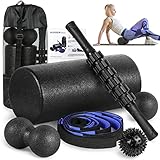
Choose a foam roller if you want the lowest-cost, lowest-maintenance option for broad muscle work, mobility exercises, and regular pre- or post-workout routines. Standard rollers usually cost $20 to $80 and measure about 12 to 36 inches long. The $27.99 TriggerPoint Grid 1.0, at 13 inches, is a relatively compact example, while a $31.71 foam roller set combines a larger back roller with a muscle roller stick.
In short, a massage gun wins for convenience and precise, hands-off targeting. A foam roller wins for value, silence, and long-term simplicity.
Side by Side
| Factor | Massage Gun | Foam Roller |
|---|---|---|
| Comfort | Pressure is adjustable; easier to avoid sensitive spots | Can feel intense because body weight supplies the pressure |
| Targeting | Excellent for small areas and individual muscles | Best for broad areas such as thighs, back, and calves |
| Durability | Often lasts 2–5 years, depending on battery and motor care | Dense foam can last many years with normal indoor use |
| Price range | About $40–$250 for common home models | About $20–$80 for most home rollers and sets |
| Maintenance | Recharge, wipe down, and eventually replace the battery or unit | Usually just wipe clean; no charging required |
| Space needed | Approximately 8–12 inches of drawer or shelf space | Approximately 13–36 inches of floor or closet space |
| Look | Contemporary gadget with controls and attachments | Minimal, gym-like cylinder; some designs look more polished |
| Resale | Limited after battery wear and normal cosmetic use | Low resale value, but no battery makes age less important |
| Best for | Targeted recovery, travel, and people who dislike floor exercises | Full-body routines, mobility work, and budget-conscious buyers |
Where Massage Gun Wins
The biggest advantage of a massage gun is precision. A roller applies pressure over a relatively wide strip of tissue, while a massage gun head can focus on a calf, the side of a hip, or a small area around the shoulder blade. That makes it useful when one muscle feels particularly tight after running, lifting, cycling, yard work, or a long day at a desk.
It is also easier to use while standing or sitting. You do not need enough clear floor space to lie down and roll across your back or legs. That matters in a compact apartment, a home office, or a bedroom shared with furniture. A typical handheld gun is about 6 to 10 inches long and can be stored in a nightstand, linen closet, or desk drawer.
Speed is another benefit. A short session of 30 seconds to two minutes per muscle can feel more practical than setting up a mat and completing a full rolling sequence. Multiple attachments can also change the sensation: a larger soft head for broad muscles, a smaller head for more focused work, and a fork-shaped attachment for areas alongside the spine. Attachments should be used on muscles rather than directly on bones, joints, the front of the neck, or other sensitive structures.
Noise and battery life are the main home-use considerations. Many consumer massage guns operate in the roughly 20- to 60-watt range and provide several speed settings, though specifications vary. Even a “quiet” motor may be noticeable in a silent room. Charging commonly takes about two to four hours, with advertised use often measured in several hours per charge. The entry-priced TOLOCO models listed at $39.99 offer a way to add percussion massage without moving into premium pricing, while their black and gray finishes may suit different storage or decor preferences.
A gun is not automatically better for every muscle. It can be awkward on the middle of the back because you must hold and control the device, and pressing too hard can make a small treatment area uncomfortable. It is best viewed as a convenient supplement to movement and recovery—not a replacement for medical care or a diagnosis of persistent pain.
Where Foam Roller for Recovery Wins
Foam rollers offer more than pressure. Rolling requires you to brace, shift your weight, and control your position, so a session can support mobility and body awareness as well as muscle work. A 24- to 36-inch roller is especially versatile for the upper back, hamstrings, quadriceps, glutes, and calves. Short 12- to 13-inch rollers are easier to store and carry but can feel less stable for full-body exercises.
Value is difficult to beat. A $27.99 TriggerPoint Grid 1.0 is a 13-inch multi-density roller designed for targeted muscle work, while a $31.71 foam roller set can provide both a larger back roller and a handheld muscle roller stick. Those prices are substantially below many powered devices, and neither option needs a charger, replacement head, or motor repair.
Foam rollers are also silent. You can use one while someone is sleeping, during a television program, or in a shared living space without adding motor noise. Cleaning is simple: wipe the surface with a slightly damp cloth and let it dry. Dense foam generally handles normal indoor use well, although leaving it under heavy furniture, in direct sunlight, or in a hot car can deform or age the material.
The trade-off is comfort and technique. A firm roller can feel intense, particularly on the outer thigh, calves, or areas that are already tender. You control the pressure by shifting more or less body weight onto the roller, but that can be difficult for beginners or people with limited mobility. A softer roller may be more approachable, while a textured or multi-density design provides more varied contact.
Foam rolling should not be performed directly over joints, the front of the neck, or areas with unexplained swelling, bruising, numbness, or sharp pain. Gentle movement is usually more useful than forcing pressure into a painful spot.
Cost Over 5 Years
Using the listed product prices as examples, a $39.99 massage gun costs about $8 per year over five years if it remains functional for the entire period. A $27.99 foam roller works out to about $5.60 per year, and the $31.71 set costs about $6.34 per year. These figures exclude tax and delivery and assume no replacement parts.
In real use, battery aging makes the comparison less tidy. If a budget massage gun needs replacement after three years, buying a second $39.99 unit would bring five-year spending to about $80, or $16 per year. A foam roller may eventually develop dents or surface wear, but replacing a basic $27.99 roller once during five years would total about $55.98. The roller is therefore usually the safer long-term value, while the massage gun may justify its higher ownership cost through convenience.
Which One for Your Home
Small apartment
Pick a massage gun if floor space is tight and you want recovery equipment that can live in a drawer. It is particularly practical when a bed, sofa, or coffee table makes a full rolling position inconvenient. If you prefer a roller, select a compact 12- or 13-inch model and store it vertically in a closet.
Family with kids or pets
A foam roller has fewer parts to lose and no charging cable or moving motor. It is generally easier to wipe clean after use and less tempting to operate around curious children. Store either tool out of reach, and keep a massage gun powered off when it is not in your hand.
Rental
Both choices are renter-friendly because they require no installation. A massage gun creates no wall or floor marks and can be packed in a small box during a move. A foam roller is equally portable but takes more room in a moving bin. Choose based on whether storage volume or charging convenience is the bigger concern.
Long-term home
Buy the foam roller if you want a durable, shared household staple for stretching and mobility. Choose both if your budget allows: use the roller for broad, quiet routines and the massage gun for quick, targeted sessions. Together, they can cover more situations than either tool alone.
FAQ
Is a massage gun better than a foam roller for recovery?
Neither is universally better. A massage gun is better for precise, convenient treatment of selected muscles, while a foam roller is better for low-cost, quiet, broad-area work and mobility exercises.
Can I use a massage gun and foam roller on the same day?
Yes, many people use a roller for gentle full-body movement and a massage gun briefly on one or two tight muscles. Keep pressure moderate, avoid repeatedly working a painful area, and stop if you experience sharp pain, numbness, or unusual swelling.
What size foam roller should I buy for home use?
A 24- to 36-inch roller is the most versatile for full-body exercises and back work. A 12- to 13-inch roller is easier to store and transport but offers less stability for some positions.
When should I avoid both tools?
Avoid using either tool over open wounds, significant bruising, areas of unexplained swelling, unstable joints, or sharp pain. If you have a medical condition, take blood thinners, are recovering from an injury, or are unsure about a painful area, ask a qualified clinician before using percussion or deep-pressure equipment.