Key takeaways
What's inside
- Understanding Waveforms and Frequencies
- Channel Count and Muscle Group Coverage
- App Integration vs. Dedicated Handheld Controllers
- Pad Quality, Adhesion, and Replacement Costs
- Battery Life and Portability Requirements
- Common Mistakes to Avoid When Buying
- When It Actually Makes Sense to Spend More
- Related Guides
- FAQ
- Related Guides
Navigating the market for recovery technology in 2026 can feel overwhelming, especially with the rapid evolution of electrical muscle stimulation devices. Whether you are an endurance runner logging high weekly mileage or a strength athlete pushing heavy loads, speeding up muscular turnaround is essential for long-term progress. Electrical muscle stimulation (EMS) has transitioned from clinical physical therapy clinics into mainstream home fitness routines, promising to flush out metabolic waste, reduce perceived soreness, and stimulate localized blood flow without demanding active physical exertion.
- Understanding Waveforms and Frequencies
- Channel Count and Muscle Group Coverage
- App Integration vs. Dedicated Handheld Controllers
- Pad Quality, Adhesion, and Replacement Costs
- Battery Life and Portability Requirements
- Common Mistakes to Avoid When Buying
- When It Actually Makes Sense to Spend More
- Related Guides
- FAQ
- Related Guides
However, not all recovery stimulators are created equal. Marketing terms like medical-grade, smart-recovery, and advanced bio-waveforms can obscure what truly impacts your post-workout experience. To make an informed investment, you need to look past flashy companion apps and focus on core engineering specifications, pad quality, channel flexibility, and treatment protocols that match your specific recovery demands.
As an Amazon Associate we earn from qualifying purchases at no extra cost to you. Product prices and availability are accurate as of the date shown and are subject to change.

Understanding Waveforms and Frequencies
The foundational technology of any stimulator revolves around how it delivers electrical impulses to your motor nerves. It is vital to distinguish between TENS (Transcutaneous Electrical Nerve Stimulation), which targets sensory nerves to mask pain signals, and EMS, which sends impulses directly to motor neurons to trigger involuntary muscle contractions. For athletic recovery, you need true EMS or hybrid devices that offer dedicated recovery modes capable of low-frequency twitch contractions. These low-frequency impulses act like an active flush, gently pumping the muscle to encourage lymphatic drainage and nutrient delivery without inducing further micro-tears.
Channel Count and Muscle Group Coverage
When evaluating hardware, the number of independent output channels dictates your treatment efficiency. Single-channel or dual-channel units limit you to treating one muscle group at a time, or require you to split pads across distant muscle groups, which often reduces current intensity. Four-channel devices allow you to treat both legs simultaneously—quads and calves, for instance—slashing your post-workout protocol time in half. If you frequently experience full-body fatigue from multi-joint compound movements, investing in a multi-channel setup prevents recovery sessions from eating up your entire evening.
App Integration vs. Dedicated Handheld Controllers
The modern fitness landscape is dominated by app-controlled hardware, but convenience cuts both ways. App-driven EMS units rely on your smartphone via Bluetooth to select programs, adjust intensity, and track history. While this allows manufacturers to push seamless firmware updates and provide rich visual interfaces, it can also introduce frustrating connectivity drops right when you are trying to relax. Conversely, dedicated physical controllers with tactile buttons offer foolproof reliability, letting you adjust settings blindly by feel while lying on a foam roller or stretching mat.
Pad Quality, Adhesion, and Replacement Costs
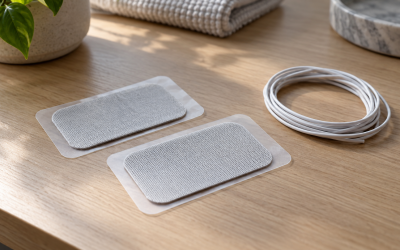
The interface between the machine and your skin is the gel electrode pad, and it represents the most critical consumable expense of owning an EMS device. Cheap hydrogel pads lose their stickiness after a handful of uses, leading to uneven current distribution, annoying stinging sensations, and frequent error codes on the device. Look for units that utilize standard snap-on or pin-connection pads so you are not locked into proprietary ecosystems with inflated replacement costs. Proper skin preparation, such as cleaning oils off the skin before application, will drastically extend pad lifespan regardless of the brand you choose.
Battery Life and Portability Requirements
Recovery routines often happen away from stationary wall outlets—whether you are traveling to a competition, sitting in the passenger seat of a car after a race, or lounging on the couch. Built-in rechargeable lithium-ion batteries have largely replaced disposable alkaline batteries, offering consistent power output over long lifespans. Check the mAh rating and typical run-time per charge; a solid recovery unit should easily handle a week’s worth of daily sessions before needing a USB-C recharge. If you travel frequently, pocket-sized pod designs that attach directly to the pad without dangling lead wires offer unmatched travel convenience.
Common Mistakes to Avoid When Buying
A frequent pitfall for buyers is getting seduced by maximum voltage or amperage specifications. Higher power does not equal better recovery; in fact, blasting sore muscles with excessive electrical current can cause cramping and worsen inflammation. Another mistake is ignoring the software side: ensure the device actually features dedicated recovery and capillarization modes rather than just high-intensity strength-building programs. Finally, buyers often underestimate ongoing maintenance costs, forgetting to factor in the recurring price of replacement pads and conductive gels.
When It Actually Makes Sense to Spend More
Entry-level units under a modest price threshold are typically fine for casual gym-goers looking to experiment with basic flush programs. However, stepping up to a premium tier makes sense if you require deep tissue penetration, multi-limb simultaneous treatment, clinical-grade waveform customizability, and rugged build quality meant to withstand daily use by serious athletes. Premium devices also tend to feature smarter impedance detection, which automatically adjusts output if a pad starts peeling away, preventing the sharp, unpleasant shocks common with budget hardware.
Related Guides
To build a comprehensive recovery protocol that goes beyond electrical stimulation, explore our other expert roundups. Check out the top best EMS muscle stimulators for recovery to compare specific hardware options side-by-side. For contrast therapy enthusiasts looking to reduce systemic inflammation, our guide to the best cold plunge tubs offers deep insights into cold exposure. Additionally, if you are managing joint trauma or post-operative swelling, review our recommendations for the best ice therapy machines to round out your recovery arsenal.
FAQ
Can I use an EMS muscle stimulator every day?
Yes, low-intensity recovery and flush programs are designed for daily use to promote blood flow and reduce stiffness. However, high-intensity strength or hypertrophy modes require adequate rest days to prevent overworking the muscle fibers.
Should I use EMS before or after my workout?
EMS is most effectively used post-workout to accelerate metabolic clearance and ease muscular tension. Using certain warm-up programs prior to training can also help activate dormant muscle fibers, but recovery remains the primary use case.
Why does the electrical stimulation feel sharp or stinging?
A sharp or stinging sensation usually indicates that your electrode pads are losing their adhesive quality or that there is residue, lotion, or oil on your skin. Replacing the pads or thoroughly cleaning the skin surface will restore an even, comfortable distribution of current.
Can EMS replace traditional active recovery like walking or stretching?
While EMS is a fantastic supplementary tool, it should not completely replace active movement like light walking or mobility work. Combining electrical stimulation with natural movement yields the most balanced approach to long-term athletic longevity.