Key takeaways
- Thoracic spine (upper back): Lie with the roller across your upper back and gently extend over it to open a rounded posture.
- Glutes: Sit on the roller and lean into one side; tight glutes are a major hidden driver of low-back tension.
- Hip flexors and quads: Rolling the front of the hips releases muscles that tilt the pelvis and strain the lower back.
- Lats: Roll the side of your back below the armpit to free up muscles that limit shoulder and spine movement.
What's inside
A foam roller is one of the cheapest, most effective tools for managing everyday back tightness, and used correctly it can loosen the muscles that pull your spine out of comfortable alignment. The key word is correctly: rolling directly on your lower back is a common mistake, while rolling the surrounding muscles that actually cause the tension is where relief comes from.
This guide explains how to use a foam roller safely for back pain relief, which muscles to target, and how to pick the right density and length. Self-myofascial release is not a cure for serious spinal problems, but for the tight upper backs and stiff hips that give most people daily discomfort, it is a genuinely useful habit.
As an Amazon Associate we earn from qualifying purchases.




⚡ Save on Your Next PC — Amazon Prime
Prime members get fast free shipping on the systems above, plus early access to Prime Day & Black Friday PC deals. New members get a 30-day free trial.
Watch: Foam Roller for Back Pain Relief: A Detailed Guide — Video Review
How Foam Rolling Eases Back Pain
Much of what people call back pain is tension in the muscles around the spine, the upper-back (thoracic) extensors, the glutes, and the hip flexors, rather than the spine itself. Foam rolling applies pressure that helps these muscles relax and improves blood flow, reducing the pull on your back. Rolling the mid-back also restores extension in a spine that spends the day hunched over a desk.
Where to Roll (and Where Not To)
Roll the muscles that surround and support the spine, never the lumbar spine directly.
- Thoracic spine (upper back): Lie with the roller across your upper back and gently extend over it to open a rounded posture.
- Glutes: Sit on the roller and lean into one side; tight glutes are a major hidden driver of low-back tension.
- Hip flexors and quads: Rolling the front of the hips releases muscles that tilt the pelvis and strain the lower back.
- Lats: Roll the side of your back below the armpit to free up muscles that limit shoulder and spine movement.
Choosing the Right Roller
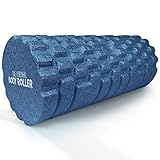
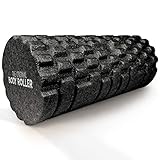
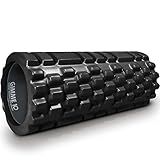
Density and texture matter. A multi-density textured roller like the TriggerPoint GRID 1.0 gives targeted pressure that mimics a massage therapist’s hands, ideal for working knots without being brutal. Smooth high-density rollers such as The Original Body Roller or the Amazon Basics 18-inch High-Density Foam Roller offer firm, even pressure and are great all-rounders. Beginners or those with sensitive muscles should start softer and progress to firmer, more textured surfaces.
A Simple Daily Routine
Spend 5 to 10 minutes: 60 to 90 seconds each on the upper back, glutes, hip flexors, and lats. Roll slowly, pause on tender spots for 20 to 30 seconds, and breathe. Do it after sitting all day or as part of a warm-up, and consistency matters more than intensity.
Tips
- Never roll the lower spine: Target the muscles around it, glutes and hips, not the lumbar vertebrae themselves.
- Go slow and breathe: Fast rolling does little; slow pressure with steady breathing is what releases tension.
- Start softer if new: A firmer textured roller is more effective once your tissues adapt, but begin gentle to avoid bruising.
- Pair with mobility: Follow rolling with light stretches or cat-cow to reinforce the new range of motion.
Frequently Asked Questions
Can I foam roll my lower back directly?
No. Rolling directly on the lumbar spine can cause the muscles to protectively tighten and stress the vertebrae. Focus on the glutes, hips, and upper back instead.
How often should I foam roll for back pain?
Daily is fine for 5 to 10 minutes. Many people roll in the morning to loosen up or in the evening after prolonged sitting.
What density roller is best for beginners?
Start with a standard high-density smooth roller. Once you are used to the pressure, a textured multi-density roller like the TriggerPoint GRID targets knots more precisely.
Will foam rolling fix my back pain completely?
It relieves muscular tension that contributes to everyday stiffness, but it is not a treatment for structural issues. Persistent or sharp pain should be evaluated by a professional.
Conclusion
Used the right way, a foam roller is a low-cost daily tool that eases the muscular tension behind most everyday back discomfort. Roll the glutes, hips, and thoracic spine rather than the lower back itself, choose a density that matches your tolerance, and stay consistent. A textured roller like the TriggerPoint GRID or a firm classic such as the Amazon Basics high-density roller will serve you for years of simple, effective recovery.