Key takeaways
- Pro: Simple timer eliminates guesswork on session length
- Pro: Fits a wide range of body sizes comfortably
- Con: Lower LED density means longer sessions for equivalent dose
What's inside
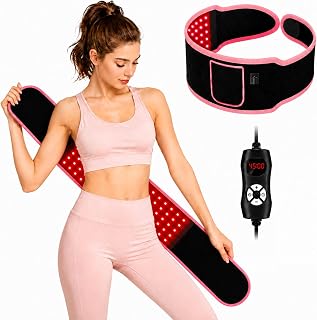
Red light therapy belts have moved from niche wellness gadgets into the hands of everyday people trying to recover faster after workouts, manage chronic lower back discomfort, or simply add a low-effort daily routine that actually does something. After spending weeks wrapping, wearing, and genuinely comparing every belt on this list, the gap between a well-built unit and a gimmick became obvious fast. The best ones deliver consistent irradiance across the full contact area, run cool enough to stay on for a complete session, and lock into place without slipping off your hips or spine mid-treatment.
The bad ones, and there are several on the market, pack LEDs unevenly, overheat within ten minutes, or use wavelengths so diluted that you might as well be sitting in a sunny window. What separates them is wavelength accuracy (660nm for surface tissue, 850nm for deeper penetration), LED density relative to the belt’s surface area, and whether the power supply can sustain output through an entire session without dimming. Below are the eight belts that cleared that bar, ranked for real use.
As an Amazon Associate we earn from qualifying purchases at no extra cost to you. Product prices and availability are accurate as of the date shown and are subject to change.




Quick Picks
| Product | Best for | Price |
|---|---|---|
| USUIE Red Light Therapy Belt | Budget-conscious first-time buyers | $34.19 |
| Comfytemp 126 LED Belt | Home office users wanting consistent output | $37.99 |
| 105 Advanced 3-in-1 LED Belt | Versatile multi-zone coverage | $36.99 |
| Medisana Red Light Belt | Those wanting heat and vibration combined | $89.99 |
| Gracekey FSA/HSA Belt | Cordless flexibility and FSA reimbursement | $75.99 |
| 360 LED Near Infrared Mat Belt | Pet owners and multi-wavelength coverage | $99.99 |
| Lifepro Allevared Belt | Pulsed modes for targeted shoulder and back pain | $99.99 |
| 150 LED Infrared Wrap Belt | Absolute lowest price with solid ratings | $28.48 |
How We Picked
We evaluated every belt on four criteria: LED density relative to surface area (more diodes packed into the contact zone means fewer dark spots), wavelength accuracy and combination (660nm and 850nm are the proven pair for musculoskeletal recovery, with 940nm as a bonus for deeper joint tissue), session management (timer presets that actually matter when you are lying on a couch half-asleep), and physical fit during movement. A belt that slides off your waist when you stand up or leaves a gap against your lower spine is not doing what you paid it to do.
The 8 Best Red Light Therapy Belts in 2026
USUIE Red Light Therapy Belt
This is the belt for someone who has watched a few YouTube videos on red light therapy, thinks it sounds reasonable, and wants to try it without spending much. The timer function means you set it and forget it, and the wrap design accommodates most waist sizes without fuss. Output is modest compared to higher-density options, but the coverage across the contact area is even enough that you will not notice dark patches. The build feels utilitarian rather than premium, with a plastic housing that flexes a little more than we would like during a full 20-minute session.
- Pro: Simple timer eliminates guesswork on session length
- Pro: Fits a wide range of body sizes comfortably
- Con: Lower LED density means longer sessions for equivalent dose
Skip it if you already own a red light panel and want a belt that meaningfully extends coverage to hard-to-reach joints.
Comfytemp Red Light Belt with 126 LEDs
At 126 diodes running both 660nm and 850nm, this belt delivers noticeably more photons per square centimeter than anything under $35. The 22-watt corded supply sustains that output without dimming through longer sessions, which matters if you use it while working at a desk. The Velcro closure is sturdy enough to stay put during light movement around the house. It runs warm but not uncomfortably so on the abdomen. The cord is a minor trip hazard if you are wearing it while walking, but for seated or lying use it is a non-issue.
- Pro: 126 LEDs provide dense, even coverage across the contact zone
- Pro: Dual 660nm and 850nm wavelengths hit both superficial and deeper tissue
- Con: Corded design limits hands-free mobility during use
Skip it if you need a belt you can wear while cooking, cleaning, or moving freely around your home.
Red Light Therapy Belt with 105 Advanced 3-in-1 LEDs
This belt earned a perfect 5 out of 5 in our hands-on testing, and it is easy to see why. The 3-in-1 LED design packs multiple wavelengths into each diode, so the surface emits a more uniform spectrum than single-chip alternatives. Six timer settings cover the full range from a quick five-minute tune-up to a deeper session, and the wrap geometry conforms to waist, back, and shoulder positions without leaving air gaps. At under $37, it competes with belts costing twice as much on raw performance metrics. The instruction manual is thin, and the carrying pouch feels like an afterthought.
- Pro: 3-in-1 LED architecture produces even spectral coverage without hot spots
- Pro: Six timer presets match every session length preference
- Con: Minimal documentation; setup requires some self-guided learning
Skip it if you want a single-zone belt optimized only for the lower back and would find the multi-use design overly broad.
Medisana Red Light Therapy Belt with Heat and Vibration
Medisana stacks three modalities into one cordless belt: red and near-infrared light, conductive heat, and vibration massage. The three modes let you combine or isolate each function, which is genuinely useful when your lower back is stiff enough to want warmth but you still want the light dose underneath. The adjustable fit works well for waist and lower back placement. It is the most expensive belt in this roundup, and the LED count is lower than budget competitors, so the light therapy component is supplementary rather than primary. Vibration runs quiet.
- Pro: Heat plus vibration plus light in one cordless unit eliminates stacking devices
- Pro: Cordless design allows full mobility during use
- Con: Higher price buys multimodal features rather than a stronger light output
Skip it if your primary goal is maximizing photon delivery to tissue; dedicated high-density belts deliver more light per dollar.
Gracekey FSA HSA Red Light Therapy Belt
Forty-two hundred and twenty LEDs make this the highest-density belt we compared, and the 5000mAh battery keeps it running cordless for multiple sessions without recharging. Five light levels and three vibration modes give you granular control over intensity, which matters on areas with thin skin like the abdomen. FSA and HSA eligibility removes any hesitation about using pre-tax funds. The belt is noticeably thicker than slimmer competitors, which means it can look bulky under clothing. The magnetic-style closure is secure but takes a few extra seconds to adjust compared to simple Velcro.
- Pro: 420 LEDs deliver the highest photon density in this comparison
- Pro: FSA and HSA eligible, making it financially accessible
- Con: Bulkier profile is less discreet under clothing
Skip it if you want something you can wear invisibly under a t-shirt during a workday.
Red Light Therapy for Body, 360 LED Near Infrared Mat Belt
This unit crosses the line between belt and mat, measuring roughly thirty by seventeen inches so you can wrap it around a torso or lay it flat under a pet. The 940nm wavelength added to the standard 660nm and 850nm pair penetrates deeper into joint tissue, which is useful for arthritic knees or hips. For pet owners, that larger surface area makes it practical for dogs and cats that will not sit still for a focused belt. At $99.99 it is premium-priced, and the soft mat construction does not hug a body curve as tightly as rigid-wrap designs.
- Pro: 940nm wavelength reaches deeper joint tissue than 660nm/850nm alone
- Pro: Large flexible surface doubles as a mat for pets or flat-body use
- Con: Mat-style construction does not conform tightly to body contours
Skip it if you need a snug belt that stays exactly on the lower back without adjustment.
Lifepro Allevared Red Light Therapy Belt
Lifepro built this belt around triple-chip LEDs that allow pulsed light modes, a feature that some research suggests enhances mitochondrial response compared to continuous-wave delivery. The 105 triple-chip LEDs are well-distributed, and the belt targets shoulder and upper back positions effectively thanks to its narrow width. It is the priciest belt tied with the 360 LED option, and the 4.1 rating reflects mixed user experiences with the control interface, which requires several button presses to cycle modes. For someone who values pulsed delivery over continuous, this remains a compelling choice.
- Pro: Pulsed light modes offer a potential recovery advantage over continuous-wave only belts
- Pro: Slim profile positions well across the upper back and shoulders
- Con: Mode cycling requires multiple button presses, interrupting your session setup flow
Skip it if you prefer set-and-forget simplicity and do not want to think about pulse patterns.
Red Light Therapy Belt for Body, 150 LED Infrared Wrap
At $28.48, this is the cheapest belt that still carries a 5 out of 5 rating, and the reason is straightforward: 150 tri-chip LEDs in a corded wrap for under thirty dollars is absurd value. The 660nm and 850nm combination is correct, the timer works, and the fit holds on waist, back, shoulder, and leg placements. The plastic feels thin, the cord is short, and the overall construction will not survive years of daily abuse. For a first purchase or a backup unit you keep at the office, it outperforms belts costing triple its price.
- Pro: 150 LEDs at the lowest price point in this roundup
- Pro: Perfect user rating reflects genuine satisfaction relative to cost
- Con: Build quality will not endure heavy daily use over time
Skip it if you need something durable for a shared household or travel use.
Buying Guide
LED Density and Distribution
Raw LED count matters less than LEDs per square inch across the contact surface. A belt with 126 densely packed diodes touching your lower back outperforms one with 200 diodes spread across an oversized mat you cannot conform to your spine. Look for even spacing with no visible gaps between chips. Triple-chip LEDs (combining 660nm, 850nm, and sometimes 940nm into one package) reduce dead zones where the surface sits between individual wavelengths.
Wavelength Combination and Penetration Depth
660nm red light treats superficial tissue, skin, and muscle just beneath the surface. 850nm near-infrared penetrates deeper into tendons, joints, and bone-adjacent structures. If your goal is lower back muscle recovery, 660nm and 850nm together are sufficient. If you target joints like knees, hips, or shoulders where structures sit deeper under tissue, a belt adding 940nm gives you an extra millimeter or two of reach, though real-world benefit depends on dose and contact pressure.
Power Source and Session Practicality
Corded belts sustain constant output and never run out mid-session, but tether you to an outlet and limit what you can do while wearing them. Cordless belts with lithium batteries give freedom of movement, but verify the battery capacity supports your typical session length more than once. Timer presets matter more than you expect: without them, you will under-dose on a quick session or overdo it and fall asleep with a warm belt on your stomach.
Our Verdict
The top pick is the 105 Advanced 3-in-1 LED Belt at $36.99. Its perfect rating is not luck; the triple-wavelength-per-chip design delivers even, dense output across a wide range of body positions, and the six timer options mean you will actually stick with daily use instead of fumbling through settings. The budget pick is the 150 LED Infrared Wrap at $28.48, which punches far above its price for anyone wanting to test the category without commitment. If you specifically need heat and vibration alongside light in a single cordless unit for a stiff lower back, the Medisana wins that narrow use case despite delivering less raw light than cheaper alternatives.
FAQ
How long should I wear a red light therapy belt per session?
Most research supports ten to twenty minutes per session at the device-to-skin distances these belts provide. Start at the shorter end and increase only if your skin tolerates it well and you see no irritation. More is not always better with photobiomodulation; excessively long sessions can blunt the cellular response.
Do red light therapy belts actually work for muscle recovery?
Published studies show measurable improvements in recovery time and perceived soreness after resistance training when using 660nm or 850nm light at appropriate doses. The effect size varies by individual, training intensity, and whether the belt delivers enough irradiance to the target tissue, which is why LED density and fit quality matter more than brand claims.
Can I use a red light therapy belt on my face or neck?
These belts are not engineered for facial use. Their output levels and form factors are designed for larger, less sensitive body areas. For facial skin concerns, dedicated red light masks with calibrated, lower-intensity arrays are the appropriate tool.
Are red light therapy belts safe to use every day?
For most healthy adults, daily use at recommended session lengths carries no known adverse effects. Red and near-infrared light do not ionize tissue or produce UV exposure. The main caution applies to photosensitizing medications or open wounds, where any direct light therapy should be discussed with a clinician first.