Key takeaways
- The best running shoes for marathon training: six picks including Brooks Hyperion Max 3 and plated options, compared on cushioning and fit.
The best running shoe for marathon training in this group is the Brooks Hyperion Max 3, a cushioned, plated neutral shoe built to protect your legs on long runs and tempo days. It suits runners who are building weekly mileage toward a first or faster marathon and want a soft but springy ride. “Marathon training shoe” here means a shoe that stays comfortable for two or three hours on the road, usually with generous cushioning, a smooth rocker shape and sometimes a stiff plate. The Nike Run Swift 3 is a simpler easy-run option, and the Sonic Cat carbon-plate shoes are lesser-known alternatives that need careful checking before you commit.
Quick List
- Brooks Hyperion Max 3 (Luminary/Cyber Yellow/Black) – best for long runs and marathon-pace workouts
- Sonic Cat Dual Carbon Plate Road Shoes – best for runners curious about plated shoes from a lesser-known brand
- Nike Run Swift 3 – best as a runner-up for easy, short training miles
- Sonic Cat Marathon Carbon Plate Shoes with Air Cushion – best for lightweight tempo runs
- Brooks Hyperion Max 3 (Coconut/Green Gecko/Pink Clay) – best for the same shoe in a brighter colorway
- Sonic Cat Dual Carbon Plate and Dual Midsole Shoes – best for casual training and workouts with a plated look
Which One Is Right for You?
| If you… | Choose |
|---|---|
| want a proven cushioned, plated trainer for long runs | Brooks Hyperion Max 3 (either colorway) |
| want a bright shoe that stands out at the start line | Brooks Hyperion Max 3 in Coconut/Green Gecko/Pink Clay |
| mostly run easy and want a simple, non-plated trainer | Nike Run Swift 3 |
| want to try a dual carbon plate design from a newer brand | Sonic Cat Dual Carbon Plate Road Shoes |
| prefer an air cushion style midsole for faster days | Sonic Cat Marathon with Air Cushion |
| want a plated shoe for gym and workouts as well as runs | Sonic Cat Dual Plate and Dual Midsole |
For true marathon training, put your money into the shoe you will wear for most long runs. The Brooks shoes lead here because the brand publishes detailed specs and independent reviewers have measured them. The Sonic Cat shoes have far less independent information available, so treat their listing claims with caution and confirm every detail before buying.
All 6 Picks in Detail
1. Brooks Hyperion Max 3 (Luminary/Cyber Yellow/Black) – Best for Long Runs and Marathon-Pace Workouts
As an Amazon Associate we earn from qualifying purchases at no extra cost to you.
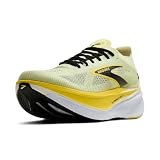
The Hyperion Max 3 is a high-stack neutral road shoe from Brooks, listed here in the Luminary, Cyber Yellow and Black colorway in men’s size 8 medium. Brooks describes a midsole that stacks a nitrogen-infused DNA Flash v2 layer with a PEBA-based DNA Gold layer on top, plus a SpeedVault plate and RapidRoll geometry that helps the foot roll forward. It suits runners who want a cushioned, bouncy shoe for long runs and tempo sessions without moving fully into race-day-only territory.
Published stack and drop figures vary by source: Brooks lists about 46 mm in the heel with a 6 mm drop, while independent sites report slightly different numbers. Weight is commonly given as about 9.9 ounces for a men’s shoe. At that stack height the shoe sits above the 40 mm limit for sanctioned road racing, so it is a training shoe rather than a race shoe for rule-bound events.
In a training block, the shoe earns its place on the long run. Wear it on the weekly long run, on progression runs that finish at goal pace, and on any day when your legs already feel heavy. Because the geometry rolls you forward, many runners find the last miles of a long run feel steadier. Give it a few shorter outings before the first long one, and check that the heel holds without slipping, since a loose heel on a tall stack is more noticeable than on a low shoe.
- Cushioning: DNA Flash v2 with DNA Gold PEBA-based top layer, per Brooks and reviewers
- Plate: SpeedVault plate; material is described differently by sources
- Drop: about 6 mm per Brooks; other sources list up to 8 mm
- Weight: about 9.9 oz (men’s), per published sources
- Size on this listing: men’s 8 medium; confirm size and width options on the product page
Pros:
- Soft, springy cushioning that suits long mileage
- Well documented by the brand and independent reviewers
Cons:
- Tall stack is less stable on tight turns
- Not legal for sanctioned road racing under the stack limit
Compared with the Nike Run Swift 3, it is a much more cushioned and purpose-built long-run shoe.
2. Sonic Cat Dual Carbon Plate Road Shoes – Best for Trying a Plated Shoe from a Newer Brand
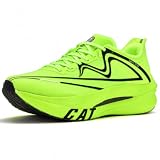
This Sonic Cat listing describes unisex road racing shoes with two full-length carbon plates and a TPEE midsole, aimed at lightweight performance running. We found no independent reviews for this exact model, and listings for the brand’s shoes are inconsistent about the midsole material and the plate construction, so the details below are what the listing states rather than verified facts. It suits runners who want to experiment with a plated shoe for tempo runs and are willing to check sizing and construction details first.
Because the listing is for men and women, check the size chart carefully and confirm how the sizing converts for your foot.
Before relying on a shoe like this, do a basic inspection when it arrives: check that both plates are visible or described in the packaging, that the stitching is even, and that the sole sits flat. Jog a mile or two around the block, then decide whether to keep it for tempo days. Return policies matter more than usual for lesser-known brands, so read the terms first and keep the packaging until you are sure the fit is right.
- Plate: dual full-length carbon plates, per the listing
- Midsole: TPEE, per the listing
- Intended use: road racing, per the listing
- Sizing: men’s and women’s; confirm conversion on the product page
- Weight, stack height and drop: confirm on the product page
Pros:
- Plated design that may suit faster workouts
- Available in a range of sizes for men and women, per the listing
Cons:
- Limited independent information on durability and fit
- Key specs are missing from the title
Next to the Brooks shoes, it is the high-risk, low-information option.
3. Nike Run Swift 3 – Best as a Runner-Up for Easy, Short Training Miles

The Run Swift 3 is a neutral road shoe with a mesh upper, Flywire cables for midfoot hold and a standard foam midsole, with no plate. Nike lists a heel-to-toe drop of about 10 mm and a weight around 10.8 ounces for a men’s size 10, while one independent lab review measured it a bit lighter and with a stack of roughly 33 mm at the heel. That reviewer described the cushioning as fairly firm and limited for long efforts, so this shoe is best placed as a runner-up for easy runs and the shorter days in a marathon block.
It does not match the Hyperion Max 3 for long-run protection. For runners who need a simple second shoe for recovery jogs, it is a reasonable companion, but it should not be the only shoe in a marathon plan.
Use it where its strengths show: recovery jogs, warm-ups, strides and the first miles of an easy run. Its role in a marathon block is secondary, which is why we flag it as a runner-up. If you want one shoe that can stretch to an easy long run, step up to a more cushioned model, and keep this one for shorter days where soft landings matter less. Many runners also like to keep a firmer, simpler pair around for strength sessions and treadmill mileage.
- Type: neutral road trainer, no plate
- Drop: about 10 mm, per Nike and reviewers
- Upper: mesh with Flywire cables
- Size on this listing: men’s 11 in black, white and dark smoke grey; confirm on the product page
- Best use: easy, short runs
Pros:
- Simple, familiar fit from a major brand
- Good stability for easy running
Cons:
- Cushioning is limited for long distances
- Not a marathon-specific shoe
It is the simplest shoe here and clearly a secondary pick compared with the Hyperion Max 3.
4. Sonic Cat Marathon Carbon Plate Shoes with Air Cushion – Best for Lightweight Tempo Runs

This Sonic Cat listing is for men’s and women’s marathon running shoes with a carbon plate, an air cushion and a lightweight, breathable build. It positions itself as a road racing sneaker. As with the other Sonic Cat shoes, We could not find independent evaluations, and the listing wording does not say whether the plate is full carbon fiber or a nylon-carbon blend, so treat the plate and air cushion claims as unverified.
A sensible approach is to treat it as an occasional faster-day shoe and keep a reliable cushioned trainer for your long runs.
Air cushion language on a listing can mean several things, from a visible air unit in the heel to a simple foam with a window in it. Look at the product photos for the midsole construction, and read the care notes in case the unit is sensitive to heat or pressure. Try the sizing in the store or at home on a treadmill before you commit to a long road run, and be ready to switch to your regular trainer if anything pinches or rubs.
- Plate: carbon plate, per the listing; confirm material
- Cushioning: air cushion, per the listing
- Upper: lightweight and breathable, per the listing
- Sizing: men’s and women’s; confirm on the product page
- Weight and drop: confirm on the product page
Pros:
- Light feel suggested by the listing
- Breathable upper for warm weather
Cons:
- Sparse independent information
- Construction details are unclear
It is less documented than the first Sonic Cat listing, so check details before you rely on it.
5. Brooks Hyperion Max 3 (Coconut/Green Gecko/Pink Clay) – Best for the Same Shoe in a Brighter Colorway

This listing is the same Hyperion Max 3 in a Coconut, Green Gecko and Pink Clay colorway, in men’s size 10.5 medium. Everything above about the midsole, the plate and the geometry applies. It suits runners who want the same long-run shoe but prefer a bolder look, or those who simply find that this size is available when the other colorway is not. Because shoe sizes on these listings are specific, check the available sizes and widths on the product page rather than assuming the listed size will fit you.
Colorway also matters for safety. A brighter shoe is easier to spot for drivers during early-morning or evening runs, and pairing it with a reflective vest adds visibility. If you plan to race in the shoe at a non-sanctioned event, or just use it as your long-run workhorse, it is sensible to buy it a month or two before your goal race so you can build trust in it through several long outings.
- Cushioning: DNA Flash v2 and DNA Gold layers, per Brooks
- Plate: SpeedVault plate
- Weight: about 9.9 oz (men’s), per published sources
- Size on this listing: men’s 10.5 medium
- Colorway: Coconut, Green Gecko and Pink Clay
Pros:
- Same cushioned long-run platform
- More distinctive look
Cons:
- Same tall stack and limited stability
- Listing is size-specific
It is functionally identical to the first Hyperion Max 3 listing; pick between the two on color and available size.
6. Sonic Cat Dual Carbon Plate and Dual Midsole Shoes – Best for Casual Training and Workouts

The last Sonic Cat listing describes men’s marathon running shoes with dual carbon plates and a dual midsole, and the title also calls them fashion workout shoes. That wording suggests a casual, multi-purpose shoe rather than a specialist marathon trainer, so it works as a runner-up for gym sessions, walks and relaxed runs. Treat the plate and midsole claims as unverified, and do not expect it to replace a purpose-built long-run shoe.
If you choose this one, set realistic expectations: use it for casual miles, gym sessions and walking days, and keep the main marathon work in a better-documented shoe. Check the insole, the outsole grip on wet pavement and the upper’s seams for rubbing, since fashion-oriented construction can differ from running-specific designs. A shoe that feels fine for 20 minutes may behave differently after two hours, so ramp up gradually.
- Plate: dual carbon plates, per the listing
- Midsole: dual midsole, per the listing
- Positioning: marathon and fashion workout shoe
- Sizing: men’s; confirm on the product page
- Weight, stack height and drop: confirm on the product page
Pros:
- Versatile look for workouts and casual use
- Plated design on paper
Cons:
- Marketing blurs running and fashion use
- Very limited independent information
Compared with the Nike Run Swift 3, it offers a plated look but with far less verified detail.
Specs Compared
| Product | Plate | Midsole | Drop | Weight | Fit on listing |
|---|---|---|---|---|---|
| Brooks Hyperion Max 3 (Luminary) | SpeedVault plate | DNA Flash v2 and DNA Gold | About 6 mm (Brooks) | About 9.9 oz (men’s) | Men’s 8 medium |
| Sonic Cat Dual Carbon Plate | Dual carbon plates | TPEE | Confirm on listing | Confirm on listing | Men’s and women’s |
| Nike Run Swift 3 | None | Standard foam | About 10 mm | About 10.8 oz (Nike) | Men’s 11 |
| Sonic Cat Marathon Air Cushion | Carbon plate | Air cushion | Confirm on listing | Confirm on listing | Men’s and women’s |
| Brooks Hyperion Max 3 (Coconut) | SpeedVault plate | DNA Flash v2 and DNA Gold | About 6 mm (Brooks) | About 9.9 oz (men’s) | Men’s 10.5 medium |
| Sonic Cat Dual Plate and Dual Midsole | Dual carbon plates | Dual midsole | Confirm on listing | Confirm on listing | Men’s |
How We Chose These
We began with the six listed shoes and compared what each listing states about plates, midsoles, intended use and sizing. For the Brooks and Nike shoes we also looked at published manufacturer figures and independent review measurements, noting where sources disagree. For the Sonic Cat shoes we found only listings and brand descriptions, so we say plainly that their specifications are unverified. We placed shoes with stronger documentation higher and the Nike model as a runner-up for easy miles. We did not run in any of these shoes ourselves, and the comparison is based on published information. Because two listings are colorways of the same Brooks model, we describe that shoe once in depth and then point to the differences, mainly size and color.
What to Look For
Cushioning and stack height
Marathon training means long hours on pavement, so cushioning matters. Many runners choose a stack height between about 35 and 45 mm for long runs, with soft but resilient foam; lower stacks of 25 to 32 mm feel more connected to the ground and often suit shorter or faster days. Heel-to-toe drop, the height difference between heel and forefoot, also shapes the ride: higher drops load the calves a little less, lower drops shift work toward them. Newer PEBA-based foams return more energy than traditional EVA at a similar weight, though they cost durability. Note that road races sanctioned under World Athletics rules cap stack height at 40 mm, so a taller training shoe is not a race-day option for those events.
Carbon plates and rocker shape
A stiff plate, carbon or otherwise, helps the shoe roll forward and can make steady running feel smoother. Plates are not magic: a good rocker shape and well-tuned foam matter just as much. Be careful with listings that advertise multiple plates without explaining the construction, because the shoe’s feel depends on how plate and foam work together. If a plate feels harsh on easy days, keep plated shoes for key workouts. Compared with conventional trainers, plated shoes can also change how your calves and feet are loaded, so ramp up the mileage in them gradually rather than switching entirely overnight.
Fit, sizing and break-in
Leave about a thumb’s width of space in front of your longest toe, since feet swell on long runs. Try shoes later in the day, wear your usual running socks, and check width options. Run a couple of short outings before using a new shoe for a long run, and follow the brand’s size chart rather than relying on your size in other brands. Pay attention to the heel and midfoot as well as the toes: the heel should hold without lifting, and the laces should lock the midfoot without pressure on the top of the foot. Socks matter too, so use the same thickness you plan to race in. If the listing is for a specific size, as several here are, confirm that your size and width exist before ordering.
Rotation and mileage
Many coaches recommend rotating two or three pairs: a cushioned daily trainer, a long-run shoe and a lighter shoe for workouts. Running shoes are often replaced somewhere between 300 and 500 miles, depending on foam, weight and surface, so a full marathon block may use a good share of one pair. Track your miles and watch for flattened foam or uneven wear. A simple note in a training log or a phone app is enough, and when a pair reaches the lower end of the range, start breaking in its replacement on shorter runs so you are never forced to debut a new shoe in race week.
A worked example
Suppose you run 35 miles a week in a 16-week plan, peaking near 45. Eighty percent of those miles are easy, so most of your pairs’ life goes to daily trainers. Use one cushioned shoe such as the Hyperion Max 3 for the weekly long run and a second, simpler shoe for recovery days. That splits wear across pairs, which can extend life and lets you notice if one shoe stops feeling right.
Questions
Do I need carbon plate shoes for marathon training?
No. Many runners train well in conventional cushioned shoes and save plated shoes for race day or key workouts. Plates are a tool, not a requirement.
How many miles should marathon shoes last?
A common range is 300 to 500 miles, though foams differ. Replace shoes when the cushioning feels flat or the outsole is worn through.
Should I train in the shoes I will race in?
Do at least a few long runs in your race shoes so you know how they feel late in a run. Keep most easy miles in a more durable trainer.
Are unfamiliar brands safe to buy?
You can buy them, but with caution: check size charts, return policies and any independent feedback, since listings may not match the shoe you receive. Stick to a proven model for your longest runs.
How do I know if a shoe is too soft?
Very soft, tall shoes can feel wobbly on turns and tire stabilizing muscles on long runs. If your ankle feels unstable, try a lower, firmer shoe.
What drop is best for marathon training?
There is no single best number. Most trainers sit between 4 and 10 mm, so choose what feels natural and change gradually.
Update History
- October 20, 2026 – Initial publication; product set drawn from current catalog listings.
- Check the product page for current specifications and availability before buying.
Sources
- Manufacturer product information for Brooks and Nike
- Independent running-shoe review sites and specialty retailer pages for published measurements
- Retailer listing titles and specification fields for each product above
- World Athletics rules on road-shoe stack height, as summarized by running publications