Key takeaways
- A $170 roller used 4 times a week is about 624 sessions, or roughly 27 cents per session.
- The same roller used twice a month is about 72 sessions, or around $2.36 per session.
- A $60 budget roller used twice a month is about 83 cents per session.
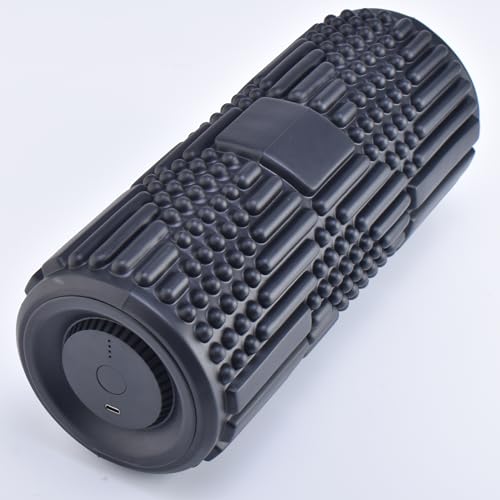
The best vibrating foam rollers in 2026 are the Therabody WaveRoller for the most adjustable vibration and longest battery, the Hyperice Vyper 3 for a firmer, spine-friendly contoured shape, and the TriggerPoint GRID Vibe Plus for the most targeted pressure at a lower price; the Hyperice Vyper Go suits travel, and generic budget rollers are fine if you only roll a few times a month. Choosing between them comes down to diameter, number of speeds, battery and how much weight you put through the roller.
Our top picks


As an Amazon Associate we earn from qualifying purchases at no extra cost to you. Ratings are shown as listed on Amazon.
Specs side by side
Figures below are manufacturer specifications. Battery runtime depends heavily on speed setting; expect the low end of the range on maximum vibration.
| Model | Length × diameter | Weight | Vibration settings | Battery | App/Bluetooth | Typical price range |
|---|---|---|---|---|---|---|
| Therabody WaveRoller | 12 × 5.1 in | 3.3 lb | 5 | Up to 3 hours | Yes | $150–$180 |
| Hyperice Vyper 3 | 13 × 5.4 in | 2.7 lb | 3 | Up to 2 hours | Yes | $150–$200 |
| TriggerPoint GRID Vibe Plus | 12 × about 3.5–3.9 in | 2.5 lb | 4 | Up to 2 hours | No | $80–$130 |
| Hyperice Vyper Go | Shorter, travel-sized | Lighter than Vyper 3 | Multiple | Shorter sessions | Yes | $100–$150 |
| Generic budget vibrating roller | Usually 12–13 × 5–5.5 in | 2.5–4 lb | 3–5 | 1–3 hours claimed | Rarely | $35–$80 |
What vibration adds over a regular foam roller
A standard foam roller works by pressure and movement alone. A vibrating roller adds rapid oscillation, which many people find makes rolling feel less uncomfortable, so they can apply pressure to sore or tight areas for longer. Research on vibration rolling generally points to short-term improvements in range of motion and perceived soreness similar to, or modestly better than, plain rolling, rather than dramatic recovery benefits. In practice the main advantage is comfort and willingness to use it, which matters if a standard roller sits unused in the corner.
What vibration does not do: replace sleep, nutrition and sensible training load, or treat injuries. Pain that is sharp, localized or persistent should be assessed by a physical therapist or doctor rather than rolled harder.
Which roller fits which user
Therabody WaveRoller: most control over intensity
Five vibration levels give the widest gap between a gentle warm-up setting and a strong post-workout setting, and the three-hour battery means weekly rather than every-other-day charging for most people. The high-density EVA foam surface has a wave texture. Independent measurements put its noise roughly in the range of a normal conversation at low speed and noticeably louder at the top setting. It is the heaviest of the group, which matters only if you carry it to the gym.
Hyperice Vyper 3: best for back and larger lifters
The Vyper 3 has a contoured profile with a lower center section, which keeps direct pressure off the spine when rolling the upper back. Its 34-watt motor drives three speeds, and the hard polypropylene shell feels firmer than foam-covered models. Hyperice sets sessions to a 10-minute auto shut-off. At 13 inches it is the longest here, which makes it slightly more stable under a heavy athlete rolling the back or quads.
TriggerPoint GRID Vibe Plus: most targeted pressure
The narrower diameter concentrates pressure on a smaller contact patch, so it digs into calves, hamstrings and the outside of the hip more than a fat roller does. That same narrowness makes it less stable and less comfortable for full back rolling. Four vibration speeds and a charger are included; there is no app.
Hyperice Vyper Go: best for travel
The Go is a shorter, lighter roller designed to fit in a backpack. It is best for calves, forearms and feet on trips; it is too short to roll the upper back comfortably.
Budget unbranded rollers
Many lower-cost vibrating rollers offer similar speed counts on paper. The trade-offs tend to be louder motors, shorter real battery life than claimed, softer foam that compresses over time, and less consistent quality control. They make sense for occasional use.
Decision matrix
| Situation | Pick | Reason |
|---|---|---|
| Rolls daily, wants fine intensity control | WaveRoller | 5 settings, longest battery |
| Mostly upper back, or bodyweight over 220 lb | Vyper 3 | Contoured shape, firm shell, longest body |
| Tight calves and hamstrings, smaller budget | GRID Vibe Plus | Narrow diameter for focused pressure |
| Travels for races or work | Vyper Go | Compact size |
| Rolls once or twice a month | Budget roller or non-vibrating roller | Premium features go unused |
Cost per session
Price only means something relative to use. Assume a roller lasts three years before battery capacity noticeably declines:
- A $170 roller used 4 times a week is about 624 sessions, or roughly 27 cents per session.
- The same roller used twice a month is about 72 sessions, or around $2.36 per session.
- A $60 budget roller used twice a month is about 83 cents per session.
If you will use it most days, the premium models cost very little extra per session. If it will be occasional, the budget option or a plain foam roller is the more rational buy.
Ownership realities
- Battery is the consumable. Lithium-ion cells lose capacity with charge cycles and heat. Charging after use and not storing it fully drained or in a hot car extends life.
- First charge matters. Manufacturers typically ask for a full initial charge of around four to five hours.
- Surfaces wear differently. Textured EVA foam can compress and pick up dirt; hard plastic shells scuff but keep their shape. Wipe either with a damp cloth and mild soap, never submerge.
- Noise. Top settings are loud enough to notice in a shared apartment late at night.
- Flooring. Hard floors amplify vibration noise; a yoga mat underneath dampens it and stops the roller drifting.
Avoid rolling directly over joints, the lower spine, varicose veins or recent injuries, and check with a healthcare professional first if you are pregnant, have a circulatory condition or use an implanted medical device.