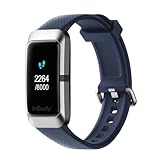
Key takeaways
- Heart rate lags. A heavy set of five lasts 15–25 seconds, and heart rate often peaks after you rack the bar. Optical sensors also struggle when forearm muscles tense hard around a grip, which shifts blood flow under the sensor.
- Motion is ambiguous. A rep counter reads wrist acceleration. Curls, presses and rows move the wrist clearly; squats with the bar on your back or leg presses barely move it at all, so counts for lower-body lifts are often wrong.
- Load is invisible. No tracker knows whether you are lifting 60 or 160 kg unless you type it in. Strain or load scores are estimates built from heart rate and movement patterns.
For weightlifting in 2026, the Garmin Venu 4 is the best all-round fitness tracker because it counts reps and sets automatically and shows them on a screen, while the Whoop 5.0 is the better choice if you care more about recovery and training load than logging each set. Lifters who want something cheap and unobtrusive can look at the Garmin CIRQA or Amazfit Helio Strap, and iPhone owners who want a full smartwatch will be well served by the Apple Watch Series 12 paired with a lifting app.
No wrist device measures strength training as well as it measures running. Understanding why makes it much easier to choose.
Our top picks
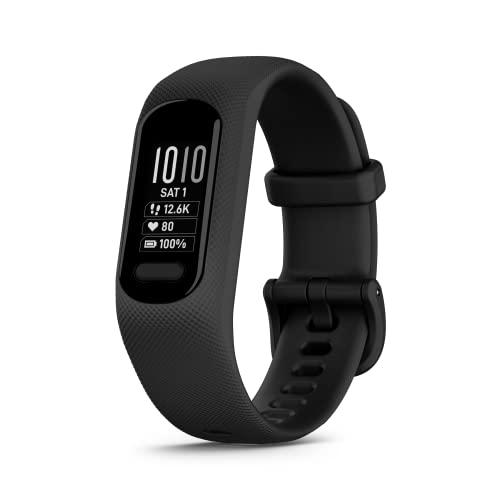


 Google Fitbit Inspire 3
- Operating System: Android
- Additional Features: Heart Rate Monitor
- GPS Geotagging Functionality: GPS Via Smartphone
As an Amazon Associate we earn from qualifying purchases at no extra cost to you. Ratings are shown as listed on Amazon.
What a wrist tracker can and cannot see under a barbell
Trackers estimate effort from two things: heart rate and motion. Both are compromised in the weight room.
- Heart rate lags. A heavy set of five lasts 15–25 seconds, and heart rate often peaks after you rack the bar. Optical sensors also struggle when forearm muscles tense hard around a grip, which shifts blood flow under the sensor.
- Motion is ambiguous. A rep counter reads wrist acceleration. Curls, presses and rows move the wrist clearly; squats with the bar on your back or leg presses barely move it at all, so counts for lower-body lifts are often wrong.
- Load is invisible. No tracker knows whether you are lifting 60 or 160 kg unless you type it in. Strain or load scores are estimates built from heart rate and movement patterns.
So the useful question is not which tracker measures lifting perfectly, but which one gives you the data you will actually use: a log of sets, a recovery signal that tells you when to push or back off, or both.
Lifting-focused comparison
| Model | Screen | Auto rep/set counting | Battery (manufacturer) | Ongoing cost | Typical upfront price |
|---|---|---|---|---|---|
| Garmin Venu 4 (45 mm) | AMOLED | Yes, editable after each set | Up to 12 days | None required | $550–$600 |
| Whoop 5.0 | None | No; estimates muscular load | Up to 14 days | Membership about $199–$359 per year | Included in membership |
| Apple Watch Series 12 | OLED | Via third-party apps | About 24 hours | None required | From about $399 |
| Garmin CIRQA | None | No | Up to 10 days | Optional Connect+ about $7/month | About $200 |
| Amazfit Helio Strap | None | No | Multi-day | None required | Roughly $80–$100 |
| Polar H10 (chest strap add-on) | None | No | Coin cell, about 400 hours | Battery and strap replacement | $80–$100 |
The picks, matched to how you train
Garmin Venu 4: best if you want your sets logged
Garmin’s strength profile detects reps, splits sets when you rest, and lets you assign exercises and weights on the watch or in the app afterward. It also builds a muscle-map view of what you trained over the week, which helps catch imbalances such as heavy pushing with little pulling. Training Readiness and HRV status give a recovery read each morning. The 45 mm case is fairly large, so lifters with small wrists may prefer the 41 mm version, which trades about two days of battery.
Whoop 5.0: best for recovery-driven programming
Whoop’s thin, screenless sensor sits flat and stays out of the way of wrist wraps and the bar in a front-rack position. Its Strength Trainer feature estimates musculoskeletal load from movement data, and the daily recovery score is built from overnight HRV, resting heart rate and sleep. It does not count reps, so pair it with a notebook or lifting app for sets and weights. The membership model means cost keeps accumulating.
Apple Watch Series 12: best smartwatch for gym-goers on iPhone
The September 2026 Series 12 brought a new chip and redesigned heart sensor, but battery stays around one day. The native strength workout records heart rate and calories; dedicated lifting apps add exercise logging and rest timers on the wrist. Good for people who mix classes, cardio and lifting and value notifications and payments.
Garmin CIRQA and Amazfit Helio Strap: best low-profile options
Both are screenless bands without required subscriptions. The CIRQA, launched in July 2026, feeds Garmin’s readiness and sleep metrics and can be worn on the upper arm, keeping it clear of the bar entirely. The Helio Strap is the cheapest way into 24/7 recovery tracking. Neither logs sets.
Decision matrix
| Your priority | Choose | Skip |
|---|---|---|
| Log every set without a phone | Venu 4 | Screenless bands |
| Know when to deload | Whoop 5.0 or CIRQA | Devices without overnight HRV |
| Olympic lifts and kettlebells | Upper-arm band (CIRQA or Whoop) | Large watch cases on the wrist |
| Under $100 budget | Helio Strap | Subscription models |
| Accurate heart rate during sets | Any device plus Polar H10 | Wrist-only optical readings |
| iPhone user, mixed training | Apple Watch Series 12 | Android-only devices |
Two-year cost of ownership
Subscription and one-off pricing look very different over time. Using mid-range figures:
- Venu 4: about $550 once, so roughly $23 per month over 24 months.
- Whoop 5.0 on a mid-tier plan: about $239 per year, or $478 over two years, roughly $20 per month, and it continues indefinitely.
- CIRQA: about $200 once, roughly $8 per month; adding Connect+ for two years brings the total near $370.
- Helio Strap: about $90 once, under $4 per month.
Past the two-year mark the one-off devices keep getting cheaper per month, while the membership model does not.
Wearing a tracker in the weight room
- Move a wrist device two finger-widths above the wrist bone for pressing and pulling, so the case does not dig in under load or bend under wrist wraps.
- For cleans, snatches and front squats, an upper-arm position avoids impact between the bar and the case.
- Check rep counts right after each set; correcting them later from memory rarely happens.
- Chalk and sweat clog sensor windows and degrade fabric bands. Wipe the sensor after sessions and rinse straps weekly; fabric loops are usually the first part to need replacing.
Recovery and strain scores are general wellness estimates, not medical assessments. If you have a heart condition, high blood pressure or an injury, check with a doctor or physical therapist before training to tracker-based targets.