Key takeaways
- ProsourceFit at $12.99: about $2.60 per year, or 7 cents per month.
- TriggerPoint Grid 1.0 at $27.99: about $5.60 per year, or 47 cents per month.
- OPTP 18-inch soft roller at $42.95: about $8.59 per year, or 72 cents per month.
- OPTP 36-inch soft roller at $61.99: about $12.40 per year, or $1.03 per month.
What's inside
Choosing between a hard foam roller and a soft foam roller is less about finding the “best” product and more about deciding how much pressure your home recovery routine can comfortably handle. A firm roller can deliver targeted pressure to tight muscles, while a soft roller is more forgiving for beginners, sensitive areas, warm-ups, and shared household use.
The practical decision also involves more than massage intensity. A roller may live beside a sofa, under a bed, or in a crowded closet. Its length affects stability and storage, its surface affects cleaning, and its price can range from about $13 to more than $60. The right choice for your home in 2026 depends on your pain tolerance, available space, and whether one person or the entire household will use it.
As an Amazon Associate we earn from qualifying purchases at no extra cost to you. Product prices and availability are accurate as of the date shown and are subject to change.


Quick Verdict
Choose a hard foam roller if you want firm, concentrated pressure for post-workout recovery, mobility work, or stubborn muscle tightness. High-density foam generally holds its shape well and is often the better value for regular athletic use. The tradeoff is that it can feel uncomfortable on tender muscles, bony areas, or for people new to foam rolling.
Choose a soft foam roller if comfort, low-impact recovery, and versatility matter most. Soft foam is easier for beginners to control and works well for gentle warm-ups, balance exercises, stretching, and family use. It may compress more over time and usually costs more when made with premium materials or in longer sizes.
For many buyers, a medium or multi-density roller is the compromise. It provides firmer pressure than a basic soft roller without feeling as aggressive as a solid, high-density model.
Side by Side
| Factor | Hard Foam Roller | Soft Foam Roller |
|---|---|---|
| Comfort | Firm and intense; may feel sharp on tender areas | Cushioned and forgiving; better for sensitive users |
| Durability | Typically resists permanent compression and surface dents | Can develop wear or compression with heavy, frequent use |
| Price range | About $13 to $28 for common 12- to 13-inch models | About $43 to $62 for the referenced 18- to 36-inch models |
| Maintenance | Usually simple: wipe the closed surface after use | Also easy to wipe, but softer finishes may show dents or marks |
| Space needed | Short models may be around 12 to 13 inches long and 5 to 6 inches wide | Common long models are 18 to 36 inches long and 6 inches wide |
| Look | Often black, textured, or visibly athletic | Often smoother and more furniture-friendly in blue or neutral colors |
| Resale | May be easier to resell if the surface remains firm and clean | Condition matters more because compression is easier to see |
| Best for | Athletes, experienced users, deep pressure, and compact storage | Beginners, gentle recovery, stretching, balance, and shared use |
| Stability | Short rollers are maneuverable; longer models offer more support | Longer soft rollers provide a broad, comfortable base |
Where Hard Foam Roller Wins
A hard foam roller is the better tool when you want noticeable pressure without repeatedly replacing the roller. High-density foam tends to retain its cylindrical shape, even when used for bodyweight exercises, leg work, and frequent post-workout sessions. It is also less likely to feel unstable when you shift your weight across the surface.
Firm rollers are especially useful for large muscle groups such as the quadriceps, hamstrings, glutes, and upper back. Experienced users can adjust the pressure by changing body position, but a hard roller gives more feedback with less movement. That can make a short five- to 10-minute routine feel effective.
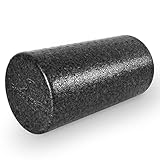
Compact hard rollers are another advantage in smaller homes. The 12-inch ProsourceFit High Density Foam Rollers, listed at $12.99, are easier to slide into a closet, under a bed, or beside a workout mat than a full-length roller. A 13-inch TriggerPoint Grid 1.0, priced at $27.99, adds a multi-density design and textured surface for users who want a more varied feel while keeping a relatively compact footprint.
The main caution is pressure control. Avoid rolling directly over joints, the front of the neck, the lower back, or areas with acute pain. A hard roller is not automatically better because it feels more intense; excessive pressure can leave muscles more irritated. Start with a few slow passes and use partial body weight until you understand how your body responds.
Where Soft Foam Roller Wins
Soft foam rollers are more approachable for people who find firm rollers painful or intimidating. The added cushioning spreads pressure over a wider area, making it easier to relax instead of bracing against the roller. That matters during gentle mobility work, stretching, and recovery after a long day at a desk.
Soft foam also makes sense when several people will use the same roller. A beginner, older adult, or casual exerciser may prefer the gentler surface, while a hard roller can be too aggressive. Soft models can support balance drills and positioning exercises as well, although users should move slowly and keep the roller on a stable, non-slip floor.
Longer rollers improve support. The OPTP PRO-Roller Soft Density Foam Roller in the 18-by-6-inch size costs $42.95 and provides enough length for many back, leg, and stretching positions without taking up the full space of a 36-inch model. The 36-by-6-inch version costs $61.99 and offers a broader base for full-body positioning, but it needs a dedicated storage spot.
Soft foam is not ideal for everyone. Heavy daily use can eventually leave impressions, and users who want highly concentrated trigger-point pressure may find it too gentle. It can also be harder to keep a long roller tucked away in a small apartment.
Cost Over 5 Years
Purchase price tells only part of the story. Assuming one roller lasts the full five years, the referenced options work out to approximately:
- ProsourceFit at $12.99: about $2.60 per year, or 7 cents per month.
- TriggerPoint Grid 1.0 at $27.99: about $5.60 per year, or 47 cents per month.
- OPTP 18-inch soft roller at $42.95: about $8.59 per year, or 72 cents per month.
- OPTP 36-inch soft roller at $61.99: about $12.40 per year, or $1.03 per month.
These are ownership estimates, not guarantees. A hard roller may offer the lowest cost if it remains firm through frequent use. A soft roller can still be the better value if its comfort means you actually use it several times each week. Replacing an inexpensive roller every two or three years may also cost more than buying a durable model once, but there is no universal replacement schedule.
To extend the life of either type, wipe the surface with a damp cloth and mild soap when needed, let it dry completely, and store it away from direct heat. Do not leave it compressed under heavy furniture or in a hot car.
Which One for Your Home
Small apartment
Choose a short hard roller, especially if storage is limited and you mainly want leg, hip, and back work. A 12- or 13-inch model can fit in a narrow closet or under a bed. If you need more back support, select a soft 18-inch roller only when you have a clear storage plan.
Family with kids or pets
A soft roller is usually the more approachable shared option, particularly for adults with different comfort levels. A 36-inch model offers stability for stretching, but its length can become a tripping or clutter issue. Store it vertically or in a closed cabinet, and inspect the surface regularly for chewing, tears, or deep dents.
Rental
Either type can work in a rental because foam rollers do not require installation or electrical power. A compact hard roller is easiest to transport between homes and less likely to show cosmetic compression. Use it on a mat to reduce sliding and avoid pressing it against painted walls or furniture.
Long-term home
If you have a dedicated workout room, choose based on technique rather than storage. A hard roller is a strong primary choice for experienced users who want firm recovery work. A long soft roller may be preferable for stretching, Pilates-style positioning, balance exercises, or a household with multiple users. Some homes benefit from keeping one compact hard roller and one longer soft roller for different routines.
FAQ
Is a hard foam roller better for tight muscles?
It can provide more concentrated pressure, but “better” depends on your tolerance and the cause of tightness. Begin gently and stop if you feel sharp pain, numbness, tingling, or unusual weakness. Foam rolling should feel manageable, not like an attempt to overpower an injury.
Can beginners use a hard foam roller?
Yes, but beginners should start with partial body weight, slow movements, and larger muscle groups. A towel or exercise mat can add a small amount of cushioning. Avoid rolling directly over joints and do not hold intense pressure on one spot for an extended period.
Does a soft foam roller wear out faster?
It may compress sooner under heavy daily use, particularly if stored under weight. Quality, foam density, body weight, and frequency all matter. Store the roller in an open position and inspect it for permanent flat spots before each use.
What length foam roller should I buy?
A 12- to 13-inch roller is compact and useful for targeted work. An 18-inch roller adds support while remaining reasonably easy to store. A 36-inch roller is more stable for full-body positioning and stretching, but it takes considerably more room. Choose the longest model your storage area can accommodate without becoming a nuisance.