Key takeaways
- How to Choose Therapy Exercise Puller: What Actually Matters
- How to Choose Balance Therapy Boards: What Actually Matters
- How to Choose Pemf Therapy Mats: What Actually Matters
- Best Cervical and Lumbar Traction Therapy Devices in 2026: Compared and Ranked
- How to Choose Portable Saunas: What Actually Matters
What's inside
Navigating chronic neck stiffness and lower back discomfort can feel like a full-time job, which is why at-home spinal decompression has become a cornerstone of modern self-care routines. Whether you are recovering from a long day at a desk or managing ongoing spinal compression, finding the right equipment is essential. As we look at the evolving market landscape in 2026, home users are flooded with options ranging from simple over-the-door stretching straps to sophisticated pneumatic decompression tables.
However, not all traction systems are built to deliver the clinical-grade decompression your spine requires. Choosing the correct apparatus requires looking past flashy marketing claims and examining structural build, force distribution, and ergonomic alignment. This guide breaks down the core elements you need to evaluate so you can select a tool that provides genuine relief without compromising your safety.
As an Amazon Associate we earn from qualifying purchases at no extra cost to you. Product prices and availability are accurate as of the date shown and are subject to change.
Identify Your Primary Treatment Zone
Before browsing specifications, determine whether your pain is primarily cervical, lumbar, or both. While combination units promise full-spine coverage, they often require compromises in ergonomic fit. Dedicated cervical units focus heavily on occipital cradles and jaw support, whereas lumbar setups rely on pelvic harnesses and counter-traction belts. If your symptoms are localized, investing in a specialized single-zone tool often yields better results than a mediocre hybrid device.
Manual Pneumatic vs. Motorized Systems
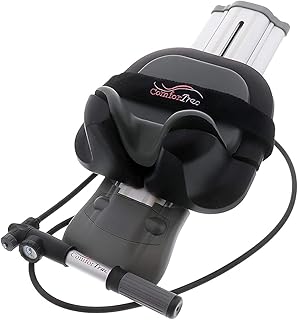
The method of generating traction dictates both the price and user experience. Manual pneumatic devices use hand-operated bulbs or floor pumps to inflate air chambers, allowing you to control the exact pressure visually via a pressure gauge. These are highly portable and cost-effective. Motorized systems, conversely, use electric console panels to pull and release tension automatically according to pre-programmed cycles. If you lack upper body strength to pump a manual device or struggle to maintain a consistent rhythm, motorized options are worth the added bulk and cost.
Evaluating Padding, Fabric, and Hygiene
Because traction devices require direct contact with sensitive areas like your neck, ribs, and hips, surface materials matter immensely. Look for high-density foam cores wrapped in breathable, antimicrobial, and wipeable synthetic leather or mesh. Avoid cheap vinyl that cracks under pressure or traps sweat during extended sessions. Removable, machine-washable covers are a massive bonus for long-term hygiene, especially if multiple household members share the equipment.
Frame Rigidity and Weight Capacity
For lumbar inversion tables and floor-based decompression benches, structural integrity is a non-negotiable safety parameter. Heavy-gauge steel frames prevent twisting or flexing under load, ensuring smooth elongation along the spine. Always check the manufacturer’s certified weight limits and height ranges before purchasing. A device that wobbles or bends during a stretch will undermine muscle relaxation, forcing your body to tense up defensively instead of decompressing.
Safety Release Mechanisms and Pressure Caps
Accidental over-inflation or sudden cramping can turn a relaxing therapy session into a painful ordeal. High-quality pneumatic devices feature built-in pressure release valves that automatically vent excess air if you pump past safe thresholds. For mechanical lumbar stretchers, quick-release pull pins or emergency stop buttons allow you to instantly abort the stretch if you experience acute discomfort. Never purchase a traction device that lacks a fast, intuitive way to drop the tension immediately.
Storage Footprint and Portability
Bulky decompression benches offer robust performance but can quickly overwhelm small living spaces if they lack folding capabilities. Consider how often you intend to pack the device away. Over-the-door neck units and inflatable lumbar belts pack down flat into a suitcase, making them ideal for frequent travelers. Heavy-duty frames require a dedicated corner of a room, so measure your floor space carefully before committing to a permanent fixture.
Related Guides
To explore more specialized recovery tools, read our detailed roundups featuring the best top-tier cervical and lumbar traction devices for full-spine care. If your discomfort radiates down your lower extremities, check out our expert picks for sciatica stretching devices designed to relieve nerve pressure. For upper body posture support, review our curated list of cervical neck traction devices that target stubborn cervical strain.
FAQ
How long should a typical traction session last?
Most experts recommend starting with sessions lasting between five and ten minutes to allow your spine to adapt. You can gradually increase your duration up to fifteen or twenty minutes, but you should never exceed manufacturer guidelines or sleep while using a traction device.
Can traction therapy completely cure herniated discs?
While traction therapy does not act as a permanent cure on its own, it creates negative intradiscal pressure that helps retract herniated material and relieve nerve root compression. It works best when combined with physical therapy, core strengthening, and lifestyle adjustments.
Is it normal to feel mild soreness after using a traction device?
Mild muscle tenderness is common during the first few days as your connective tissues adjust to gentle elongation. However, sharp nerve pain, numbness, or worsening symptoms mean the tension is too high or the device is poorly fitted, requiring you to stop immediately.
How often should I perform traction therapy?
For best results, users generally perform one to two short sessions daily, depending on individual tolerance and physician recommendations. Consistency matters more than intensity, so frequent mild stretches are safer and more effective than infrequent aggressive pulls.