Key takeaways
- Best Apple Watch Ultra for Extreme Outdoor Adventures in 2026: Compared and Ranked
- How to Choose Portable Saunas: What Actually Matters
- How to Choose Sole Treadmills: What Actually Matters
- How to Choose Mini Massage Guns: What Actually Matters
- How to Choose Treadmills for Garages: What Actually Matters
Shopping for a rugged smartwatch requires cutting through heavy marketing jargon to find features that genuinely support survival, navigation, and durability in harsh environments. Whether you are planning multi-day backpacking treks, alpine ascents, or deep backcountry trail runs, the device on your wrist needs to be more than just a basic fitness tracker. It must function as a reliable instrument that can withstand extreme elements while keeping you oriented and connected when things go sideways in the wilderness.
Many buyers make the mistake of prioritizing minor software features over foundational hardware capabilities. When your safety depends on gear, metrics like screen brightness under direct midday glare, multi-band location tracking precision, and real-world battery endurance under heavy sensor loads become paramount. This guide cuts straight to the core, detailing the exact specifications and design elements you should evaluate before investing in an adventure-ready smartwatch.
As an Amazon Associate we earn from qualifying purchases at no extra cost to you.
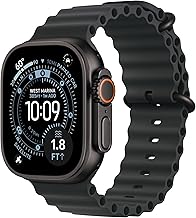
Prioritizing Dual-Frequency GPS and Mapping Accuracy
When navigating dense tree canopies, deep canyons, or towering mountain ranges, standard single-frequency location tracking often fails due to signal bounce and interference. For extreme outdoor pursuits, dual-frequency GPS support is non-negotiable. This technology utilizes multiple satellite frequencies to deliver pinpoint positioning accuracy even in geographically challenging terrain where traditional tracking systems lose their lock.
Beyond raw tracking accuracy, consider how you interact with maps in the field. Look for devices that support detailed offline topography, allowing you to view trails, elevation contours, and points of interest without relying on a cellular connection. Being able to glance down at your wrist to confirm your exact coordinates can prevent costly navigation errors when visibility drops or trails become obscured by weather.
Evaluating Real-World Battery Performance and Power Modes
Battery anxiety is a very real hazard during extended backcountry expeditions. Manufacturer battery ratings are typically tested under ideal, controlled conditions, which rarely reflect the demands of continuous outdoor tracking with heart rate monitoring, full brightness, and active route guidance enabled. You need to assess how a watch handles power management during multi-day excursions where charging outlets do not exist.
Look for dedicated low-power or workout-saving modes that strategically reduce GPS ping frequency and heart rate sampling rates to stretch battery life over several days without sacrificing essential safety data. A proper adventure watch should easily survive a grueling weekend trek on a single charge, or feature fast-charging capabilities that can restore a significant percentage of battery power during a brief midday camp stop using a portable power bank.
Display Legibility in Extreme Lighting Conditions
Outdoor environments expose your gear to the harshest lighting imaginable, from blinding alpine snow glare to dark, dense forest floors. A screen that looks vibrant indoors can quickly become unreadable when coated in sweat, mud, or direct sunlight. Peak outdoor brightness measured in nits is a critical metric; higher brightness ratings ensure that split times, navigational arrows, and vital health metrics remain instantly legible with a quick flick of the wrist.
Additionally, look for specialized night modes or automated ambient light adjustments that shift the interface to high-contrast red tones. This preserves your natural night vision during pre-dawn alpine starts or late-night tent adjustments, preventing the blinding flash of a bright white display in pitch-black conditions.
Material Durability, Sapphire Crystals, and Thermal Limits
Extreme adventures are inherently rough on equipment. Scraping against jagged rock faces, taking accidental impacts during boulder scrambles, and plunging into icy whitewater rivers will quickly destroy standard consumer electronics. The casing material and crystal face must be engineered to absorb punishment without catastrophic failure.
Aerospace-grade titanium housings provide an optimal balance of lightweight comfort and extreme structural rigidity, resisting corrosion from sweat and saltwater alike. Coupled with a flat sapphire front crystal that sits flush beneath the bezel to prevent edge impacts, this construction protects the internal display from shattering against hard surfaces. Furthermore, verify the device’s operational temperature range; freezing winter mountaineering and scorching desert heatwaves both test the absolute limits of lithium-ion battery chemistry and internal circuitry.
Band Compatibility, Security, and Physical Ergonomics
Losing a piece of critical navigation gear down a crevasse or into a rushing river because a band snapped is an entirely avoidable disaster. The attachment mechanism and band design must lock securely into place, resisting lateral pull forces caused by heavy backpacks, trekking poles, or aggressive arm swings during technical climbs.
Material choice matters immensely for comfort and skin health over prolonged wear. Breathable, quick-drying bands prevent moisture buildup and chafing during sweaty endurance efforts, while adjustable closures allow you to easily loosen or tighten the fit over bulky layers of cold-weather outerwear or wetsuits. Ergonomically, the physical buttons and digital crowns should be large enough to operate smoothly even while wearing heavy winter gloves.
Common Buying Mistakes to Avoid
One of the most frequent mistakes outdoor enthusiasts make is paying a massive premium for lifestyle features they will never use in the wild, such as cellular voice plans or extensive third-party app stores, while overlooking essential durability ratings. Do not assume that a device marketed as a sport model is automatically built for extreme environments; water resistance ratings, dust sealing certifications, and drop-test standards vary wildly across the market.
Another pitfall is ignoring software ecosystem compatibility. Ensure that your chosen hardware seamlessly integrates with your preferred mapping software, route-planning platforms, and training analysis tools. A brilliant piece of hardware becomes infinitely more frustrating if exporting your route files requires a cumbersome, convoluted workaround.
Related Guides
To explore alternative options and compare how top-tier rugged wearables stack up against one another, check out our comprehensive Best Apple Watch Ultra for Extreme Outdoor Adventures in 2026: Compared and Ranked roundup for detailed performance breakdowns.
FAQ
Can I use an adventure smartwatch for deep-water scuba diving?
While many rugged outdoor wearables feature high water resistance ratings and dedicated dive computer functionalities, you must verify specific depth certifications and recreational dive limits. Standard water resistance is not always engineered to handle high-pressure underwater environments or prolonged saltwater immersion without specialized seals.
How does cold weather affect battery life during winter expeditions?
Extreme sub-freezing temperatures temporarily degrade the chemical reactions inside lithium-ion batteries, leading to rapid and unexpected power drops. Keeping the watch worn closely against your skin beneath your clothing layers or thermal base layers helps maintain a stable operating temperature and preserves battery life.
Is cellular connectivity necessary for backcountry safety?
Cellular connectivity is a convenient bonus for streaming music or receiving emergency notifications near civilization, but it is entirely useless in deep backcountry dead zones. Relying on pre-downloaded offline maps and satellite communication features is far safer and more reliable than counting on local cell towers.
What is the benefit of a flat sapphire crystal display?
A flat sapphire crystal sits completely flush with or slightly below the surrounding protective case, preventing direct side impacts from shattering the glass against rocks or equipment. Sapphire is also second only to diamond in hardness, making it exceptionally resistant to unsightly scratches from abrasive dirt and granite.