Key takeaways
- The listing does not name compatible watch models or provide dimensions.
- The voltage, capacity, and connector details are missing or contradictory.
- The seller claims a universal fit for every GPS smartwatch.
- The battery arrives swollen, creased, punctured, leaking, or hot.
- The connector must be cut, rewired, or forced into place.
- The advertised capacity is dramatically higher than the original without matching dimensions.
- There is no return policy for a part that arrives defective or incompatible.
- The instructions recommend puncturing, folding sharply, or charging the battery outside the watch.
What's inside
Buying a GPS smartwatch battery is less about choosing the largest number on the package and more about matching the battery to the watch, its charging system, and the way you use GPS. A common mistake is assuming that any battery with the same voltage will work. Another is choosing capacity alone, without checking physical dimensions, connector placement, or battery-management compatibility. A battery can have the right voltage and still fail to fit, charge, or communicate safely with the watch.
Shoppers also overlook installation. Many GPS watches are sealed with adhesive and may lose water resistance after opening. Before buying, identify the exact watch model, compare the original battery’s markings, and decide whether the repair is worth the cost of the part and labor. This guide explains what to look for in GPS smartwatch battery replacements in 2026, with practical numbers for evaluating size, capacity, price, safety, and installation.
As an Amazon Associate we earn from qualifying purchases at no extra cost to you. Product prices and availability are accurate as of the date shown and are subject to change.


Decide These 3 Things First
- Confirm the exact watch model. Look on the case, original packaging, companion app, or watch settings. “Garmin Forerunner” or “Venu” is not specific enough; different generations can use different batteries, connectors, and mounting shapes.
- Choose capacity based on the original battery. Most GPS smartwatch replacement batteries fall roughly between 40mAh and 400mAh. A higher-capacity cell is not automatically an upgrade if it is thicker or incompatible with the charging circuit.
- Decide who will install it. A small 40mAh or 120mAh battery may cost less than $15, but professional installation can cost $40 to $100 or more. If the watch is water-resistant, DIY opening may compromise the seal.
Size and Fit
Physical fit is the first decisive factor. Compare the replacement’s length, width, and thickness with the original battery, not just the advertised capacity. A typical small smartwatch cell may measure approximately 20 to 35mm long, 15 to 25mm wide, and 3 to 5mm thick. Larger fitness-watch batteries can measure around 35 to 45mm long, 25 to 35mm wide, and 4 to 6mm thick.
Even a 1mm difference in thickness can prevent the rear cover from closing evenly. A battery that is too large may press against the display, vibration motor, or motherboard. Measure the old cell with a ruler or caliper after disconnecting it, and photograph the connector orientation before removal. Also check whether the connector cable exits from the left, right, top, or bottom. A cable that is technically long enough may not bend safely if it exits in the wrong direction.
Capacity provides a useful fit clue. A 40mAh cell is common in compact devices, while 120mAh, 180mAh, and 300mAh examples are more typical of larger GPS watches. These numbers are not interchangeable, however. A 300mAh battery designed for a larger watch will generally not fit a compact model simply because both use 3.7V lithium-polymer chemistry.
Battery Material and Chemistry
Look for a rechargeable lithium-polymer, or LiPo, battery with a nominal voltage of approximately 3.7V and a full-charge voltage near 4.2V. That is a common format for GPS smartwatches. The replacement should use the same chemistry and voltage range specified for the watch. Do not substitute a coin cell, lithium-ion pack with a different charging profile, or an unprotected loose cell.
Packaging quality matters. A suitable pouch cell should have smooth, intact foil with no swelling, creases, punctures, or exposed edges. Avoid batteries with damaged insulation, oily residue, bent tabs, or an unexplained “universal” label. A protection circuit may be built into the battery pack or the watch itself, so check the listing and the original battery before assuming one is included.
Capacity is measured in milliamp-hours, or mAh. In simple terms, a 180mAh cell stores about 50% more charge than a 120mAh cell, but actual runtime also depends on GPS use, screen brightness, heart-rate sensors, notifications, temperature, and battery age. Treat advertised capacity as a specification to verify, not a guaranteed runtime figure.
Construction and Connector
The connector is just as important as the cell. Common smartwatch plugs have two contacts, but the spacing, housing shape, wire order, and cable length can vary. A JST PH 2.0mm two-pin connector, for example, is not automatically compatible with every two-pin smartwatch socket. Confirm the connector family, pitch, polarity, and orientation.
Never rely on wire colors alone. Red is often positive and black is often negative, but manufacturers can use different conventions. Compare the original plug and replacement photos, and do not force a connector that does not slide in smoothly. Reversing polarity can damage the watch.
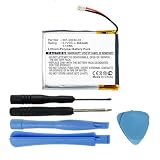
Look for a battery with a firmly attached flex cable, insulated solder joints, and a protective tab or circuit board where appropriate. A cable that is too short can pull on the connector when the case closes. A cable that is excessively long can fold under the cell and create pressure points. Replacement packs should also include, or be compatible with, the adhesive needed to keep the battery from moving inside the case.
Comfort and Performance
A replacement battery should not noticeably change how the watch sits on your wrist. Weight differences are usually modest: a small LiPo cell may weigh about 2 to 5 grams, while a larger 300mAh pack may weigh roughly 6 to 10 grams. The more important issue is thickness. A battery that bows the rear cover can create a pressure point against your wrist and may interfere with the optical heart-rate sensor.
For performance, compare the original capacity with the replacement’s rated capacity. A battery that is 10% to 20% below the original may produce shorter operating time, especially during GPS tracking. A battery rated 10% to 20% higher can be acceptable only when its dimensions, connector, charging requirements, and protection arrangement are confirmed compatible.
Do not expect a replacement battery to restore a brand-new watch’s full runtime automatically. GPS watches lose efficiency through aging components, software activity, and sensor use. After installation, charge the watch fully, use it normally for several cycles, and monitor heat, swelling, sudden percentage drops, or shutdowns. Unusual heat during charging is a reason to disconnect the charger and stop using the battery.
Price Tiers
Price can help identify what is included, but it does not prove quality. Basic replacement cells commonly cost about $6 to $15. For example, a 40mAh LiPo battery with a JST PH2.0mm connector may be listed near $6.99, while a 120mAh replacement compatible with a Garmin Venu Sq Music may be around $13.75.
Midrange options generally cost $12 to $25 and may offer better model-specific labeling, clearer connector information, adhesive, or a limited warranty. A 180mAh replacement for certain Garmin Forerunner models may sell for approximately $12.74. Larger cells, such as a 300mAh replacement for Garmin Fenix 3 or Fenix 3 HR, may be priced around $15.95.
Premium pricing usually means $25 to $60 for the part, particularly when availability is limited or the battery comes from a specialist repair supplier. This does not necessarily mean higher capacity. Pay for accurate compatibility, documented specifications, and dependable support rather than a larger mAh number alone.
Warranty and Seller Support
Look for at least a 30-day return period, with 90 days to 12 months preferable for a replacement battery. The warranty should cover defective cells, incorrect capacity, dead-on-arrival products, and connector problems. It may exclude damage caused by puncture, incorrect installation, water exposure, or use with the wrong charger.
A useful seller should identify compatible watch models, battery dimensions, voltage, capacity, connector type, and whether tools or adhesive are included. Be cautious when the listing provides only a product photo and a phrase such as “fits most GPS watches.” Before purchasing, ask whether the battery is new, how it was stored, and whether the connector matches your exact model.
Delivery and Assembly
Lithium batteries are often shipped under special transport rules, so delivery may take several days longer than ordinary small parts. Check that the package includes protective insulation and does not arrive crushed or overheated. Do not install a battery that arrives swollen, torn, wet, or unusually hot.
Assembly difficulty varies widely. Some watches use screws and a replaceable gasket; others use strong adhesive, delicate flex cables, and a sealed rear cover. If you lack a precision screwdriver, plastic opening tools, controlled heat, and replacement adhesive, professional service is safer. A repair shop may charge $40 to $100 or more, but that cost can be worthwhile for a watch used in rain, swimming, or outdoor navigation.
After opening the watch, water resistance should be treated as uncertain unless the gasket is replaced and the seal is properly tested. Never pierce or bend the pouch cell, and do not use metal tools directly against it. Dispose of the old battery through a local battery-recycling program.
Spec Checklist
| Spec | Budget | Mid | Premium |
|---|---|---|---|
| Typical price | $6–$15 | $12–$25 | $25–$60 |
| Capacity range | 40–120mAh | 120–240mAh | 200–400mAh |
| Nominal voltage | 3.7V LiPo | 3.7V LiPo | 3.7V LiPo with documented protection arrangement |
| Typical thickness | 3–5mm | 3–6mm | 4–6mm, model-specific |
| Connector | Two-pin, exact match required | Model-specific plug and cable | Verified connector, polarity, and cable length |
| Warranty goal | 30 days | 90 days–6 months | 6–12 months |
Red Flags
- The listing does not name compatible watch models or provide dimensions.
- The voltage, capacity, and connector details are missing or contradictory.
- The seller claims a universal fit for every GPS smartwatch.
- The battery arrives swollen, creased, punctured, leaking, or hot.
- The connector must be cut, rewired, or forced into place.
- The advertised capacity is dramatically higher than the original without matching dimensions.
- There is no return policy for a part that arrives defective or incompatible.
- The instructions recommend puncturing, folding sharply, or charging the battery outside the watch.
FAQ
Can I use any 3.7V battery in my GPS smartwatch?
No. Voltage is only one requirement. The battery must also match the chemistry, dimensions, connector, polarity, charging arrangement, and protection system. A 3.7V battery with the wrong plug or cable order can damage the watch.
Is a higher-mAh battery always better?
No. Higher capacity may provide more stored energy, but only if the battery physically fits and the watch can charge it correctly. Capacity increases of about 10% to 20% may be reasonable when all other specifications match; a much larger increase deserves careful verification.
How long should a replacement GPS smartwatch battery last?
That depends on charge cycles, temperature, GPS use, and storage. A well-matched replacement should restore normal operation, but it should not be judged by a single advertised runtime claim. Monitor charging behavior and battery percentage over several ordinary use cycles.
Should I replace the battery myself?
DIY replacement is practical for experienced users with precision tools and the correct adhesive. Use a repair shop when the watch is sealed, valuable, water-resistant, or difficult to open. After any repair, assume water resistance is reduced unless the seal has been professionally replaced and tested.