Key takeaways
- A very high stall-force claim with no test conditions, amplitude, or speed information.
- Unusually low pricing paired with a long list of premium features and no clear warranty provider.
- A heavy gun with no angled grip, pressure control, or explanation of how it is meant to be held.
- Attachments that are difficult to remove, have rough seams, or cannot be cleaned.
- Battery claims such as “all-day power” without an estimated operating time in hours.
- Reviews mentioning overheating, speed drops, burning odors, or a shaft that wobbles.
- No published return address, missing charger information, or a warranty that excludes nearly every failure.
What's inside
Choosing a massage gun by amplitude alone is a common mistake. Shoppers also compare maximum speed, count of attachments, and flashy “deep tissue” language without checking whether the motor can maintain force against the body. That is where how to choose a massage gun stall force becomes important. Stall force indicates how much pressure you can apply before the motor slows dramatically or stops.
A gun with 60 pounds of advertised stall force is not automatically better than one rated at 40 pounds. The number may be measured at a particular speed, with a fully charged battery, or under a manufacturer-specific testing method. Some brands do not publish a test method at all. Treat stall force as one useful specification—not a universal laboratory score—and consider the gun’s size, weight, grip, noise, battery, warranty, and return policy at the same time.
As an Amazon Associate we earn from qualifying purchases at no extra cost to you. Product prices and availability are accurate as of the date shown and are subject to change.

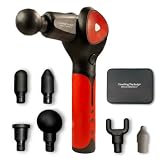

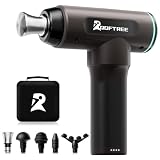
For most home users in 2026, a reliable midrange model with approximately 35 to 55 pounds of usable pressure, 10 to 14 millimeters of amplitude, and a weight below 2.5 pounds offers a practical balance. Athletes and larger users may prefer more force, while people seeking occasional neck, shoulder, or calf relief often benefit more from a lighter, quieter device.
Decide These 3 Things First
- Who will use it? A single user can choose the grip, weight, and attachments around one body and routine. A household needs a versatile handle, several speed levels, and a battery that can survive frequent charging.
- Where will you use it? A home-only gun can be heavier and louder. For a gym bag, prioritize a weight of roughly 1.5 to 2.2 pounds, a protective case, and USB-C or compact charging.
- How much pressure do you actually need? Light recovery work does not require extreme force. If you want to work large glute, hamstring, or quadriceps muscles, look for at least 35 pounds of stated stall force and an amplitude of 10 millimeters or more.
Size and Weight
Massage guns range from compact devices under 1.5 pounds to large professional-style units around 3 pounds. Size affects reach, storage, and fatigue. A compact gun measuring approximately 6 to 8 inches long is easier to pack and control around the shoulders. Full-size models may measure 9 to 12 inches and provide a larger motor, but they can be awkward for self-treatment.
Weight matters more than many shoppers expect. Holding a 2.8-pound gun overhead for five minutes is noticeably harder than using a 1.6-pound model. For self-use, aim for 1.5 to 2.3 pounds. If another person will provide treatment, a heavier unit may be acceptable. Also check the handle diameter. A grip of about 1.5 to 2 inches is comfortable for many adults; very thick handles can strain smaller hands.
Material and Attachment Quality
The housing should feel rigid, with no creaking or sharp seams when you squeeze the handle. Most good massage guns use a hard plastic or composite shell around the motor. Metal accents can improve appearance, but they do not automatically indicate a stronger motor or better durability.
Attachment heads deserve closer attention. Closed-cell foam is hygienic and easy to wipe clean. Soft silicone heads are useful around sensitive areas and can feel less harsh on bare skin. Hard plastic heads may transmit more concentrated pressure but are less forgiving. A metal head can be durable and easy to sanitize, yet it may feel too intense for bony areas.
Look for at least four useful attachments: a broad ball for large muscles, a flat head for general use, a fork or two-prong head for either side of the spine, and a softer head for tender areas. More than six heads is not necessarily better if several are poorly shaped or difficult to clean.
Construction and Motor Design
Construction determines whether the gun feels controlled at higher pressure. Check for a stable attachment shaft, buttons that do not rattle, and a battery compartment that closes firmly. The head should slide into place smoothly and remain secure during use. A loose shaft can make the gun feel harsh even when the published force is modest.
For motor performance, compare three numbers together: stall force, amplitude, and speed range. Stall force describes resistance to stopping; amplitude describes how far the head travels into the muscle; speed describes how many percussions occur per minute. A useful home range is approximately 1,200 to 3,200 percussions per minute, with at least three or four speed settings. Amplitude between 10 and 14 millimeters suits general muscle recovery.
Do not assume that a 16-millimeter stroke is preferable for every user. Greater travel can feel aggressive and may be uncomfortable on smaller muscles. Likewise, a high stall-force claim is less useful if the gun overheats, loses speed quickly, or becomes difficult to hold.
Comfort and Real-World Performance
The best massage gun is one you can use without fighting it. An angled or multi-grip handle makes it easier to reach the back of the leg and upper shoulder. Some models include a pressure indicator that changes color as you press. This can be useful, but it should not replace your own comfort judgment.
Noise is another performance factor. A manufacturer may advertise a low decibel figure without explaining the speed or distance used for measurement. Instead, look for a brushless motor and reviews that describe conversation-level operation. A practical target is a device quiet enough to use while watching television, although powerful motors often produce more sound at maximum speed.
Battery life varies widely. A removable or rechargeable lithium-ion battery should provide at least 2 to 3 hours of claimed use for occasional home sessions. If the battery is built in, check whether the charger is included and whether the product can operate while charging. Avoid using maximum pressure on small, tender areas; start at the lowest speed and move slowly over large muscles for 30 to 90 seconds at a time.
Price Tiers: What You Get
Budget: $50 to $100. These guns often include four to six heads, three to five speeds, and a basic battery. Expect lighter construction, more audible motors, and less detailed information about stall force. They can be suitable for occasional use if the retailer offers a straightforward return window.
Midrange: $100 to $180. This is the strongest value category for many buyers. You are more likely to find a better grip, a brushless motor, a carrying case, 35 to 55 pounds of stated stall force, and a 10- to 14-millimeter amplitude. The $119 Coaching The Body Muscle Liberator 3 is an example of the kind of price point shoppers may encounter, while other deep-tissue models near $170 sit at the upper end of this tier.
Premium: $180 to $300 or more. Premium pricing may buy a more refined handle, quieter operation, replaceable batteries, app guidance, or stronger support. The $199.99 Deep Tissue Massage Gun for Athlete with Metal Head is a useful price reference for this category. Do not pay extra solely for a high force number; confirm that the warranty and ergonomics justify the premium.
Warranty and Support
A massage gun contains a motor, battery, control board, and moving shaft, so warranty coverage matters. Look for at least a one-year limited warranty, with two years preferable in the midrange and premium categories. Check whether the battery is covered for the full term or excluded after a shorter period.
Read the exclusions before buying. Some warranties cover manufacturing defects but not normal battery capacity loss, drops, moisture, or damage caused by using unauthorized chargers. A U.S. service address, visible customer-support contact, and a published return period of at least 30 days are meaningful advantages.
Delivery, Returns, and Assembly
Massage guns require virtually no assembly, but delivery details still affect the purchase. The box should include the gun, all listed attachments, charger, instructions, and—if promised—a case. Confirm that the charger uses the correct voltage and that replacement attachments or batteries can be purchased.
Before ordering, check shipping cost, estimated delivery time, and whether the return requires you to pay postage. A low-priced unit can become less attractive if return shipping costs $20 to $40. Inspect the product immediately, charge it according to the instructions, and test every speed and attachment during the retailer’s return window.
Spec Checklist
| Spec | Budget | Mid | Premium |
|---|---|---|---|
| Typical price | $50–$100 | $100–$180 | $180–$300+ |
| Weight | 1.5–2.8 lb | 1.5–2.5 lb | 1.3–2.4 lb |
| Stated stall force | 20–40 lb | 35–55 lb | 40–70 lb |
| Amplitude | 8–12 mm | 10–14 mm | 12–16 mm |
| Speed settings | 3–5 | 4–8 | 5–12 or variable |
| Battery claim | 1.5–3 hours | 2–4 hours | 3–6 hours or replaceable |
| Warranty target | At least 1 year | 1–2 years | 2 years or more |
These ranges are buying targets, not guarantees of performance. Manufacturers measure stall force and battery life differently, so compare models from the same brand cautiously and prioritize transparent specifications.
Red Flags
- A very high stall-force claim with no test conditions, amplitude, or speed information.
- Unusually low pricing paired with a long list of premium features and no clear warranty provider.
- A heavy gun with no angled grip, pressure control, or explanation of how it is meant to be held.
- Attachments that are difficult to remove, have rough seams, or cannot be cleaned.
- Battery claims such as “all-day power” without an estimated operating time in hours.
- Reviews mentioning overheating, speed drops, burning odors, or a shaft that wobbles.
- No published return address, missing charger information, or a warranty that excludes nearly every failure.
FAQ
What is a good stall force for a massage gun?
For general home use, 35 to 55 pounds is a reasonable stated range. Light users may need less, while athletes or people treating large muscle groups may prefer 50 pounds or more. Because testing methods vary, combine the number with weight, amplitude, and credible owner feedback.
Is higher stall force always better?
No. Higher force can help the gun maintain speed under pressure, but excessive force may feel uncomfortable and make the device heavier. A controllable gun with several low-speed settings is generally more useful than an aggressive model used only at its lowest setting.
What amplitude should I choose?
Choose about 10 to 14 millimeters for versatile home use. Eight to 10 millimeters can feel gentler, while 14 to 16 millimeters may suit users who want deeper treatment of large muscles. Avoid pressing hard over bones, the front of the neck, joints, or injured areas.
How much should I spend?
Plan on $100 to $180 for the best balance of performance, comfort, and support. A $50 to $100 model can work for occasional use, provided it has a return policy. Spend $180 or more only when the premium model offers measurable advantages such as a better grip, replaceable battery, quieter operation, longer warranty, or stronger customer service.