Key takeaways
- Hole Diameter: Verify whether your barbell requires 2-inch Olympic sleeves or 1-inch standard sleeves before purchasing, as these sizes are not interchangeable and buying the wrong type renders plates unusable.
- Material and Coating: Choose bumper plates for dropping from overhead during Olympic lifts, rubber-coated plates for noise dampening in shared spaces, or bare cast iron for maximum density and traditional feel in dedicated garage gyms.
- Weight Accuracy: Prioritize calibrated or competition-spec plates if you are tracking progressive overload seriously, as cheaper cast plates can vary by several percentage points from their stated weight.
- Grip Design: Look for plates with integrated handles or three-hole grip designs if you frequently load and unload heavy weights alone, as this feature significantly improves safety and convenience during plate changes.
- Fractional Increments: Invest in change plates ranging from 0.5 lb to 5 lb to enable micro-loading, which is essential for breaking through plateaus on pressing movements where even small jumps represent significant percentage increases.
What's inside
.
The CAP 2-inch Olympic Bumper Plate Weight Set is the best overall choice for most home gyms due to its durable construction and versatile weight range, while the Amazon Basics 1-Inch Grip Weight Plates serve as the best budget runner-up for standard bar setups. Many buyers struggle to distinguish between Olympic and standard sizing or choose the wrong material for their training style, leading to equipment incompatibility or premature wear. This guide breaks down the critical differences in plate construction, sizing standards, and coating materials to help you select the right weight plates for safe and effective strength training.
As an Amazon Associate we earn from qualifying purchases.


Quick Comparison
| Product | Best For | Standout Feature | Rating |
|---|---|---|---|
| CAP 2-inch Olympic Bumper Plate Set | Overall home gym use | Uniform diameter across weights | 4.7/5 |
| Amazon Basics 1-Inch Grip Plates | Budget standard bars | Ergonomic three-hole grip design | 4.6/5 |
| RitFit Olympic Rubber Grip Plates | Noise reduction and floor protection | Solid iron core with rubber coating | 4.7/5 |
| EVERYMATE Fractional Change Plates | Progressive overload precision | Steel insert bumper compatibility | 4.8/5 |
| CAP Barbell 2-Inch Olympic Plate | Traditional cast iron training | Classic machined finish | 4.5/5 |
How to Choose a Weight Plate Buying Guide
- Hole Diameter: Verify whether your barbell requires 2-inch Olympic sleeves or 1-inch standard sleeves before purchasing, as these sizes are not interchangeable and buying the wrong type renders plates unusable.
- Material and Coating: Choose bumper plates for dropping from overhead during Olympic lifts, rubber-coated plates for noise dampening in shared spaces, or bare cast iron for maximum density and traditional feel in dedicated garage gyms.
- Weight Accuracy: Prioritize calibrated or competition-spec plates if you are tracking progressive overload seriously, as cheaper cast plates can vary by several percentage points from their stated weight.
- Grip Design: Look for plates with integrated handles or three-hole grip designs if you frequently load and unload heavy weights alone, as this feature significantly improves safety and convenience during plate changes.
- Fractional Increments: Invest in change plates ranging from 0.5 lb to 5 lb to enable micro-loading, which is essential for breaking through plateaus on pressing movements where even small jumps represent significant percentage increases.
The Best Weight Plate Buying Guides Reviewed
Best Overall: CAP 2-inch Olympic Bumper Plate Weight Set
This set delivers consistent dead-bounce performance and uniform diameter across all weights, making it ideal for lifters who perform both Olympic lifts and general strength work in a home gym environment. The optional storage rack compatibility adds long-term organizational value for serious trainees accumulating multiple plate pairs.
Best Budget: Amazon Basics 1-Inch Grip Weight Plates
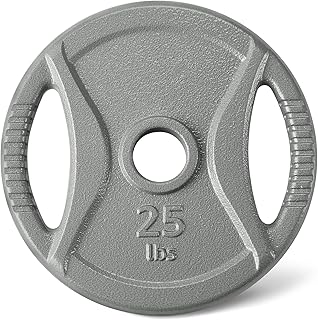
Designed for standard 1-inch barbells, these cast iron plates offer an ergonomic three-hole grip that makes loading safer and more convenient without the premium price of Olympic equipment. They are best suited for beginners or those maintaining existing standard-bar setups who need reliable, no-frills weight additions.
Best Premium: RitFit Olympic Rubber Grip Weight Plates
These plates combine a solid iron core with thick rubber coating and three-hole grips, offering superior floor protection and noise reduction for lifters training in apartments or shared spaces. The precise machining and durable overmolding justify the higher cost for users who prioritize equipment longevity and neighbor-friendly workouts.
Best for Progressive Overload: EVERYMATE Change Weight Plates Set
This fractional plate set fills the critical gap between standard increments, allowing precise micro-loading for bench press, overhead press, and rehabilitation protocols where 5-lb jumps are too aggressive. The steel-insert bumper design ensures they stay centered on Olympic bars during dynamic movements unlike loose-fitting alternatives.
Best for Traditional Training: CAP Barbell 2-Inch Olympic Weight Plate
These classic cast iron Olympic plates provide the dense, compact profile preferred by powerlifters and traditional strength athletes who do not drop weights and want maximum sleeve space. The machined finish and accurate sizing make them a dependable workhorse for high-volume programming in dedicated garage or basement gyms.
Frequently Asked Questions
What is the difference between Olympic and standard weight plates?
Olympic plates have a 2-inch center hole designed for Olympic barbells with rotating sleeves, while standard plates have a 1-inch hole for lighter-duty fixed-sleeve bars. Olympic plates also typically feature uniform diameter on bumper versions, whereas standard plates scale in size with weight.
Are bumper plates worth it for home gyms?
Bumper plates are worth the investment if you perform Olympic lifts, CrossFit-style workouts, or any movement where the bar may be dropped from above knee height. For pure powerlifting or bodybuilding where weights are always lowered under control, rubber-coated or cast iron plates often provide better value and denser stacking.
How accurate are budget weight plates compared to premium options?
Budget cast iron plates typically carry a tolerance of plus or minus 3-5%, meaning a 45-lb plate could weigh anywhere from 43 to 47 lbs. Calibrated and premium rubber-grip plates usually hold within 1% or less, which matters significantly for competitive training and accurate progressive overload tracking over months and years.
Can I mix different brands of weight plates on the same bar?
You can safely mix brands as long as they share the same hole diameter and are used symmetrically on each side of the bar. However, mixing bumper plates with cast iron on the same sleeve is discouraged because differing diameters concentrate impact force on the smaller plate, potentially damaging it or the bar.
Final Thoughts
The CAP 2-inch Olympic Bumper Plate Weight Set remains the top recommendation for versatility and durability, while the Amazon Basics 1-Inch Grip Plates offer unbeatable value for standard-bar users. Lifters needing precise progression should add the EVERYMATE Change Weight Plates to complement whichever primary set they choose.