Key takeaways
- More responsive workout data. A chest strap can register changes in effort quickly, which is useful for intervals, hill repeats, spinning, rowing, and circuit training.
- Often better accuracy during movement. Because the sensor sits close to the heart and does not depend on wrist contact, it can avoid some of the dropouts caused by loose watch bands, arm motion, tattoos, sweat, or cold hands.
- Useful for heart-rate-zone training. If your plan calls for easy aerobic work, threshold intervals, or recovery sessions, a consistent heart-rate signal makes those targets easier to follow.
- Works with multiple devices. A compatible strap may send data to a sports watch, phone, bike computer, treadmill, or training platform, reducing your dependence on one brand’s ecosystem.
- Usually lighter and less distracting than a smartwatch. The sensor is small, and there is no bright screen or notification stream competing for your attention.
- Helpful for structured fitness goals. Runners, cyclists, triathletes, and people returning to exercise may appreciate a clearer view of intensity than a basic step counter provides.
What's inside
The Short Answer
You probably do not need a chest heart monitor unless accurate, real-time heart-rate data during exercise is important to you and you are comfortable wearing a strap around your chest.
A chest monitor is usually more precise and responsive than a wrist-based fitness tracker, especially during intervals, strength training, cycling, rowing, and other activities that involve rapid heart-rate changes or lots of wrist movement. But it is an exercise accessory—not a substitute for a medical device, heart evaluation, or professional advice.
As an Amazon Associate we earn from qualifying purchases at no extra cost to you. Product prices and availability are accurate as of the date shown and are subject to change.

If you simply want an occasional estimate of your pulse, a smartwatch or fitness band is likely enough. If you train by heart-rate zones, want cleaner data for a workout app, or need readings that react quickly to effort, a chest strap can be worth the roughly $70 to $110 cost. As of 2026, the decision comes down less to whether chest straps “work” and more to whether their extra accuracy and inconvenience matter in your routine.
What You Actually Get
A chest heart monitor is a small sensor attached to an adjustable elastic strap. You wear it around your rib cage, with the sensor positioned against your skin near the lower chest. The strap detects the electrical signals associated with each heartbeat and sends heart-rate data to a compatible watch, bike computer, phone, treadmill, or training app.
That differs from a smartwatch, which estimates heart rate optically through light sensors on your wrist. Optical sensors can be convenient, but their readings may lag during sprints or fluctuate when the watch moves, the band is loose, or your wrists are flexing. A chest strap generally provides a steadier stream of data for workouts with frequent intensity changes.
Most current chest monitors connect using Bluetooth, ANT+, or both. Bluetooth is useful for phones and many fitness apps, while ANT+ is common on bike computers, gym equipment, and sports watches. Check compatibility before buying, particularly if you plan to connect the monitor to more than one device.
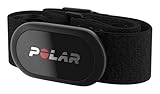
Two representative options are the Garmin HRM 200 Heart Rate Monitor, M-XL, listed at $79.99, and the Polar H10 Heart Rate Monitor Chest Strap, M-XXL, listed at $104.79. The Polar model supports ANT+ and Bluetooth and is marketed as waterproof. These products illustrate the typical price difference between a straightforward everyday strap and a higher-priced, feature-rich model. Prices can vary, so treat approximately $70 to $110 as a realistic shopping range rather than a fixed rule.
Pros
- More responsive workout data. A chest strap can register changes in effort quickly, which is useful for intervals, hill repeats, spinning, rowing, and circuit training.
- Often better accuracy during movement. Because the sensor sits close to the heart and does not depend on wrist contact, it can avoid some of the dropouts caused by loose watch bands, arm motion, tattoos, sweat, or cold hands.
- Useful for heart-rate-zone training. If your plan calls for easy aerobic work, threshold intervals, or recovery sessions, a consistent heart-rate signal makes those targets easier to follow.
- Works with multiple devices. A compatible strap may send data to a sports watch, phone, bike computer, treadmill, or training platform, reducing your dependence on one brand’s ecosystem.
- Usually lighter and less distracting than a smartwatch. The sensor is small, and there is no bright screen or notification stream competing for your attention.
- Helpful for structured fitness goals. Runners, cyclists, triathletes, and people returning to exercise may appreciate a clearer view of intensity than a basic step counter provides.
Cons
- You must wear it correctly. The strap needs to be snug enough to maintain contact without making breathing uncomfortable. Poor placement can cause missing or erratic readings.
- It is less convenient than a watch. You have to put it on before exercising, keep the strap clean, and remember to remove it afterward.
- Skin irritation is possible. Sweat, friction, detergent residue, and a tight band can cause itching or redness. Washing and fully drying the strap helps, but sensitive skin may still object.
- It may not display data by itself. Many chest sensors do not have a screen. You need a compatible receiving device or app to see your heart rate in real time.
- Compatibility can be confusing. Not every monitor pairs with every watch, gym machine, or phone. Bluetooth connection limits, ANT+ support, and simultaneous-device pairing vary by model.
- It is not a medical monitor. Consumer exercise straps are not designed to diagnose an arrhythmia, explain chest pain, or replace an electrocardiogram ordered by a clinician.
Who Should Buy It
A chest heart monitor makes sense if you exercise at least two or three times per week and one of the following describes you:
- You train by heart-rate zones and want a signal that responds promptly to changes in effort.
- You use intervals, cycling power targets, rowing workouts, or classes where wrist readings often seem delayed or inconsistent.
- You already own a compatible watch or bike computer but want improved heart-rate data without buying a new device.
- You are comparing fitness progress over time and prefer a dedicated sensor rather than estimates from different wrist devices.
- You find watches uncomfortable during sleep, work, or workouts but still want heart-rate information while exercising.
Choose the strap size carefully. The Garmin HRM 200 example is listed in M-XL, while the Polar H10 example is listed in M-XXL. Measure around your chest according to the manufacturer’s instructions rather than assuming your usual shirt size will fit. A secure, comfortable fit matters more than choosing the most expensive sensor.
Who Should Skip It
Skip a chest monitor if you only want a rough pulse estimate during walks, casual gym sessions, or daily activity. A smartwatch, fitness band, or even manual pulse check may meet that need with less fuss.
It is also a poor choice if you strongly dislike tight clothing around your torso, have recurring skin reactions to elastic bands, or rarely use workout apps and connected equipment. Paying $70 to $110 for a sensor that stays in a drawer is not a good upgrade.
Do not buy one as a way to investigate unexplained palpitations, fainting, shortness of breath, or chest discomfort. If you have concerning symptoms, stop exercising and seek medical guidance. For people with a diagnosed heart condition, ask a healthcare professional whether a consumer chest strap is appropriate and how its readings should be interpreted.
Cheaper Alternatives
| Option | Cost | Trade-off |
|---|---|---|
| Existing smartwatch | $0 additional cost | Most convenient, but wrist readings may lag or become inconsistent during some workouts. |
| Basic fitness band | About $30-$80 | Usually less expensive and comfortable, but typically offers fewer training connections and less responsive data. |
| Manual pulse check | $0 | No purchase required, but it provides only a spot reading and is impractical during intervals or fast-paced exercise. |
| Gym equipment heart-rate grips | Usually included | Can show a quick reading on a treadmill or bike, but you must keep your hands on the sensors and cannot take the data with you. |
| Entry-level chest strap | About $50-$75 | Gets you the main accuracy advantage, but may offer fewer connection options, less durable materials, or a simpler app experience. |
FAQ
Is a chest heart monitor more accurate than a smartwatch?
It is often more responsive during exercise, particularly when intensity changes quickly or your wrists are moving constantly. That does not mean every chest strap reading is perfect. Fit, skin contact, battery condition, and device compatibility all matter. A properly worn strap is generally the better tool for workout heart-rate tracking.
Can I use a chest monitor without a smartwatch?
Yes, if the monitor is compatible with a phone, fitness app, gym machine, bike computer, or another receiving device. The sensor itself may not show your heart rate, so confirm that you have something available to display or record the data before buying.
Do chest heart monitors track heart rhythm or detect heart problems?
Some consumer sensors capture electrical heart signals for exercise tracking, but that does not make them diagnostic medical equipment. They should not be used to confirm or rule out an arrhythmia, heart attack, or other condition. Seek medical care for symptoms or unusual readings that concern you.
How tight should a chest heart monitor be?
It should sit securely against your skin without sliding, pinching, or restricting normal breathing. Wear it around the chest as directed, moisten the contact areas if the manufacturer recommends it, and adjust it before starting your workout. Clean and dry the strap after use to reduce odor, buildup, and skin irritation.