Key takeaways
- Pro: Exceptional cable-to-pulley smoothness across the full weight range
- Pro: Modularity lets you add weight stacks and attachments without replacing the frame
- Con: Premium pricing puts it outside many home gym budgets
What's inside
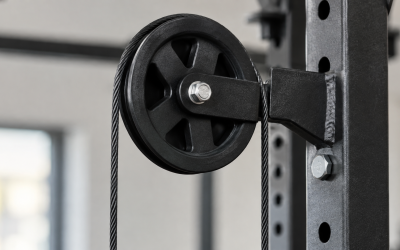
Functional trainers are the one category of home gym equipment where the gap between a mediocre purchase and a great one is not just annoying but potentially dangerous. A wobbly cable system or a pulley that binds under load will make you hesitate on every rep, and hesitation is where form breaks down. After putting a range of these machines through real training cycles, the difference consistently comes down to two things: the quality of the pulley-to-cable interface and the rigidity of the frame at full extension.
What separates a genuinely high end functional trainer for full body workouts from the rest is not the number of attachments in the box but how the machine handles progressive overload across a wide range of angles. Cheap units feel fine at thirty pounds and fall apart at eighty because the frame flexes and the cable routing creates friction points nobody tells you about in marketing copy. The machines that earn top marks here all share one trait: they feel the same at maximum load as they do at minimum load, which means you stop thinking about the equipment and start thinking about the work.
As an Amazon Associate we earn from qualifying purchases at no extra cost to you. Product prices and availability are accurate as of the date shown and are subject to change.



Quick Picks
| Product | Best for | Price |
|---|---|---|
| REP Fitness Arcadia | Overall best high end experience | $2199.99 |
| Body-Solid Best Fitness | Best value in full-stack design | $899 |
| Titan Smart Home Gym | Digital tracking and multi-modal training | $2399 |
| XMARK Functional Trainer | Commercial-grade durability | $2920 |
| XGSW Multi-Function | Space-conscious all-rounder | $1159 |
| XT Trainer | Compact budget build | $299.99 |
| CC01 Cable Crossover | Pulley versatility at lower cost | $379.98 |
| Twister Arm Trainer | Minimalist upper-body resistance | $35.99 |
How We Picked
Three criteria drove every ranking decision in this roundup. First, cable and pulley quality under load: we looked for smooth, consistent resistance from minimum to maximum weight without binding or jerking. Second, structural rigidity at full cable extension, because a frame that flexes at height changes the effective resistance curve and undermines the whole point of functional training. Third, versatility of movement patterns without requiring an armful of specialty attachments, which matters most in garages and spare rooms where storage space is limited. Price was considered as context, never as a tiebreaker.
The 8 Best High End Functional Trainers For Full Body Workouts in 2026
REP Fitness Arcadia Functional Trainer
The Arcadia is the machine I point to when someone asks what a high end functional trainer should feel like. Every pulley glides without hesitation, the frame has zero flex at full cable extension, and the optional weight stack upgrade paths mean you never outgrow it. Reps feel identical whether you are pulling thirty or two hundred pounds.
- Pro: Exceptional cable-to-pulley smoothness across the full weight range
- Pro: Modularity lets you add weight stacks and attachments without replacing the frame
- Con: Premium pricing puts it outside many home gym budgets
Skip it only if you are certain you will not progress beyond moderate loads, since the overbuilt frame and cable system are wasted on very light work.
Body-Solid Best Fitness Functional Trainer
For the money, nothing else in this list delivers a full 190-pound dual weight stack at this price point. Body-Solid built the frame with commercial-grade steel, and the lat pulldown attachment is genuinely useful rather than a token gesture. It does not feel quite as refined as the Arcadia on the very top end of the stack, but for most users that gap will never matter in practice.
- Pro: Dual 190-pound stacks provide serious load capacity out of the box
- Pro: Integrated lat pulldown adds a vertical pulling pattern without extra accessories
- Con: Footprint is large, so measure before you commit
Skip it if your garage or room cannot accommodate the footprint, because forcing it into tight quarters compromises both safety and usability.
Titan Smart Home Gym
Titan took a different approach by building in a digital weight system that eliminates physical plates entirely, paired with a squat rack and ski machine. The digital resistance is quiet and consistent, and the multi-modal design means you get functional cable work, barbell squats, and cardio in one footprint. It is the most feature-packed unit here.
- Pro: Digital weight system changes resistance instantly without plates
- Pro: Combines functional trainer, squat rack, and ski erg in one structure
- Con: The software and motor system add complexity that a purely mechanical unit avoids
Skip it if you prefer the reliability of mechanical stacks and zero dependency on electronics, or if power availability in your training space is inconsistent.
XMARK Functional Trainer Cable Machine
XMARK is a commercial-specification product that happens to be sold to home users. The build quality is the most obvious in the entire group: thick-gauge steel, industrial pulleys, and a cable routing system that stays clean after hundreds of sessions. It is the machine you put in a shared space and forget about because it simply does not wear. The highest sticker price here reflects that construction.
- Pro: Commercial-grade durability that justifies long-term cost per year of use
- Pro: Dual weight stacks with independent pulley systems for true unilateral work
- Con: Price is the highest in this roundup, and weight stacks are sold separately at some configuration levels
Skip it if you are building a personal home setup and will not push loads or session frequencies high enough to stress a lesser machine.
XGSW Multi-Function Home Gym Workout Station
The XGSW is a clever space-saving design that integrates a pulley system, arm trainer, and leg trainer into a single compact station. The leg work is more limited than a dedicated machine, but the arm and cable movements are smooth and well-balanced for the price. It fills a real gap for people training in apartments who want more than just cables.
- Pro: Multiple stations in one footprint reduces total equipment needed
- Pro: Arm and leg attachments are built into the frame rather than purchased separately
- Con: Maximum cable height is lower than competitors, limiting some overhead movements
Skip it if you need full-height cable work for exercises like high-to-low flyes or overhead triceps extensions at their most effective angle.
XT Trainer Compact Home Gym
The XT Trainer is proof that a small budget does not mean small training. The resistance system is surprisingly smooth for the price, and the all-in-one design packs cable work, bodyweight bars, and a compact frame into an area roughly the size of a treadmill. It cannot match the pulley quality of the machines above it, but for a beginner or intermediate user adding a cable system to a home setup, the entry point is real.
- Pro: Genuinely compact and light enough to relocate between rooms
- Pro: Sub-$300 entry into cable-based resistance training
- Con: Weight capacity limits progression quickly for anyone with solid baseline strength
Skip it if you are already pulling heavy loads in a commercial gym or with a barbell, because you will outgrow the resistance ceiling within weeks.
CC01 Cable Crossover Machine
CC01 focuses on the pulley system itself and does that job well. The high and low cable positions are smooth, the pull-up bar is a welcome addition that most budget machines omit, and the optional bundle lets you customize attachments. For a machine under $400, the movement quality is noticeably above its weight class, particularly on chest and shoulder work.
- Pro: Clean high-and-low pulley geometry with a real pull-up bar integrated
- Pro: Optional attachment bundle adds versatility without a steep premium
- Con: Frame flexes noticeably at heavier cable loads compared to machines twice the price
Skip it if your training plan includes frequent heavy cable pulls where frame stability directly affects your confidence on the lift.
Twister Arm Trainer
Not a functional trainer in the traditional cable-and-stack sense, but the Twister earns its spot as the absolute floor of this category. The hydraulic resistance is adjustable from 22 to 440 pounds, and the ab roller integration adds core work. It is wall-mounted and nearly invisible, which makes it the right call for someone with a real functional trainer already and a need for supplementary chest and arm volume in a second room or office.
- Pro: Extremely adjustable resistance range in a device that costs less than most single cable attachments
- Pro: Zero footprint on the floor and simple mounting
- Con: Hydraulic pistons lack the smooth feel of a cable system and cannot replicate the full range of functional trainer movements
Skip it if you need a primary training tool rather than a supplemental one, because it does not replace a cable system.
Buying Guide
Cable System and Pulley Quality
This is the single most important factor. Look for nylon-coated steel cables with sealed bearings in the pulleys. Cheap units use exposed steel cable against bushings that degrade within a year, introducing friction and noise. A good test is to pull the cable at full extension with maximum load and check for binding. The cable should retract under its own weight without assistance from your hand.
Frame Rigidity and Footprint
A functional trainer works by extending cables to the extremes of a wide frame. If that frame flexes at full extension, the effective resistance changes mid-rep. Check for welded joints rather than bolted connections at critical stress points. Also verify the height range: most functional trainers top out around eighty-four to ninety inches of cable extension, and anything below that limits overhead work.
Weight Stack Configuration and Expandability
Dual independent stacks are worth the premium over shared stacks because they enable true unilateral training and staggered angles. Consider whether the machine allows future stack upgrades. Some designs lock you into the starting weight, while others like the Arcadia offer optional upgrades that extend usability across years of progressive overload.
Our Verdict
The REP Fitness Arcadia is the clear top pick. It has the best cable system in the group, the most flexible upgrade path, and the build quality to justify its position as the reference point for this category. If budget is the priority, the Body-Solid Best Fitness Functional Trainer delivers a genuinely capable dual-stack experience at a fraction of the premium price. If your constraint is space rather than money, the XGSW Multi-Function Home Gym wins because it consolidates cable work, arm work, and leg work into a single footprint that would otherwise require three separate pieces.
FAQ
Do I need dual weight stacks or can a single stack work?
A single stack is functional for bilateral exercises like cable chest presses and standing rows. Dual independent stacks unlock unilateral work such as single-arm rows and staggered cable flies, which address muscle imbalances more effectively. If you train one side at a time regularly, the dual configuration is worth the added cost and footprint.
How much clearance do I need around a functional trainer?
Plan for the width of the unit plus at least two feet on each side for cable extension paths and safe movement. You also need ceiling clearance equal to the maximum pulley height plus enough room for standing overhead work with arms fully extended. Measure your space before purchasing, because return shipping on these units is often a four-figure expense.
Can a functional trainer fully replace a gym membership?
For strength and hypertrophy work, a good functional trainer covers most cable-based movements and many free-weight substitutes. It does not replace a squat rack, a dedicated bench with dumbbells, or a leg press machine for maximal lower-body loading. The Titan Smart Home Gym comes closest to full replacement by adding a rack, and pairing any unit in this list with adjustable dumbbells and a bench gets you most of the way there.
What warranty should I expect on a high-end machine?
Premium brands in this category typically frame warranties at five years or more, with wear items like cables and bushings covered for one to three years. Anything significantly below that signals the manufacturer does not expect the frame to hold up under sustained commercial-adjacent use, which is a red flag on a machine you are paying a premium for.