Key takeaways
- Best Overall: TriggerPoint Grid 1.0 (13 inch) – a compact, firm, multi-density roller with a hollow core.
- Best Value Textured Roller: 321 STRONG 3-Zone Massage Roller – three surface zones let you dial the pressure up or down.
- Best for Calves and Forearms: Tiger Tail The Stick (Bendy 18 inch) – handheld control instead of body weight.
- Best for One Exact Spot: 5BILLION FITNESS Peanut Massage Ball – double-ball shape that straddles the spine.
- Best Budget: Gimme 10 Massage Roller – hollow-core EVA roller aimed at physical-therapy style use.
- Best Premium / Longest Reach: TriggerPoint Grid 2.0 (26 inch) – full-length roller for back, hamstrings and quads.
For muscle knots, the best foam roller is a firm, textured one you can control, and the TriggerPoint Grid 1.0 is the one we would start with. If you want something that can reach a single stubborn spot in the shoulder blade or glute, add a peanut-style massage ball such as the 5BILLION FITNESS Peanut Massage Ball, because a smooth tube spreads pressure over a wide area while a ball concentrates it. This guide is research-based: we compared manufacturer descriptions, listing details and how physical-therapy and fitness publications describe self-myofascial release, and we did not personally use these products.
A quick note on the word “knot”. What most people call a knot is a tender, tight-feeling spot in a muscle. Researchers still debate exactly what is happening in that tissue, and no roller removes anything. What a roller can do is give you a way to apply steady, adjustable pressure to a sore area so it feels looser afterwards, which many people find helpful before or after a workout. If a spot is sharp, swollen, numb, tingling or has not eased in a couple of weeks, that is a question for a doctor or physical therapist rather than a roller.
Our top picks


As an Amazon Associate we earn from qualifying purchases at no extra cost to you.
Top Picks at a Glance
- Best Overall: TriggerPoint Grid 1.0 (13 inch) – a compact, firm, multi-density roller with a hollow core.
- Best Value Textured Roller: 321 STRONG 3-Zone Massage Roller – three surface zones let you dial the pressure up or down.
- Best for Calves and Forearms: Tiger Tail The Stick (Bendy 18 inch) – handheld control instead of body weight.
- Best for One Exact Spot: 5BILLION FITNESS Peanut Massage Ball – double-ball shape that straddles the spine.
- Best Budget: Gimme 10 Massage Roller – hollow-core EVA roller aimed at physical-therapy style use.
- Best Premium / Longest Reach: TriggerPoint Grid 2.0 (26 inch) – full-length roller for back, hamstrings and quads.
Comparison Table: Rollers and Tools for Muscle Knots
| Product | Best for | Key specs | Watch for | Price tier |
|---|---|---|---|---|
| TriggerPoint Grid 1.0 | Everyday knots in quads, calves, lats | 13 in long, multi-density EVA, hollow core, 500 lb capacity per maker | Short length makes upper-back rolling less stable | Mid-range |
| 321 STRONG 3-Zone Roller | Beginners who want adjustable intensity | Medium density; palm, finger and thumb zones | Exact length and weight not listed in the title | Budget to mid-range |
| Tiger Tail The Stick | Calves, forearms, hamstrings | Bendy 18 in handheld roller stick | Needs arm effort; not for the spine | Mid-range |
| 5BILLION Peanut Ball | Spot work beside the spine, glutes, neck base | Double lacrosse-style ball | Very concentrated pressure; easy to overdo | Budget |
| Gimme 10 Massage Roller | Value hollow-core roller | Hollow core, premium EVA per listing | Firmness level not listed | Budget to mid-range |
| TriggerPoint Grid 2.0 | Back, long muscle groups, shared use | 26 in, multi-density EVA, hollow core, 500 lb capacity | Bulky for travel | Premium |
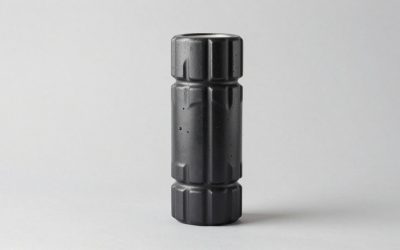
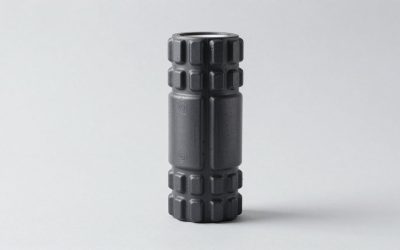
1. TriggerPoint Grid 1.0: Best Overall for Muscle Knots
- Length: 13 inches (about 5.5 inches wide), around 1.3 lb per the maker
- Construction: multi-density EVA foam over a rigid hollow core
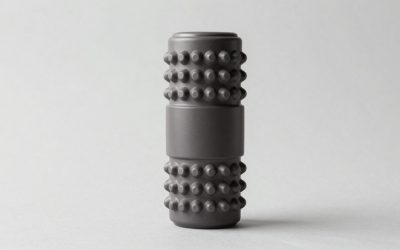
- Surface: raised grid pattern designed to mimic a therapist’s hands
- Capacity: up to 500 lb according to the manufacturer
- Firmness: sold as a firm roller; softer versions exist in the same brand family
Best for: people who want one roller that can handle quads, calves, glutes and the lats without much fuss. Skip if: you mainly want to roll the full length of your spine while lying down, because 13 inches is short for that.
The grid pattern is what makes this roller relevant to muscle knots. On a smooth tube, pressure spreads out across the whole contact surface. The raised and recessed sections of the Grid create firmer ridges next to softer valleys, so a smaller part of the muscle gets more focused pressure while the rest of the muscle stays relatively comfortable. That is the practical difference between “rolling” and “working a spot”.
The short 13-inch body is both its strength and limit. It is easy to store in a gym bag, easy to aim at one thigh at a time, and it is hard to roll off of because you shift your weight without needing a long runway. It is less stable for the thoracic spine, where a longer roller keeps both shoulder blades supported.
Pros: clear pressure variation; hollow core holds its shape; compact; high weight rating; widely available in several colors. Cons: firm out of the box, so a poor first choice if you are very sore; short for full-back work; grid ridges can feel intense on bony areas.
2. 321 STRONG 3-Zone Massage Roller: Best Value Textured Roller
- Design: patented three-zone surface with palm, finger and thumb zones
- Density: medium, according to the listing
- Use: exercise warm-up and cool-down, general muscle massage
- Dimensions and weight: not listed in the title; check the maker’s page for the size you want
Best for: beginners who find a hard roller too aggressive but want more than a smooth cylinder. Skip if: you are an experienced roller user who wants maximum firmness.
The idea behind the three zones is that you can choose a different feel by rotating the roller. A broad, palm-like zone suits large muscles such as quads, narrower finger-like ridges suit the calves and the outer thigh, and thumb-like points suit smaller spots. In practice that means you can start gently on a sore area and gradually move to the more pointed zone as it tolerates pressure, which is a safer progression than going straight to a firm grid.
Medium density also matters. A medium roller compresses slightly under body weight, which reduces the chance of bruising when you lean in. Many people who dislike foam rolling had their first experience on a very dense, smooth tube; a medium textured roller is often a kinder introduction.
Pros: adjustable intensity; gentler than very firm rollers; low cost for a textured design. Cons: several size and color versions with similar names, so confirm the length before you buy; firmness may be too soft for heavy lifters.
3. Tiger Tail The Stick: Best for Calves, Forearms and Hamstrings
- Format: 18-inch flexible (“bendy”) handheld muscle roller stick
- Purpose: myofascial release and trigger-point work per the maker
- Control: pressure comes from your hands, not body weight
- Weight and handle material: not listed in the title
Best for: runners, cyclists and desk workers with tight calves, forearms or hamstrings, and anyone who finds it awkward to get onto the floor. Skip if: your main trouble spots are the upper back and glutes, which are hard to reach with a stick.
A roller stick solves a problem that foam rollers do not: you can apply exactly the pressure you want and stop instantly. With a foam roller your body weight is the force, and on a sore spot it can be hard to back off. With a stick, a light grip is a light massage and a firm grip is a firm one, so it is useful when you want to work a knot in the calf or forearm without lying on a hard surface.
The flexible 18-inch shaft is designed to follow the shape of the leg rather than staying rigid. The tradeoff is that you work your arms and shoulders as well, so people with sore hands or limited grip may tire before the muscle does. It also takes a minute to learn to roll along the muscle belly instead of across tendons and joints.
Pros: very controllable; good for calves and forearms; light and travel friendly; no floor needed. Cons: arm effort; poor for the back; mid-range cost for what is a simple tool.
4. 5BILLION FITNESS Peanut Massage Ball: Best for One Exact Spot
- Shape: double lacrosse-style ball joined in a “peanut” form
- Intended areas: neck base, upper back, glutes, feet, according to the listing
- Firmness: firm rubber; the exact durometer is not listed
- Diameter: not listed
Best for: pinpoint tender spots beside the spine, in the glutes or at the base of the skull, where a roller is too wide. Skip if: you are new to self-massage, because concentrated pressure is easy to overdo.
The peanut shape is the clever part. A single ball can roll onto the spine itself, which is uncomfortable and not what you want. The groove between the two balls creates a channel so each ball presses on the muscle on either side of the spine while the bones sit in the gap. People use it against a wall for the shoulder blades or on the floor for the lower back and glutes.
Use short sessions. A sensible approach is to find a tender spot, lean in until the sensation is moderate, breathe for 20 to 30 seconds, then move on. Staying on one spot for minutes does not work better and can leave the area bruised.
Pros: precise; small and inexpensive; works against a wall; avoids direct pressure on the spine. Cons: intense; not suited to large muscles; only a few areas are comfortable to reach.
5. Gimme 10 Massage Roller: Best Budget Hollow-Core Roller
- Core: hollow, intended to keep the roller from collapsing
- Material: premium EVA foam per the listing
- Marketed for: physical-therapy style rolling and muscle massage
- Size and firmness: not listed in the title
Best for: shoppers who want a patterned hollow-core roller without paying for the biggest brand. Skip if: you need verified specifications; confirm the exact dimensions on the maker’s page first.
Hollow-core EVA rollers matter for durability. Cheap solid foam rollers flatten after a few months of regular use, and a flat spot turns a roller into a lumpy cylinder that no longer applies even pressure. A rigid core resists that compression, so the roller keeps its shape under heavier body weight. This is the main reason to pay a little more than the cheapest smooth tube.
Because the diameter, firmness and length are not stated in the listing text we reviewed, we treat this as the “good enough” choice for someone who wants texture on a budget, and we would compare it with the Grid 1.0 if you can stretch a bit further.
Pros: hollow core; textured surface; modest cost. Cons: fewer published specs; less brand support than the leaders; firmness is a guess until you handle one.
6. TriggerPoint Grid 2.0: Best Premium and Longest Reach
- Length: 26 inches
- Construction: multi-density EVA with a hollow core
- Capacity: supports up to 500 lb per the listing
- Surface: grid pattern similar to the 13-inch Original
Best for: people who roll the whole back, hamstrings and quads regularly, or a household that shares one roller. Skip if: you travel with your roller or have limited storage.
The 26-inch length lets you lie along it with the roller running down the spine, which supports both sides of the back evenly. It also allows leg work with both legs stacked or one at a time without rolling off the end. If your knots are mainly in the upper back, lats and traps, the extra length is the reason to upgrade from the 13-inch model.
Pros: stable for back work; same trusted pattern; high capacity; long enough for full-body sessions. Cons: costs the most here; large; firm pattern can feel too intense for sensitive users.
Also Consider
- The Original Body Roller: a high-density roller aimed at back and legs, useful if you want a plain firm cylinder without texture.
- Rollga: an ergonomic medium-density roller with a spine groove and bumps; a good fit if you want back work that avoids pressure on the vertebrae.
- Pro-Tec Athletics Travel Size Foam Roller: a compact high-density option for gym bags and carry-ons.
How We Chose
We started from the search intent: shoppers looking for a foam roller for muscle knots want pressure they can aim, not a generic roller. We shortlisted textured and tool-style products, then compared manufacturer descriptions, listing details and what independent fitness and physical-therapy publications say about self-myofascial release tools. Where a spec was not stated in the listing, we wrote “not listed”. We did not personally use these products, and we do not claim measured results.
We limited the list to two products per brand, mixed rollers with a ball and a stick so each type of knot has an answer, and left out any item whose category or specs we could not identify.
Buying Guide
Texture: smooth, ridged or pointed
Smooth rollers are best for large, general tightness. Ridged or grid rollers concentrate pressure in narrower bands, which suits knot-like spots. Pointed or ball tools concentrate it most. Start with the gentlest tool that makes the area feel noticeably worked, and only step up if you still feel nothing after two weeks of regular use.
Density: matching firmness to experience
Soft rollers compress easily and suit people who are new, older, or very sore. Medium is the best starting point for most active adults. Firm and extra-firm are for experienced users with high pain tolerance. If you can’t breathe normally and keep your shoulders relaxed while rolling, the roller is too firm for you today.
Length: 13, 18 or 26 inches and beyond
13 inches is easy to carry and aim; it suits legs. 18 inches covers most leg and glute work and is stable enough for a partial back. 24 to 36 inches lets you lie along your spine. Pick the length for the area you will roll most, not the one that looks best on a shelf.
Core and durability
A hollow rigid core resists flattening. Solid foam is cheaper but breaks down faster. If the product lists a weight capacity, treat 250 lb or more as a good sign for longevity, and check that it is a rated figure from the maker rather than a marketing estimate.
Technique rules that apply to every tool
- Roll slowly, about an inch per second, and pause on tender spots for 20 to 30 seconds while breathing.
- Keep the effort at a moderate level, not a grit-your-teeth level.
- Avoid rolling directly on joints, the bony spine, the front of the neck and any area with swelling, bruising or a recent injury.
- Sessions of 5 to 10 minutes are enough; more is not better.
Which Tool for Which Spot
| Where it feels tight | Best tool | Position | Time per spot |
|---|---|---|---|
| Calves | Tiger Tail style stick or Grid 1.0 | Seated, leg across the opposite knee for a roller | 20 to 30 seconds |
| Quads and outer thigh | Grid 1.0, 321 STRONG 3-Zone | Forearm plank over the roller | 20 to 30 seconds |
| Hamstrings | Grid 2.0 or Gimme 10 | Seated on the roller, hands behind | 30 seconds |
| Glutes and hip | Peanut ball or Grid 1.0 | Ankle across opposite knee, lean to one side | 20 to 30 seconds |
| Upper back | Grid 2.0 (arms crossed over chest) | Lying on the roller, hips lifted | 5 to 8 slow passes |
| Between shoulder blades | Peanut ball against a wall | Standing, lean back into the ball | 20 seconds each side |
| Forearms | Roller stick | Seated, forearm on the thigh | 30 seconds |
A useful rule is the “two-minute check”. Spend about two minutes on a tight area at moderate effort and then repeat the movement that bothers you, such as a squat or reaching overhead. If it feels freer, the tool and pressure are about right. If it feels worse or the area is hot, sore or bruised, drop to a softer roller or lighter grip and give it a day. This is a practical check, not a medical one.
Also think about how the knot formed. Knot-like tightness often follows a pattern: long hours at a desk and tight hip flexors or chest, a new running block and tight calves, or a heavy leg day and sore quads. Rolling is more useful as a short warm-up or cool-down habit, paired with movement and sleep, than as an emergency fix once a spot is already angry. Gentle movement through a full range after rolling, such as a few bodyweight squats or arm circles, helps you feel whether the area has genuinely loosened.
Common Mistakes With Knot Work
- Pressing harder when a spot does not release. Tension often eases with patience and breathing, not force.
- Rolling the exact same spot daily for long periods. Give tender tissue a day to settle.
- Skipping the surrounding muscles. A tight glute can load the lower back, and a tight calf can feed into the hamstring, so work the neighbors too.
- Ignoring numbness, tingling or sharp pain. Stop and speak to a clinician.
Frequently Asked Questions
Can a foam roller get rid of muscle knots?
No roller can promise that. Foam rolling gives you a way to apply steady pressure to a tight, tender area, and many people find that it feels looser afterwards. If the area stays painful, ask a physical therapist.
Is a textured foam roller better than a smooth one for knots?
A textured roller concentrates pressure, which many people prefer for specific tender spots, while a smooth roller is gentler for broad tightness. Preference matters more than any formula, and a medium textured roller is a sensible first choice.
How long should I roll one tender spot?
About 20 to 30 seconds per spot is a common guideline from physical-therapy resources, and a whole session often lasts 5 to 10 minutes. Longer holds can irritate the tissue.
Should I use a ball or a roller for a knot between the shoulder blades?
A peanut-style ball against a wall gives more precise pressure on each side of the spine, while a longer roller spreads pressure across the upper back. Try the roller first and add the ball if you need more precision.
Can I use a foam roller every day?
Many people do short, gentle sessions daily, but sore areas often do better with a rest day between firm sessions. If an area feels bruised the next morning, you used too much pressure.
Does it matter if the roller has a hollow core?
Yes for durability. A hollow rigid core keeps a roller round under body weight, while solid foam can develop flat spots after months of use.
When should I see a doctor instead of rolling?
See a doctor or physical therapist if you have numbness, radiating pain, swelling, a recent injury, or pain that has not improved after a couple of weeks. This guide is general information and not medical advice.
Which One Should You Buy?
If you want one roller for most knots, buy the TriggerPoint Grid 1.0. If you are new and nervous about firmness, the 321 STRONG 3-Zone is gentler and adjustable. If your trouble spots are the calves and forearms, a Tiger Tail style stick gives more control. For a single spot beside the spine, add the peanut ball. If you roll the back and legs often, the longer Grid 2.0 is worth the extra cost. Whatever you pick, start gently and build up gradually.
Sources
- TriggerPoint manufacturer product pages for Grid 1.0 and Grid 2.0
- 321 STRONG, Tiger Tail, 5BILLION FITNESS and Gimme 10 product descriptions
- American Council on Exercise guidance on foam rolling
- Harvard Health Publishing coverage of self-massage and muscle soreness
- Cleveland Clinic overview of myofascial release
Last updated: October 2026