Key takeaways
- Best Overall: Elefor Massage Gun, eight heads and 20 speeds in a conventional full-size body.
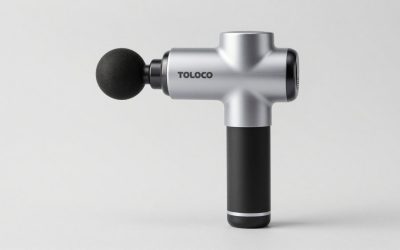
- Best Value: TOLOCO Massage Gun, ten heads and a brushless motor described as silent.
- Best Budget: LEERCON Mini, six speeds and four heads in a pocketable shape.
- Best With Heat: AERLANG Massage Gun with Heat, the only heated model in this group.
- Best for Fine Speed Control: Gvber, 30 speeds and USB-C rechargeable.
- Best for Quiet Use at Home: Medcursor, brushless motor and six heads.
The best massage gun under $50 is the Elefor, because it pairs a wide speed range with eight heads and a plain, no-gimmick body, and the runner-up is the Gvber for people who want USB-C charging and a very fine speed ladder. Everything in this price band shares the same basic compromises: smaller motors, modest stall force and plastic housings. This guide shows which compromises matter, which ones do not, and which model suits which kind of user.
Every pick below was found in a live product catalog, and every spec quoted comes from the listing or the maker’s own product page. Where a number is not published, the article says “not listed” rather than guessing. Street prices move daily, so the guide uses tier words (Budget, Mid-range) instead of dollar figures; always check the current price before you order.
Our top picks
 RENPHO Active Thermacool 2 Massage Gun with
- Smart control: Take charge of your wellness with…
- Dual-temperature relief: This back massage gun with heat…
- Deep-tissue massage: Crafted with a premium exterior and…


As an Amazon Associate we earn from qualifying purchases at no extra cost to you.
Top Picks at a Glance
- Best Overall: Elefor Massage Gun, eight heads and 20 speeds in a conventional full-size body.
- Best Value: TOLOCO Massage Gun, ten heads and a brushless motor described as silent.
- Best Budget: LEERCON Mini, six speeds and four heads in a pocketable shape.
- Best With Heat: AERLANG Massage Gun with Heat, the only heated model in this group.
- Best for Fine Speed Control: Gvber, 30 speeds and USB-C rechargeable.
- Best for Quiet Use at Home: Medcursor, brushless motor and six heads.
Quick Comparison Table
| Product | Best for | Key specs (as listed) | Watch for | Price tier |
|---|---|---|---|---|
| Elefor Massage Gun | All-round home use | 8 heads, 20 speeds | Battery capacity not listed | Budget |
| Gvber Massage Gun | Fine intensity control | 30 speeds, 6 heads, USB-C charging | Stall force not listed | Budget |
| TOLOCO Massage Gun | Variety of heads | 10 heads, brushless motor | Speed count not stated in the title | Budget to mid-range |
| AERLANG with Heat | Stiff-feeling muscles on cool days | Heat function, carrying case | Heat adds weight and drains the battery faster | Budget to mid-range |
| LEERCON Mini | Travel bag, desk drawer | 6 speeds, 4 heads, small body | Smaller motor, shorter reach on the back | Budget |
| Medcursor Massage Gun | Quiet evenings | Brushless motor, 6 heads | Speed count not stated | Budget to mid-range |
1. Elefor Massage Gun: Best Overall for Everyday Use
- Eight massage heads included
- 20 speed levels
- Percussion design aimed at back, legs and shoulders
- Matte black body, full-size handle
- Battery capacity, amplitude and stall force: not listed
Best for: someone buying a first massage gun who wants a standard shape and enough heads to cover the whole body. Skip if: you want published amplitude and stall-force numbers to compare against premium brands.
The strongest argument for the Elefor is simplicity. Twenty speed levels is plenty for a budget machine: most people settle on two or three favorite settings and rarely touch the rest. Eight heads sounds generous, but in practice the ball, flat and bullet shapes do ninety percent of the work. The fork head is meant for either side of the spine or the calf, and the small bullet is for the hand and foot or a single stubborn spot.
What the listing does not give you is the motor data that serious users look for. Treat that as normal for this price band rather than a flaw specific to this model. In everyday use, what you need is a gun that holds its speed against moderate pressure, and a manufacturer’s description cannot prove that either way. If you press hard and the unit stalls, back off the pressure and let the head do the moving.
A full-size body also helps with reach. Because the handle is long enough to angle over the shoulder, you can get at the upper back without contorting, which is where mini guns fall short. If most of your use is on the back, hips and thighs, a conventional shape like this one is the more practical choice.
Pros:
- Conventional shape that is easy to hold
- Wide speed ladder for a Budget-tier model
- Good head variety for first-time buyers
- Simple controls with no app or screen
Cons:
- No published motor specs
- Heads are plastic and foam, so they wear with heavy use
2. Gvber Massage Gun: Best for Fine Speed Control
- 30 speed levels
- Six heads
- USB-C rechargeable (the same cable as most phones and laptops)
- Described as quiet
- Battery capacity and stall force: not listed
Best for: people who are sensitive to intensity, such as those returning to exercise after a break, or anyone sharing the gun with a partner who prefers a different strength. Skip if: a long list of speeds will just feel fiddly to you.
Thirty speeds really only matters at the bottom of the range. When you are working over the neck or a recently hard-worked calf, the difference between level three and level four is something you notice. A fine ladder lets you step up gradually rather than jump from “barely there” to “too much”. The USB-C port is a practical plus: you can charge from a phone brick or a laptop and you are not hunting for a proprietary cable when you travel.
The six heads are a smaller set than the Elefor or TOLOCO, but they cover the main shapes. The listing frames the gun as being for athletes and for the back, legs and shoulders. As with every model here, keep it away from bones, joints, the front of the neck and any area a clinician has told you to avoid.
Because many speed steps are close together, it helps to decide on a routine before you start: for example, begin at level five for the first pass, move up to level eight if the muscle feels warm and loose, and never go higher than feels comfortable. Writing your favorite level on a sticky note inside the case saves guesswork.
Pros:
- Very granular intensity
- USB-C charging
- Quiet operation claimed in the listing
- Gentle enough to start low
Cons:
- Fewer heads than rivals
- Motor specs not listed
3. TOLOCO Massage Gun: Best Value With a Brushless Motor
- Ten massage heads
- Brushless motor, described as silent
- Portable body marketed to athletes and for relaxing at home
- Battery capacity and speed count: not listed in the title
Best for: households with several people who each want a different head, and anyone who dislikes buzzing noise. Skip if: you only need two or three heads and would rather save the money.
A brushless motor matters in a budget massage gun for one main reason: it tends to be quieter and to wear more slowly than a brushed motor, because there are no carbon brushes to rub down. The listing leans on that point, and it is the right feature to prioritize. Ten heads is more than you need, but it makes this the model that lets everyone in a household find a shape they like, including a wide flat head that spreads pressure over larger muscle groups.
TOLOCO sells more than one similar model in this price band, so check the exact name on the product page before ordering. The one described here is the ten-head version with the silent brushless motor in the title.
Pros:
- Brushless motor
- Large head set
- Portable and gift-friendly
Cons:
- Several near-identical TOLOCO listings can confuse the choice
- Specs beyond head count are not listed
4. AERLANG Massage Gun with Heat: Best for Cold-Day Warm-Ups
- Built-in heat function
- Carrying case included, per the listing
- Deep-tissue percussion design
- FSA eligible, according to the listing (check your own plan)
- Number of speeds and heads: not listed
Best for: people who like warmth before massaging stiff-feeling muscles, especially in a cold garage or in winter. Skip if: you want the longest possible battery life, because heat draws extra power.
Heat is the one feature that changes how a massage gun feels rather than just how it sounds. A warm head on the upper back or hamstrings is more inviting on a cool day, and some people simply enjoy the sensation. Keep sessions short with the heated head, check that it never feels hot against bare skin, and stop if you notice any discomfort. Heat functions are not meant for numb skin or areas with reduced sensation; anyone with circulation concerns should ask a doctor before using them.
The included carrying case makes this a decent gift. The trade-off is that heat adds a small heating element, which means the body is a bit heavier and the battery drains faster than in a heat-free model. If you mostly use the gun in a warm room, you may never miss the heat, and a plain model will give you more runtime per charge.
Pros:
- Heat in a Budget-tier price band
- Includes a carrying case
- Same percussion action as ordinary guns
Cons:
- Extra weight and shorter battery life with heat on
- Speed and head counts not listed
5. LEERCON Mini Massage Gun: Best Budget Travel Option
- Six speeds
- Four heads
- Small, portable handheld body
- Marketed for back and neck comfort
- Battery capacity and weight: not listed
Best for: a gym bag, desk drawer or carry-on. Skip if: you want to work large muscle groups like the quads and glutes with a lot of pressure.
Mini guns trade power for size. The motor is smaller, so it stalls sooner under pressure, but for the forearms, calves, neck and upper traps that is rarely a problem. The six-speed ladder keeps things simple, and four heads is enough for a small unit. Think of it as a second gun, one you carry, rather than your only gun for hard training days.
If you want something slightly larger from the same brand, LEERCON also lists a nine-head mini with a quiet-motor description, which sits a little higher in the price band.
Pros:
- Lowest price in the group
- Pocketable
- Easy to pick up and use without learning anything
Cons:
- Less reach on the middle of the back
- Smaller motor and presumably a smaller battery
6. Medcursor Massage Gun: Best for Quiet Evening Use
- High-intensity brushless motor, per the listing
- Six massage heads
- Handheld percussion design
- Marketed for sore muscle and stiffness comfort
- Speed count and battery capacity: not listed
Best for: evenings in front of the television, where noise is the thing you notice first. Skip if: you need a published speed count to plan your routine.
Medcursor is a less familiar name than TOLOCO or Elefor, which is the main reason to be careful: look at the warranty and return terms before buying, and keep your order paperwork. The brushless motor and six heads put it in the same class as the others. If the listing’s “high intensity” wording appeals, remember that more intensity is not the goal; the best setting is the lowest one that still feels useful.
Pros:
- Brushless motor
- Reasonable head set
- Straightforward controls
Cons:
- Newer, less established brand
- Several specs not listed
Also Consider
cotsoco Massage Gun. A quiet, portable model with a carrying case, FSA eligible per its listing. It overlaps heavily with the Elefor, so pick between them on which listing gives you clearer return terms.
arboleaf Mini Massage Gun. A full-metal mini with a brushless motor, usually priced a notch above the cheapest minis. Worth it if plastic bodies bother you.
BOB AND BRAD Q2 Mini. A pocket-sized mini from a better-known massage brand, listed as FSA and HSA eligible. It often lands just above this price ceiling, so check the current price; it is the one to look at if you can stretch slightly.
TOLOCO second listing. TOLOCO also lists a ten-replacement-head version marketed as super quiet. It is close to the pick above, so choose the one with the better current deal.
How We Chose
This guide is research-based. We did not personally use these products, so there are no first-person impressions or lab numbers here. We built the shortlist from live product listings, then compared the spec lines each maker publishes (head count, speed levels, charging type, included accessories). We then read the manufacturers’ product pages where available and cross-checked recurring owner complaints reported by independent consumer publications such as Wirecutter and Consumer Reports in their massage gun coverage.
The selection rules were simple. First, the model had to be a current, widely sold item. Second, it had to be in the Budget or lower mid-range tier. Third, we kept to one or two models per brand so the list does not read as a single maker’s catalog. Fourth, any spec that could not be found in the listing is marked “not listed”. We did not use star ratings, sales rank or review counts, because those can be gamed and do not tell you about fit for your body.
Buying Guide: What Actually Matters in the Budget Tier
Stall force and why the number matters
Stall force is how much pressure the head can take before the motor stops. Premium guns publish it, often somewhere between 30 and 60 pounds or more. Most budget guns do not publish it at all. In practice this means that on a budget gun you should let the weight of the gun, not your own body weight, rest on the muscle. If it stalls, you are pressing harder than the motor can follow. Lighter pressure with slow gliding movements is both more comfortable and kinder to the motor.
Amplitude, or how far the head travels
Amplitude is the distance the head moves in and out, typically 6 to 16 millimeters across the market. Deeper amplitude feels more substantial and tends to suit large muscles; shallow amplitude feels buzzier. Budget listings rarely publish it. If you want a deeper feel, you will need to go higher in price; if you want a lighter feel for the neck and forearms, shallow is fine and arguably better.
Battery and charging
Budget guns often run roughly two to six hours on a charge at low speeds, but real runtime falls fast at high speeds and with heat. A USB-C port is a real convenience. A good rule: choose a model that charges with a cable you already own, and plan to top up after every few uses instead of letting it run flat.
Noise
Listings that say “quiet” or “silent” are making a relative claim. A brushless motor helps, but nothing here is silent next to a television at low volume. If you live with a light sleeper or use the gun at night, buy from a seller with an easy return policy and give the first session a quiet-room check.
Heads you will really use
For a first gun, you need four shapes: a ball for large muscles, a flat head for broad pressure, a bullet for small spots and a fork for either side of the spine or the calf. Anything beyond that is nice to have. More heads also means more little parts to lose, so keep them in the case.
A simple cost-per-use check
Take a gun in the forty-dollar range and use it three times a week. That is about 156 sessions a year, which works out to roughly a quarter per session, before any battery wear. Compare that with a single paid massage session, and even a budget gun pays for itself quickly if you really use it. If you only reach for it once a month, the cheapest model is the sensible choice, because a premium one will not return the extra spend.
A Sample Weekly Routine for a Budget Gun
A gun gets used more when it has a place in your week. This example assumes someone who walks, lifts lightly and sits at a desk, using the gun on the lowest comfortable speed.
- After a workout (two minutes per area): calves, quads and glutes, gliding slowly with the flat or ball head.
- Midweek desk break (three minutes): upper back and shoulders with the soft ball head, avoiding the spine and the front of the neck.
- Weekend (five minutes): feet and forearms with the bullet head on a low setting, then stretch gently.
Total time is under fifteen minutes a week, which is why a Budget-tier gun is usually enough. If you find yourself wanting more time on the gun, that is the signal to consider a stronger model, not before.
Common Mistakes With Budget Massage Guns
- Pressing too hard. It does not improve results and it stalls cheaper motors.
- Staying in one place. Keep the head moving, roughly 30 seconds to two minutes per muscle group, unless a clinician has suggested otherwise.
- Using it on bones, joints, the front of the neck or the spine itself. Stay on the muscle.
- Ignoring your own situation. If you are pregnant, take blood thinners, have a pacemaker, a clotting concern, numbness or an injury, ask a doctor or physical therapist first.
- Buying on head count alone. A dozen heads cannot make up for a weak motor or a poor return policy.
- Ignoring the charger. Use the cable that came with the unit or an equivalent, and do not leave it plugged in for days.
Decision Table
| If you are… | Choose | Why |
|---|---|---|
| Buying a first gun for one household | Elefor | Balanced head set and speed range |
| Sensitive to intensity | Gvber | 30 speeds make small steps possible |
| Sharing with several people | TOLOCO | Ten heads, brushless motor |
| A cold-weather user | AERLANG with Heat | Heat function in a Budget-tier gun |
| Travelling or carrying a bag | LEERCON Mini | Smallest and cheapest |
| Prioritizing low noise | Medcursor | Brushless motor, simple controls |
Frequently Asked Questions
Is a massage gun under $50 any good?
Yes, for light to moderate home use, and no if you want deep pressure on large muscles for heavy training. Budget guns have smaller motors and less published data, but they still deliver the basic percussion action many people want for general comfort after a workout or a long day.
How is a budget gun different from a premium one?
The biggest differences are motor strength, battery life, build quality, warranty and published specs. Premium models often state amplitude and stall force and carry longer warranties. Budget models give you the same basic experience with a lower intensity ceiling.
How long should I use a massage gun on one area?
Roughly 30 seconds to two minutes per muscle group is a common guideline in consumer guides, with total sessions of ten minutes or less. Listen to your body, and ask a physical therapist if you have a specific injury.
Can I use a massage gun every day?
Many people use one briefly each day, but it is not necessary. If any area feels tender or bruised afterwards, rest it and reduce the speed and time. Persistent pain is a reason to see a clinician.
Are cheap massage guns safe?
Look for a seller that provides clear documentation, a return window and a charger that matches the unit. Beyond that, safe use depends mostly on how you use the gun: low speed, light pressure and avoiding bones, joints and the front of the neck. No guide can guarantee safety for every body, so ask a doctor if you have a medical condition.
Does heat in a massage gun matter?
Heat is a comfort feature, not a medical one. It can make the session feel nicer on a cold day, but it also drains the battery. Do not use heat on areas with reduced sensation.
Should I get a mini or full-size gun?
A mini is better for travel and small areas; a full-size gun is better for thighs, glutes and the back. If you can only buy one and you are at home most days, full-size is the more flexible pick.
Which One Should You Buy?
If you want one dependable gun and you are not sure what you need, buy the Elefor. If you value gentle, precise control, take the Gvber. If you share the gun with others, the TOLOCO’s head set is the most flexible. If winter stiffness is your main complaint, the AERLANG with heat is the right trade-off, and if your bag space is limited, the LEERCON Mini fits in a pocket. If you can stretch your budget slightly, the BOB AND BRAD Q2 Mini from the Also Consider list is the step-up worth checking.
Whichever you choose, start at the lowest speed, glide slowly and stop if something does not feel right. This guide is general information and not medical advice.
Sources
- Elefor, Gvber, TOLOCO, AERLANG, LEERCON and Medcursor product listings and maker pages
- Wirecutter massage gun coverage
- Consumer Reports massage gun guidance
- Hospital for Special Surgery (HSS) guidance on percussive massage devices
- American Academy of Orthopaedic Surgeons (OrthoInfo) patient pages on muscle soreness
Last updated: October 2026