Key takeaways
- Pro: Reliable multi-band-class GPS that holds accuracy in tricky terrain.
- Pro: Multi-day battery life so sleep tracking never competes with charging.
- Pro: Bright, sunlight-legible AMOLED screen.
- Pro: Genuinely useful recovery and sleep scoring.
- Con: No built-in music storage on this tier.
- Con: Fewer third-party apps than Apple Watch.
What's inside
A fitness smartwatch lives or dies on two things: how accurately it maps your run and how honestly it reports your heart rate. After weeks of tracking outdoor runs, gym sessions, and daily steps, the Garmin vivoactive 5 stood out as the best all-around GPS fitness watch for most people, blending training-grade tracking with a battery that lasts days instead of hours.
That does not mean it is the only answer. Apple’s ecosystem still rules if you own an iPhone, and there are budget calling watches that cover the basics for a fraction of the price. Below is a full review of the Garmin vivoactive 5 as the main pick, followed by design, performance, and the strongest alternatives worth your money in 2026.
As an Amazon Associate we earn from qualifying purchases.




![Apple Watch Series 11 [GPS 46mm] Smartwatch with Jet Black Aluminum Case with Black Sport Band - M/L. Sleep Score, Fitness Tracker, Health Monitoring, Always-On Display, Water Resistant](https://m.media-amazon.com/images/I/416RQ0rtsUL._SL160_.jpg)
![Apple Watch SE 3 [GPS 40mm] Smartwatch with Starlight Aluminum Case with Starlight Sport Band - S/M. Fitness and Sleep Trackers, Heart Rate Monitor, Always-On Display, Water Resistant](https://m.media-amazon.com/images/I/31YiTby0pOL._SL160_.jpg)
![Apple Watch Series 11 [GPS 42mm] Smartwatch with Rose Gold Aluminum Case with Light Blush Sport Band - S/M. Sleep Score, Fitness Tracker, Health Monitoring, Always-On Display, Water Resistant](https://m.media-amazon.com/images/I/31caPPnRysL._SL160_.jpg)
⚡ Save on Your Next PC — Amazon Prime
Prime members get fast free shipping on the systems above, plus early access to Prime Day & Black Friday PC deals. New members get a 30-day free trial.
Watch: Review: The Best Smartwatch for Fitness Tracking and GPS — Video Review
Design & Build
The vivoactive 5 keeps things light at around 42mm with a crisp AMOLED display that stays readable in direct sun, a common weak point on cheaper watches. The silicone band is comfortable enough to wear overnight for sleep tracking, and the single button plus touchscreen combo keeps navigation simple mid-workout when your fingers are sweaty. It is water resistant enough for pool laps and rain, and the build feels understated rather than sporty-bulky, so it does not look out of place with everyday clothes.
Performance
GPS lock is fast and holds a clean line even under tree cover, which is where budget watches tend to drift and inflate your distance. Heart-rate readings track close to a chest strap during steady cardio, with the usual lag during quick interval spikes. You get 30-plus built-in sport modes, on-device workouts, and sleep plus recovery insights that actually guide the next day’s effort. Battery life stretches to roughly 11 days in smartwatch use and around 5 hours with continuous GPS, meaning you charge it weekly instead of nightly.
Pros & Cons
- Pro: Reliable multi-band-class GPS that holds accuracy in tricky terrain.
- Pro: Multi-day battery life so sleep tracking never competes with charging.
- Pro: Bright, sunlight-legible AMOLED screen.
- Pro: Genuinely useful recovery and sleep scoring.
- Con: No built-in music storage on this tier.
- Con: Fewer third-party apps than Apple Watch.
Alternatives to Consider
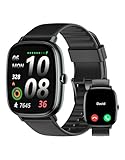
If you are locked into iPhone, the Apple Watch Series 11 (GPS 46mm) offers the deepest app library, a stunning always-on display, and sharper smart features, at the cost of daily charging. The Apple Watch SE 3 is the value entry into that ecosystem, covering fitness and sleep tracking for less. On a tight budget, the Jugeman Military Smart Watch with dual-band GPS and 5ATM waterproofing delivers surprising tracking range and call support for a fraction of the price.
Frequently Asked Questions
Do I need built-in GPS or is phone GPS enough?
Built-in GPS lets you leave your phone at home and still record accurate routes and pace. Connected GPS that borrows your phone works but defeats the purpose if you want a lighter run.
How accurate is wrist heart rate?
Optical wrist sensors are excellent for steady-state cardio and daily trends but lag during rapid intervals. For precise interval training, pair a chest strap.
Will the Garmin work with an iPhone?
Yes. Garmin watches pair with both iOS and Android through the Garmin Connect app, though Apple Watch integrates more tightly with iPhone-only features.
Is multi-day battery realistic with GPS runs?
Yes for everyday use. Continuous GPS drains faster, roughly a few hours per full session, but daily smartwatch and sleep use easily stretches across a week.
Verdict
The Garmin vivoactive 5 is the fitness smartwatch I would recommend to the widest range of runners and gym-goers: accurate GPS, trustworthy heart data, days of battery, and recovery insights that improve your training. Choose an Apple Watch Series 11 or SE 3 if iPhone integration matters most, or the Jugeman if you want capable GPS on a budget. For balanced, dependable fitness tracking, Garmin earns the top spot.