Key takeaways
- Choosing by shirt size: A medium shirt does not guarantee a medium chest strap. Body shape and measurement are more reliable.
- Confusing strap length with fit range: The elastic band may stretch, and the listed product length may not equal the supported torso circumference.
- Buying the same label across brands: Garmin M-XL and Polar M-XXL represent different published ranges.
- Measuring over thick clothing: This can lead to a strap that is unnecessarily large and prone to slipping.
- Wearing it too high: The sensor should usually sit below the chest muscles or bust, not directly over the sternum.
- Ignoring electrode contact: Moisten the electrode areas before exercise if the instructions recommend it. Dry skin can cause inconsistent readings, especially at the beginning of a workout.
- Over-tightening to fix poor placement: First reposition the band and wet the electrodes. More tension is not always the solution.
What's inside
The Short Answer
For most adults, a heart rate monitor chest strap should sit snugly around the rib cage, directly below the chest muscles or bust line, without restricting breathing. Measure your body circumference at the spot where the strap will rest, then compare that number with the manufacturer’s listed range. Do not choose by shirt size alone.
A strap that is too loose may produce gaps between the electrodes and skin, causing missed readings or erratic heart-rate data. A strap that is too tight can feel uncomfortable, roll during movement, and leave pressure marks. As a general starting point, adults commonly need a strap covering about 26 to 47 inches (66 to 119 cm), although product ranges differ substantially.
As an Amazon Associate we earn from qualifying purchases at no extra cost to you. Product prices and availability are accurate as of the date shown and are subject to change.

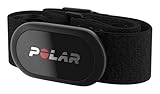
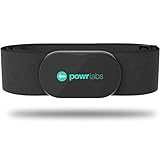
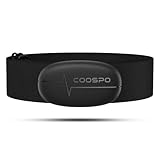
Among the example models, the Garmin HRM 200 in M-XL covers approximately 30 to 47 inches (76 to 119 cm), while the Polar H10 in M-XXL is designed for approximately 26 to 37 inches (67 to 95 cm). Those labels are not interchangeable: one brand’s M-XL may fit very differently from another brand’s M-XXL.
Standard Sizes
Heart rate monitor sizing is usually based on the strap’s adjustable body circumference, not the sensor pod’s dimensions. The following ranges are useful shopping benchmarks, but always confirm the exact product listing before ordering.
| Common strap label | Approximate body circumference | Approximate circumference in centimeters | Best suited to |
|---|---|---|---|
| XS-S | 20-26 in. | 51-66 cm | Small frames, teens, and some petite adults |
| S-M | 24-34 in. | 61-86 cm | Petite to average adult builds |
| M-XL | 30-47 in. | 76-119 cm | Average to broad adult builds |
| M-XXL | 26-37 in. | 67-95 cm | Average adult builds, depending on the brand |
| Extended or universal | Up to about 52 in. | Up to about 132 cm | Users who need additional adjustment range |
These ranges overlap because there is no universal heart rate monitor strap standard. A strap may also include an elastic section that stretches several inches beyond its relaxed measurement. Width is usually about 1 to 1.5 inches (2.5 to 3.8 cm), which is wide enough to stay flat but narrow enough to remain unobtrusive under a shirt.
When comparing specific models, check whether the quoted measurement is the minimum-to-maximum fit range or the unstretched strap length. For example, the Garmin HRM 200 M-XL and Polar H10 M-XXL use different size labels and different circumference ranges. Budget options such as POWR LABS and COOSPO may list a broad adjustable range, but compatibility, replacement-strap availability, and clasp design can vary.
Typical prices range from about $25 to $45 for basic Bluetooth and ANT+ straps, $40 to $80 for midrange models, and $80 to $110 for premium or brand-specific units. The listed examples span approximately $25.49 to $104.79. Price does not determine fit; the correct circumference and secure electrode contact matter more.
How to Measure Your Space
For a chest strap, “your space” means the circumference around your torso where the monitor will sit. Measure your body, not the width of a favorite shirt.
- Stand naturally. Keep your posture relaxed and breathe normally. Do not flex your chest or pull your stomach inward.
- Find the placement line. Measure directly below the chest muscles. For most men, this is around the lower edge of the pectoral muscles. For most women, place the tape below the bust, where the strap will sit during exercise.
- Wrap a flexible tape around your torso. Keep it level across your back and parallel to the floor. It should touch the skin or a thin base layer without digging in.
- Take two readings. Record the measurement after a normal exhale and again after a normal inhale. Use the larger number when selecting a size.
- Convert if necessary. To convert inches to centimeters, multiply inches by 2.54. For example, 32 inches equals 81.3 cm.
- Compare the number with the actual range. Choose a strap whose range places your measurement away from both extremes. If you measure 32 inches, a range of 26 to 37 inches or 30 to 47 inches should work, provided the brand confirms that range.
- Allow for movement. If you have a muscular chest, wear thick winter layers, or plan intense exercise, avoid choosing a strap that only barely reaches your measurement.
The finished strap should sit firmly enough that you can slide one or two fingers underneath it. If you can pull the band several inches away from your body, it is too loose. If breathing deeply feels restricted, loosen it slightly or select a larger size.
By Room or Use Case
Gym and Indoor Cycling
For stationary cycling, rowing, and weight training, a standard adjustable adult strap is usually sufficient. Choose the smallest size range that comfortably includes your measurement. A strap that stays flat is especially important when leaning forward over handlebars or a rowing machine. Bluetooth and ANT+ support are useful if you switch between a phone, cycling computer, smartwatch, or connected fitness equipment.
Running and Outdoor Training
Runners should prioritize a stable fit and a soft, flexible elastic band. Measure in the clothing you normally wear for training, but do not add extra inches unless the strap will sit over a base layer. If your torso measurement is near the top of a range, select the next larger option rather than relying on maximum stretch. Reflective details and a low-profile sensor can also reduce rubbing under fitted shirts.
Swimming
Not every chest strap records heart rate underwater, even when the sensor is water resistant. Check the product’s water rating and whether it supports live transmission while submerged. A snug fit is essential because water movement can shift a loose band. The Polar H10, for example, is commonly chosen for water-related training, but the sensor’s recording and transmission behavior still depends on the device and workout setup.
Large Chests, Busts, or Layered Clothing
Measure below the chest or bust, where the strap will actually rest. Do not measure across the fullest point if the band will sit lower. Those near the maximum listed circumference should look for an extended or universal strap and confirm that replacement bands are available. For winter training, measure with the strap against your body rather than over a bulky sweatshirt; chest monitors generally perform best with the electrodes touching skin.
Small Frames and Youth Users
Adults with a torso circumference below about 26 inches (66 cm) may need an XS-S model. A standard adult strap can bunch, slide, or require excessive tightening. Youth users should follow the manufacturer’s age guidance and should never wear a strap so tight that it causes pain, numbness, or difficult breathing.
Common Sizing Mistakes
- Choosing by shirt size: A medium shirt does not guarantee a medium chest strap. Body shape and measurement are more reliable.
- Confusing strap length with fit range: The elastic band may stretch, and the listed product length may not equal the supported torso circumference.
- Buying the same label across brands: Garmin M-XL and Polar M-XXL represent different published ranges.
- Measuring over thick clothing: This can lead to a strap that is unnecessarily large and prone to slipping.
- Wearing it too high: The sensor should usually sit below the chest muscles or bust, not directly over the sternum.
- Ignoring electrode contact: Moisten the electrode areas before exercise if the instructions recommend it. Dry skin can cause inconsistent readings, especially at the beginning of a workout.
- Over-tightening to fix poor placement: First reposition the band and wet the electrodes. More tension is not always the solution.
FAQ
How tight should a heart rate monitor strap be?
It should be snug and secure, but not restrictive. You should be able to slide one or two fingers under the band. It should not bounce, roll, or gap from the skin during movement.
What size heart rate monitor strap do most adults need?
Many adults fit a range between about 26 and 47 inches (66 and 119 cm), depending on body shape and brand. Measure first because the same size label can cover very different dimensions.
Can I use a larger strap if I am between sizes?
Yes, if your measurement falls near the upper end of the smaller strap. A larger range usually offers more adjustment room, but make sure the strap can still tighten enough to remain flat and secure.
How often should I replace the strap?
Replace it when the elastic loses tension, the clasp no longer holds, the electrodes crack, or readings become unreliable after cleaning and repositioning. The sensor pod may continue working even when the fabric strap has worn out, so a replacement band can be less expensive than buying a complete monitor.