Key takeaways
- Pro: The adjustable front and rear rests move smoothly and hold position well between shots, giving you genuine repeatability for load testing.
- Pro: At $120.59 it sits in the sweet spot where the build quality clearly justifies the cost over entry-level alternatives.
- Con: The frame can shift on lighter bench surfaces without sandbags underneath, so plan for a stable shooting table.
Every shooter who has spent an afternoon chasing a phantom zero knows the frustration: you fire a three-shot group, it looks mediocre, and you cannot tell whether the rifle is the problem or your trigger squeeze is. A lead sled shooting rest removes that ambiguity by locking the firearm into a fixed platform so that only the gun and the load are contributing to the group. If your load is consistent, a good sled will show you that on paper without the human variance creeping in.
The market, however, is uneven. Cheap sleds wobble under recoil, shift between shots, and make fine windage adjustments feel like a guessing game. Better sleds absorb rearward energy through weighted frames or dedicated recoil pads, hold a stable platform shot after shot, and let you dial the front and rear rests in small increments without disturbing your zero. The difference in group clarity between those two tiers is night and day, which is why it matters to buy deliberately. This roundup tests what separates a dependable platform from a frustrating one.
Our top picks



As an Amazon Associate we earn from qualifying purchases at no extra cost to you. Ratings are shown as listed on Amazon.
Quick Picks
| Product | Best for | Price |
|---|---|---|
| Lead Sled Adjustable (4.7/5) | Most reloaders who want proven adjustability | $120.59 |
| Lead Sled Solo (4.4/5) | Compact bench work and hunting rifle zeroing | $123.98 |
| Lead Sled DFT (4.5/5) | Heavier calibers needing dual-frame stability | $209.99 |
| Lead Sled DFT (4.8/5) | Precision shooters wanting top-rated recoil control | $206.65 |
| Lead Sled Solo (4.4/5, low price) | Budget-conscious Solo buyers | $106.35 |
| Lead Sled Adjustable (4.1/5) | Shoppers prioritizing availability over rating | $168.08 |
| Lead Sled MAX (4.8/5) | Maximum stability without compromise | $248.97 |
| Steady Rest NXT (4.3/5) | First sled or light rifle work on a tight budget | $28.98 |
How We Picked
We evaluated each platform on four criteria. First, recoil management: how well the sled absorbs rearward energy and prevents shooter fatigue or scope damage over a full reloading session. Second, adjustability: whether the front and rear rests offer fine, repeatable increments in elevation and windage without requiring you to fight the mechanism. Third, build quality: weld integrity, frame rigidity, and the durability of threaded adjustment points under repeated use. Fourth, value: whether the price reflects the stability and features delivered, or whether a cheaper option in the same family performs just as well.
The 8 Best Lead Sled Shooting Rests in 2026
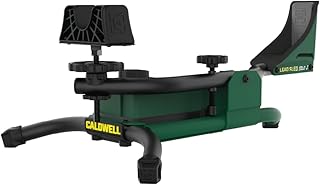
Lead Sled Adjustable Shooting Rest
This is the workhorse most reloaders recognize from their first bench session. The offset frame geometry keeps the rifle elevated and the front rest accessible, so you can dial in zero changes without contorting over the sled. It suits anyone who zeroes rifles or develops loads with a moderate volume of rounds per session.
- Pro: The adjustable front and rear rests move smoothly and hold position well between shots, giving you genuine repeatability for load testing.
- Pro: At $120.59 it sits in the sweet spot where the build quality clearly justifies the cost over entry-level alternatives.
- Con: The frame can shift on lighter bench surfaces without sandbags underneath, so plan for a stable shooting table.
Skip it if you shoot very heavy magnum calibers and want dedicated recoil absorption beyond what the standard frame provides; a DFT or MAX model handles that better.
Lead Sled Solo with Offset Frame
The Solo compresses the Lead Sled philosophy into a narrower footprint. The offset frame means the rear bag or clamp sits to one side, so you get a clear line of sight for scope work and the recoil-reducing pad absorbs energy directly at the butt. This is a hunting-rifle zeroing sled first and a reload bench tool second.
- Pro: The recoil-reducing pad makes extended sessions with .300 Win Mag or similar manageable without shoulder or frame fatigue.
- Pro: Heavy-duty steel construction means it survives transport to a range without bending or losing alignment.
- Con: The compact frame offers less lateral stability than full-size Lead Sleds, so long-range precision work can feel marginal.
Skip it if your primary use is developing tight sub-MOA loads at 100 yards and beyond, where the DFT family delivers noticeably better stability.
Lead Sled DFT with Dual Frame Technology
Dual Frame Technology separates the shooting platform from the base in a way that channels recoil energy downward and forward rather than straight back into the bench. This is the sled you reach for when you are loading for varmint precision or testing brass with a heavier rifle that punishes lesser platforms.
- Pro: The dual-frame system reduces felt recoil dramatically, protecting both your scope reticle and your patience over fifty-round sessions.
- Pro: Weighted base design keeps the sled planted without needing additional sandbags or clamps.
- Con: At $209.99 it is a real investment, and the setup learning curve is steeper than the standard Adjustable.
Skip it if you mostly shoot standard-weight hunting rifles and already have a bench that absorbs recoil well; the Solo or Adjustable handles those without the premium cost.
Lead Sled DFT with Dual Frame Technology (Top Rated)
Same Dual Frame Technology, slightly different configuration, and a higher user rating. The 4.8 score reflects owners praising the micro-adjustment knobs on the front rest and the way the system handles magnum recoil without creeping forward on the bench. For 2026, this is the version most precision-oriented reloaders end up recommending on forums.
- Pro: The $206.65 price undercuts other DFT variants while matching their stability, making it the better buy of the dual-frame line.
- Pro: Owners report zero shift over multi-session comparisons, which is the single most important trait in a sled for load development.
- Con: It is heavy and not designed for transport; this stays on your bench permanently.
Skip it if portability matters; the Solo family is the only Lead Sled option that fits easily into a range bag.
Lead Sled Solo (Low Price Variant)
Functionally identical to the $123.98 Solo above, this listing undercuts it by a meaningful margin. If the offset frame and recoil-reducing pad are what you need, there is no reason to pay more for the same platform. At $106.35 it becomes the best entry point into Lead Sled quality without the DFT premium.
- Pro: Lowest price for genuine Caldwell Solo build quality; you save relative to the same unit listed higher.
- Pro: The heavy-duty steel frame and recoil pad hold up to .308 Win and .30-06 recoil without the bench chatter that plagues cheaper sleds.
- Con: Like all Solos, lateral stability is limited for long-range precision compared to full-frame models.
Skip it if you need dual-frame recoil management for magnum calibers; the savings are not worth the trade in shooting comfort over time.
Lead Sled Adjustable (Higher Price Variant)
This shares the Adjustable name and core design with the top-rated version at $120.59, but it carries a notably lower user score and a higher price. The rating drop suggests owners have encountered inconsistency in the adjustment threads or frame stability compared to the better-reviewed sibling.
- Pro: The adjustable front rest system is still functional and familiar, so it gets the job done for general zeroing.
- Pro: Widely available and recognizable to anyone who has used a Lead Sled before.
- Con: At $168.08 with a 4.1 rating, you are paying more for a platform that scores lower than the cheaper version of itself.
Skip it unless the $120.59 Adjustable variant is out of stock; the price-to-rating ratio here is the weakest in this roundup.
Lead Sled MAX
The MAX is Caldwell’s answer to people who want no compromises. At $248.97 and a 4.8 rating, it delivers the most massive base footprint, the deepest recoil absorption, and the finest adjustment increments in the lineup. This is the sled for a dedicated reloading bench where you shoot fifty rounds per session and expect every group to be purely about the rifle and load.
- Pro: The stability is exceptional; even heavy magnum recoil does not move the sled an inch on a proper bench surface.
- Pro: The adjustment knobs have detents that make repeat settings practical across sessions, saving you from chasing your zero each time.
- Con: It is expensive and physically large, so it demands dedicated bench space and a clear budget commitment.
Skip it if you only zero two or three rifles a year; the Adjustable at $120.59 covers that use without the overkill.
Caldwell Steady Rest NXT
The Steady Rest NXT is not technically a Lead Sled; it is Caldwell’s budget-friendly stable rest that shares the same bench-top purpose. At $28.98 it offers surprising capability for light rifles, small-caliber centerfire, and scope mounting work where you need the gun held still but do not want to spend a fraction of what a full sled costs.
- Pro: The price is a fraction of any Lead Sled in this list, and the quality is solid enough for .223 and smaller bore work.
- Pro: Compact and light, so it stores easily and even fits on a small apartment balcony setup.
- Con: Recoil management is basic; heavy-centerfire rounds will push it and shorten its useful life.
Skip it if your primary rifles are .308 Win or larger; the frame flex under heavier recoil makes it a poor investment that you will outgrow within a single reloading season.
Buying Guide
Recoil Management: Why It Determines Everything
Recoil energy is what separates a sled that protects your scope and shooter from one that does not. Entry-level rests like the Steady Rest NXT rely on the weight of the frame alone to resist rearward motion, which works for .223 but fails with anything pushing meaningful energy. Mid-tier options like the Solo add a dedicated recoil-reducing pad that compresses under the buttstock, converting rearward energy into a shorter impulse. The DFT and MAX push this further with dual-frame or oversized base geometry that channels energy away from the shooting line entirely. If you shoot more than one full magazine of .308 or magnum per session, recoil management is not optional. It directly affects your group consistency because a sled that shifts even a fraction of an inch between shots introduces the same variable you were trying to eliminate.
Adjustability: Increments That Matter
A shooting rest that does not adjust in small increments is just a stable holder. The Lead Sled Adjustable and DFT models let you dial front and rear rests independently, which is what allows you to center your scope’s elevation turret before you start loading or to shift point of impact in quarter-MOA steps without remounting. The key question is whether the threads have detents or locking collars. Without those, vibration from repeated shots creeps the settings, and you lose your reference between sessions. The Solo and Steady Rest offer fewer adjustment points, which simplifies setup but limits precision control.
Frame Weight and Bench Compatibility
A sled is only as stable as the surface it sits on. Full-weight Lead Sled models like the DFT and MAX are heavy enough to resist shifting on most bench tops without additional anchoring. Lighter frames like the Solo or the Steady Rest can creep forward under repeated recoil unless you weigh them down with sandbags or clamp them to the table. Before purchasing, consider your bench surface. If it is smooth or slightly slick, frame weight and contact surface area become the deciding factor for whether you get consistent results or a platform that wanders.
Our Verdict
The top pick is the Lead Sled MAX. Its 4.8 rating and exceptional recoil absorption make it the most complete platform for anyone who zeroes or develops loads seriously, and the price reflects that capability honestly.
The budget pick is the Lead Sled Solo at $106.35. It delivers genuine recoil-pad comfort and heavy-duty steel construction at the lowest entry point in the Solo line, making it the smartest value for hunting-rifle owners who want a dedicated sled without a premium spend.
The condition under which another product wins: if you shoot exclusively in calibers lighter than .243 Win and your primary task is scope mounting or one or two zero sessions per year, the Steady Rest NXT at $28.98 is all you need and spending more would be waste.
FAQ
Do I need a lead sled for a single hunting rifle?
A lead sled removes human variability and lets you confirm whether a scope, mount, or load is actually responsible for poor accuracy. For a single rifle used a few times a year, it is not essential but it does make zeroing faster and less frustrating, especially for long-range hunting setups where marginal groups cost you ethical shot confidence.
What is the difference between a lead sled and a standard bench rest?
A bench rest supports the rifle from below and leaves recoil management to your shoulders and body. A lead sled clamps or locks the rifle in place on a weighted frame, meaning recoil travels through the platform rather than into the shooter. This makes groups more repeatable and reduces scope movement over a full session.
How many pounds of lead weights does a lead sled need?
Weight requirements depend on your rifle caliber and the sled design. The Caldwell Solo line uses a recoil pad and frame geometry rather than loose lead shot, while the Adjustable and DFT models allow you to add lead shot bags to the base. As a general guideline, heavier calibers benefit from more mass, and the frame design of DFT models reduces the amount of added weight needed compared to single-frame sleds.
Will a lead sled damage my scope?
A proper lead sled reduces scope stress because it prevents recoil shock from reaching the optic through your shoulder or an unstable bipod. The concern is the opposite: sleds that shift or chatter under recoil can transmit vibration into the scope tube. That is exactly why recoil management and frame stability matter when choosing a platform.