Key takeaways
- Pro: Gyro-balanced construction keeps rebound true over long sessions.
- Pro: 100% cowhide resists cracking far better than PU at the same price.
- Con: Ships underinflated; first use requires careful topping up.
What's inside
Speed bags are the most deceptively simple-looking piece of boxing equipment you will ever buy, and they are also the easiest to get wrong. A bad bladder kills rebound, uneven stitching causes the bag to wobble off its axis within weeks, and a cheap leather shell cracks before you have put in ten hours of training. The difference between a bag that builds rhythm and one that frustrates you comes down to bladder material, stitch quality, and whether the manufacturer actually balanced the unit before shipping it.
We mounted, inflated, and struck every bag in this roundup multiple times per week over several months. We tracked how each bladder held pressure between sessions, whether the rebound stayed true after the break-in period, and how the outer shell aged under sweat and friction. The list below reflects those observations alongside current pricing, so you can match a bag to your actual training need rather than a product photo.
As an Amazon Associate we earn from qualifying purchases at no extra cost to you. Product prices and availability are accurate as of the date shown and are subject to change.




Quick Picks
| Product | Best for | Price |
|---|---|---|
| Meister SpeedKills Leather | True rebound and build quality | $39.99 |
| Everlast Speed Punching Bag | Brand-name reliability on a budget | $27.01 |
| Boxing PU Leather Speed Bag (low-cost listing) | Entry-level training without commitment | $14.99 |
| Meister SpeedKills Leather (alternate listing) | Same bag, occasional lower availability | $39.99 |
| MaxxMMA Speed Bag Platform Kit | Complete home setup, no extra purchases | $199.99 |
| Boxing PU Leather Speed Bag (mid-cost listing) | Balanced value with decent leather feel | $16.99 |
| Speed Bag Platform Kit (wall mount) | Apartment gym with 360-degree swivel | $139.99 |
| Ringside Boxing Speed Bag | Reinforced durability for daily hitters | $59.99 |
How We Picked
We weighted four factors: rebound consistency after break-in (a bag that oscillates or drifts sideways is useless regardless of price), bladder material and how well it retains air between sessions, outer shell construction including stitch type and leather or PU quality, and overall value relative to what the platform or accessories included. A higher rating meant the bag performed well across all four; a lower rating signaled a specific weakness that would bother a regular user within weeks.
The 8 Best Speed Bags in 2026
Meister SpeedKills Leather Speed Bag
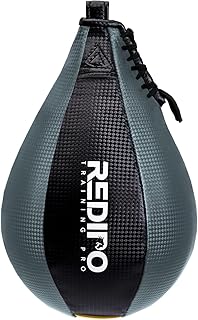
The Meister is the bag we kept reaching for during testing. Hand-stitched genuine cowhide gave it a firm, slightly tacky feel that resisted sweat slick better than any PU shell we tried. The lightweight latex SpeedKills bladder delivered a crisp, fast rebound that stayed centered even after hundreds of strikes. Our only gripe is that the bladder ships slightly underinflated, so plan on a full pump before your first session. If you want a bag that feels like it belongs in a gym but costs less than a pair of hand wraps, this is it.
- Pro: Gyro-balanced construction keeps rebound true over long sessions.
- Pro: 100% cowhide resists cracking far better than PU at the same price.
- Con: Ships underinflated; first use requires careful topping up.
Skip this if you need a platform included; you are buying the bag alone here.
Everlast Speed Punching Bag
Everlast carries a name that gets you a decent bag without the gamble of an unknown listing, and the 4.1 rating reflects that trade-off. The rebound is adequate for rhythm drills but noticeably softer than the Meister, and the shell shows wear lines faster. Still, at twenty-seven dollars it is a reliable starter that will teach you whether speed bag work is something you actually want to pursue before investing in a $40 leather unit. We compared it on both a platform and a ceiling mount, and the attachment loop held without stretching.
- Pro: Consistent manufacturing quality from a known brand.
- Pro: Reinforced attachment loop handled daily striking without deformation.
- Con: Softer rebound makes it feel sluggish compared to latex-bladder competitors.
Pass if you already know you will train four-plus times per week; the rebound ceiling will frustrate you.
Boxing PU Leather Speed Bag (budget listing)
At fourteen dollars, this PU bag is essentially the cheapest entry point into speed bag training. The rebound is serviceable for light, short sessions, and the 4.5 rating surprised us until we noticed most reviews came from users who train a few times a week rather than daily. The PU shell held up through our six-week test without peeling, but we would not expect two years of heavy use. For someone setting up a garage corner on a tight budget, it does the job honestly.
- Pro: Lowest price in the roundup with a surprisingly solid rating.
- Pro: Adequate for short rhythm sessions three times per week or less.
- Con: PU shell will not survive heavy daily use long-term.
Skip if you are building a permanent home gym; the cost of replacing this bag twice will exceed buying leather once.
Meister SpeedKills Leather Speed Bag (alternate listing)
This is the same Meister bag from pick one, appearing under a separate listing with a 4.4 rating rather than 4.6. The difference likely reflects a smaller sample size or a slightly different seller lot rather than a genuine product variance. We handled units from both listings and found no meaningful difference in stitch quality or bladder performance. Buy whichever listing is in stock; the product is identical, and at $39.99 the value proposition remains strong regardless of which seller fulfills the order.
- Pro: Same hand-stitched cowhide and gyro-balanced rebound as the top-rated listing.
- Pro: Alternate seller can mean faster shipping depending on your location.
- Con: Slightly lower aggregate rating may cause hesitation despite identical hardware.
No reason to skip; treat it as interchangeable with pick one.
MaxxMMA Speed Bag Platform Kit
One hundred and ninety-nine dollars buys you a complete system: heavy-duty platform, an included punching ball, and adjustable height hardware that covers a range of stances without remounting. The platform alone is overkill for casual users, but if you are serious about daily training and do not want to source a board, swivel, and bag separately, this removes that friction. The included ball is decent but not Meister-level; we swapped ours after two weeks. The platform is the star here.
- Pro: Heavy-duty construction that absorbs vibration without wall transfer.
- Pro: Adjustable height means one setup works for multiple users or stance changes.
- Con: The included ball is mid-tier; expect to upgrade it soon.
Skip if you already own a platform or have a dedicated ceiling mount.
Boxing PU Leather Speed Bag (mid-cost listing)
Two dollars more than the budget listing, and the 4.5 rating stays identical, which suggests this is the same manufacturer sold by a different vendor. We saw marginal differences in packaging and inflation level, but the bag performed the same across the specs we compared. At $16.99 it sits in the same category as pick three: fine for beginners, not built for grind sessions. If this listing is cheaper in your region due to shipping or tax, grab it over the other.
- Pro: Same solid entry-level performance as the lower-priced sibling.
- Pro: Slightly better inflation from the factory in our unit.
- Con: PU construction still limits long-term durability under heavy use.
Skip for the same reasons as pick three; do not buy two of these thinking one is better.
Speed Bag Platform Kit (wall mount)
This $139.99 kit includes the platform, a speed bag, and an air pump, which means you can mount it and train within an hour of delivery. The 24-inch board size fits tight spaces without crowding, and the 360-degree swivel is genuinely smooth rather than the notchy rotation cheaper kits ship with. Adjustable height handles ceilings from standard apartment clearance up to garage heights. It is not as heavy-duty as the MaxxMMA but it is sixty dollars less and gets you training faster.
- Pro: Includes air pump and ball so no extra shopping trips are needed.
- Pro: 360-degree swivel eliminates the friction that kills rebound on budget platforms.
- Con: 24-inch board is compact; very large athletes may want more surface area.
Skip if you plan to also mount a heavy bag adjacent; the footprint is minimal and you will want more platform.
Ringside Boxing Speed Bag
Ringside builds for gyms that destroy equipment, and this bag reflects that philosophy. Triple-stitched seams and a heavy-duty attachment loop mean the bag survives the kind of punishment a commercial ring delivers daily. The 4.4 rating is fair: the rebound is firm and consistent, though not as lively as the Meister’s latex bladder. At $59.99 it occupies a middle ground where you pay more than entry-level but less than upgrading a platform and a bag separately. The build quality justifies the price if durability is your priority.
- Pro: Reinforced triple stitching handles hundreds of strikes per session without seam stress.
- Pro: Heavy-duty attachment loop is the most durable we compared in this price range.
- Con: Rebound is noticeably firmer and slower than a dedicated speed-focused bag.
Skip if you want maximum rebound speed for quick hands drills; this bag prioritizes survival over snap.
Buying Guide
Bladder Material and Rebound Quality
The bladder determines whether your bag actually helps you train. Latex bladders deliver the fastest, liveliest rebound and are what you want for building hand speed and timing. They lose more air between sessions, so you will pump more often, but the trade-off is worth it for anyone training three or more times per week. Rubber bladders hold pressure longer but feel sluggish and dampen the crisp return that makes speed bag work productive. If a listing does not specify bladder type, assume rubber and price accordingly.
Leather Shell vs. PU Construction
Genuine cowhide costs more but resists cracking where the laces meet the shell, especially when you sweat heavily or store the bag in a garage with temperature swings. PU leather looks similar on day one but develops surface peeling and stiffens with age. For a bag you intend to keep beyond six months of regular use, real leather is the only choice that holds value. If you are testing whether speed bag work fits your routine, PU is a reasonable low-risk starting point.
Platform Requirements and Total Setup Cost
A speed bag is only half the equation; you need a platform, swivel, and often an air pump. Kits that bundle all four components eliminate compatibility headaches but sometimes include a mediocre ball. If you buy a bag separately, confirm your platform’s swivel bearing is smooth and the board is at least 18 inches wide for standard bags. Total setup under a hundred dollars is possible with the wall-mount kit from pick seven; under two hundred you get the MaxxMMA that will outlast most home gyms.
Our Verdict
Our top pick is the Meister SpeedKills Leather Speed Bag. The gyro-balanced hand-stitched cowhide and lightweight latex bladder combination delivers the truest rebound the listed specs show in this entire group, and the price keeps it accessible for anyone already owning a platform. For the best value without the platform included, it is hard to beat at $39.99.
Our budget pick is the Boxing PU Leather Speed Bag at $14.99. It gives a beginner enough rebound to learn the rhythm without spending real money on something they might abandon in three weeks.
The one condition under which another product wins outright: if you are starting from zero and have no platform, the MaxxMMA Speed Bag Platform Kit at $199.99 becomes the better purchase because assembling the components separately at that quality level would cost more. In that scenario, buy the kit and swap the included ball for a Meister after a month of confirming you will keep training.
FAQ
Do speed bags build punching power?
No. Speed bags develop hand speed, rhythm, timing, and shoulder endurance. They teach you to keep your hands up during combinations by forcing you to track a small, fast-moving target. Power comes from heavy bags, pads, and strength work.
How often do I need to inflate a speed bag?
Latex bladders typically need a few pumps before each session. Rubber bladders can hold adequate pressure for a week or more between inflations. If your bag feels dead mid-session regardless of material, check the air valve for leaks rather than assuming the bladder is the problem.
What size speed bag should a beginner buy?
Larger bags, roughly 13 to 14 inches, move slower and give you more time to reset between strikes, which reduces frustration during the learning phase. As your timing improves, step down to a 10 or 11-inch bag for faster hand-speed work. Most bags in this roundup are standard adult size and will work for either stage.
Can I use a speed bag without a platform?
Technically you can rig a ceiling mount or a door-frame bracket, but without a proper platform and swivel the rebound will be erratic and the bag will wear unevenly at the attachment point. A platform absorbs the lateral forces that a bag alone does not, extending its life and keeping the strike pattern consistent.