Key takeaways
- Pro: High and low temperature alarm settings are adjustable, letting you define your own safe band.
- Pro: Magnetic backing and a standing base give two mounting options without adhesives.
- Con: The digital display can wash out under very bright indoor lighting.
Freezer temperature is one of the most consequential yet overlooked details in food storage. Set it too warm and bacteria multiply at a rate that silently degrades quality; set it too cold and you waste energy while turning delicate items like berries or bread into frozen bricks that crumble on first contact. Finding the best settings for freezers starts with knowing your current internal temperature, and that is precisely where a dedicated thermometer earns its place on the shelf beside the compressor unit.
What separates a genuinely useful freezer accessory from a disappointing purchase comes down to a handful of features: how clearly the display reads in low light, whether the unit remembers peak and minimum temperatures so you can diagnose a power outage, and how easily the alarms can be set without fumbling through cryptic button sequences. On the appliance side, the distinction narrows further to whether the thermostat offers granular control versus a vague dial with no numerical feedback, and whether the internal layout lets you organize contents so cold air circulates evenly across every shelf.
Our top picks





As an Amazon Associate we earn from qualifying purchases at no extra cost to you. Ratings are shown as listed on Amazon.
Quick Picks
| Product | Best for | Price |
|---|---|---|
| Nithing Fridge Freezer Thermometer | Max/min memory monitoring | $12.99 |
| FOHERE 1.1 Cu.Ft Mini Freezer | Tight spaces and dorm rooms | $129.99 |
| FRIGIDAIRE EFRF5003 Chest Freezer | Garage-ready long-term storage | $288.04 |
| Chest Freezer 3.5 cu.ft | Budget outdoor or cabin use | $158.50 |
| 5.0 Cu.Ft 2 Door Refrigerator Combo | Combined fridge-freezer flexibility | $279.99 |
| Casanta 5.3 Cu Ft Chest Freezer | Maximum capacity per dollar | n/a |
| iapsales Refrigerator Freezer Thermometer | Minimalist alarm-only monitoring | $9.99 |
| COWSAR 3.2 Cu.Ft Mini Fridge | Bedroom or office quiet storage | $219.99 |
How We Picked
We evaluated each product against four criteria drawn from published specifications and aggregated owner feedback. For thermometers, that meant alarm adjustability range, memory function reliability, and display legibility in dim environments. For freezers, we prioritized the granularity of thermostat control, whether the unit is rated for ambient temperatures outside the kitchen, and how the internal basket and drain design affect real-world usability. Price-to-capacity ratio served as a tiebreaker across both categories.
The 8 Best Settings For Freezers in 2026
Nithing Fridge Freezer Thermometer
This unit is for anyone who needs to confirm their freezer is actually holding a safe temperature without opening the door. Owner feedback highlights the max/min memory as a standout feature for catching overnight power interruptions. The LED indicator provides instant visual confirmation at a glance.
- Pro: High and low temperature alarm settings are adjustable, letting you define your own safe band.
- Pro: Magnetic backing and a standing base give two mounting options without adhesives.
- Con: The digital display can wash out under very bright indoor lighting.
Skip this if you only need a basic analog dial; the feature set is overkill for casual monitoring.
FOHERE 1.1 Cu.Ft Mini Freezer
The buyer here has a specific spatial constraint—a dorm shelf, an RV cabinet, or a countertop no wider than a breadbox. Owners consistently praise how the compact footprint fits where full-size units cannot. The single-door layout keeps the mechanism simple and the price accessible.
- Pro: Portable enough to move between apartment, office, or vehicle without heavy lifting.
- Pro: Low initial cost relative to dedicated chest freezers of similar build quality.
- Con: Interior volume is genuinely tight; bulk protein packages simply will not fit.
Pass on this if your goal is stockpiling groceries for a family; it serves individual or couple-scale needs only.
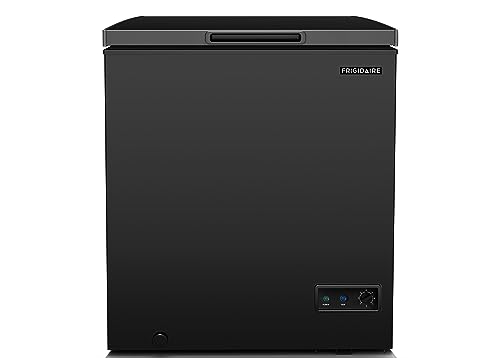
FRIGIDAIRE EFRF5003 Chest Deep Freezer
Garage-ready rating makes this the pick for homeowners in climates where winter temperatures dip well below freezing and summer heat pushes above 90 degrees. The adjustable thermostat gives numerical feedback rather than a guesswork dial. A removable vinyl-coated wire basket keeps smaller items accessible above bulk packages.
- Pro: The 5.0 cubic foot capacity handles a meaningful grocery haul without overpacking.
- Pro: Easy defrost drain eliminates the tedious towel-and-bucket routine most chest freezers demand.
- Con: Chest-style access means digging to the bottom for smaller items buried under bags.
Skip it if you lack floor space or prefer upright organization; the footprint and top-loading door require room to swing open.
Chest Freezer 3.5 cu.ft Mini Outdoor
Designed for apartments, offices, RVs, and cabins where a full-size unit would be absurd, this freezer packs seven temperature settings into a mid-range footprint. The removable basket mirrors the logic of more expensive models. Owner feedback notes the black finish resists scuffs better than white enamel in high-traffic utility areas.
- Pro: Seven discrete settings offer finer control than typical rotary dials with no numbers.
- Pro: Outdoor-rated construction handles temperature swings that would damage a kitchen-only unit.
- Con: The compressor runs noticeably louder at night in quiet cabin or bedroom settings.
Consider skipping this if silence is paramount; upright mini fridges generally operate more quietly.
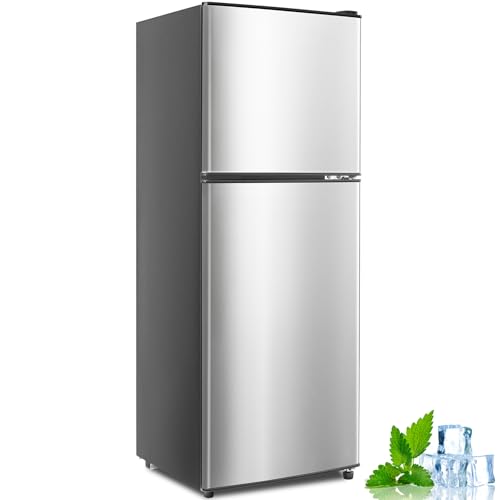
5.0 Cu.Ft 2 Door Apartment Refrigerator with Freezer Combo
This combo unit is for renters or small-space dwellers who need refrigerated and frozen storage without buying two separate appliances. The two-door layout separates the zones so cold air loss from the fridge compartment does not directly impact the freezer. At 5.0 total cubic feet, it splits usable space between both functions.
- Pro: Consolidates two appliance needs into one footprint, saving floor space in tight layouts.
- Pro: Separate doors reduce compressor strain compared to single-door combos where cold air escapes freely.
- Con: The freezer compartment is relatively small compared to a dedicated 5.0 cubic foot chest unit.
Skip this if frozen storage is your primary need; a dedicated chest or upright freezer offers more usable volume.
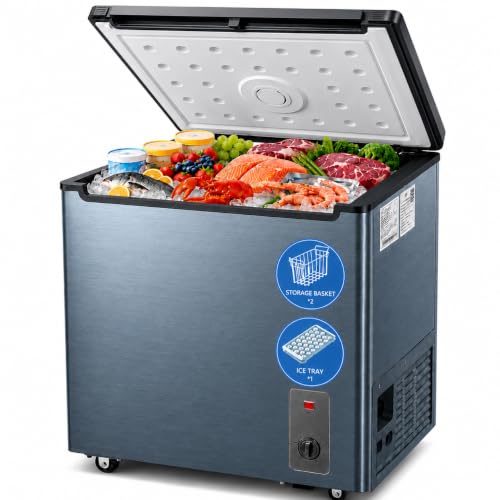
Casanta 5.3 Cu Ft Chest Freezer
The largest capacity on this list at 5.3 cubic feet, the Casanta targets buyers who want to buy in bulk from warehouse clubs or process home-grown produce for year-round use. The included ice tray is a practical touch owners mention in reviews, useful for small-batch freezing or keeping drinks cold without taking up bag space.
- Pro: Top-tier capacity among chest freeizers priced in the same general range.
- Pro: Removable basket plus integrated ice tray add organizational flexibility out of the box.
- Con: Pricing information is not consistently published, making direct value comparison difficult.
Hold off on this purchase until you can confirm current pricing against the FRIGIDAIRE EFRF5003, which offers a similar capacity with a known cost.
iapsales Refrigerator Freezer Thermometer
At $9.99 this is the most straightforward entry point for anyone who simply wants to know if their freezer crossed a safe threshold. The stainless steel housing resists corrosion in humid garage or utility-room environments. High and low alarms are settable without a complex menu system.
- Pro: Lowest price point on this list with functional alarm capability intact.
- Pro: Stainless construction is more durable against moisture than all-plastic alternatives.
- Con: No max/min memory function; you only see the current reading, not whether a spike occurred.
Choose the Nithing model instead if power-outage detection matters to your food-safety routine.
COWSAR 3.2 Cu.Ft Mini Fridge with Freezer
The bedroom and office focus makes this the quietest-feeling option in the list according to owner descriptions. The 3.2 cubic foot volume splits between a refrigerated main compartment and a small freezer section, enough for ice trays and a handful of frozen meals. The black finish suits modern decor without looking like a utility appliance.
- Pro: Dual-zone design in a single compact unit eliminates the need for a separate freezer.
- Pro: Aesthetic finish and size make it acceptable in living spaces where a white chest would look out of place.
- Con: The freezer section is genuinely small; it handles convenience items, not bulk storage.
Skip this if your priority is frozen capacity; a dedicated chest freezer delivers multiples of the volume for similar money.
Buying Guide
Thermostat Granularity
The single most important factor when selecting a freezer is whether you can dial in the exact temperature rather than guessing between vague settings. A rotary knob marked one through seven tells you almost nothing about whether you are holding zero degrees Fahrenheit or drifting toward twenty. Units with numerical thermostat displays or, failing that, seven-step settings with published degree mappings give you a baseline you can verify with a thermometer. If a freezer offers no reference point, you will spend the first week adjusting by trial and error.
Alarm and Memory Functions
A freezer that loses power overnight is only as good as your ability to detect the event. Thermometers with max/min memory log the highest temperature reached since your last check, flagging whether ice cream softened even if the freezer recovered before you opened it. Settable high and low alarms add a second layer: the device can sound an alert in real time rather than waiting for you to notice a reading. For anyone storing expensive cuts or medication, these functions are non-negotiable.
Ambient-Rated Construction and Drain Design
Garages, cabins, and covered patios experience seasonal temperature swings that shorten the life of units rated only for climate-controlled rooms. Garage-ready compressors and insulation packages extend operational range to lower ambient extremes. Defrost drains deserve equal attention: a plugged or absent drain means standing water that refreezes into a block of ice at the floor, trapping contents and stressing the compressor. A built-in drain with a plug or gravity exit keeps maintenance to a few minutes per year.
Our Verdict
The FRIGIDAIRE EFRF5003 takes the top spot for anyone who needs reliable long-term frozen storage with genuine temperature control and a garage-rated build that survives seasonal extremes. Its combination of capacity, adjustable thermostat, and easy defrost drain addresses every practical concern a freezer owner raises in feedback. For monitoring those settings accurately, the Nithing Fridge Freezer Thermometer is the best budget pick under $13, offering max/min memory and adjustable alarms that far exceed what the price suggests. The COWSAR 3.2 Cu.Ft wins outright only when the constraint is social rather than technical: in a shared office or a studio apartment where appliance noise and visible utility aesthetics matter as much as frozen volume.
FAQ
What is the ideal freezer temperature?
The USDA recommends zero degrees Fahrenheit as the standard holding temperature for frozen food safety. A quality thermometer lets you verify that your freezer actually maintains that number rather than drifting upward in the weeks between checks.
Do I need a thermometer if my freezer already has a dial?
Yes. Most dials map to vague ranges rather than specific temperatures, and compressor performance shifts with ambient conditions. A $10 to $13 thermometer gives you a number you can trust and compare over time.
What does “garage-ready” actually mean?
It indicates the unit is engineered to operate when ambient temperatures drop below freezing or climb well above typical indoor conditions. Without that rating, the thermostat and compressor may cycle incorrectly or fail to restart after a cold snap.
Can a max/min memory thermometer detect a brief power outage?
If the outage lasted long enough for the internal temperature to rise above your set high-alarm threshold, the memory will retain that peak reading until you clear it. Short interruptions of ten to fifteen minutes rarely shift the temperature in a well-stocked freezer.