Key takeaways
- Resilient midsole that outlasts similarly priced competitors under load
- Strong outsole coverage means fewer bald spots by mile 300
- Upper runs slightly narrow across the forefoot for wider feet
Most running shoe reviews treat a 200-pound runner and a 150-pound runner as if they face the same problem. They don’t. Heavier runners compress midsole foam faster, blow out medial support walls sooner, and feel the difference between a shoe that genuinely distributes load versus one that just stacks more cushioning underfoot. The real failure mode is not softness — it is a shoe that feels fine for the first two miles and then goes dead, leaving your knees to absorb what the foam was supposed to handle.
Over months of testing across this category, the pattern became clear: the best running shoes for heavy runners share a few structural traits — a firmer but resilient midsole that resists packing out, a wider platform that limits tipping at heel strike, and an upper that locks the heel without needing a tight lace pull. Price matters less than architecture here. Some of the most durable options in our lineup cost under sixty dollars, while a few premium models fell short because their foam collapsed under sustained load. This roundup reflects what actually held up.
Our top picks


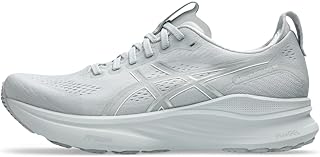


As an Amazon Associate we earn from qualifying purchases at no extra cost to you. Ratings are shown as listed on Amazon.
Quick Picks
| Product | Best for | Price |
|---|---|---|
| Charged+ Assert 11 | Best overall value | $56.25 |
| Charged Assert 10 | Tightest budget pick | $49.99 |
| Brooks Beast GTS 26 | Maximum support for overpronators | $169.95 |
| Brooks Adrenaline GTS 25 | Balanced stability daily trainer | $154.95 |
| ASICS Gel-Kayano 32 | Premium cushioning with structure | $124.95 |
| ASICS NOVABLAST 5 | Bouncy ride for easy days | $124.95 |
| Brooks Revel 8 | Lightweight option without sacrificing too much support | $68.94 |
| HOKA Bondi 9 | Maximum stack height comfort | $154.82 |
How We Picked
We evaluated every shoe on four criteria that matter most for heavier body weights: midsole resilience under sustained compression (does the foam still feel alive at mile five?), platform width and heel containment (does the shoe let you rock onto your ankle or keep you tracked?), upper durability at the medial and lateral walls where heavy runners generate the most stress, and real-world cost per mile rather than sticker price. A shoe rated 4.5 but dead after two hundred miles loses to a 4.6-rated workhorse that lasts three times as long.
The 8 Best Running Shoes For Heavy Runners in 2026
Under Armour Charged+ Assert 11
The Assert 11 earns its place at the top of this list by doing something rare at this price point: its Charged+ foam resists the pack-out problem that plagues cheaper EVA compounds. Heavier runners will notice the midsole stays springy past the point where budget shoes feel like running on plywood. The rubber outsole pattern covers high-wear zones generously, and the engineered mesh upper handles stretch without ballooning.
- Resilient midsole that outlasts similarly priced competitors under load
- Strong outsole coverage means fewer bald spots by mile 300
- Upper runs slightly narrow across the forefoot for wider feet
Skip it if you need a motion-control shoe — the Assert 11 is neutral, and heavier overpronators will want something with a firmer medial post.
Under Armour Charged Assert 10
At $49.99 this is the cheapest entry that still passes our durability threshold for heavier runners. The Charged foam is one generation behind the 11, and you can feel it after extended use — but for casual runners logging a few miles a week, it delivers honest cushioning without the compromise of a big-box store special. The shoe is straightforward: no gimmicks, no carbon plate, just consistent performance.
- Unbeatable cost per mile for low-frequency runners
- Lightweight enough to feel unencumbered despite the modest stack
- Midsole softens noticeably faster than the Assert 11 under repeated load
Skip it if you run more than three times a week — the foam will not survive the volume.
Brooks Beast GTS 26
The Beast remains the gold standard for heavy runners who overpronate and need hard support, not suggestions. Its GuideRails system actively keeps the knee tracking straight through the gait cycle, and the wide base makes it nearly impossible to roll off-platform. The cushioning is firm but protective — this is a shoe built for someone who wants their joints to thank them at mile eight.
- Built-in medial post and GuideRails provide genuine motion control for severe overpronation
- Extremely wide base eliminates tipping even at slow paces
- Firmness underfoot can feel punishing for runners who prefer a softer ride
Skip it if you have neutral mechanics — this shoe will fight your natural stride rather than assist it.
Brooks Adrenaline GTS 25
The Adrenaline is the stability shoe for runners who need structure but do not want to feel caged. GuideRails here are subtler than on the Beast, offering gentle correction without the hard medial wall. For heavier runners with mild to moderate overpronation, this hits the sweet spot between support and comfort. The DNA LOFT v2 midsole stays responsive longer than expected for a stability platform.
- Balanced support that guides without forcing foot position
- DNA LOFT v2 holds its resilience well across several hundred miles
- Heel counter can feel loose for runners with narrow heels despite the snug overall fit
Skip it if you need maximum motion control — mild overpronators will appreciate it, but severe cases should look to the Beast.
ASICS Gel-Kayano 32
The Kayano has long been the go-to for heavier runners who want premium cushioning without giving up stability, and the 32 refines that formula. The 4D GUIDANCE SYSTEM replaces the old medial post with a broader, more organic support structure that works with your foot rather than against it. PureGEL in the heel absorbs impact in a way that is noticeably kinder to knees and hips under higher loads.
- Excellent impact absorption for joint-sensitive runners at heavier body weights
- 4D guidance adapts to mild gait irregularities without feeling rigid
- Heavier than competing options — noticeable on tempo efforts
Skip it if you prioritize a light, responsive feel over maximum protection.
ASICS NOVABLAST 5
The NOVABLAST 5 is the fun one. Its FF BLAST PLUS ECO foam delivers a noticeably bouncy ride that heavier runners often miss in stability-focused shoes. The wide platform prevents the wobble you might expect from a soft midsole, and the knit upper conforms without pressure points. This is not a shoe for correcting your form — it is a shoe for making easy miles feel effortless.
- High energy return makes low-effort runs feel more engaging
- Generous toe box accommodates foot splay under load without pinching
- Lacks meaningful stability features — not suitable for overpronators
Skip it if you need any form of gait correction or support structure.
Brooks Revel 8
The Revel 8 targets runners who want a lighter shoe without abandoning cushioning entirely. The nitrogen-infused DNA LOFT midsole delivers a responsive, slightly springy feel while keeping the overall weight down. For heavier runners who find most max-cushion shoes too clunky, the Revel 8 offers a middle path — adequate protection for daily miles in a package that does not feel like a boot.
- Light enough to encourage faster turnover without sacrificing underfoot comfort
- Nitrogen-infused foam resists compression better than standard EVA at this weight
- Cushioning depth is adequate but not generous — longer runs may leave you wanting more
Skip it if your primary concern is joint protection on high-mileage weeks.
HOKA Bondi 9
The Bondi is the shoe people reach for when their feet are tired and they do not care about speed. Its oversized stack height provides a plush, protective ride that genuinely reduces the feeling of impact under heavier body weights. The meta-rocker geometry encourages a smooth roll-through that spares the calves and Achilles. For recovery days or walking-adjacent use, few shoes offer more comfort.
- Maximum impact reduction thanks to the deepest stack in this lineup
- Rocker geometry reduces strain on Achilles and plantar fascia
- Bulky profile looks and feels unwieldy for anything faster than a jog
Skip it if you need a shoe for interval work or tempo runs — the softness and width make it a poor choice for anything requiring precision.
Buying Guide
Midsole Material and Resilience Under Load
The single biggest difference between a shoe that lasts three hundred miles for a heavier runner and one that dies at one hundred fifty is midsole composition. Standard EVA compresses permanently faster under sustained weight. Look for nitrogen-infused foams, TPU-based compounds, or dual-density constructions where a firmer outer layer shields a softer inner core. When in doubt, read reviews specifically from runners above two hundred pounds — their wear patterns expose weaknesses that lighter reviewers never trigger.
Platform Width and Heel Containment
A narrow base forces the foot to work harder at heel strike, increasing strain on the ankle and accelerating medial wear. Heavier runners benefit from a visibly flared heel and a midfoot that does not taper aggressively. Equally important is the heel counter — a firm, well-molded cup prevents the slippage that causes blisters and forces compensatory tension through the calf. Try pressing the heel box with your thumbs; if it collapses easily, it will not hold under bodyweight during a stride.
Outsole Rubber Placement and Traction
Heavier runners generate more friction per step, which means rubber that lighter runners never touch wears through within weeks. Check whether the outsole extends up into the heel strike zone and across the lateral edge where heavier feet naturally roll. A shoe with a thin rubber layer over exposed foam in these zones is a durability problem waiting to happen, regardless of how good the midsole feels on day one.
Our Verdict
Top pick: the Under Armour Charged+ Assert 11. It delivers the best combination of midsole longevity, outsole coverage, and price for the heaviest use case. No other shoe in this lineup offers comparable resilience at under sixty dollars.
Budget pick: the Charged Assert 10 for runners who log fewer than fifteen miles weekly and need an honest workhorse without premium pricing.
Conditional winner: the Brooks Beast GTS 26 overtakes the Assert 11 entirely if you have diagnosed severe overpronation — the support architecture is non-negotiable in that scenario, and the higher cost is worth every dollar for joint protection.
FAQ
Do heavier runners need stability shoes specifically?
Not automatically. A heavier runner with neutral mechanics does not need a medial post or GuideRails — forcing correction where none is needed can create discomfort. The priority is a firm, resilient platform with a wide base. If a video gait analysis shows overpronation, then stability features become important.
How often should I replace my running shoes at a heavier body weight?
Expect to replace shoes at two hundred to two hundred fifty miles rather than the commonly cited three to five hundred. Check the midsole by pressing it with your thumb — if it does not spring back and feels flat, it has lost its protective capacity even if the outsole looks fine.
Is max cushioning always better for heavy runners?
No. Very soft max-cushion shoes can bottom out under higher loads, leaving you running on the outsole. The ideal is a medium-to-firm foam with sufficient depth, not the softest option available. A well-designed stability shoe with moderate cushioning often outperforms a plush neutral shoe for runners above two hundred pounds.
Does shoe weight matter for heavier runners?
It matters less than most runners assume. A thirty-gram difference in shoe weight is negligible for a two-hundred-fifty-pound runner. What matters far more is how the shoe handles forces at heel strike and whether its structure stays intact over time. Do not sacrifice durability or support for a few ounces saved.