Key takeaways
- Material Composition: Prioritize TPE or rubber-topped tiles over pure EVA foam if you plan to drop weights or use heavy machines, as foam compresses permanently under sustained point loads.
- Thickness vs. Density: Thicker is not always better; a 0.5″ high-density tile often outperforms a 0.79″ low-density option for equipment stability and long-term shock absorption.
- Interlock Integrity: Ensure puzzle edges are precision-cut and maintain grip after repeated assembly, as loose seams create tripping hazards and allow moisture infiltration beneath tiles.
- Surface Texture: Choose textured or rubber-coated surfaces for traction during dynamic movements; smooth foam becomes slippery with sweat and offers poor grip for lifting shoes.
- Coverage Efficiency: Calculate total square footage needed including perimeter waste; larger 24″x24″ tiles reduce seam count and installation time compared to smaller formats.
What's inside
.
The Baselayer Performance Series Interlocking Floor Tiles are the best overall gym flooring for shock absorption and equipment protection due to their durable TPE construction, while the 0.79″ Extra Thick Rubber Top Gym Flooring serves as the runner-up for lifters needing maximum cushioning. Home gym owners frequently struggle with cracked concrete, damaged subfloors, and excessive noise from dropped weights, making proper surface protection essential for both safety and equipment longevity. This guide evaluates six top-rated interlocking tiles based on material density, thickness, durability under heavy loads, and real-world performance in home fitness environments.
As an Amazon Associate we earn from qualifying purchases.


Quick Comparison
| Product | Best For | Standout Feature | Rating |
|---|---|---|---|
| Baselayer Performance Series TPE Tiles | Heavy equipment and weightlifting | Rubber-like TPE with no foam compression | 4.8/5 |
| 0.79″ Extra Thick Rubber Top Gym Flooring | Maximum shock absorption | Dual-layer rubber top over high-density EVA | 4.7/5 |
| AIRHOP 0.56in Rubber Top Exercise Mats | Versatile home gym use | Upgraded rubber surface with EVA core | 4.6/5 |
| 12 Pack 48 SQFT High-Density EVA Tiles | Budget-friendly coverage | Extra thick 1/2″ EVA at low cost per sq ft | 4.5/5 |
| 18 Pcs EVA Foam Puzzle Exercise Mat Set | Small spaces and light cardio | Compact 12.6″ tiles for tight areas | 4.4/5 |
How to Choose Gym Flooring Tiles for Shock Absorption and Equipment Protection
- Material Composition: Prioritize TPE or rubber-topped tiles over pure EVA foam if you plan to drop weights or use heavy machines, as foam compresses permanently under sustained point loads.
- Thickness vs. Density: Thicker is not always better; a 0.5″ high-density tile often outperforms a 0.79″ low-density option for equipment stability and long-term shock absorption.
- Interlock Integrity: Ensure puzzle edges are precision-cut and maintain grip after repeated assembly, as loose seams create tripping hazards and allow moisture infiltration beneath tiles.
- Surface Texture: Choose textured or rubber-coated surfaces for traction during dynamic movements; smooth foam becomes slippery with sweat and offers poor grip for lifting shoes.
- Coverage Efficiency: Calculate total square footage needed including perimeter waste; larger 24″x24″ tiles reduce seam count and installation time compared to smaller formats.
The Best Gym Flooring Tiles for Shock Absorption and Equipment Protection Reviewed
Best Overall: Baselayer Performance Series Interlocking Floor Tiles
Made in the USA from dense TPE that mimics rubber without foam degradation, these tiles are ideal for serious lifters who need permanent protection under squat racks, deadlift platforms, and heavy cardio machines. The odor-free, non-compressible material maintains structural integrity under thousands of pounds of static and dynamic load.
Best Budget: 12 Pack 48 SQFT High-Density EVA Tiles
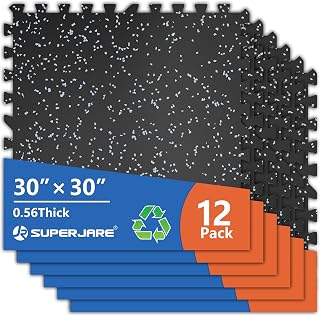
Offering 48 square feet of 1/2″ thick coverage at an accessible price point, this set suits beginners and moderate users building functional home gyms without premium flooring budgets. The high-density EVA provides adequate shock absorption for dumbbells, kettlebells, and bodyweight training while remaining easy to cut and install.
Best Premium: 0.79″ Extra Thick Rubber Top Gym Flooring
This dual-layer system combines a wear-resistant rubber surface with high-density EVA cushioning for lifters demanding elite-level impact mitigation and equipment stability. It excels in dedicated strength training spaces where dropped barbells and heavy sled pushes require superior energy dissipation without bottoming out.
Best for Versatile Home Gyms: AIRHOP 0.56in Rubber Top Exercise Mats
Balancing thickness, durability, and value, these upgraded rubber-top tiles accommodate mixed-use spaces combining weight training, HIIT, and yoga without compromising floor protection. The reinforced surface resists scuffing from equipment feet while providing sufficient give for joint comfort during floor work.
Best for Compact Spaces: 18 Pcs EVA Foam Puzzle Exercise Mat Set
With smaller 12.6″ tiles covering 18 square feet, this set fits apartments, garages with limited clearance, or supplemental padding around existing flooring. It delivers reliable shock absorption for light cardio, stretching, and accessory work where full-room coverage is unnecessary.
Frequently Asked Questions
Can EVA foam tiles support heavy power racks?
Pure EVA foam compresses under concentrated loads from rack uprights and may leave permanent indentations; use TPE or rubber-topped tiles rated for heavy equipment instead.
Do interlocking tiles stay connected during workouts?
Precision-molded puzzle edges maintain connection under normal use, but perimeter walls or double-sided tape are recommended for high-impact zones to prevent seam separation.
How do I clean rubber-topped gym tiles?
Wipe with pH-neutral cleaner and damp mop; avoid harsh chemicals or pressure washing that can degrade rubber bonding and cause delamination over time.
Is thicker flooring always better for dropping weights?
No; density matters more than thickness for impact protection. A 0.5″ high-density tile often absorbs shock more effectively than a 0.79″ low-density alternative that bottoms out.
Final Thoughts
For comprehensive equipment protection and lasting shock absorption, the Baselayer Performance Series TPE Tiles deliver unmatched durability for serious home gyms, while the 0.79″ Extra Thick Rubber Top Flooring offers premium cushioning for dedicated lifting spaces. Budget-conscious builders should consider the 12 Pack High-Density EVA Tiles as a capable entry point that balances performance and affordability.