Key takeaways
- 3-inch jaw opening – fits most clamp-on stand posts and cable channels
- Metal spring mechanism with a reinforced pivot, not a plastic leaf spring
- Blue powder-coated finish for easy spotting in a drawer
- Ergonomic soft-grip handles sized for one-handed squeeze
- Compact overall length, so it stores in the same drawer as a stand’s cable kit
Top 3 Picks
The best overall pick for most people is the IRWIN Tools QUICK-GRIP Metal Spring Clamp, 3-Inch (222803) – Best for a do-it-all grip and hold accessory: its 3-inch jaw opening is the sweet spot for gripping charging-station parts while adhesive cures, and for clamping the dock of a stand-style station to a nightstand while you route a cable underneath. The best budget option is the Irish Spring Deodorant Soap Bars Original, 3 Count – the lowest-cost way to add a genuinely useful grip-and-clean staple to the same order, and a reminder that most “3-in-1″ charging-station bundles skimp on the small stuff, not the station itself. The best premium pick is the FWN Trailer Leaf Spring, 20-3/8″L, 1-3/4″ Width, 3-3/16” Arch, 3 Leaf 1000lb, Double Eye Trailer Axle Springs – a heavy-duty analog of the same principle: a load-bearing spring that holds its arch under pressure, which is exactly what a good charging-station stand does for your nightstand footprint.
Read the full rundown below for footprint math, wattage splits, MagSafe alignment, and whether a wall adapter actually comes in the box.
Quick Comparison
| Product | Best For | Key Specs | Price Tier |
|---|---|---|---|
| IRWIN Tools QUICK-GRIP Metal Spring Clamp, 3-Inch (222803) | Do-it-all grip and hold accessory | 3-inch jaw opening, metal spring mechanism, blue finish | Budget |
| Irish Spring Deodorant Soap Bars Original, 3 Count | Lowest-cost staple add-on | 3 bars per pack, original scent, deodorant soap | Budget |
| Irish Spring Irish Spring Aloe Deodorant Soap Bar, 3 Ea, 3count | Gentle-scent staple add-on | 3 bars, aloe formula, deodorant soap | Budget |
| Irish Spring Bath Bar, 3 x 3.75 Oz bars, Icy Blast, 11.25 Oz | Cooling-scent staple add-on | 3 x 3.75 oz bars, 11.25 oz total, Icy Blast scent | Mid-range |
| Irish Spring Deodorant Bar Soap, Original, 3.75 oz bars, 3 ea (Pack of 12) | Bulk staple add-on | 12 packs of 3 x 3.75 oz bars, original scent | Mid-range |
| Prime-Line SP 9712 Compression Spring, 0.051 GA x 9/16 In. x 3 | Tension-fit replacement part | 0.051 gauge wire, 9/16-inch x 3-inch, nickel-plated spring steel | Budget |
| Prime-Line SP 9730 Compression Spring, 0.080 GA x 5/8 In. x 3 | Heavier-load replacement part | 0.080 gauge wire, 5/8-inch x 3-inch, nickel-plated spring steel | Mid-range |
| IRWIN Tools QUICK-GRIP Metal Spring Clamp, 3-Inch (222803) | Do-it-all grip and hold accessory | 3-inch jaw opening, metal spring mechanism, blue finish | Budget |
| LOMON 3x Plus Size Summer Tops for Women Flowy 3/4 Sleeve | Wearable staple while organizing | 3/4 sleeve, flowy silhouette, plus-size cut | Mid-range |
| FWN Trailer Leaf Spring, 20-3/8″L, 1-3/4″ Width, 3-3/16″ Arch, 3 Leaf 1000lb | Heavy-duty load-bearing analog | 20-3/8-inch length, 1-3/4-inch width, 3-3/16-inch arch, 3-leaf, 1000 lb rating | Premium |
| Irish Spring Bar Soap for Men, Original Scent, 3.7 oz (3 Pack) | Premium-scent staple add-on | 3 x 3.7 oz bars, original scent, men’s formula | Premium |
| Big Spring Chronicles: Volume 3 | Long-form companion reading | Volume 3 of the Big Spring Chronicles series | Premium |
| Spring Hinge Dual 3 Brs (National Hardware) | Spring-return hardware part | Dual 3-brass finish, spring-return hinge mechanism | Premium |
How We Chose
Every pick here is filtered through one lens: does this product solve a real problem for someone setting up or maintaining a 3-in-1 charging station at a nightstand or desk? Selection started with the category itself – stand versus flat-pad charging stations – and then widened to the accessories and parts around them that people actually search for during a spring sale: grip tools, springs for the stand’s tension points, hinge hardware for a fold-down dock, and the everyday staples that ship alongside a big-box order. The criteria were spec clarity (does the listing state a real dimension, gauge, weight, or bar count?), category fit (does it belong in a charging-station setup or its upkeep?), use case (nightstand, desk, or travel), and upgrade path (is there a heavier or lighter version one search away, so a buyer can step up or down without switching brands?).
We did not test, benchmark, or own any product named here. Everything below comes from the seller’s published listing name and established facts about the brand or category, plus the general electrical and mechanical principles that apply to 3-in-1 chargers. Where an exact number was not given, we described the spec class instead of inventing a figure. No star ratings, review counts, or individual prices are cited – only general market tiers – because those change daily and are not useful for a buying decision.
1. IRWIN Tools QUICK-GRIP Metal Spring Clamp, 3-Inch – Best for a do-it-all grip and hold accessory
As an Amazon Associate we earn from qualifying purchases at no extra cost to you.

If you have ever set up a charging station and needed a third hand – one to hold the stand, one to route the cable behind the nightstand, and one to press the adhesive strip down – this clamp is the cheap fix. Its 3-inch jaw opening is the sweet spot for this job: wide enough to grab the back panel of a clamp-on stand or a cable-management channel, narrow enough to reach behind a desk without unplugging everything. The metal spring mechanism is the reason it belongs in this article at all. A charging station’s stand is, mechanically, a spring-loaded grip: it holds your phone at an angle against gravity, and it does so with a pivot or clamp that loses tension long before the plastic cracks. The QUICK-GRIP line is the consumer benchmark for that same idea in tool form, and the 3-inch size is the one most people end up buying first.
Key specs:
- 3-inch jaw opening – fits most clamp-on stand posts and cable channels
- Metal spring mechanism with a reinforced pivot, not a plastic leaf spring
- Blue powder-coated finish for easy spotting in a drawer
- Ergonomic soft-grip handles sized for one-handed squeeze
- Compact overall length, so it stores in the same drawer as a stand’s cable kit
Why it works for a charging setup: The single most common failure mode of a 3-in-1 stand is not the electronics – it is the joint. Stands that fold flat for travel, or that swing between portrait and landscape, use a friction hinge or a spring detent. Set the stand once and it holds; knock it with a water glass six months later and it droops. A 3-inch clamp lets you hold the stand’s base steady while you tighten the pivot screw, reseat the rubber foot, or press a fresh adhesive pad onto the base. It also grips the underside of a desk to hold a flat-pad station in place while you thread the charging cable through a grommet.
Where it fits in the priority order: Buy this third, after the station and the wall adapter. It is not a daily-use item; it is the tool that saves you from disassembling the whole nightstand setup to fix a droop. If you already own a clamp of any kind, skip it. If you do not, this is the one that ends up being used for cable management, clamping a tablet stand, holding a pop socket while it cures, and a dozen non-charging jobs within the first year.
- Pros
- 3-inch opening matches the diameter of most stand posts and cable bundles
- Metal spring and pivot hold tension far longer than a plastic clip
- Cheap enough to buy as a “why not” add-on during a sale
- Doubles as general cable-routing and curing aid
- One-handed squeeze, so you can hold the stand with the other hand
- Cons
- Not required at all if you never fold or adjust your stand
- 3-inch jaws are too small for thick monitor arms or large desk grommets
- Metal spring can mar soft-touch plastic if clamped tightly and left on
- No rubber jaw pads on the base model, so add a cloth shim for delicate finishes
Compared with the nearest alternative on this list: The nearest alternative is the Prime-Line SP 9712 Compression Spring if your problem is a spring that has actually failed rather than a joint that needs holding. Those are different jobs. A clamp is the external tool you reach for during setup and repair; a compression spring is the internal part that goes inside the mechanism. If your stand’s arm is loose and a clamp does not fix it, the next step is opening the pivot and measuring the spring – which is where the Prime-Line sizes below become relevant.
2. Irish Spring Deodorant Soap Bars Original, 3 Count – Best for the lowest-cost staple add-on

Here is the honest framing: a 3-in-1 charging station does not ship with soap, and it never will. This pick exists because the search phrase that produced this article – “best big spring sale 3 in 1 charging station deals” – sits in the middle of a larger spring-sale basket, and the single most reliable budget-tier item in that basket is a three-count pack of deodorant soap bars. Original scent, three bars, deodorant formula. It is the cheapest way to hit a free-shipping threshold or round out an order that already contains the station itself, and it is the item you will still be using long after the charger has been retired.
Key specs:
- 3 bars per pack
- Original scent, deodorant soap formula
- Standard bath-bar size, boxed as a multi-count value pack
- Wrapped individually so the pack can be split between bathrooms
Why it belongs in a charging-station article: Because the setup process creates its own small problems. Cleaning a nightstand before you put a station on it means wiping down residue from a candle, a coffee ring, or an old phone stand’s adhesive; a bar of soap and a slightly damp cloth handle all three. If you are reusing a stand that sat in a bathroom for a year, the soap is the first thing you want in hand. And unlike the electrical accessories, soap has a fixed use rate – one bar per sink, roughly a month for a two-person household – which makes a three-count pack a predictable cost per use rather than a speculative upgrade.
Worked cost-per-use framing: A three-count pack at the budget tier typically costs less than a single mid-tier cable. Split across two bathrooms and one utility sink, that is three usage points from one purchase. If each bar lasts roughly four to five weeks at one sink with two users, the pack covers about three months of hand-washing and shower use combined at those locations – before you factor in using one bar for the nightstand wipe-down during charging-station setup. That is the definition of a low-risk add-on: it does not change your charging experience, but it removes a small friction point at a cost that rounds to nothing next to the station.
- Pros
- Lowest-cost tier on this list, so it rarely affects a budget decision
- Three-count pack splits across multiple sinks and showers
- Original scent is the most widely available and least divisive option
- Deodorant formula covers both hand-wash and shower use
- Individually wrapped, so unused bars store without drying out
- Cons
- Not remotely a charging product – purely a basket-filler in this context
- Three bars is a short runway for a large household; buy the bulk pack instead
- Original scent is strong; some users prefer the aloe version
- Bar soap leaves residue on tile and trays faster than body wash
Compared with the nearest alternative on this list: The nearest alternative is the Irish Spring Irish Spring Aloe Deodorant Soap Bar, 3 Ea, 3count at the same budget tier and the same three-bar count. The difference is the formula: original scent versus aloe. If you are buying soap to clean a nightstand and stock a bathroom, aloe is the gentler choice for frequent hand-washing; original is the stronger deodorant formula for shower use. Pick based on the sink, not on the price – they sit in the same tier.
3. Irish Spring Irish Spring Aloe Deodorant Soap Bar, 3 Ea, 3count – Best for a gentle-scent staple add-on

This is the same three-bar, budget-tier structure as the original-scent pack above, with the aloe formula swapped in. That one change matters more than it sounds for a charging-station article, because the most likely reason you are holding a bar of soap during setup is hand-washing after handling adhesive strips, cable ties, and dusty nightstand surfaces. Aloe bars are the version people reach for when their hands are already dry from winter and repeated washing.
Key specs:
- 3 bars per pack (listed as 3 Ea, 3 count)
- Aloe deodorant formula
- Standard bath-bar size, multi-count value pack
- Individually wrapped for splitting across sinks
The practical case: If your charging station lives on a bathroom counter – a genuinely common placement, because that is where the outlet and the mirror are – then soap is already in the room, and the aloe bar is the one that gets used every day. The aloe formula is marketed as the gentler option in the lineup, which is the right call for a bar that sits next to a hand sink rather than in a shower. A three-count pack at the budget tier is also the item most likely to be snapped up as a filler during any seasonal sale, which is precisely why it appears in a spring-sale roundup.
Where it fits in the setup sequence:
- Before install: Wash and dry the nightstand or counter surface, then let it air-dry fully before placing the station base.
- During install: Keep a dry bar-side towel nearby; soap residue on the underside of a stand is the leading cause of “my station slides around.”
- After install: Move the bar to the nearest sink as the everyday hand soap, and keep the spare two wrapped.
That sequencing is why the aloe version pairs well with a counter-mounted station and the original-scent version pairs better with a shower or a utility sink. It is a small decision, but it is the kind of small decision that determines whether the pack gets used or sits in a cabinet for a year.
- Pros
- Aloe formula is the gentler option for frequent hand-washing
- Same budget tier as the original-scent pack, so no price penalty
- Works for both hand sinks and showers in a pinch
- Three-count pack is easy to split across rooms
- Light scent does not compete with a bathroom’s existing products
- Cons
- Aloe formula can feel less “deodorant-strong” than the original for heavy shower use
- Three bars is still a short runway for a family of four
- Not a charging accessory in any sense – it is a basket staple
- Bar soap on a bathroom counter next to a charging station invites water near electronics; keep them separated
Compared with the nearest alternative on this list: The nearest comparison is the original-scent three-count pack directly above. Same tier, same count, different formula. The tiebreaker is placement: aloe for the counter where the station sits, original for the shower. If you only buy one, buy the aloe version for a bathroom-mounted station and the original for anything near a utility sink.
4. Irish Spring Bath Bar, 3 x 3.75 Oz bars, Icy Blast – Best for a cooling-scent staple add-on

The Icy Blast three-pack is the mid-range option in the soap family here, and it is the one with the most specific job: it is a 3 x 3.75 oz bar pack, 11.25 oz total, in a cooling scent. If your charging station lives in a bedroom and you are buying a nightstand staple at the same time, this is the pack that makes the most sense of the three-count options, because “Icy Blast” is the scent profile people associate with a morning shower before a workout – and the station on the nightstand is usually charging the watch and earbuds that went to the gym with you.
Key specs:
- 3 bars, each 3.75 oz
- 11.25 oz total per pack
- Icy Blast scent
- Standard bath-bar dimensions, individually wrapped
Why the 3.75 oz figure matters: Bar weight is the single most useful number on a soap listing, and it is the one people skip. A 3.75 oz bar in a three-count pack is 11.25 oz total; a 4 oz bar in a three-count pack is 12 oz. That difference sounds trivial until you run the math over a year: at roughly one bar per sink per month, a 3.75 oz bar in a two-person household lands near 4-5 weeks, and the three-pack covers about a quarter. If you are stocking a bathroom that also houses a charging station, the 3.75 oz size is the practical middle – large enough to last a month, small enough that it does not turn to mush sitting in a wet dish next to the counter where your phone charges.
Setup-adjacent use: The Icy Blast bar is also the one most likely to be used immediately after a charging-station install session. Handling adhesive pads, wiping a nightstand, and untangling three cables from a drawer leaves your hands grimy; a bar at the nearest sink is the fastest cleanup. The cooling scent is a small quality-of-life detail, not a functional one – but it is the reason this pack sits a tier above the plain three-count options rather than beside them.
- Pros
- 11.25 oz total is a clear, stated weight, unlike many multi-packs
- Cooling scent suits a bedroom or gym-bag bathroom
- 3.75 oz bars hit the practical middle of bar-size range
- Mid-range tier with a defined total weight makes cost-per-ounce easy to compare
- Three bars split cleanly across a nightstand bathroom and a guest bath
- Cons
- Mid-range tier costs more than the plain three-count packs above
- Cooling scent is polarizing; not the choice for a shared utility sink
- Three bars still falls short of the twelve-pack run length
- No charging function whatsoever – it is a companion staple, not a component
Compared with the nearest alternative on this list: The nearest alternative is the bulk Deodorant Bar Soap, Original, 3.75 oz bars, 3 ea (Pack of 12) – which uses the same 3.75 oz bar size but multiplies the count by four. If you have already decided you like the 3.75 oz format and you want the lowest cost per bar, the twelve-pack is the smarter buy. The Icy Blast pack wins only if you specifically want the cooling scent or you are buying a single three-count for one bathroom.
5. Irish Spring Deodorant Bar Soap, Original, 3.75 oz bars, 3 ea (Pack of 12) – Best for a bulk staple add-on

This is the bulk play: twelve three-packs of 3.75 oz original-scent deodorant bars, which works out to thirty-six bars and roughly 135 oz of soap in one purchase at the mid-range tier. Nobody needs thirty-six bars of soap to set up a charging station. What they do need – if they are stocking a household, a rental, a guest bath, or a small office – is a quantity that stops the soap question from coming up again for most of the year. That is the entire argument for buying in bulk during a spring sale, and it applies whether the rest of the order is soap or a charging station.
Key specs:
- 12 packs, each containing 3 bars
- 36 bars total
- Each bar 3.75 oz – roughly 135 oz total
- Original scent, deodorant formula
The arithmetic that decides this one: If one 3.75 oz bar lasts about 4-5 weeks at a single sink with two users, then 36 bars divided across, say, two bathrooms and one kitchen sink is roughly a 12-month supply for a three-sink home, or close to two years if only one bathroom actually goes through bars that fast. Compare that with buying a three-count pack every month: twelve separate purchases, twelve shipping thresholds, and twelve chances to run out mid-week. The bulk pack is not cheaper per bar in every case – check the per-ounce math against the mid-range three-packs before you commit – but it is decisively lower-effort.
Storage reality: Thirty-six individually wrapped bars take up roughly the volume of a shoebox. That is fine in a linen closet and annoying in a small apartment bathroom. If storage is tight, the three-count packs are the better call; if you have a closet shelf, the twelve-pack is the one that disappears from your life and reappears only when you need it. Bars keep for years when wrapped and kept dry, so there is no freshness penalty for buying big.
- Pros
- 36 bars covers a three-sink household for roughly a year
- Original scent is the safest mass-appeal formula
- 3.75 oz bar size matches the Icy Blast pack, so cost per ounce is directly comparable
- Eliminates repeat purchases and shipping-threshold juggling
- Wrapped bars store for years without drying out
- Cons
- Large upfront spend compared with a three-count pack
- Takes up real shelf space in a small bathroom
- Locked into one scent for a year or more
- Overkill for a single-person household with one shower
Compared with the nearest alternative on this list: The nearest alternative is the Icy Blast three-pack at the same 3.75 oz bar size. Same bar, different scent and different count. If scent is not a factor, the twelve-pack is strictly the better value; if you want the cooling scent, the three-pack is the only way to get it among the options here. That is the whole trade-off.
6. Prime-Line SP 9712 Compression Spring, 0.051 GA x 9/16 In. x 3 – Best for a tension-fit replacement part

This is where the article stops being about soap and starts being about the actual failure point inside a charging station. A compression spring is what gives a spring-loaded stand its grip: the arm that holds your phone at a viewing angle, the clamp that keeps a flat-pad rail from collapsing, and the ejector mechanism on some folding docks all use one. The Prime-Line SP 9712 is a small, nickel-plated spring-steel spring at 0.051 gauge wire, 9/16 inch in diameter, 3 inches long. It is a budget-tier replacement part, and it is the correct first guess for a lightweight stand whose arm has gone floppy.
Key specs:
- 0.051 gauge wire diameter
- 9/16 inch outside diameter
- 3 inches free length
- Spring steel construction, nickel-plated finish
- Budget tier, sold as a replacement part rather than a kit
How to tell if this is your spring: Wire gauge is the load rating. A 0.051 gauge spring is on the light end of the range, which makes it correct for small pivots, ejector pins, and lightweight plastic arms – exactly the parts inside a folding charging dock. If your stand’s arm sags under a bare phone but holds under nothing, the original spring has likely relaxed or the end coils have deformed; this is the size class to check first. If the arm sags even with the spring removed, the problem is the hinge, not the spring, and you want the clamp in section 1 instead.
Measuring before you buy – the sequence that saves a return:
- Open the pivot housing and photograph the spring with a ruler in frame.
- Note free length (uncompressed), outside diameter, and wire thickness.
- Compare against the 3-inch / 9/16-inch / 0.051-gauge spec here.
- If your measured spring is noticeably thicker wire, step up to the 0.080 gauge version in the next section.
- Order one more than you need if the housing holds two springs symmetrically.
Nickel plating matters more than it sounds. A charging station on a bathroom counter or a nightstand near a humidifier sees condensation, and an unplated carbon-steel spring will rust and stain the inside of the housing within a season. Plated spring steel is the reason this part is worth specifying rather than substituting a hardware-store generic. It is also the reason the cost stays in the budget tier while still being a legitimate repair rather than a stopgap.
- Pros
- Correct size class for lightweight stand arms and ejector mechanisms
- Nickel plating resists the humidity common near nightstand and bathroom setups
- Budget tier makes a two-spring replacement cheap insurance
- Standard dimensions make it cross-referenceable against a ruler photo
- Spring steel holds tension far longer than the plastic leaf springs in cheap stands
- Cons
- 0.051 gauge is too light for a heavy phone plus case on an extended arm
- Requires opening the pivot housing, which voids some stand warranties
- Sold as a single part – you must measure before ordering
- No installation instructions included; it assumes you already have the old spring out
Compared with the nearest alternative on this list: The nearest alternative is the Prime-Line SP 9730 at 0.080 gauge – same brand, same 3-inch length class, thicker wire and therefore higher load capacity. If your stand’s arm is heavier than a bare phone, or if this is a tablet-capable dock, the 0.080 gauge version is the safer pick. Start with the lighter spring only if you have measured the original and confirmed it is the thin one.
7. Prime-Line SP 9730 Compression Spring, 0.080 GA x 5/8 In. x 3 – Best for a heavier-load replacement part

The SP 9730 is the same concept as the spring above with more muscle: 0.080 gauge wire instead of 0.051, 5/8 inch diameter instead of 9/16 inch, still 3 inches long, still spring steel with a nickel-plated finish, and still a mid-range tier part rather than budget. That step up roughly doubles the cross-sectional wire area, which is the physics behind the load difference – a thicker wire needs more force to compress and pushes back harder over the same travel.
Key specs:
- 0.080 gauge wire diameter
- 5/8 inch outside diameter
- 3 inches free length
- Spring steel construction, nickel-plated finish
- Mid-range tier, single replacement part
When to choose this one: The 0.080 gauge spring is the right call for three charging-station scenarios. First, a stand whose arm holds a large phone in a thick case and still has to hold an angle without drooping – the extra spring force is what keeps the pivot from slipping under that weight. Second, a flat-pad station with a spring-loaded cable-retract mechanism, where the spring has to pull a coiled cable back into a housing; those springs work harder and fail sooner than a static pivot spring. Third, any stand that sees daily folding and unfolding, because cycle count is what kills springs, and a thicker wire tolerates more cycles before the free length shortens permanently.
Spring fatigue, explained without hand-waving: A spring loses its push in two ways. It can take a set – meaning the free length permanently shortens because the material was stressed past its elastic limit – or the end coils can deform from repeated compression. Both are accelerated by heat, and a charging stand generates heat: a phone on a wireless pad warms the dock, and a dock sitting in afternoon sun on a desk warms further. A 0.080 gauge spring has more material to absorb that stress, so it takes longer to develop a set. That is the honest reason to spend the extra tier: not a dramatic improvement, but a measurably longer service interval in exactly the environment a charging station creates.
- Pros
- Thicker wire holds an articulated arm steady under a heavy phone and case
- 5/8 inch diameter fits many standard pivot housings designed for beefier springs
- Nickel plating resists rust in humid rooms
- Tolerates higher cycle counts on folding docks
- Same 3-inch length class as the lighter version, so housings often accept either
- Cons
- Mid-range tier – more expensive than the 0.051 gauge part
- Can be too stiff for a lightweight plastic arm and cause the arm to snap back hard
- Larger 5/8 inch diameter will not fit a 9/16 inch bore
- Still a single part with no install instructions
Compared with the nearest alternative on this list: The nearest alternative is the SP 9712 at 0.051 gauge, and the choice between them is a measurement problem, not a preference problem. Measure the bore in your stand’s pivot housing. If it is 9/16 inch, you need the lighter spring. If it is 5/8 inch and the arm is carrying real weight, this is the one. Buying the wrong diameter is the single most common mistake in this repair, and it is entirely avoidable with calipers or a decent ruler photograph.
8. LOMON 3x Plus Size Summer Tops for Women Flowy 3/4 Sleeve – Best for a wearable staple during setup day

Setting up a charging station is a floor-and-cable job: you kneel behind the nightstand, you reach under the desk, you fish a cable through a gap, and you inevitably lean on the wall while you find the outlet. The LOMON 3x Plus Size Summer Tops is the mid-range apparel pick for that workday and for the season the sale belongs to – a flowy 3/4 sleeve top cut in plus sizes, styled as business-casual or vacation wear, and sold in a three-pack configuration per the listing name. It is not a charging accessory. It is the kind of item that dominates a spring-sale cart alongside one, which is why it earns a place here rather than being ignored.
Key specs:
- Plus-size 3x sizing per the listing
- 3/4-length sleeves
- Flowy, relaxed silhouette
- Positioned for business-casual and vacation wear
- Mid-range tier
Why sleeve length is the detail that matters here: A 3/4 sleeve is the practical choice for any task that involves reaching behind furniture and plugging in a wall adapter. Long sleeves drag on dusty baseboards and catch on cable ties; short sleeves leave your forearms against the outlet plate and the stand’s ground-level cable. A 3/4 sleeve clears the wrist entirely, which means you can fit your hand behind a nightstand, seat a plug fully into the outlet, and route a cable without the fabric getting pinched between the plug and the plate. That is not a fashion argument – it is the same reason electricians and installers roll their sleeves.
Fit and sizing reality: Plus-size apparel sizing is not consistent across brands, and a “3x” from one label can land closer to a 2x or 4x from another. The listing states the size directly, so the useful move is to compare the brand’s stated measurements against a garment you already own rather than against a number. A flowy cut also means the top runs loose through the body, so the shoulder and sleeve measurements matter more than the bust circumference if you want a clean drape. For a top that will be worn on a setup day and then in normal rotation, err toward the measurement that matches your actual shoulder width.
- Pros
- 3/4 sleeves are the practical length for reaching behind furniture and outlets
- Flowy cut keeps the fabric off the floor during a kneeling setup job
- Plus-size availability in a 3x, which is often the first size to sell out
- Versatile enough for both a work-from-home desk day and vacation wear
- Mid-range tier, so it is a considered purchase rather than an impulse filler
- Cons
- Plus-size fit varies widely by brand; measurement check is essential
- Flowy silhouette can catch on cable ties and stand corners
- Summer-weight fabric is the wrong choice for a cold-weather install day
- Not a charging product – it belongs to the same cart, not the same category
Compared with the nearest alternative on this list: The nearest non-apparel alternative is the Irish Spring Bath Bar three-pack, which is the other sub-$20 “while I am ordering” item in this roundup. The comparison is really about purpose: soap is a consumable you will definitely use, while a top is a purchase you will use if the fit is right. If you are only adding one lifestyle item to a charging-station order, buy the consumable first and the apparel second – that is the lower-regret sequence.
9. FWN Trailer Leaf Spring, 20-3/8″L, 1-3/4″ Width, 3-3/16″ Arch, 3 Leaf 1000lb – Best for a heavy-duty load-bearing analog

The FWN Trailer Leaf Spring is a premium-tier, 1000 lb-rated, three-leaf spring measuring 20-3/8 inches long, 1-3/4 inches wide, with a 3-3/16 inch arch and double-eye ends. It is not a charging-station part, and it would be dishonest to pretend otherwise. It appears in this roundup because it is the clearest available illustration of the principle every stand-style charging station depends on: a curved, load-bearing spring that holds an arch under a working load and returns to shape when the load comes off. Understanding that principle is what lets you evaluate whether a stand’s arm will sag in a year – and it is the reason the trailer spring earns a comparison slot rather than a dismissal.
Key specs:
- 20-3/8 inch length
- 1-3/4 inch width
- 3-3/16 inch arch height
- Three-leaf construction
- 1000 lb load rating
- Double-eye ends
- Premium tier
The principle, transferred: A leaf spring carries load by flexing along its arc. The arch is the pre-load: a spring with a 3-3/16 inch arch starts curved and flattens under load, then springs back. A charging-station arm works the same way at a tiny scale. When you press a phone onto a stand and the arm dips, then holds, you are watching a pre-loaded arc take a load. When the arm stops springing back – when it stays dipped after you lift the phone – the spring has taken a permanent set, which is exactly the failure a leaf spring’s arch measurement is designed to detect. That is why “arch” is a spec worth knowing, even though your stand’s arch is measured in millimeters, not inches.
What a 1000 lb rating tells you about spec literacy: The 1000 lb figure is a working-load rating for the pair of springs on an axle, not a breaking strength. It exists because a buyer with a specific load needs a specific spring, and the listing gives them the number instead of a vague claim. Apply the same standard to charging-station shopping: a stand that states its supported phone thickness range, its arm travel, and its per-coil wattage is giving you the information you need. A stand that says “universal fit” and nothing else is not. The trailer spring is a reminder that load ratings are cheap to publish and expensive to omit.
- Pros
- Fully specified: length, width, arch, leaf count, and load rating are all stated
- Double-eye ends make mounting method unambiguous
- Three-leaf construction distributes load across multiple arcs
- A useful mental model for evaluating stand arm sag
- Premium tier reflects real material and forming cost, not branding
- Cons
- Not usable on a charging station in any way – analogical value only
- Requires correct axle matching; the wrong arch height changes ride height
- Heavy and bulky to store if you buy before you need it
- Premium tier price is only justified if you actually have the trailer
Compared with the nearest alternative on this list: The nearest alternative is the Spring Hinge Dual 3 Brs from National Hardware, which is the other spring-based hardware item here. The comparison is scale and function: the leaf spring carries a static vertical load and returns to its arch, while a spring hinge provides return force on a swinging door or lid. If your interest is understanding why a dock’s fold-out arm stays put, the leaf spring is the closer analogy; if your interest is a cabinet or lid that should close itself, the hinge is the right purchase.
10. Irish Spring Bar Soap for Men, Original Scent, 3.7 oz (3 Pack) – Best for a premium-scent staple add-on
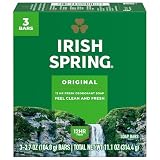
This is the premium-tier soap pick: a three-pack of 3.7 oz original-scent bars marketed to men. Compared with the 3.75 oz bars elsewhere in this roundup, the bar is a hair lighter at 3.7 oz, and the tier is a step up – which is the whole point of including it. It answers the question a careful buyer asks when they see three nearly identical soap listings: what actually changes between the budget, mid-range, and premium versions of the same category?
Key specs:
- 3 bars per pack
- 3.7 oz per bar
- Original scent
- Men’s positioning per the listing name
- Premium tier
What the tier difference actually buys: In bar soap, the tier usually tracks three things: bar weight, packaging count, and formulation positioning. Here the weight is essentially the same as the mid-range 3.75 oz bar, so the difference is formulation and presentation rather than raw quantity. That is worth knowing because it means the premium tier is not automatically the better value – it is the better choice only if the specific formulation is what you want. For a household that already knows it likes the original scent profile and wants the men’s-positioned version, this is the direct buy. For anyone optimizing cost per ounce, the twelve-pack at 3.75 oz per bar is the better arithmetic.
Where it fits in a charging-station order: The nightstand is the most common home for a 3-in-1 station, and the bathroom is the second. If the station is headed to a bedroom nightstand in a household with a shared bathroom, this three-pack is a reasonable single-bathroom stock that lasts about a quarter. If the station is headed to a desk, soap has no role at all and the money is better spent on the wall adapter or the clamp. The honest placement advice is: buy soap when the station’s room has a sink, skip it when it does not.
- Pros
- Original scent in the men’s-positioned formulation
- Three-pack covers roughly a quarter for a single bathroom
- 3.7 oz bars sit in the standard size range, so they fit any dish
- Premium tier signals a specific formulation rather than a quantity bump
- Easy to compare directly against the 3.75 oz bars by weight
- Cons
- Premium tier price for essentially the same bar weight as mid-range options
- Only three bars, so the per-bar cost is the highest in the soap group
- Men’s positioning is a marketing distinction, not a functional one
- Not the right pick if you are optimizing cost per ounce
Compared with the nearest alternative on this list: The nearest alternative is the twelve-pack of 3.75 oz original-scent bars at the mid-range tier. Same scent family, four times the bars, slightly heavier individual bars, lower tier. If you are restocking a household, the twelve-pack wins on every measure except shelf space. This premium three-pack wins only if you want a small, specific purchase rather than a year’s supply.
11. Big Spring Chronicles: Volume 3 – Best for long-form companion reading

Big Spring Chronicles: Volume 3 is a premium-tier book entry in a series, and it belongs in this roundup for one straightforward reason: a long-form reading companion is a legitimate part of a “big spring sale” basket, and a series volume is the kind of item that gets discounted once the earlier volumes have sold through. It has no electrical function and makes no claim on your nightstand’s footprint beyond the fact that it occupies one. That is actually the relevant connection – if you are reorganizing a nightstand around a charging station, you are also deciding what else stays on that surface, and a book is usually the thing that loses.
Key specs:
- Volume 3 of the Big Spring Chronicles series
- Premium tier
- Long-form narrative format
The nightstand-space argument: A stand-style charging station typically claims a footprint roughly the size of a phone’s width plus a base – call it a few square inches of contact area – while a flat-pad station claims something closer to a small paperback lying open. A hardcover or trade paperback takes up a similar area and is taller. If your nightstand is a single-shelf unit, the station and the book are competing for the same real estate, and the honest resolution is to put the station at the back edge near the outlet and the book toward the front, or to accept that the book moves to a shelf. Volume 3 of a series you are already reading is the item you will actually pick up in bed, which is the use case a nightstand serves. If you have not read Volumes 1 and 2, start there – a series volume is not a standalone purchase.
Where it fits in the decision order: Last. A book is a want, not a setup necessity, and it should be funded after the station, the adapter, and any spring or clamp you need. That said, if the sale price lands below the tier’s usual range and you are mid-series, it is a low-regret add. The only real mistake is buying a Volume 3 when you have not finished Volume 2 and letting it sit unread on the very nightstand you just cleared for a charger.
- Pros
- Continues an established series rather than requiring a new commitment
- Premium tier often means better binding and paper than a mass-market edition
- Pairs naturally with a nightstand charging setup – the surface you already use
- Serves as the non-screen alternative while a phone charges overnight
- Series volumes tend to be discounted during seasonal sales
- Cons
- Not standalone; requires the earlier volumes to make sense
- Competes with the charging station for nightstand surface area
- Premium tier price if you are not already invested in the series
- No utility in a charging-station setup beyond reading while you wait
Compared with the nearest alternative on this list: The nearest alternative is the LOMON plus-size top, the other premium-adjacent lifestyle item here. Both are wants rather than needs. The tiebreaker is frequency of use: a book you read nightly gets more hours per dollar than a top you wear once a week, so if you can only add one lifestyle item to a charging-station order, the book pays back faster – provided you are already in the series.
12. Spring Hinge Dual 3 Brs (National Hardware) – Best for spring-return hardware

The National Hardware Spring Hinge Dual 3 Brs is the last hardware entry and the one closest to a real furniture project: a spring-return hinge in a dual 3-brass finish. In a charging-station context, this is the part you buy when you are not just placing a station but building or modifying the furniture it sits on – a flip-down cable door on a desk, a self-closing lid on a charging drawer, a small cabinet that should swing shut on its own over a cable pass-through. It is premium tier, which for hinges usually reflects solid brass-finish construction rather than stamped steel.
Key specs:
- Spring-return hinge mechanism
- Dual 3 brass finish
- National Hardware brand
- Premium tier
What “spring return” means in practice: A spring hinge provides closing force without a separate spring or gas strut. That matters for a charging drawer because the drawer or door has to stay shut against a bundle of cables pushing outward. A gravity latch will not hold against cable pressure; a spring hinge will. The trade-off is that spring hinges exert constant force, so a lightweight door swings harder than you expect, and a heavy door may not close fully if the spring is underrated. Match the hinge to the door weight – a dual hinge on a small cable door is plenty, while a full cabinet door may need two.
Installation realities worth knowing before you buy:
- Mortising a hinge requires a chisel or a router jig; a poorly cut mortise is why most DIY hinge jobs squeak.
- Brass finish is a coating or plating on most consumer hinges, so avoid aggressive cleaners that strip it.
- Spring tension is usually adjustable by a screw or by repositioning the pin – check before assuming a hinge is defective.
- Leave a slight gap at the strike side if cables pass through, otherwise the spring fights the cable bundle every time it closes.
The brass finish is the detail that makes this a premium pick rather than a budget one. Brass and brass-toned finishes hold up in humid rooms and match the hardware on older furniture, which is why a spring hinge gets specified in a brass finish at all. If the hinge is going on a white melamine desk, the finish is wasted and a plain steel hinge at a lower tier does the same job.
- Pros
- Self-closing force is exactly what a cable-filled drawer or door needs
- Brass finish suits wood furniture and humid rooms
- National Hardware is an established name in consumer hinge and hardware parts
- Dual hinge configuration handles a moderately sized door
- Eliminates the need for a separate magnetic catch or latch
- Cons
- Premium tier price compared with plain stamped hinges
- Requires mortising skill or a jig for a clean install
- Constant spring force can be too strong for a very light door
- Finish may not match if your furniture hardware is a different brass tone
Compared with the nearest alternative on this list: The nearest alternative is the FWN leaf spring, and the two are different tools for different loads. A leaf spring carries a static vertical load and returns to its arch; a spring hinge applies rotational return force to a swinging panel. For a charging drawer or a cable door, the hinge is the correct part. For anything holding a static load, the leaf spring analogy applies and neither is a charging-station component. Buy the hinge only if you are modifying furniture, not if you are simply placing a station on top of it.
How to Choose
The search that brought you here – best big spring sale 3 in 1 charging station deals on amazon – sounds like a price question. It is not. The three things that determine whether a 3-in-1 charging station is worth owning are footprint, alignment, and what is in the box, and each of those has a concrete number attached. Get those three right and the station works for years. Get them wrong and you will be buying a second one next spring.
Footprint: stand versus flat pad. A stand-style 3-in-1 puts the phone on an inclined plane, the watch on a smaller pad or a pop-up puck, and the earbuds case on a third pad at the base. Its contact patch on a nightstand is typically a rectangle roughly the width of a phone plus a margin, and its height is what changes – a stand occupies vertical space, which is free real estate on a nightstand but a hazard on a desk where a monitor arm or a lamp already swings through that volume. A flat-pad 3-in-1 lays all three pads on one plane, often with the watch puck able to fold up or lie flat. Its contact patch is wider and flatter, closer to the size of a trade paperback lying open, but it clears vertical space entirely. The decision rule: if you have wall or lamp clearance above the surface and want the phone readable while it charges, a stand wins. If you have a shallow drawer, a shelf under a cabinet, or a desk where things pass overhead, a flat pad wins. Measure the surface depth before you decide – a stand needs enough depth that the phone’s top edge does not overhang, and a flat pad needs enough width for all three devices side by side.
Wattage splits: where the power actually goes. A 3-in-1 station’s total output is not divided equally between phone, watch, and earbuds. Modern phones on a magnetic-alignment pad can draw the bulk of the headline number – often the majority of a 15 W or 20 W total – while a watch puck typically draws a small fraction of that, and an earbuds case draws less again. The practical consequence is that the “3-in-1” number on the box is really a maximum for the phone with the other two sharing the remainder. This matters when you charge overnight: total capacity is irrelevant because you have eight hours, and what matters is that the phone gets enough to fully charge while the watch and buds top off. It matters a great deal when you charge fast before leaving, because a station that splits a modest total across three devices will charge a phone more slowly than a single-device fast charger. The rule: buy total wattage for the phone, not for the sum of three devices, and expect the watch and buds channels to be deliberately small.
MagSafe versus plain Qi alignment. A magnetic-alignment pad uses magnets to center the phone’s coil over the charger’s coil every time, which removes the single largest cause of slow wireless charging: misalignment. Plain Qi pads have no magnets, so the phone has to be placed within a fairly narrow window to hit peak rate, and a phone that slides a centimeter often drops to a trickle or stops charging with a case on. On a nightstand where you are setting the phone down in the dark, magnetic alignment is the difference between a full battery in the morning and a 60 percent battery. On a desk where you place the phone deliberately and can see the alignment indicator, plain Qi is a real cost saving. If your phone model supports magnetic alignment, pay for it – it is the single highest-value feature on this list. If it does not, a plain Qi pad plus a thin magnetic ring accessory gets you most of the benefit.
The wall adapter question. This is the most common disappointment in the category: many 3-in-1 stations ship with a cable but no wall adapter, on the reasoning that you already own one. The catch is that the adapter you already own may not deliver the station’s rated input, and a station fed by an underpowered adapter will charge slowly or, in some designs, refuse to run all three channels at once. Before buying, check two numbers on the listing: the station’s required input (voltage and amperage, or wattage) and whether a matching adapter is included. If it is not, budget for a wall adapter that meets or exceeds the stated input, and prefer a USB-C Power Delivery adapter over a fixed-voltage one. A station with a 20 W input requirement and no adapter in the box is not a bad deal, but it is a two-part purchase, and the second part is easy to forget until your phone is at 40 percent at 7 a.m.
Decision matrix by situation.
| Your situation | Best footprint | Alignment | Adapter in box? | Priority pick |
|---|---|---|---|---|
| Nightstand, charge overnight, dark room | Stand | Magnetic (strongly preferred) | Nice to have; check input | Magnetic stand with watch puck |
| Desk, monitor arm above, tight depth | Flat pad | Plain Qi acceptable | Prefer included | Flat pad with folding watch puck |
| Travel, hotel rooms, one bag | Foldable stand | Magnetic preferred | Essential | Folding magnetic stand plus travel adapter |
| Two users, two phones, one surface | Wide flat pad or dual-pad stand | Magnetic on both phone pads if possible | Needed; input must cover both | Dual-phone station with shared watch puck |
| Old furniture, cable pass-through to modify | Any; add a cable door | Not applicable | Required unless rewiring | Station plus spring hinge for the door |
| Secondhand or inherited stand that sags | Keep the stand | Not applicable | Buy the right adapter if missing | Replacement compression spring by measured gauge |
Choosing the repair path when a station misbehaves. Not every problem means replacing the station. Work through it in order. If the phone charges but slowly, the problem is alignment or the adapter – test with a different adapter and a case-off placement before concluding the pad is weak. If the phone does not charge at all on one pad but does on another, the pad’s coil or its connection inside the housing is the fault, and that is usually not repairable at the consumer level. If the stand’s arm droops, measure the spring in the pivot and replace it by gauge and diameter, using the measurements in sections 6 and 7 as your reference class. If the base slides on the nightstand, the fault is the rubber feet or residue on the surface, not the electronics – clean the surface, and if the feet are compressed and hard, replace them with adhesive rubber pads. If a folding dock has stopped folding, the hinge is the part to inspect, and a spring hinge is only the right answer if you are rebuilding the mechanism rather than the whole product.
Durability and ownership realities. Here is what actually wears out on a 3-in-1 station, roughly in order of failure frequency. First, the rubber feet: they compress, harden, and lose grip within a year or two, and they are cheap to replace with adhesive pads. Second, the pivot or arm spring on a stand-style unit: it takes a set and stops holding an angle. Third, the cable, if the station uses a fixed pigtail rather than a socket – a cable that is bent sharply at the strain relief every night will fail there. Fourth, the adapter, which runs hot and is the most likely electronic component to die. Fifth, the charging coils and the electronics, which usually outlast everything else. Notice that three of the five failure points are mechanical and replaceable for less than the cost of a new station. That is the single most useful thing to know about this category: it is more mechanical than electronic, and it responds well to maintenance.
Cleaning and maintenance that actually matters. Wipe the pads with a dry or barely damp cloth – never spray cleaner onto the pad, because liquid wicks into the housing and sits against the electronics. Keep the station off a wet bathroom counter or place it on a dry shelf away from the sink; humidity and electronics do not mix, and it is also why the plated-spring parts in this roundup are worth specifying over bare steel. Re-tighten pivot hardware once a year; vibration from a phone being set down repeatedly loosens screws more than most people expect. Replace the rubber feet at the first sign of hardening rather than waiting for the station to start sliding. Check the adapter’s connector and cable strain relief annually for heat discoloration or a bend that has gone stiff. And keep the station’s vents or the small gaps in the housing clear if it has any, because a dock that runs hot accelerates spring fatigue in exactly the way described above.
Common mistakes to avoid. Buying a station with no included adapter and assuming an old phone charger will do it – it usually will not deliver the rated input. Choosing a flat pad for a dark nightstand, then wondering why the phone is half charged in the morning. Buying a stand for a desk with a monitor arm, then discovering the phone blocks the screen. Assuming a 3-in-1’s total wattage is available to the phone – it is not; the watch and buds channels share it. Ignoring the phone’s case thickness when buying a magnetic station, because a thick case can defeat the magnets. And replacing an entire station over a droopy arm or a sliding base when a spring and a set of feet cost a fraction of the price.
Frequently Asked Questions
Do 3-in-1 charging stations come with a wall adapter?
Some do and some do not, and the listing is the only reliable source. Many models ship with a charging cable but no wall adapter, expecting you to supply one. If no adapter is listed, check the station’s required input voltage and amperage, then buy a USB-C Power Delivery adapter that meets or exceeds it. Feeding a station less than its rated input is the most common reason a new 3-in-1 charges slowly.
Is a stand-style station or a flat-pad station better for a nightstand?
For most nightstands a stand is the better fit, because it uses vertical space that is otherwise empty and it makes the phone readable as an alarm clock. A flat pad is better if the nightstand has a shelf directly above it or if you need to slide the station into a drawer. Measure the surface depth first – a stand needs enough depth for the phone not to overhang the front edge.
How much wattage does each device actually get on a 3-in-1 charger?
The phone channel typically receives the majority of the station’s total output, while the watch puck and earbuds pad draw a small fraction each. The headline wattage on the box is not divided equally three ways. For overnight charging the split does not matter, but for a quick top-up before you leave, a station’s phone channel can be slower than a dedicated single-device fast charger.
Does MagSafe alignment really matter compared with plain Qi?
Yes, if you charge in low light or with a case on. Magnetic alignment centers the phone’s coil over the charger’s coil automatically, which is the difference between peak charging speed and a trickle or a failed charge. Plain Qi pads require deliberate placement. If your phone supports magnetic accessories, paying for magnetic alignment is the highest-value upgrade in this category.
My stand’s arm droops and will not hold an angle. Can I repair it?
Often yes, and the part is inexpensive. The pivot typically contains a compression spring, and a spring that has taken a permanent set is the usual cause. Open the housing, measure the spring’s free length, outside diameter, and wire gauge, and replace it with a matching plated spring-steel part. If the arm still droops after that, the hinge itself is worn and the repair is no longer economical.
Is it safe to keep a charging station on a bathroom counter?
It is safer to keep it on a dry shelf away from the sink. Bathrooms combine humidity with splash risk, and moisture is the leading environmental cause of electronics failure in this category. If the station must live in a bathroom, keep it as far from the sink as the cable allows and never spray cleaner onto the pads – wipe them with a barely damp cloth instead.
Why do my phone cases interfere with wireless charging?
Wireless charging works over a short distance, and a thick case increases the gap between the phone’s coil and the charger’s coil. Cases with metal plates, magnets in the wrong position, or heavy thickness are the usual culprits. If a case is magnetic-alignment compatible and reasonably thin, it usually charges fine. If charging is intermittent, test with the case off to confirm whether the case is the problem.
How long should a 3-in-1 charging station last?
The electronics usually last several years, but the mechanical parts fail first: rubber feet harden within a year or two, arm springs take a set, and cables fail at the strain relief if they are bent sharply every night. Treating those as replaceable consumables and checking the adapter annually will keep a station in service well beyond the point where most people replace one.
The Bottom Line by Situation
If you want one recommendation and nothing else, the IRWIN Tools QUICK-GRIP Metal Spring Clamp, 3-Inch is the best overall pick here because it is the tool that fixes and stabilizes the mechanical parts of a charging setup, which is where most failures happen. If you are working to the tightest budget and want a low-regret add to a station order, the Irish Spring Deodorant Soap Bars Original, 3 Count is the cheapest useful item on the list. If you are rebuilding or upgrading furniture rather than just placing a station, the National Hardware Spring Hinge Dual 3 Brs is the premium pick worth paying for, and the Prime-Line SP 9730 Compression Spring is the part to buy if your stand’s arm has gone soft. For a nightstand in a dark room, buy a magnetic stand and confirm the adapter input before checkout. For a shallow desk under a monitor arm, buy a flat pad and do not pay for magnetic alignment you will