Our Top Picks
 Maasechs 6 Pack Vinyl PVC Fence Panel with47-3/4" x 7/8" x 3"49.21 x 7.09 x 4.33 inches9.92 poundsCheck on Amazon
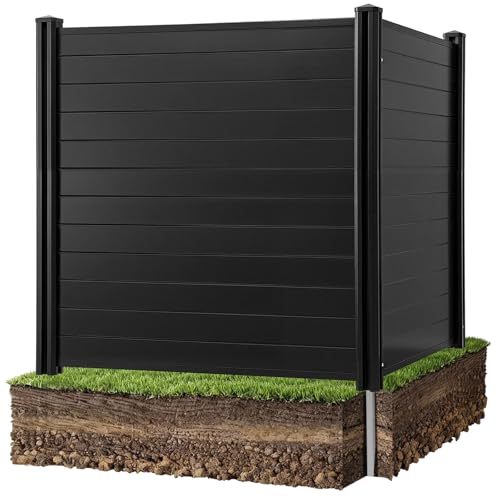


The short answer: for most people who need to hide an air conditioner, pool pump, trash enclosure or utility gear, the best vinyl fencing panels for the job are the VEVOR 2-panel outdoor privacy screen — two 48 x 48 in panels on 27.6 in ground stakes, which is enough height to break a utility sightline and enough stake length to stay upright without a concrete pour. If what you actually want is decorative front-yard curb appeal for the least money, the E&K 36 in H x 84 in W white picket set covers 14 linear feet with two panels and installs in an afternoon. If you want the most substantial privacy panels in this roundup and are willing to pay for them, the VINGLI two-panel privacy set is the premium pick.
Everything below compares what the listings actually state — panel heights, widths, stake lengths, pack counts and materials — alongside the numbers that decide whether a panel survives where you live: sail area, wind load, frost depth, coverage math and what wears out first. Vinyl fencing looks like a commodity category until you start comparing 3 ft picket kits with 4 ft privacy screens and 7/8 in picket parts, and then the differences matter a great deal.
Top 3 Picks
Best overall: VEVOR 2-Panel Outdoor Privacy Screen
Two 48 x 48 in panels with 27.6 in ground stakes hit the sweet spot for the single most common vinyl-fence job in residential settings: screening mechanical equipment. The stakes are long relative to the panel height, which is exactly the ratio you want for wind resistance in a free-standing screen, and the 8 ft of total face width is usually enough to wrap a condenser or a pool pump without a full fence project. It suits homeowners who want privacy fast, with no digging and no concrete.
Best budget: E&K 36 in H x 84 in W White Picket Set
A two-panel set at 3 ft tall and 7 ft wide per panel gives you 14 linear feet of decorative fencing for the price of a couple of bags of concrete. This is the curb-appeal play — porch edges, garden borders, pool surrounds — and it is the cheapest way in this roundup to add a defined, finished line to a front yard without any post-setting. It is not a privacy product, and it is not trying to be.
Best premium: VINGLI Vinyl Privacy Fence Panels
VINGLI’s two-panel privacy set is aimed at the same jobs as the VEVOR screen but positioned as a heavier, more finished privacy solution for trash can enclosures and garden equipment. If your priority is a solid, opaque screen rather than the lowest possible spend, and you want panels that read as permanent fencing rather than a utility barrier, this is the premium option to compare against the VEVOR set before you buy.
Quick Comparison
The table below covers every product in this roundup. Price tiers are relative bands, not quotes — listings move constantly, and kit prices shift with panel count and season.
| Product | Best for | Key specs (as listed) | Price tier |
|---|---|---|---|
| VEVOR 2-Panel Outdoor Privacy Screen | Screening AC units, pool pumps, utility gear | 2 panels, 48 x 48 in each; 27.6 in ground stakes; 8 linear ft total coverage; no-dig install | Premium |
| VINGLI Vinyl Privacy Fence Panels | Trash can and garden equipment enclosures | 2 privacy panels; white vinyl; stake-based install; opaque screening | Premium |
| E&K White Picket Fence Set | Front porch and garden curb appeal | 1 set / 2 panels; 36 in H x 84 in W each; 14 linear ft total coverage; decorative picket | Budget |
| Qikdesign Reinforced Privacy Fence | Low-cost privacy around AC units and bins | 36 in W x 45 in H; reinforced white vinyl; “double windproof” construction | Budget |
| Maasechs 6-Pack Pickets with Post Caps | Repairing or custom-building picket runs | 6 pickets plus post caps; 7/8 in x 3 in x 47-3/4 in white PVC pickets | Budget |
| Zippity Baskenridge Picket Panels | Renter-friendly decorative edging | No-dig white vinyl picket kit; driven stakes, no concrete | Budget |
| Zippity Madison Picket Panels | Defined garden borders with a more finished look | No-dig white vinyl picket kit; driven stakes, no concrete | Mid-range |
How We Chose
This roundup is built from product listings and published category specifications, not from hands-on installation or testing. The selection criteria were deliberately narrow. First, category fit: does the product actually do the job it claims? A picket kit and a privacy screen are not substitutes, so both were included but never ranked against each other as if they competed. Second, stated specs: panel height, panel width, pack count, stake length and material, all taken from the listing rather than inferred. Where a listing does not lead with a dimension, that product is described by spec class instead of a guessed number.
Third, installation system: whether the product needs concrete, driven stakes or nothing at all, because that single factor often decides whether a project happens this weekend or next spring. Fourth, upgrade path: can the panels be extended, matched, repaired or replaced later, and does the kit lock you into a proprietary post or stake? Fifth, ownership realities: wind exposure, UV fading, frost heave and cleaning. Products that only make sense in a narrow situation were still included — the Maasechs picket pack and the Zippity kits solve specific problems well — but they are labelled for what they are rather than promoted as all-purpose buys.
1. VEVOR 2-Panel Outdoor Privacy Screen – Best for Hiding AC Units, Pool Pumps and Utility Gear
As an Amazon Associate we earn from qualifying purchases at no extra cost to you.

This is the pick when the thing you want to hide is a machine rather than a view. Two 48 x 48 in panels give you 4 ft of height and 8 ft of total face width, and the 27.6 in ground stakes drive deep enough that the assembly holds without a concrete pour. It is the best overall choice here for the most common real-world job: screening an air conditioner condenser, a pool pump, a heat pump or a bank of utility meters sitting against the side of a house where a full fence would be overkill and a shrub would take three seasons to fill in.
Who it suits: homeowners with a specific utility eyesore and no appetite for a construction project; anyone renting who cannot pour concrete; pool owners who want the equipment pad tidied before a party; and buyers who need a screen they can reposition seasonally. It also suits anyone whose HOA restricts fence height, because a 4 ft free-standing screen usually reads as equipment screening rather than a fence structure.
Key specs as listed:
- Panel count and size: 2 panels, 48 in tall x 48 in wide each
- Total screening coverage: 8 linear feet
- Ground stakes: 27.6 in long
- Installation: drive-in stakes, no concrete required
- Material: white vinyl / PVC
- Configuration: free-standing screen, not part of a continuous fence line
Strengths. The proportions are the story. A 48 in panel on a 27.6 in stake puts roughly 57% of the panel’s height back into the ground as anchorage, and that ratio is what keeps a free-standing screen upright through a gusty spring. Compare that with shallow spike kits that bury 8 to 12 in and wobble the first time the wind gets under them. The 4 ft height is also a genuine advantage in wind terms: a 4 x 4 ft panel presents 16 sq ft of sail, which is a third of what a 6 x 8 ft privacy panel presents. Less sail means less leverage on the stakes, which means the no-dig approach actually works at this size.
Coverage is the other strength. Two panels side by side give 8 linear feet, which is enough for a typical condenser unit plus clearance on both sides, or a pool pump and filter assembly with room to work around it. Because the panels are free-standing, you can set them in an L shape to wrap a corner rather than running them in a single straight line — something a continuous fence line cannot do without posts and rails.
Trade-offs. At 4 ft, the screen blocks the equipment from the street but does not block a standing adult’s sightline. If your goal is “the neighbor on the second-floor balcony cannot see my patio,” 4 ft will not do it. The 8 ft of coverage is also finite — this is a screen, not a fence. And because it sits in the premium tier, the cost per linear foot is high relative to full-size panels, which is the price you pay for zero site work.
Pros
- 27.6 in stakes provide real anchorage without concrete
- 4 ft height keeps sail area low, so wind leverage is manageable
- 8 linear feet of coverage handles most single-appliance jobs
- Free-standing design can be arranged in an L or U to wrap equipment
- Repositionable and removable — useful for renters and seasonal setups
- No digging, no curing time, no permit conversation in most jurisdictions
Cons
- 4 ft does not block standing sightlines
- Premium tier means a high cost per linear foot versus full-size panels
- Not expandable into a long continuous run without additional matching panels
- Driven stakes can lift in severe freeze-thaw soils
- Opaque solid panels catch more wind than an open picket design
How it compares with the nearest alternative. The VINGLI two-panel privacy set is the closest competitor, and the decision comes down to footprint and finish rather than philosophy — both are premium, both are two-panel privacy products, both install without a full post-and-concrete build. The VEVOR’s advantage is the specific 48 x 48 in geometry and the long stakes, which make it the more predictable no-dig install for a single utility unit. The VINGLI’s advantage is that it is designed and marketed as a privacy panel first, which tends to mean a more finished look in visible locations. If the screen will be seen from the street, weigh the finish; if it is tucked against a side wall, weigh the install simplicity.
2. VINGLI Vinyl Privacy Fence Panels – Best for Trash Can Enclosures and Garden Equipment
VINGLI’s two-panel vinyl privacy set is the premium option in this roundup for buyers who want an opaque screen that looks deliberate rather than improvised. It is aimed at the same broad category as the VEVOR screen — garden equipment, air conditioner units, trash can storage — but it is positioned as a privacy fence product, which in practice means the visual result matters as much as the function.
Who it suits: homeowners with a visible trash can area beside a driveway or along a side yard where neighbors and passers-by see it daily; anyone who has already been fined or warned about visible bins; buyers who want a screen that reads as fencing rather than a utility barrier; and people who intend to leave it in place permanently rather than move it seasonally.
Key specs as listed:
- Panel count: 2 privacy panels
- Material: white vinyl / PVC
- Installation: stake-based, no concrete described in the listing
- Design intent: opaque privacy screening
- Typical applications named: garden AC screening, trash can concealment
Strengths. The core advantage of buying a purpose-built privacy panel rather than a multi-purpose screen is that the design has been optimised for opacity. Solid vinyl panels in this class are extruded to be light-tight, with no gaps between pickets and no lattice openings that let you see through at an angle. That matters more than most buyers expect: a 4 ft screen with half-inch gaps between pickets is surprisingly see-through when you are standing three feet away, because the eye stitches the gaps together. Solid panels do not have that problem.
Vinyl itself is a genuinely low-maintenance material when it is formulated for exterior use. The colour is compounded through the material rather than painted on, so a scuff does not reveal a different colour underneath the way a scratched painted surface does. Cleaning is a garden hose and, occasionally, mild soap. There is no sanding, staining, sealing or repainting, and no rot in the way a wood screen rots at the ground line. For a screen that lives behind a trash enclosure and gets hosed down, that is close to the ideal material profile.
Because VINGLI sells vinyl fencing across a range of configurations, this set also sits inside a broader product family. That matters for the upgrade path: if you later decide you want to extend the run, you are more likely to find matching panels in the same line than you would with a one-off import screen.
Trade-offs. Premium pricing for two panels is the obvious one. Solid panels also present full sail area — there are no gaps to bleed wind through — so a 4 ft solid screen catches meaningfully more wind than a picket screen of the same size. That is the trade you make for privacy, and it is the reason stake length and soil conditions matter so much on this type of product. Confirm the stated panel dimensions and stake length on the listing before ordering, because VINGLI offers this design in more than one configuration and the footprint you receive depends on which one you select.
Pros
- Opaque solid panels give genuine visual screening, not a suggestion of it
- Colour is compounded through the vinyl rather than painted on
- No rot, no staining, no repainting, no sealing
- Cleans with a hose and mild soap
- Part of a broader vinyl fencing line, so matching parts are more likely to be available later
- Reads as permanent fencing rather than a temporary barrier
Cons
- Premium tier pricing for only two panels
- Solid panels catch maximum wind — no gap relief
- Opaque design means you cannot see through to monitor equipment behind it
- Panel dimensions vary by configuration, so the listing must be read carefully
- Vinyl can become brittle in extreme cold if struck while frozen
How it compares with the nearest alternative. Against the VEVOR screen, the VINGLI is the more polished privacy product and the VEVOR is the more predictable no-dig install with its explicitly stated 27.6 in stakes. Against the Qikdesign reinforced panel, the VINGLI is roughly the same concept executed at a higher price point and, presumably, a heavier build — the Qikdesign listing emphasises reinforced, double-windproof construction at budget pricing, which tells you the category has a genuine low-cost tier. If your enclosure is fully hidden from view and you simply need opacity, the budget option will do the job. If it is on show, the premium panel earns its money.
3. E&K White Picket Fence Set – Best Budget Curb Appeal for Porches, Gardens and Pool Surrounds

Two panels at 36 in tall and 84 in wide each is 14 linear feet of decorative white picket fencing, and at budget pricing that is the best value in this roundup for pure visual improvement. This is not a privacy product and it should not be bought as one. It is a definition product: it tells the eye where your garden ends, gives a porch a finished edge, and makes a pool surround look intentional rather than improvised.
Who it suits: homeowners working on front-yard presentation; gardeners who want a border between beds and lawn; pool owners who want a low decorative barrier around equipment or planting; and anyone who wants the picket-fence look without setting posts in concrete. It is also a reasonable choice for renters with a small patio or side yard, provided they can stake into soil rather than concrete.
Key specs as listed:
- Set contents: 1 set, 2 panels
- Panel size: 36 in H x 84 in W each
- Total coverage: 14 linear feet
- Style: decorative white picket
- Material: vinyl / PVC
- Named applications: front porch, yard, garden, pool area
Strengths. The width is the standout number. At 84 in per panel, this kit covers ground fast: 14 linear feet from two panels means you need roughly 1.4 panels to cover 10 ft, versus 3.3 panels of a 36 in wide product to cover the same distance. If your project is a long, low border along a driveway or the front of a porch, wide panels mean fewer joints, fewer stakes and a cleaner line.
Height and wind profile are the second strength. At 36 in tall, a picket panel presents very little sail area, and because pickets are spaced with gaps, the effective surface the wind pushes against is a fraction of the panel’s nominal dimensions. A 3 ft tall, 7 ft wide picket panel has a nominal face area of 21 sq ft, but with typical picket spacing the solid material may be only around half of that. The practical result is a panel that shrugs off wind that would worry a solid privacy screen of similar size, which is why low picket fencing is such a common choice in exposed front yards.
Maintenance is minimal. White vinyl pickets do not need painting, and because they are decorative rather than structural, minor flex in the wind is not a problem the way it is with a privacy panel that has to stay rigid and gap-free.
Trade-offs. Three feet of picket fence gives you almost no privacy. Standing on the other side, an adult can see straight over it and, depending on picket spacing, partly through it. The 36 in height also means the panels are decorative rather than containment — they will not keep a determined dog in or a deer out. And because it is a budget-tier product, expect budget-tier hardware: the stakes or brackets supplied with entry-level kits are the part most likely to need upgrading or replacing if your soil is heavy clay or full of rocks.
Pros
- 14 linear feet of coverage from just two panels
- 84 in panel width means fewer joints and a cleaner visual line
- Low 36 in height keeps wind load minimal
- No painting, staining or sealing required
- Budget pricing makes it the cheapest curb-appeal upgrade here
- Picket styling suits traditional front-yard and porch architecture
Cons
- No meaningful privacy at 36 in tall
- Not a containment fence for pets or livestock
- Budget-tier stakes and hardware may need replacing in difficult soil
- Open picket design shows gaps when viewed at an angle
- Only 14 linear feet per set, so long runs require multiple sets
How it compares with the nearest alternative. The Zippity Baskenridge kit is the closest competitor — both are low, white, decorative no-dig picket products at budget pricing. The E&K’s advantage is the stated 84 in panel width, which is unusually wide for this class and gives it the coverage edge. The Zippity kits’ advantage is that they come from a brand built specifically around the no-dig vinyl fence concept, so the stake system and the assembly instructions tend to be the more refined part of the product. If coverage per panel is what you need, take the E&K. If you want the most polished no-dig assembly experience, look at the Zippity kits.
4. Qikdesign Reinforced White Vinyl Privacy Fence – Best Budget Privacy Screen for AC Units and Bins

The Qikdesign panel is the budget answer to the same question the VEVOR and VINGLI screens answer: how do I hide an air conditioner or a trash bin without spending premium money? At 36 in wide by 45 in tall, it is a solid, reinforced white vinyl privacy panel, and the listing’s “double windproof” phrasing signals that the construction has been beefed up specifically to resist the failure mode that kills cheap screens.
Who it suits: buyers who need opacity around a utility unit and are working to a tight budget; landlords screening AC units at rental properties; anyone buying several panels to wrap a larger enclosure, where per-panel savings multiply; and shoppers who want a privacy screen but do not need the extra 3 in of height or 12 in of width that the VEVOR panel provides.
Key specs as listed:
- Panel size: 36 in W x 45 in H
- Colour and material: white vinyl / PVC
- Construction: reinforced, described as double windproof
- Type: solid privacy panel (opaque, not picket)
- Named applications: air conditioner screening, trash can concealment
Strengths. The reinforcement claim is the interesting part. In budget vinyl screens, the failure point is almost always the same: the panel flexes, the frame joint at the corner opens up, and the screen starts leaning. Reinforcement in the frame or the panel edges addresses exactly that. The “double windproof” description suggests either a double-wall construction or paired reinforcement at the stiles, both of which stiffen the panel against bending. Whatever the exact build, the design intent is clear and it is the right intent for a solid privacy screen.
At 45 in tall and 36 in wide, the panel is a genuinely useful size for the jobs it names. A 45 in screen hides a standard residential condenser unit from the street and from most ground-level sightlines, and 36 in of width is enough to cover a condenser with a little clearance on each side. For a trash enclosure, you would typically need two or three panels side by side, which is where budget pricing starts to matter a great deal — three panels at a premium price is a different decision than three panels at a budget price.
The height also carries a wind benefit. At 45 in rather than 6 ft, the panel presents 11.25 sq ft of sail area, which is about a quarter of what a full 6 x 8 ft privacy panel presents. Combined with reinforcement, that makes this a screen that should stay put in ordinary residential wind exposure without engineering heroics.
Trade-offs. Budget construction shows up somewhere, and with vinyl panels it is usually in wall thickness, in the quality of the supplied stakes, and in colour consistency between batches. If you buy two panels now and three more next year, there is a real chance the whites will not match exactly. Buying the whole set at once is the safer approach. The 36 in width also means more joints and more stakes per linear foot than a wider panel — covering 12 ft of run takes four of these panels versus three of a 48 in wide product.
Pros
- Budget pricing makes multi-panel enclosures affordable
- Reinforced, double-windproof construction targets the usual failure point
- 45 in height screens a condenser unit from street level
- Solid opaque panel — no see-through gaps
- Low sail area relative to full-height privacy panels
- Suits trash can and AC screening equally well
Cons
- Narrower panels mean more joints and more stakes per linear foot
- Budget-tier hardware is the most likely component to need upgrading
- Colour matching across separate purchases is not guaranteed
- 45 in still does not block standing sightlines
- No concrete-free claim as explicit as the VEVOR stake length
How it compares with the nearest alternative. Set against the VEVOR screen, the Qikdesign is the value play: you give up 3 in of height, 12 in of panel width, and the explicitly stated 27.6 in stakes, and in exchange you pay a budget price for a comparable concept. For a single visible unit where finish matters, the VEVOR is the better-looking and better-anchored product. For wrapping a large enclosure where you need five or six panels, the Qikdesign’s price tier changes the total project cost enough to be worth the trade. Against the VINGLI premium set, it is the same argument at a bigger spread.
5. Maasechs 6-Pack Vinyl PVC Pickets with Post Caps – Best for Repairing or Custom-Building a Picket Run

This one is a parts pack, not a finished fence, and that is precisely why it belongs in a roundup. Pickets are the consumable of the vinyl fence world. They are the component that gets cracked by a lawnmower, snapped by a falling branch, chewed by a dog or broken when someone leans on the fence while carrying groceries. When that happens, you do not need a new fence — you need six pickets and a set of post caps.
Who it suits: anyone with an existing white vinyl picket fence who needs to replace damaged pickets without buying a whole new panel; DIY builders constructing a custom picket run who want to control rail spacing and overall height themselves; landlords maintaining multiple properties where picket damage is a recurring cost; and buyers finishing a project who need post caps to close off the tops of posts and stop water pooling inside them.
Key specs as listed:
- Pack contents: 6 pickets plus post caps
- Picket dimensions as listed: 7/8 in x 3 in x 47-3/4 in
- Colour and material: white vinyl / PVC
- Product type: fence parts, not a complete panel assembly
- Intended use: outdoor picket fencing
Strengths. The 47-3/4 in length is the number that matters most. That is just under 4 ft, which means these pickets are sized for a fence whose pickets run from the bottom rail to the top rail with the usual overhang above the top rail. In practice, a 47-3/4 in picket is used on fences in roughly the 3 ft to 4 ft visible-height range once rail positions are accounted for. If you are replacing pickets on an existing fence, measure your existing picket length before ordering — a 47-3/4 in picket will not match a fence built with 5 ft pickets, and the mismatch will be obvious.
The 3 in width is a standard picket face, which is the most common profile on residential white vinyl picket fencing. That is good news for matching: a 3 in wide picket in white vinyl is close to a universal profile, so these are likely to sit alongside existing pickets without an obvious visual break. The 7/8 in figure describes the picket’s thickness, which is the standard extruded profile for this class — thick enough to resist flexing between rails, thin enough to stay light and economical.
Post caps are the quietly important inclusion. Open-topped vinyl posts collect rainwater, and standing water inside a post is a genuine long-term problem in freeze-thaw climates, where it expands and can split the post wall. A cap costs almost nothing and prevents the single most avoidable failure in a vinyl fence installation.
Trade-offs. You get pickets and caps, not rails, posts or hardware. This is not a starter kit, and anyone expecting to assemble a fence from this box alone will be disappointed. It is also a small quantity — six pickets covers roughly 18 in of fence width at standard 3 in spacing plus gaps, so it is a repair pack, not a build pack. If you are building a run from scratch, you will need to buy this in multiples and source rails and posts separately, which is entirely doable but requires more planning than a kit.
Pros
- Solves the most common vinyl fence problem — broken pickets — without buying a full panel
- 47-3/4 in length suits the common 3 ft to 4 ft picket fence class
- Standard 3 in picket face and 7/8 in thickness match typical residential profiles
- Post caps included, preventing the water-pooling failure mode
- Cheap way to keep an existing fence looking maintained
- Useful for custom builds where you want to set your own rail spacing
Cons
- Parts only — no rails, posts or fasteners
- Six pickets cover only a short section of fence
- Must be matched to existing picket length or the repair will be visible
- White is a common colour but not guaranteed to match a weathered existing fence exactly
- Requires some disassembly skill to swap pickets out of routed rails
How it compares with the nearest alternative. This is not competing with the E&K set or the Zippity kits in any direct sense — those are complete decorative kits and this is a maintenance component. The comparison worth making is economic: when a picket breaks on an E&K or Zippity style fence, replacing a single picket from a parts pack costs a fraction of replacing a whole panel. If you own any white vinyl picket fence, keeping a pack like this in the garage is the cheapest insurance in this entire roundup. If you are starting from nothing, buy a kit instead.
6. Zippity Baskenridge Picket Fence Panels – Best No-Dig Decorative Border for Renters and Small Yards

Zippity Outdoor Products builds its whole identity around one idea: vinyl fencing that goes in without digging. The Baskenridge picket panels are the entry point in that range, a budget-tier decorative picket kit in white vinyl that stakes directly into soil. It is the product to reach for when you want a defined edge in a garden or along a path, you want it this weekend, and you do not want to own a post-hole digger.
Who it suits: renters who cannot modify a property permanently and need something they can pull up and take with them; homeowners with small urban yards where a full fence would overwhelm the space; gardeners defining beds, vegetable plots or path edges; and anyone who has tried and failed to set posts in rocky or compacted ground and wants a different approach.
Key specs as listed:
- Type: white vinyl picket fence panels
- Installation: no-dig, driven stakes
- Material: vinyl / PVC
- Category: decorative low-height picket fencing
- Kit format: DIY assembly, no concrete or post holes
Strengths. The no-dig system is the entire value proposition, and it is a real one. Traditional vinyl fencing requires posts set in concrete, which means digging holes 24 to 36 in deep, mixing concrete, bracing posts plumb while the concrete cures, and waiting a day before hanging panels. That is a two-day project with a materials run in the middle. A driven-stake kit collapses that into an afternoon, and it does so without leaving anything behind that a landlord would object to.
Because these are decorative panels rather than structural privacy fencing, the engineering demands are modest. A low picket panel in the 2 to 3.5 ft class presents very little wind resistance — the open picket design lets air through rather than catching it — so the stakes only need to hold the panel’s own weight and resist tipping, not resist hundreds of pounds of wind load. That is why no-dig works here and why no-dig would be risky on a 6 ft solid privacy panel.
Vinyl is also the right material for a rental or temporary installation. It does not rot, it does not need painting, and when you pull the stakes and move, the panels go with you in the same condition they arrived in. Compare that with wood, which weathers visibly and cannot be reinstalled elsewhere looking new.
Trade-offs. The honest limitation is height. Zippity’s picket kits are decorative borders, typically in the low knee-to-waist-height class, and they are not privacy fencing. If you want to block a view, this is not the product — the VEVOR or Qikdesign screens are. The second limitation is the stake system itself. Driven stakes in loose sand, fresh fill dirt or waterlogged clay will not hold well, and in severe freeze-thaw soils they can lift over winter. If your ground is soft or your winters are hard, plan on re-seating the stakes each spring. Confirm the exact panel dimensions and kit contents on the listing, because Zippity sells several picket configurations and coverage varies between them.
Pros
- No digging, no concrete, no curing time — installs in an afternoon
- Fully removable, which makes it renter-friendly
- Low wind load thanks to the open picket design
- Vinyl will not rot and needs no painting
- Decorative styling suits garden beds, paths and small yards
- Budget pricing keeps the experiment cheap
Cons
- Decorative height only — no privacy function
- Driven stakes can lift in freeze-thaw or fail in loose soil
- Not suitable for containing pets or livestock
- Smaller coverage per panel than wide picket sets
- Needs re-seating after severe weather in some climates
How it compares with the nearest alternative. Against the E&K picket set, the Baskenridge loses on raw coverage — E&K’s 84 in panel width is unusually generous for the class — but likely wins on assembly refinement, since no-dig staking is Zippity’s core competency rather than a feature bolted onto a general vinyl range. Against the Zippity Madison, the Baskenridge is the budget sibling: same no-dig approach, lower price tier, and