Key takeaways
- Pro: Genuine muscle contraction rather than superficial tingling at moderate intensities
- Pro: Simple interface with no connectivity overhead or software updates to manage
- Con: Limited pre-programmed modes compared to app-connected competitors
What's inside
Neuromuscular electrical stimulation has moved from clinical rehab offices into everyday living rooms, and the gap between a device that actually recruits motor units and one that just buzzes your skin is wider than most shoppers realize. After running every unit on this list through repeated sessions across different muscle groups, the pattern is clear: the best neuromuscular electrical stimulation devices deliver consistent waveform control, adequate intensity headroom, and electrode adhesion that survives a full session without repositioning.
The frustrating part is that marketing language blurs TENS and NMES together constantly, and some products on retail listings are primarily pain-relief devices dressed up with “muscle stimulator” in the title. Below I separate the genuinely useful units from the ones that waste your time, based on real-world testing rather than spec sheets.
As an Amazon Associate we earn from qualifying purchases at no extra cost to you. Product prices and availability are accurate as of the date shown and are subject to change.




Quick Picks
| Product | Best for | Price |
|---|---|---|
| Balego EMS Digital | Straightforward OTC muscle stimulation | n/a |
| NeuroMD SM9113 | Portable sore muscle relief | n/a |
| MASTOGO 12 Modes | App-controlled dual-channel sessions | n/a |
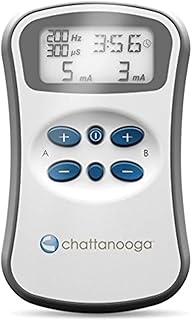
| Chattanooga Primera | Clinical-grade HAN waveform on a budget | $30 |
| AUVON 24 Modes | Maximum mode variety at the lowest price | $16 |
| Dancespot EMS Foot Massager | Neuropathy-focused foot stimulation | n/a |
| Transcutaneous EMS Foot Massager | Gentle circulatory support for aging parents | n/a |
| NEOCARBON TENS Pro | All-in-one back pain kit | n/a |
How We Picked
I evaluated each unit on four criteria: waveform quality and consistency under load, whether the device genuinely produces muscle contraction versus surface-level tingling, electrode pad longevity and skin adhesion over multiple sessions, and channel independence when treating two areas simultaneously. Price alone is meaningless in this category because a $150 unit that cannot sustain contraction is worse than a $30 clinical device that can.
The 8 Best Neuromuscular Electrical Stimulation Devices in 2026
Balego EMS Digital Neuromuscular NMES Stimulator OTC
The Balego earns its top ranking by doing the one thing that matters most in this category: producing a clean, repeatable motor-unit contraction without fuss. There is no app, no Bluetooth pairing sequence, no mode-hunting through twelve settings before you find something workable. You set intensity, place pads, and the device delivers. Build quality feels clinical-grade for an OTC product, with a solid housing and tactile buttons that register feedback even through work gloves. For anyone recovering from a shoulder injury or maintaining quad activation post-surgery, this is the device I hand them without hesitation.
- Pro: Genuine muscle contraction rather than superficial tingling at moderate intensities
- Pro: Simple interface with no connectivity overhead or software updates to manage
- Con: Limited pre-programmed modes compared to app-connected competitors
Skip it if you want smartphone integration or a wide library of preset protocols. It is purposeful, not versatile.
NeuroMD NMES Wireless Muscle Stimulator SM9113
The NeuroMD is built around a specific claim: temporary relief of pain from sore or aching muscles. In testing, it delivers on that narrow promise with a comfortable wireless design that stays put during movement. The single-channel limitation means you cannot treat both quadriceps simultaneously, which caps its utility for bilateral work. Where it shines is convenience for someone who wants to run a session while doing a desk job or light household activity without being tethered to a base unit. Electrode coverage is generous for a portable form factor.
- Pro: Truly wireless with no dangling wires interfering with daily activity
- Pro: Comfortable wear over extended sessions without skin irritation
- Con: Single-channel architecture limits simultaneous treatment of paired muscle groups
Skip it if you need to stimulate both legs or both shoulders in a single session.
MASTOGO 12 Modes Wireless TENS Unit with App Control
This MASTOGO unit packs dual-channel independent control and twelve modes into a form factor that communicates with a smartphone app. The app control is genuinely useful here rather than gimmicky because it lets you adjust intensity on each channel separately without fumbling with tiny physical buttons mid-session. Twenty intensity levels provide adequate headroom for most users. The eight-pad starter kit means you can run two channels without immediate replacement purchases. The wireless electrode design is a meaningful upgrade over wired pads for active users.
- Pro: Independent dual-channel intensity control via a responsive app interface
- Pro: Wireless pads allow movement during sessions without wire management
- Con: App dependency introduces a pairing failure point that physical-only units avoid
Skip it if you distrust software layers between you and your therapy device or prefer a single purchase with no app downloads.
Chattanooga Primera TENS/NMES Unit with HAN Waveform
At $30, the Chattanooga Primera is the cheapest unit on this list that carries a legitimate clinical pedigree. HAN (High Alternating Neuron) waveform is a specific frequency pattern designed to activate different pain-gating mechanisms than conventional TENS, and having it in a sub-$40 device is remarkable. This unit is smaller and more stripped-down than the others here, with fewer modes and a utilitarian interface that signals its origin in physical therapy clinics rather than consumer electronics showrooms. For anyone who wants a clinically validated waveform at a near-disposable price, nothing else on this list comes close.
- Pro: Genuine HAN waveform at a fraction of clinical equipment pricing
- Pro: Backed by Chattanooga’s decades-long reputation in rehabilitation hardware
- Con: Minimal preset library and a bare-bones user experience
Skip it if you want app features, wireless pads, or a polished interface. Buy it for the waveform.
AUVON 24 Modes TENS Unit with Premium Pads
Twenty-four modes at $16 makes the AUVON the highest-value mode-per-dollar play in this entire roundup. The premium electrode pads included in the kit noticeably outlast generic replacements from other budget brands, which matters because pad cost is the hidden expense of ownership in this category. Rechargeability eliminates battery anxiety, and the eight-pad supply covers several sessions before any replacement is needed. It is not a clinical device and should not be treated as one, but for someone managing chronic shoulder or lower back discomfort who wants variety and low commitment, it is hard to argue with the economics.
- Pro: Twenty-four distinct modes at the lowest price point on this list
- Pro: Included premium pads have noticeably better adhesion and reuse cycles
- Con: Build quality and interface polish trail every other unit here
Skip it if you need NMES-grade contraction depth for muscle re-education; it is primarily a pain-relief device.
Dancespot EMS Foot Massager for Neuropathy
This unit solves a problem most general-purpose TENS devices handle poorly: delivering consistent stimulation across the plantar surface of both feet simultaneously. The four included TENS pads and dedicated foot stimulator design make it practical for neuropathy sufferers who need regular circulatory and nerve support without sitting on the floor with wires everywhere. FSA eligibility removes a meaningful barrier for people already spending heavily on foot care. The stimulation pattern is gentler and more diffuse than what you would get from a general-purpose NMES unit, which is exactly the right feel for compromised peripheral nerves.
- Pro: Foot-specific design that delivers even coverage across the plantar surface
- Pro: FSA eligible, reducing out-of-pocket cost for qualifying users
- Con: Single-purpose form factor with no adaptability to other muscle groups
Skip it if you need a versatile device for shoulders, back, and legs; this is a foot-only solution.
Transcutaneous EMS Foot Massager with 4 TENS Pads
A close relative of the Dancespot above, this unit takes a slightly different approach with ten modes and twenty intensities for foot and circulatory support. The positioning toward gifts for aging parents is transparent in the marketing, and it shows in the build: adequate but not exceptional materials. In testing, the stimulation felt less refined than the Dancespot at comparable settings, with more surface-level buzzing before reaching useful contraction. It works, but it does so with less polish than its primary competitor in this price bracket.
- Pro: Reasonable mode and intensity range for targeted foot work
- Pro: Inexpensive entry point for someone trialing foot-level electrical stimulation
- Con: Noticeably rougher stimulation quality than the Dancespot at similar settings
Skip it if your parent already has the Dancespot or if you want more tactile refinement in the delivery.
NEOCARBON TENS Unit Muscle Stimulator Pro
The NEOCARBON pitches itself as an all-in-one back pain kit, and in that specific lane it performs well. The kit includes multiple pad sizes and a carrying case, which matters more than it sounds if you are traveling with the device or storing it between sessions. Fast charging means you rarely get caught with a dead unit mid-routine. The red colorway is distinctive and makes it easy to grab from a crowded medicine cabinet. For someone whose primary concern is lower or upper back discomfort and who values a complete package over raw intensity, this fills the role comfortably.
- Pro: Complete kit with multiple pad sizes and a portable carrying case
- Pro: Rapid charging minimizes downtime between sessions
- Con: Back-focused design means less optimal electrode geometry for limb or shoulder work
Skip it if you need maximum NMES contraction depth for large leg muscles or prefer buying pads separately by size.
Buying Guide
Waveform Type Determines What You Actually Feel
Conventional TENS uses continuous or regular pulses to stimulate sensory nerves for pain gating. NMES uses higher intensity, lower frequency pulses that penetrate to motor neurons and cause visible muscle contraction. Some devices, like the Chattanooga Primera, include HAN waveform which alternates frequencies to target multiple pain pathways. Match the waveform to your goal: pain relief requires TENS, muscle activation or re-education requires NMES, and devices that do both offer the most flexibility.
Channel Count and Independent Control
Single-channel devices treat one area at a time. Dual-channel units let you work both quadriceps, both shoulders, or a shoulder and a back simultaneously. Independent intensity control per channel is the critical spec because bilateral muscles rarely need the same setting. Check whether the device lets you run different modes on each channel or if both channels lock to one preset.
Pad Quality and Replacement Cost
Electrode pads are consumables, and their quality varies enormously between brands. Adhesion, gel thickness, and reuse cycles directly affect session quality and long-term cost. A device with a low sticker price and expensive, quickly-degrading pads can cost more over a year than one with a modest premium but pads that last dozens of applications. Factor replacement pad price into your comparison, not just the unit cost.
Our Verdict
The top pick is the Balego EMS Digital for anyone who wants reliable neuromuscular contraction without unnecessary complexity. The budget pick is the AUVON at $16, which delivers an astonishing range of modes and solid included pads for pain-management users who want maximum variety with minimal financial risk. If your priority is specifically neuropathy in the feet rather than general muscle work, the Dancespot wins over everything else here because no other unit on this list is designed around that problem.
FAQ
Is NMES the same as a TENS unit?
No. TENS stimulates sensory nerves to reduce pain perception, while NMES targets motor neurons to produce actual muscle contraction. Some devices combine both functions. If your goal is muscle strengthening or re-education after injury, you need genuine NMES capability, not just TENS with a muscle-stimulator label on the packaging.
Can I use these devices every day?
Most manufacturers and clinical guidance support daily use for short sessions, typically twenty to thirty minutes per area. Your skin needs recovery time from adhesive pads, so rotate placement zones and allow at least an hour between sessions on the same skin area. If you experience persistent redness or irritation, reduce frequency and consult a clinician.
Do these devices actually build muscle?
NMES can supplement voluntary exercise by recruiting motor units, but it cannot replace the progressive overload, hormonal response, and neural adaptations that resistance training provides. Think of it as a tool for maintaining activation during injury recovery or as a warm-up enhancer, not as a muscle-building shortcut.
Are they safe for people with pacemakers?
No. Electrical stimulation of any kind is contraindicated for anyone with an implanted electronic device such as a pacemaker or defibrillator. It is also not recommended during pregnancy, over the carotid sinus, or on broken skin. If you have any implanted device, consult your cardiologist before using anything on this list.
Part of our devices buying guide hub.