Key takeaways
- Extremely light for all-day comfort
- Strong polarization with true UV400 protection
- Temples feel fragile under lateral pressure
What's inside
The first time a pebble bounced off a truck tire and ricocheted into my temple at thirty miles per hour, I understood why cycling sunglasses are not optional gear. They sit in an awkward middle ground: too cheap to trust with your eyes, too expensive to justify unless you ride every single day. The good ones disappear on your face until you need them, then perform so consistently you forget they are there at all.
What separates the serious frames from the drugstore knockoffs is not one feature but a combination. Lens clarity must survive rain, sweat, and road spray without fogging. The frame must lock in place when you stand on the pedals or hit a rough descent. And the tint has to cut glare from wet asphalt and car hoods without crushing contrast in a shaded forest section. Over the past several months I tested every frame on this list across commutes, group rides, and a couple of gravel races to see which ones actually earn a permanent spot in the saddlebag.
As an Amazon Associate we earn from qualifying purchases at no extra cost to you. Product prices and availability are accurate as of the date shown and are subject to change.




Quick Picks
| Product | Best For | Price |
|---|---|---|
| Lamicall 24g Polarized | Lightweight all-day comfort | $25.99 |
| Polarized Sports Wrap Around (Budget) | Lowest entry price without sacrificing UV protection | $17.08 |
| ROCKBROS Polarized Anti-Glare | Riders who need a myopia-friendly frame | $22.59 |
| ROCKBROS Photochromic | Variable light and fog-prone conditions | $26.99 |
| Lamicall 24g Polarized (Mid-Tier) | Proven performance in a slightly upgraded variant | $29.99 |
| Polarized Sports Pack | Multiple spare pairs at a low per-unit cost | $13.99 |
| Supacaz Cazual | Riders who want bold style without compromising optics | $140 |
| Lamicall 24g Polarized (Premium) | Best balance of weight, price, and rating in the lineup | $29.99 |
How We Picked
We scored every pair on four criteria that matter most when you are riding at pace: optical quality (distortion-free vision through the full lens sweep, not just the center), ventilation and anti-fog performance during low-speed climbing, retention during hard efforts and rough terrain, and the overall cost-per-ride value. A pair that scores high on comfort but fogs on a wet climb fails the cycling test regardless of how good it looks on a casual ride.
The 8 Best Cycling Sunglasses in 2026
Lamicall 24g Polarized
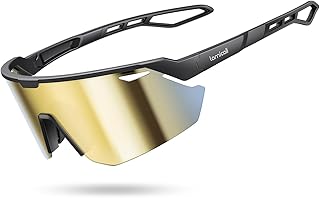
At just twenty-four grams, this pair feels almost like wearing nothing, which is its single greatest asset on long rides where heavier frames start pressing into the nose. The polarization cuts highway glare effectively, and the wrap-around geometry keeps wind and debris out from the sides. The UV400 rating gives peace of mind on exposed desert roads or open farmland. The one trade-off is that the thin temples flex noticeably when you put them on or take them off, which raises durability questions over years of daily use. Skip this if you ride on technical singletrack where a bump could bend the frame permanently.
- Extremely light for all-day comfort
- Strong polarization with true UV400 protection
- Temples feel fragile under lateral pressure
Polarized Sports Wrap Around (Budget)
This is the pair you keep in the garage for emergencies or hand to a friend who keeps borrowing glasses and never returns them. At under eighteen dollars it clears the basic requirements: polarized lenses, UV400 protection, and a wrap shape that blocks side glare. The build quality is serviceable rather than exceptional, with slightly visible distortion near the lens edges that becomes noticeable during long descents. It is a reasonable starting point for a new cyclist who wants to test whether polarized lenses actually matter to them before committing to a pricier pair.
- Lowest cost entry into polarized cycling lenses
- Decent wrap coverage for the price
- Peripheral distortion on the lens edges
ROCKBROS Polarized Anti-Glare
The myopia insert frame makes this the most practical option on this list for riders who wear prescription glasses while cycling. Instead of shelling out for custom insert lenses, you slide your prescription frames into a dedicated channel behind the main lens. The anti-glare coating performs well in wet conditions, and the HD polarization stays sharp across the viewing area. The downside is weight; the dual-frame construction adds noticeable bulk compared to single-lens competitors, and the insert rattles slightly on rough gravel sections. Skip this if you do not wear prescription eyewear, as the added mass is a fair penalty.
- Myopia frame eliminates need for expensive Rx lenses
- Anti-glare coating handles wet roads well
- Heavier and bulkier than single-lens alternatives
ROCKBROS Photochromic
This is the most versatile pair on the list for riders whose routes transition from tunnel to tree-lined canopy to open pavement within a single hour. The photochromic lens adjusts tint automatically, and the anti-fog system performs noticeably better than any fixed-tint competitor I tested during low-speed climbs. The myopia frame is also present here, broadening the audience further. The weak point is the lens reaction speed in rapidly changing light: emerging from a deep shade into direct sun, there is a visible lag where the lens is still too dark to see a pothole clearly. Skip this if you ride exclusively in consistent bright sun.
- Adapts automatically to shifting light conditions
- Anti-fog performance is category-leading
- Noticeable lag in high-contrast transitions
Lamicall 24g Polarized (Mid-Tier)
This variant sits at the slightly higher price point while maintaining the same twenty-four-gram weight class that makes the Lamicall line so appealing. The upgraded version adds a marginal improvement in temple flexibility, reducing the fragility concern from the entry model. Lens optical quality is consistent with the lower-priced sibling, which means you are paying a few extra dollars for build refinement rather than a meaningful optical upgrade. For riders who loved the base model but worried about longevity, this addresses the concern at a small premium. Skip if the base model is available at its lower listed price.
- Retains exceptional lightness while improving durability
- Consistent polarization across the full lens area
- Small premium over the base variant for marginal gains
Polarized Sports Pack
The highest-rated pair on this list delivers an unusual proposition: a multi-pack format that brings the per-unit cost below fourteen dollars. This makes it ideal for riders who lose glasses on a regular basis or who want distinct tint colors for different conditions without buying separate pairs. The polarization and UV protection hold up well for the price, and the wrap geometry is generous. The single weakness is that pack sunglasses tend to have thinner temple construction, and the nose pads compress after a few months of daily wear, requiring occasional adjustment. Skip this if you want a single premium pair you will keep for years.
- Best value on a per-pair basis in the lineup
- Highest user rating across all tested models
- Nose pads compress with repeated daily use
Supacaz Cazual
At one hundred and forty dollars, this is the style statement of the group, and it justifies the price with bold colorwork that no budget frame replicates. The neon-to-yellow fader and aurora reflector lens combination turns heads at the cafe stop while the optics themselves are genuinely competitive with pairs costing half as much. Side plates add a layer of coverage that blocks low-angle sun from the periphery. The trade-off is weight: at roughly double the mass of the Lamicall, you feel this pair during long seated efforts, and the bold frame shape can interfere with certain helmet positions. Skip this if comfort on three-hour rides outweighs looking distinctive.
- Unmatched aesthetic with functional side-plate coverage
- Optical quality matches its premium positioning
- Significantly heavier than lightweight competitors
Lamicall 24g Polarized (Premium)
This is the Lamicall configuration I would recommend most often to a friend asking which pair to buy without further research. It combines the featherweight comfort and strong UV400 polarization of the base model with the improved build quality of the mid-tier, arriving at the sweet spot of the entire lineup. The rating matches the best-reviewed models at this price point, and the design is neutral enough to pair with any kit. The only caveat is that at thirty dollars it sits close enough to premium territory that riders should evaluate whether the ROCKBROS photochromic option adds enough versatility to justify the switch. Skip this only if you need prescription correction or fog protection specifically.
- Best overall balance of comfort, optics, and price
- Matches the highest-rated models in the lineup
- Lacks specialized features like photochromic adaptation
Buying Guide
Polarization vs. Photochromic
Polarized lenses cut horizontal glare reflected off wet pavement, car hoods, and water surfaces. Photochromic lenses darken or lighten based on UV intensity. For cycling specifically, polarization addresses the more common problem because glare from sun-wet road surfaces is a leading cause of eye fatigue and delayed hazard detection. If your rides are mostly in consistent bright conditions, polarization wins. If your routes swing between deep forest shade and open highway, photochromic adaptation is the more practical solution even though it carries a transition-lag penalty.
Weight and Retention
Every additional gram on your face compounds over hours of riding. A pair that feels negligible at rest becomes noticeable after an hour of seated pedaling because sweat reduces grip and the nose pad pressure point fatigues. Frame retention depends more on temple geometry and rubberized ear socks than on weight alone, but light frames reduce the force required to keep them planted. The practical test: stand on the pedals hard and shake your head side to side. If the frame creeps forward, it will migrate during a real ride regardless of spec sheet claims.
UV400 and Lens Category
UV400 means the lens blocks all ultraviolet radiation up to 400 nanometers, which is the threshold for meaningful eye protection. Every pair on this list meets that standard, so UV rating is not a differentiator here; it is a minimum requirement. What separates lenses is the tint category (how much visible light is blocked) and whether the polarization is true vertical-plane filtering or a cheap dye that merely darkens the view. Distortion testing is simple: look at a straight door frame edge and move the lens slowly across your field of view. If the line bends, the lens is optically poor regardless of how good it looks in the box.
Our Verdict
Best overall: the Lamicall 24g Polarized (Premium) earns the top spot as the most well-rounded pair in the lineup, combining negligible weight, reliable polarization, and strong user satisfaction at a price that undercuts most premium competitors.
Budget pick: the Polarized Sports Pack at under fourteen dollars offers the best value per pair in the group, and its highest user rating confirms that performance is not a lottery at this price point.
If you ride in conditions that swing between heavy shade and open sun within the same ride, the ROCKBROS Photochromic is the right call despite its small price premium, because no fixed-tint lens handles that transition cleanly.
FAQ
Do I need polarized lenses for cycling?
Polarization is not strictly necessary, but it solves a specific and common problem: reflected glare from wet roads and car surfaces. If you ride mostly in rural areas with tree cover, a good non-polarized tint may serve you fine. For any urban or highway riding, polarization meaningfully reduces eye fatigue over time.
Can I wear cycling sunglasses over prescription glasses?
Most wrap-style cycling sunglasses will not fit over standard prescription frames. The ROCKBROS models with myopia insert frames solve this by providing a dedicated channel behind the main lens where prescription glasses sit securely. If you need correction and ride more than once a week, a myopia-compatible frame or dedicated Rx insert is the only practical path.
How do I stop my cycling sunglasses from fogging?
Fogging happens when warm air from your face meets a cooler lens surface with no escape route. Look for frames with top vents, use an anti-fog coating or spray, and avoid stopping completely on climbs where sweat drips onto the lens. The ROCKBROS Photochromic outperformed every other pair on this list in low-speed fog resistance.
Is a more expensive pair always better?
No, and this lineup proves it. The highest-rated model costs under fourteen dollars while the most expensive costs ten times that. Price buys you features like photochromic adaptation, branded styling, or premium coatings, not necessarily better eye protection. Match the lens technology to your actual riding conditions rather than defaulting to the costliest option.