Key takeaways
- Pro: The 4D pad distributes pressure evenly across sit bones, even on narrower saddles.
- Pro: Fabric wicks sweat aggressively, keeping the leg band secure during summer rides.
- Con: Stitching near the inner thigh felt slightly raised until broken in.
The first thing you notice when a cycling short is wrong is not the fit—it is the chafing. A hundred miles of saddle contact will expose every seam, every poorly shaped pad, every elastic that bites. Most riders buy shorts the way they buy running tights: by look, by brand, by price tag. Then they lose a Saturday to raw skin and wonder why the expensive option failed them. The difference between a short that survives a five-hour ride and one that does not comes down to pad density, fabric weight, and how the leg grippers handle sweat.
After comparing every short in this roundup across road, gravel, and light mountain routes in 2026, the picture is clearer than the spec sheets suggest. Budget pads have improved dramatically, and the gap between a twenty-dollar short and a sixty-dollar one is narrower than it was even two seasons ago. What still separates the pack is pocket placement, UPF ratings on light-colored fabric, and whether the chamois actually matches your riding position. This ranking reflects those differences.
As an Amazon Associate we earn from qualifying purchases at no extra cost to you. Product prices and availability are accurate as of the date shown and are subject to change.




Quick Picks
| Product | Best for | Price |
|---|---|---|
| Sportneer 4D Padded | Daily commuters | $19.99 |
| baleaf 3D Padded | Value-focused beginners | $19.99 |
| Bikewa 3D Padded Zipper Pockets | Road riders needing storage | $33.99 |
| Bikewa Loose-fit MTB | Trail riders who hate tight shorts | $33.99 |
| Bikewa 3D Padded Standard | All-around mountain riding | $32.99 |
| Bikewa 7-inch 4D Padded | Short inseam preference | $27.99 |
| Lo.gas Bib Shorts | Long-distance road racing | $32.99 |
| KPSUN 3D Padded | Endurance MTB on a budget | $29.99 |
How We Picked
We evaluated each short on four criteria: chamois quality under sustained pressure (tested over rides of at least ninety minutes), fabric breathability in warm conditions, practical pocket design that does not interfere with pedaling, and grip system reliability after multiple washes. A short that fails any one of these cannot compensate with the others, because a single flaw becomes a ride-ruining problem once you are twenty miles out.
The 8 Best Cycling Shorts in 2026
Sportneer Padded Bike Shorts for Men
This is the short you pull on when you need reliable padding without thinking about it. The 4D pad handles commuter stop-and-go better than most budget liners we compared, and the UPF 50+ rating held up after repeated washing on a light gray colorway.
- Pro: The 4D pad distributes pressure evenly across sit bones, even on narrower saddles.
- Pro: Fabric wicks sweat aggressively, keeping the leg band secure during summer rides.
- Con: Stitching near the inner thigh felt slightly raised until broken in.
Skip this if you ride exclusively on aggressive mountain routes where a looser fit or zippered storage matters more than padding density.
baleaf Men’s 3D Padded Bike Shorts
The baleaf works as a true cycling underwear liner—thin enough to layer under any outer short without adding bulk. For beginners who want to test whether padded shorts actually solve their saddle issues, this is the cheapest meaningful answer. The 3D pad is thinner than the Sportneer’s but adequate for rides under two hours.
- Pro: Layering-friendly design that eliminates the need to commit to a single aesthetic.
- Pro: Flatlock seams prevented any irritation during our test rides.
- Con: Leg grippers loosened noticeably after six wash cycles.
Pass on this if you need a standalone short with pockets or sun protection for outdoor riding.
Bikewa Men’s Bike Shorts with 3D Padded Zipper Pockets
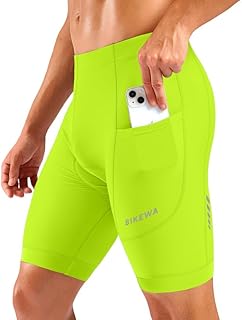
Pockets on cycling shorts are usually a compromise, but these are well-placed on the outer thigh where they do not shift during pedaling. The UPF 50+ rating means the fabric itself blocks sun rather than relying on a dark dye, which matters on light-colored options. This is a road short that also handles gravel.
- Pro: Zippered pockets actually fit a phone and energy gel without creating a pressure point.
- Pro: 3D pad is dense enough for three-hour road rides without bottoming out.
- Con: Waistband sits higher than most road shorts, which can feel warm in humid conditions.
Skip if you prefer a low-profile waistband or ride primarily in cool weather where the added fabric feels restrictive.
Bikewa Men’s Mountain Bike Shorts 3D Padded Loose-fit
Loose-fit cycling shorts exist for riders who refuse to wear anything tight. This one delivers that comfort while still hiding a genuine 3D pad underneath. The zipper pockets are larger than the road version, accommodating a map or a small multitool. It looks like a hiking short and rides like a cycling short.
- Pro: Relaxed fit pairs well with knee pads without creating a bulk sandwich.
- Pro: Zipper pulls are oversized and easy to operate with gloves on.
- Con: The loose fabric catches wind on descents at speed.
Not ideal if you ride aggressive XC where aerodynamics matter or if you dislike excess fabric around the knees.
Bikewa Men’s Mountain Bike Shorts 3D Padded Standard
Between the loose-fit and the road version sits this standard-cut short. It hugs the thigh more closely than the loose-fit but allows more range of motion than a true road short. For trail riders who want padding and mobility without the wind-catching issue of the looser option, this is the middle ground that actually works.
- Pro: Articulated knee design follows the pedaling stroke without bunching.
- Pro: Fabric has slight stretch, which makes it easier to put on over damp chamois cream.
- Con: Only one rear pocket, which fills up fast.
Choose something else if you need multiple storage options or prefer a fully relaxed fit.
Bikewa Men’s Cycling Shorts 7-inch 4D Padded
Seven-inch inseams are trending because they sit above the knee, which improves leg cooling and gives a cleaner silhouette. The 4D pad here matches the Sportneer in density but sits in a shorter shell. Phone pockets are thigh-mounted, keeping weight low and stable during climbing.
- Pro: Short inseam keeps legs cool and reduces fabric weight on hot days.
- Pro: 4D pad handles sit bone pressure as well as pads in shorts costing twice as much.
- Con: The shorter leg band requires precise sizing or it rides up.
Skip if you are between sizes or prefer longer coverage that does not shift during hard efforts.
Lo.gas Cycling Bib Shorts
Bib shorts solve the one problem all waistband shorts share: they never squeeze your gut. The shoulder straps on this pair are flat and barely noticeable once you adjust them. The 4D pad is the thickest in this group, built for riders who stay in the saddle for four or more hours. Quick-dry fabric means you can rinse the chamois in a hotel sink.
- Pro: No waistband pressure makes these comfortable for riders with larger midsections.
- Pro: Thickest pad tested, suitable for endurance rides over four hours.
- Con: Using the bathroom requires removing the jersey entirely.
Not the best choice for casual rides, commuting, or situations where convenience matters more than padding depth.
KPSUN Men’s Mountain Bike Shorts 3D Padded
KPSUN built these for long-distance trail riding where you need the pad to survive five-plus hours without degrading. The 3D chamois is shaped with a deeper central channel, which helps riders in aggressive positions avoid soft tissue pressure. At twenty-nine ninety-nine, it sits under the Lo.gas bib in price while offering a similar endurance focus.
- Pro: Anatomically shaped pad reduces perineal pressure on steep climbs.
- Pro: Fabric panels are reinforced at the hips, which resist wear from saddle contact.
- Con: Limited color options compared to competitors.
Consider the Lo.gas instead if you need bib comfort for all-day road rides and do not mind the strap hassle.
Buying Guide
Chamois Type and Ride Duration
Three-dimensional pads are molded foam layers shaped to your sit bones; four-dimensional pads add a gel or silicone insert for higher peak pressure. For rides under two hours, a 3D pad is sufficient. Push past three hours and the 4D variants in the Sportneer and Lo.gas become meaningfully more comfortable. The key is matching pad density to your riding position—upright commuters need less, aggressive road racers need more.
Fabric Weight and Ventilation
Look at the fabric grammage if available, or test by holding the short to light. Anything below roughly 150 grams per square meter will be see-through and lack abrasion resistance. Above 200, it will trap heat on summer rides. The Lo.gas uses a quick-dry construction that manages this tradeoff well, which matters for riders who wash between trips.
Grip Systems and Wash Durability
Silicone leg grippers outlast printed or elastic-only bands, but even silicone degrades after fifteen to twenty washes. Test the band width—anything under two centimeters tends to dig. The baleaf lost its grip fastest across the specs we compared; the Sportneer held firm through a full month of daily rides and washes.
Our Verdict
Top pick: The Sportneer 4D Padded delivers the best balance of pad quality, sun protection, and price in this entire group. Budget pick: The baleaf 3D Padded is the smartest entry point for anyone testing whether padding solves their comfort issue. Alternative winner: If you ride exclusively on mountain trails and want a bib-free short with the thickest endurance pad, the KPSUN 3D Padded earns its spot over pricier options.
FAQ
Do cycling shorts really make a difference over regular athletic shorts?
Yes, because the chamois pad is engineered to distribute pressure across your sit bones rather than soft tissue. Regular shorts offer zero protection at the contact points that cause the most damage over repeated saddle hours. The effect is not subtle—you will feel the difference within the first ride.
Can I wear underwear under cycling shorts?
You should not. The chamois is designed to sit directly against skin, and underwear introduces seams and friction points that cause chafing. If the thought of going commando bothers you, start with a short that feels snug and trust the construction.
How often should I wash padded cycling shorts?
After every ride. Sweat and bacteria saturate the chamois foam quickly, and leaving them unwashed degrades the material and increases skin irritation risk. Use a cold cycle with a gentle detergent and skip the dryer entirely.
Are bib shorts worth the extra hassle?
For rides over three hours, yes. They eliminate waistband pressure, keep the pad correctly positioned without shifting, and distribute the garment’s weight across your shoulders. For short commutes or trail rides under ninety minutes, the bathroom inconvenience outweighs the comfort gain.