Key takeaways
- Best for low ceilings: Titan Fitness T-2 Series Short Power Rack — A short power rack with a skinny pull-up bar, pin-and-pipe safeties, and standard J-hooks for home garage and strength-training setups.
- Best traditional T-3 cage: Titan Fitness T-3 Series Power Rack — A full power rack described with a 1,100-pound capacity for conventional cage-based training.
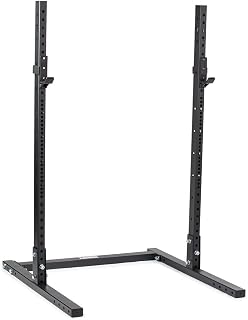
- Best compact open rack: Titan Fitness T-3 Series 73.5-inch Squat Stand — A 73.5-inch squat stand with a stated 1,000-pound capacity, Westside hole spacing, and J-hooks.
- Best flat-foot option: Titan Fitness X-3 Series Flat Foot Power Rack — A flat-foot X-3 design with a stated 1,650-pound rackable capacity and both skinny and fat pull-up bars.
- Best wall-mounted space saver: Titan Fitness T-3 Series Space Saving Rack — A compact wall-mounted rack described as 91 inches high and 24 inches deep, with 2-by-3, 11-gauge steel uprights, J-hooks, and a pull-up bar.
- Best bolt-down X-3: Titan Fitness X-3 Series Tall Bolt-Down Power Rack — A tall X-3 rack with 36-inch depth for lifters who can anchor the frame and want more interior room.
Searching for “what are titan fitnesses best racks”? Start with one practical question: do you need a full power cage, or would a compact squat stand or wall-mounted frame better match your room? The current lineup includes short racks for low ceilings, traditional T-3 cages for general strength training, flat-foot designs that avoid floor anchoring, and X-3 models intended for lifters who prioritize higher rackable capacity and a more substantial structure.
The right choice depends on more than a capacity figure. Ceiling height, available depth, floor construction, anchoring rules, bar-storage plans, pull-up preferences, and the type of solo training you perform all affect whether a rack works well in your gym. A full cage with pin-and-pipe safeties is usually the more reassuring format for unsupported squats and bench presses, while a squat stand may be easier to place in a multipurpose room. Wall-mounted and bolt-down racks can preserve floor space, but they require a suitable installation surface and a commitment to securing the frame correctly.
This guide compares the Titan Fitness listings using their stated product titles plus the specification pages Titan publishes for each rack line, checked in October 2026. Titan sells most racks in several heights, depths, colors, and bundles, so verify dimensions, hole spacing, steel specifications, included hardware, mounting requirements, and accessory compatibility for the exact variation on the current product page before ordering.
Our top picks




As an Amazon Associate we earn from qualifying purchases at no extra cost to you.
Updated October 2026 — What are Titan Fitness’s best racks? For most garage gyms the best Titan Fitness rack is the Titan Fitness T-3 Series Power Rack (2 x 3-inch 11-gauge uprights, 1,100 lb capacity), because it balances price, frame strength and the widest choice of attachments. Lifters who train heavy and do not want to drill the floor should step up to the Titan Fitness X-3 Series Flat Foot Power Rack (3 x 3-inch uprights, 1,650 lb rackable). For low ceilings on a tight budget, the Titan Fitness T-2 Series Short Power Rack is the entry point.
Short on floor space? The Titan Fitness T-3 Series Wall Mounted Folding Power Rack and the Titan Fitness X-3 Series 80-Inch Wall Mounted Folding Power Rack fold back toward the wall when you need to park. Price tiers, spec lines and the full comparison follow below.
Quick answer: the top Titan Fitness rack picks
- Best for low ceilings: Titan Fitness T-2 Series Short Power Rack — A short power rack with a skinny pull-up bar, pin-and-pipe safeties, and standard J-hooks for home garage and strength-training setups.
- Best traditional T-3 cage: Titan Fitness T-3 Series Power Rack — A full power rack described with a 1,100-pound capacity for conventional cage-based training.
- Best compact open rack: Titan Fitness T-3 Series 73.5-inch Squat Stand — A 73.5-inch squat stand with a stated 1,000-pound capacity, Westside hole spacing, and J-hooks.
- Best flat-foot option: Titan Fitness X-3 Series Flat Foot Power Rack — A flat-foot X-3 design with a stated 1,650-pound rackable capacity and both skinny and fat pull-up bars.
- Best wall-mounted space saver: Titan Fitness T-3 Series Space Saving Rack — A compact wall-mounted rack described as 91 inches high and 24 inches deep, with 2-by-3, 11-gauge steel uprights, J-hooks, and a pull-up bar.
- Best bolt-down X-3: Titan Fitness X-3 Series Tall Bolt-Down Power Rack — A tall X-3 rack with 36-inch depth for lifters who can anchor the frame and want more interior room.
How We Researched This Guide
This guide is based on the product names, specifications, and design descriptions shown for the listings in this guide. Where the listing identifies a capacity, height, depth, steel gauge, safety system, pull-up bar, or mounting style, those details are used to explain the likely role of the rack. Where information is missing, the buying advice identifies what shoppers should verify rather than filling the gap with an assumption.
The ranking emphasizes fit for common home-gym needs: low-clearance rooms, full-cage safety, open training space, wall-mounted storage efficiency, flat-foot installation, and heavy strength training. Capacity figures are treated as product-stated information, not as a guarantee that every part of a complete gym setup is suitable for that load. The bench, barbell, plates, flooring, anchoring method, and installation quality all matter.
1. Choose the right rack format first
Power racks, squat stands, wall-mounted racks, flat-foot racks, and bolt-down racks solve different problems. A traditional power rack surrounds the lifter with uprights and usually provides adjustable safety hardware inside the cage. That format is the most natural starting point for solo squats, bench presses, and rack-based barbell work, provided the safeties are correctly installed and adjusted.
A squat stand is more open. The T-3 73.5-inch model is specifically described as a squat stand with J-hooks and Westside hole spacing. That can be a strong fit for a room that also needs to accommodate cleans, carries, dumbbell work, or other movements. The trade-off is that an open stand does not provide the same enclosed catching structure as a full power rack. Verify whether separate spotter arms or other safety attachments are included before treating it as a solo-training solution.
Wall-mounted and bolt-down racks preserve usable floor area, but installation becomes part of the safety system. A wall-mounted rack needs an appropriate structural surface, while a bolt-down rack needs a suitable floor and permission to drill. A flat-foot rack avoids the same kind of permanent anchoring, but it still needs enough clear floor area and a stable surface. Do not select a format based only on its advertised capacity.
2. Measure height, depth, and training clearance
Measure the actual room before comparing rack categories. Record ceiling height at the proposed location, then account for uneven floors, joists, garage-door hardware, lighting, ductwork, and the height of the pull-up bar. A rack that technically fits may still be impractical if you cannot set a bar on the J-hooks, perform pull-ups, or move a loaded bar safely.
Height is especially important when comparing the short T-2, the 73.5-inch T-3 squat stand, the 91-inch T-3 space-saving rack, and the tall X-3 option. A lower rack can solve a ceiling problem, but it may restrict pull-up positions or overhead work. A taller frame can offer more room for movement, but it may not suit a basement or garage with limited clearance.
Depth is equally easy to underestimate. The T-3 space-saving rack is listed at 24 inches deep, while the X-3 tall bolt-down model is described as having 36-inch depth. Those figures describe the rack design, not necessarily the complete operating zone. Leave room for the bench, the barbell sleeves, plate loading, walkouts, and access around the frame. A common mistake is measuring only the rack footprint and forgetting the bar’s total length.
3. Compare safeties, J-hooks, and adjustment points
For a full power rack, the safety system is one of the most important differences from a basic barbell stand. The T-2 listing specifically identifies pin-and-pipe safeties and standard J-hooks. Before purchase, confirm how the safeties adjust, whether both sides are included, and whether the listed hardware is intended for both squat and bench positions.
J-hooks hold the bar at the starting height. Their location needs to be high enough for a comfortable unrack but low enough that you do not have to rise onto your toes or lose position. For benching, the correct setting can be more demanding because the bar must clear the hooks without forcing the shoulders or wrists into an awkward path. Look for clearly stated hole spacing and adjustment positions rather than assuming every rack offers the same level of precision.
Westside hole spacing is explicitly listed for the T-3 73.5-inch squat stand. Closely spaced holes through the benching area can make fine adjustments easier, but the exact spacing pattern and the full range of holes should still be confirmed. Do not assume that a rack with the same series name includes identical safety hardware or accepts every accessory. Check the product-specific parts list.
4. Interpret capacity figures in context
Several listings provide a stated capacity: 1,100 pounds for the T-3 power rack, 1,000 pounds for the T-3 squat stand, and 1,650 pounds of rackable capacity for the X-3 flat-foot rack. These figures are useful for comparing the product descriptions, but they should not be read as a complete prediction of real-world performance in every configuration.
“Rackable capacity” generally relates to the load supported by the rack during a rack-based movement, while the barbell, J-hooks, safeties, floor, and fasteners also contribute to the overall setup. A wall-mounted or bolt-down model depends on the quality of its connection to the wall or floor. A freestanding model depends on its base, surface, loading pattern, and whether the user applies sideways force.
Choose a rack with an appropriate margin above your current working loads and realistic future goals, but do not use a large capacity number to overlook poor room fit or uncertain installation. Confirm whether the stated figure applies to the entire rack, the uprights, the pull-up bar, or a particular attachment. If the listing does not explain the load conditions behind the number, treat the number as a comparison point rather than a universal guarantee.
5. Check steel, frame geometry, and hardware details
Frame size and steel gauge can influence rigidity, attachment compatibility, and long-term durability, but these listings do not provide complete construction details for every model. The T-3 space-saving rack is specifically described with 2-by-3, 11-gauge steel uprights. The other listings require closer inspection of their product pages for upright dimensions, steel gauge, crossmember design, weld information, and hardware size.
Do not compare racks by series name alone. A wall-mounted T-3, a traditional T-3 cage, and a T-3 squat stand may have very different frame layouts and installation requirements. Likewise, an X-3 flat-foot model and an X-3 bolt-down rack may serve different stability goals despite sharing a series designation.
Review the assembly manual before ordering when possible. Look for the number of crossmembers, the placement of base plates or feet, the type and quantity of fasteners, and whether the rack requires a second person for assembly. Missing information is a reason to contact the manufacturer or seller, not a reason to assume the frame uses a particular steel specification.
Titan series at a glance: T-2 vs. T-3 vs. X-3
Series names are more useful once you know what they usually stand for. Titan’s own listings across the rack and attachment lines describe the frame sizes below. Use the table to understand the families, then confirm the details for the exact rack you plan to buy, because a single series can include short, tall, folding, wall-mounted, and flat-foot builds.
| Series | Upright size | Steel gauge | Stated rackable capacity in this guide | Attachment fit | Typical role |
|---|---|---|---|---|---|
| T-2 | 2 x 2 in. | 14-gauge | 850 lb rackable (Titan’s T-2 spec; older listings show 700 lb) | T-2 attachments are listed for 2 x 2 uprights with 26 mm holes | Entry-level home racks and low-ceiling setups |
| T-3 | 2 x 3 in. | 11-gauge | 1,100 lb (power racks), 1,000 lb (squat stand) | T-3 attachments are listed for 2 x 3 uprights with 11/16-in. holes | Mainstream garage gyms with the widest choice of formats |
| X-3 | 3 x 3 in. | 11-gauge | 1,650 lb (flat-foot rack) | Check X-3-specific attachment listings | Heavier training and lifters who want a stiffer frame |
Two practical points follow from this. First, accessories do not cross over automatically. A T-2 J-hook made for 2 x 2 uprights will not fit a 2 x 3 T-3 upright, and hole diameter matters as much as tube size. Second, moving up a series changes more than the capacity number. Larger uprights generally mean a heavier, more rigid frame and more attachment options, but also a larger shipping box, a heavier assembly job, and usually a higher price. If you expect to add dip handles, a landmine, spotter arms, or plate storage later, decide on the series first and buy attachments to match it.
6. Match installation demands to your space
Installation is a major dividing line among these racks. The X-3 tall model is identified as bolt-down, so its stability depends on a suitable floor and correctly installed anchors. The T-3 space-saving model is identified as wall mounted, making the wall structure and mounting hardware central to safe use. Never attach a wall-mounted rack only to drywall or an unverified surface.
The X-3 flat-foot model is intended for a different installation approach because its flat-foot design does not require the same type of floor bolt-down described for the tall X-3. Even so, “flat foot” does not mean that every floor, exercise style, or loading pattern will feel identical. Check the base dimensions, recommended clearance, floor requirements, and whether the manufacturer recommends anchoring for particular uses.
Freestanding racks also deserve careful placement. Use a level, solid surface and follow the assembly instructions for every crossmember and fastener. Avoid placing a rack where a garage door, vehicle, storage cabinet, or uneven transition can interfere with the walkout. If you rent, verify whether drilling into a wall or floor is permitted before choosing a mounted design.
7. Consider pull-ups and future accessories
Pull-up hardware varies across this group. The T-2 listings specify a skinny pull-up bar. The X-3 flat-foot listing specifies both skinny and fat pull-up bars, giving it a broader grip choice according to the listing description. Other racks list a pull-up bar or do not provide enough detail to identify the included configuration.
Grip preference matters, but so does clearance. A low rack may technically include a pull-up bar while offering limited room above or below it for a comfortable repetition. Confirm the bar height and the usable space around the rack. Also check whether the pull-up bar is a structural crossmember, a removable component, or an attachment with its own installation instructions.
Future accessories can affect the best series choice. The product titles identify T-3 and X-3 families, but compatibility should be confirmed at the individual listing level. Check the upright dimensions, hole pattern, attachment mounting method, and any stated series restrictions before planning for dip handles, spotter arms, plate storage, landmine attachments, or other upgrades. Avoid buying accessories first and discovering that their mounting dimensions do not match the rack.
8. Plan the complete lifting setup
A rack is only one part of a barbell station. Before choosing, place the intended bench inside the rack and check whether its height and width leave adequate room for the J-hooks and safeties. Confirm that the bench can be moved in and out without striking the uprights. An open squat stand may be more flexible for walkouts, but it may provide less protection when training alone.
Consider the barbell’s total length and sleeve space. Plates need room to slide onto the sleeves without colliding with walls, uprights, or storage. If you use bumper plates, account for their diameter and the space needed to lower the bar safely. If you use specialty bars, verify that the rack’s width and hook design suit them.
Finally, plan how the rack will be used between sets. A narrow corner may fit the frame but leave no room to load plates, adjust safeties, or step backward safely. The best Titan rack for your gym is the one that combines an appropriate format, verified dimensions, suitable safety equipment, and an installation method you can execute correctly.
Detailed product breakdowns
1. Titan Fitness T-2 Series Short Power Rack with Skinny Pull-Up Bar
The Titan Fitness T-2 Series Short Power Rack is designed around the needs of home and garage gym users who need a power rack without the height of a full-size cage. Its listed configuration includes a skinny pull-up bar, pin-and-pipe safeties, and standard J-hooks. That combination provides the basic components needed for squats, bench pressing, rack-based barbell work, and pull-ups in a more height-conscious setup.
Key specifications: This is a T-2 Series short power rack intended for home garage gym weightlifting and strength training. Titan lists the T-2 rack in 71-inch and 83-inch heights, with 2 x 2-inch, 14-gauge uprights, an 850-pound rackable capacity, and a 42 x 26-inch interior. The kit includes two pin-and-pipe safeties, two J-hooks, two weight plate horns, and a 1.25-inch single pull-up bar, and Titan recommends bolting the rack down for stability. Older listings of this rack show a 700-pound rating, so confirm 850 pounds on the variation you buy.
Strengths: The short format is the central advantage for rooms with limited ceiling clearance. The included safeties are also important for lifters who want the protective structure of a cage rather than an open squat stand. Standard J-hooks and a pull-up bar mean the rack is presented as a usable starting point rather than a bare frame.
Trade-offs: A shorter rack may provide less overhead clearance and fewer options for high pull-up movements than a taller model. Pin-and-pipe safeties can also require more deliberate adjustment than other safety designs. Buyers should verify the actual height, safety adjustment positions, rackable capacity, and whether the base must be secured to the floor.
Best for: Home lifters with low ceilings who want a conventional rack for squats, bench work, and basic pull-ups. Skip it if: you need extensive overhead clearance, a tall pull-up station, or a rack with published specifications that are unavailable in this listing.
View the Titan Fitness T-2 Series Short Power Rack
2. Titan Fitness T-3 Series Power Rack, 1,100-Pound Capacity
The Titan Fitness T-3 Series Power Rack is presented as a full power rack for weightlifting and strength training, with a stated 1,100-pound capacity. Compared with the short T-2 listings, the T-3 series uses larger 2 x 3-inch, 11-gauge uprights and a higher 1,100-pound rating. Its cage format is suited to lifters who prioritize enclosed barbell training and room for safety hardware.
Key specifications: This is a Titan T-3 Series power rack with a stated 1,100-pound capacity, described as a cage for weightlifting and strength training. Titan’s page for the T-3 power rack lists 2 x 3-inch, 11-gauge uprights, Westside hole spacing, two J-hooks, and 1.25-inch and 2-inch pull-up bars. Its 82 x 24-inch model has a 42-inch inside width and a 1,100-pound rackable rating, and Titan recommends bolting it down. Titan sells the T-3 cage in several heights, depths, colors, and bundles, so confirm the dimensions, safeties, and plate holders for the exact variation you order.
Strengths: The published capacity gives buyers a concrete starting point for comparing it with lower-capacity racks. A full power-rack format can support squats, bench pressing, and other barbell movements inside a contained frame. The T-3 series designation may also matter to buyers considering compatible equipment, but that compatibility should be confirmed before purchasing accessories.
Trade-offs: Capacity alone does not describe stability, usable interior space, or the rack’s fit in a home gym. Without dimensions and a list of included components, buyers cannot assume that a pull-up bar, safeties, or particular J-hooks are included. A full cage may also demand more floor and ceiling space than a short rack or squat stand.
Best for: Strength trainees seeking a full T-3 power-rack format with a stated 1,100-pound capacity. Skip it if: your room has restrictive dimensions or you require clearly listed accessories and measurements before committing.
View the Titan Fitness T-3 Series Power Rack
3. Titan Fitness T-3 Series 73.5-Inch Squat Stand
The Titan Fitness T-3 Series 73.5-inch Squat Stand is the most open and space-conscious format in this group. It is listed with a 1,000-pound capacity and includes Westside hole spacing and J-hooks. Unlike a full power rack, a squat stand does not surround the lifter with a complete cage, so its appeal is primarily the combination of a stated capacity, compact height, and open access to the bar.
Key specifications from the available data: The stand is 73.5 inches tall and has a stated 1,000-pound capacity. It is part of the T-3 Series, uses Westside hole spacing, and includes J-hooks. The available data does not state the stand’s footprint, base width, steel gauge, safety attachments, anchoring requirements, or whether any spotter arms are included.
Strengths: The listed height can be useful in low-ceiling rooms, while the open format leaves more room around the bar for movements such as cleans, lunges, and carries. Westside hole spacing can provide more positioning choices for setting J-hooks, particularly when alternating between squat and bench heights.
Trade-offs: This is a squat stand rather than a full cage. The listing does not list integrated safeties, so buyers training alone should determine whether compatible spotter arms or another safety solution is available. A capacity rating also does not tell you how much the stand may move during reracking or dynamic training.
Best for: Lifters who value an open, compact setup and need a short stand for squats and bench work. Skip it if: you regularly train heavy without a spotter and require built-in pin-and-pipe or strap-style protection.
View the Titan Fitness T-3 Series 73.5-inch Squat Stand
4. Titan Fitness X-3 Series Flat Foot Power Rack
The Titan Fitness X-3 Series Flat Foot Power Rack is aimed at lifters who want a substantial rack without an explicitly listed bolt-down installation. Its product title states a 1,650-pound rackable capacity and identifies both skinny and fat pull-up bars. The flat-foot format may be attractive where drilling into a floor is undesirable, although the available data does not establish how much anchoring is recommended for particular training loads or movements.
Key specifications: This is an X-3 Series flat-foot power rack with a stated 1,650-pound rackable capacity. Titan’s page for the flat-foot rack lists 3 x 3-inch, 11-gauge uprights, Westside hole spacing with 11/16-inch holes, an 82-inch or 91-inch height, 30 inches of interior depth, a 42-inch inside width, and a 50 x 48-inch footprint. It includes 1.25-inch skinny and 2-inch fat pull-up bars plus two J-hooks with plastic liners. Safeties and weight plate holders are sold separately, and no floor bolting is required. Confirm the height and any plate-holder bundle on the exact variation you order.
Strengths: The high stated rackable capacity makes this a strong candidate for experienced lifters who handle substantial barbell loads. Having both skinny and fat pull-up bars offers a choice of grip thicknesses. The flat-foot design may simplify placement in a home gym where permanent floor bolts are not practical.
Trade-offs: “Rackable capacity” should not be treated as a complete safety specification; buyers should confirm the rating’s scope and the capacities of included safety components. Flat-foot racks can also require careful positioning and may not behave like a permanently anchored rack during aggressive pull-ups or repeated reracking. The included hardware needs verification.
Best for: Experienced home lifters seeking a high-capacity X-3 rack with two pull-up-bar options and a flat-foot base. Skip it if: you need a bolt-down rack, have limited room, or want all dimensions and safety hardware documented in the listing.
View the Titan Fitness X-3 Series Flat Foot Power Rack
5. Titan Fitness T-3 Series Space Saving Rack
The Titan Fitness T-3 Series Space Saving Rack is described as a compact wall-mounted power rack for rooms where floor depth is the primary constraint. Its listed dimensions include a 91-inch height and 24-inch depth, and the title identifies 2-by-3, 11-gauge steel uprights. It includes J-hooks and a pull-up bar, making it a more complete starting point than a wall-mounted frame sold without bar-support hardware.
Key specifications: The rack is 91 inches tall and 24 inches deep. It uses 2-by-3, 11-gauge steel uprights, is designed for wall mounting, and includes J-hooks and a pull-up bar. Titan’s page for this rack line lists a 1,100-pound rackable capacity, Westside hole spacing, a 1.25-inch pull-up bar, and two top side braces, and states that wall-mounting hardware is not included. It is a fixed wall-mounted frame rather than a folding one, and no safeties are listed, so plan on spotter arms or safeties if you train alone.
Strengths: The 24-inch depth is useful when a traditional rack would consume too much floor space. Wall mounting can help preserve a walkway and keep the rack close to the wall. The included J-hooks and pull-up bar cover basic barbell and upper-body use, while the 91-inch height may fit rooms that cannot accommodate taller racks.
Trade-offs: Installation is a major consideration. Buyers must verify whether their wall can support the rack and loaded training, which fasteners are included, and whether the rack requires a specific stud layout or masonry surface. Because wall-mounting hardware is sold separately and no safeties are included, review the current listing before ordering.
Best for: Space-limited home gyms with a suitable structural wall and a preference for a shallow rack. Skip it if: you cannot mount equipment securely or want a freestanding rack that can be relocated easily.
View the Titan Fitness T-3 Series Space Saving Rack
6. Titan Fitness X-3 Series Tall Bolt-Down Power Rack, 36-Inch Depth
The Titan Fitness X-3 Series Tall Bolt-Down Power Rack is intended for buyers who prioritize a tall rack, a deeper training area, and permanent stability. Its title specifies a 36-inch depth and a bolt-down design. The X-3 designation places it in Titan’s larger rack family, with 3 x 3-inch uprights.
Key specifications: This is a tall X-3 Series power rack with a 36-inch depth and a bolt-down installation format. Titan’s page for the X-3 bolt-down line lists 3 x 3-inch, 11-gauge uprights, a 1,650-pound rackable capacity, Westside hole spacing with 11/16-inch holes, a 42-inch inside width, and 80-inch or 90-inch heights in 24-inch and 36-inch depths. The page lists two J-hooks and 1.25-inch and 2-inch pull-up bars, with pin-and-pipe or strap safeties and plate holders as optional add-ons. Confirm the height and what is in the box for the exact variation you order.
Strengths: A 36-inch depth can provide more usable room inside the rack than a shallow wall-mounted design. Bolt-down construction is also relevant for lifters who want the rack fixed in place rather than relying on its own base weight. A tall frame may provide more room for pull-ups and overhead work, subject to the actual ceiling clearance.
Trade-offs: Permanent installation reduces flexibility and requires a suitable floor, accurate layout, and compatible anchors. The tall format may be unsuitable for low garages and basements. Titan sells safeties and plate holders for this line as add-ons, so do not assume a particular safety system or attachment package comes in the box.
Best for: Dedicated home gyms with adequate ceiling height and a floor suitable for bolting down a deep rack. Skip it if: you rent, frequently rearrange equipment, or need a compact or nonpermanent setup.
View the Titan Fitness X-3 Series Tall Bolt-Down Power Rack
7. Titan Fitness T-3 Series Wall Mounted Folding Power Rack — Best for Garages That Still Need Parking Space
As an Amazon Associate we earn from qualifying purchases at no extra cost to you.

The fixed wall-mounted T-3 rack covered earlier saves floor space, but it never leaves the room. This folding version is built for the garage that has to hold a car, bikes, or a workbench when training is over. The listing describes an 82-inch height, a 21-inch depth, 2-by-3, 11-gauge steel uprights, and included J-hooks and a pull-up bar. When you finish a session, the frame swings in toward the wall instead of staying open in the middle of the floor.
The 82-inch height suits many basements and garages where a 90-inch frame would be too tall. The 21-inch depth is shallower than a typical cage, though, so bench position and walkout room need extra planning. The title does not list safeties, so treat spotter arms or a separate safety option as a likely add-on for solo squats and bench presses. Titan lists a 1,100-pound capacity, says the rack needs wall anchoring but no floor anchoring, and states that wall-mounting hardware is not included, so buy fasteners rated for your wall. Read the mounting instructions before you order: the wall structure and the stud spacing or masonry type decide whether this format suits your room.
Pros
- Folds toward the wall, which frees up floor space between sessions
- 2-by-3, 11-gauge uprights match the T-3 accessory family
- J-hooks and pull-up bar are listed as included
Cons
- Correct wall installation is mandatory, not optional
- Safeties are not listed in the title and may need to be bought separately
- The shallow depth leaves less interior room than a full cage
8. Titan Fitness X-3 Series 80-Inch Wall Mounted Folding Power Rack — Best for Low Ceilings and a Small Stored Footprint

This X-3 folding rack takes the same fold-away idea to Titan’s 3-inch X-3 uprights. The listing gives an 80-inch height and says the rack folds to within about 5 inches of the wall. That makes it one of the lowest-profile options in this guide when stored, and a sensible match for basements with joists or ductwork that rule out taller frames. As an X-3 product, it belongs to the series built around larger uprights, so check accessory compatibility against X-3 attachments rather than T-3 ones.
The 80-inch height has the usual trade-off: pull-ups and standing overhead work may feel cramped for taller lifters, depending on ceiling height and bar position. As with the T-3 folding model, check the parts list for J-hooks, safeties, and the pull-up bar. Titan sells this rack in 80-inch and 90-inch heights with 21-inch and 41-inch depths and lists a 1,100-pound capacity, so confirm the depth for the exact configuration. Wall-mounting hardware is not included, so read the mounting requirements before drilling.
Pros
- Stated fold depth of about 5 inches from the wall
- 80-inch height suits rooms with low ceilings
- 3-inch X-3 uprights; Titan lists the same 1,100-pound capacity as the T-3 folding rack
Cons
- Limited headroom for pull-ups and standing overhead pressing
- The title gives few details on included hardware, so check the parts list
- Requires a structurally suitable wall and careful installation
9. Titan Fitness T-3 Series Short Power Rack, 36-Inch Depth with Plate Holders — Best Short Cage With Room to Move Inside
Most short racks in this guide solve a ceiling problem but leave the interior tight. This T-3 listing pairs the short frame with a 36-inch depth and weight plate holders, and it carries the same stated 1,100-pound capacity as the other T-3 cages. The deeper interior gives more room to set a bench inside the safeties, step back from the J-hooks during squats, and keep the bar path away from the front uprights. Plate holders keep plates on the frame, and plates loaded on the rear pegs add weight low on the rack.
The deeper footprint is the cost. A 36-inch cage needs noticeably more floor than the 24-inch versions, and the bar sleeves and plates still need clearance on both sides. Confirm the exact height against your ceiling, and check which safeties and J-hooks come in the box.
Pros
- Short frame for limited ceiling height
- 36-inch depth gives more working room inside the cage
- Weight plate holders listed as part of the configuration
Cons
- Larger footprint than 24-inch-deep T-3 racks
- Plate holders and the deeper frame add bulk compared with the base T-3 short cage
- Included safety hardware should be confirmed before ordering
Folding and short-cage racks (7-9) at a glance
| Rack | Format | Stated size | Main advantage | Main thing to verify |
|---|---|---|---|---|
| T-3 Wall Mounted Folding Power Rack | Folding, wall mounted | 82 in. high, 21 in. deep | Clears floor space between sessions | Wall structure and safety hardware |
| X-3 80-Inch Wall Mounted Folding Rack | Folding, wall mounted | 80 in. high, folds to about 5 in. from the wall | Lowest stored profile for low ceilings | Pull-up clearance and included parts |
| T-3 Short Power Rack, 36-in. depth | Freestanding short cage with plate holders | Short height, 36 in. deep | Roomy interior under a low ceiling | Floor area and safety hardware |
Two More Titan Fitness Racks Worth Considering
Most Titan rack guides also cover the tall T-3 squat stand and Titan’s flagship TITAN Series line. Both fill gaps in the list above: an open stand that still has a pull-up bar, and a heavier 3 x 3-inch stand for lifters who have outgrown the T-3 frame.
Titan Fitness T-3 Series Tall Squat Stand with Pull-Up Bar — Best Open Stand for Pull-Ups

- Uprights: 2 x 3-inch 11-gauge steel with 11/16-inch holes (fits T-3 attachments)
- Height: 92.5 inches overall; pull-up bar up to 89 inches
- Base: 47 x 48 inches; walk-in space between uprights about 41 x 42 inches
- Capacity: 1,000 lb, per Titan
- Hole spacing: Westside spacing through the bench and clean-pull zones
- Includes: J-hooks and a 1.25-inch, 42-inch-long pull-up bar; no bolting required
This is the tall sibling of the Titan Fitness T-3 Series 73.5-inch Squat Stand already in this guide. The extra height buys you a real pull-up station and room for overhead pressing, while the open front keeps space for cleans, lunges and bench walk-ins. It does not include safeties, so plan on T-3 spotter arms if you squat or bench alone.
Pros
- Pull-up bar on an open stand, so one footprint covers squats, presses and pull-ups
- Accepts the large T-3 attachment range
- Freestanding base; no floor anchors needed
Cons
- Needs roughly 8 feet of ceiling for full pull-ups
- No safeties in the box, unlike the T-2 short rack
Skip it if: your ceiling is under about 96 inches or you want a full cage for heavy solo work.
Titan Fitness TITAN Series 92-Inch Squat Stand — Best Premium Titan Stand

- Uprights: 3 x 3-inch 11-gauge steel, numbered holes
- Capacity: 1,500 lb rackable, per Titan
- Hole pattern: keyhole side spacing for running several attachments at once
- Base: flat-foot design that can be bolted down for extra stability
- Includes: sandwich J-hooks and a bolt-on pull-up bar
The TITAN Series is Titan’s flagship line above X-3: the same 3 x 3-inch tube size, plus numbered uprights with keyhole side spacing. In stand form it suits lifters who want X-3-class stiffness without the footprint of a full cage. Expect a sizeable assembly job and check the manual for the wrench and socket sizes before you start.
Pros
- Highest rackable rating of any open stand in this guide
- Numbered holes make J-hook and spotter-arm settings easy to repeat
- Keyhole spacing lets you mount more than one attachment per side
Cons
- Premium-tier stand, so compare it with a full X-3 power rack before choosing
- Uses TITAN Series hardware, so check attachment fit before buying T-3 or X-3 add-ons
- No safeties included
Skip it if: you mostly squat and bench alone; the Titan Fitness X-3 Series Flat Foot Power Rack gives you a full cage in the same X-3 class.
More of the Best Titan Fitness Racks for Specific Setups
Two more Titan options fill gaps in the list above: a pair of independent stands for rooms that double as something else, and a short X-3 cage for heavier lifters working under a low ceiling.
Titan Fitness T-3 Series Independent Squat Stand – Best Pair of Stands for Shared Rooms

The Titan Fitness T-3 Series Independent Squat Stand is built as two separate uprights instead of one joined frame, so you can set them to the width your bar needs and move them aside when the room has to do something else. It suits lifters who squat and bench in a spare room or one garage bay, want open floor for cleans and lunges, and are willing to add spotter arms for solo training.
- Uprights: 2 x 3-inch, 11-gauge steel with 11/16-inch holes, per Titan’s spec sheet
- Height: about 70 inches of upright, 72.5 inches overall
- Capacity: 1,000 lb
- Hole spacing: Westside spacing through the bench and clean-pull zones
- Base: bolt-together H-base with rubber feet, about 24 x 25 inches per stand
Pros
- Easy to stow or reposition, which helps in multipurpose rooms
- Low overall height works under many basement ceilings
- Shares the T-3 attachment family, so spotter arms and J-hook upgrades are easy to find
Cons
- No safeties in the box, so heavy solo work needs spotter arms bought separately
- Two separate bases take more care to line up than a connected cage
Skip it if: you train heavy alone and want pin-and-pipe protection built in; the Titan Fitness T-3 Series Power Rack is the better fit.
Titan Fitness X-3 Series Short Bolt-Down Power Rack, 24-Inch Depth – Best Short X-3 Cage for Heavy Training

The Titan Fitness X-3 Series Short Bolt-Down Power Rack brings the 3 x 3-inch X-3 frame to rooms that cannot take the tall version. It is aimed at strong lifters with an ordinary-height garage or basement who can anchor the rack to the floor and want a stiffer frame than the T-3 cages, with weight plate holders named in the listing.
- Uprights: 3 x 3-inch, 11-gauge steel with 11/16-inch holes, per Titan’s spec sheet for the 80-inch version
- Rackable capacity: 1,650 lb
- Height and depth: about 80 inches tall, 24 inches deep inside
- Hole spacing: Westside spacing through the bench and clean-pull zones
- Pull-up bars: Titan’s 80-inch bolt-down spec lists 1.25-inch and 2-inch bars
Pros
- Stiffer 3 x 3-inch frame with the 1,650 lb rackable rating of the X-3 line
- Shorter height fits ceilings that rule out the 90-inch X-3 racks
- Plate holders keep plates on the frame and add weight low on the rack
Cons
- Bolt-down only, which rules out renters and rearranging
- 24-inch depth leaves less walkout room than the 36-inch X-3 cage
- Heavy boxes: plan on two people for assembly
Skip it if: you cannot drill into the floor; the Titan Fitness X-3 Series Flat Foot Power Rack needs no anchors.
Comparison Table
| Product | Series / Type | Stated Height / Depth | Stated Capacity | Key Included Features From Listing | Ideal Use Case |
|---|---|---|---|---|---|
| Titan Fitness T-2 Series Short Power Rack, Skinny Pull Up Bar, Pin and Pipe Safeties, Standard J-Hooks | T-2 Series / Short Power Cage | 71 in. or 83 in. high, 42 x 26 in. inside | 850 LB rackable (Titan spec; older listings show 700 LB) | Skinny Pull Up Bar, Pin and Pipe Safeties, Standard J-Hooks | Low-ceiling garages and basements that need a full cage enclosure |
| Titan Fitness T-3 Series Power Rack, 1,100 LB Capacity Cage | T-3 Series / Full Power Cage | Sold in several heights and depths; Titan’s 82 x 24 in. model is 42 in. wide inside | 1,100 LB Capacity stated in title | Power Cage for Weightlifting and Strength Training; Titan lists 2 J-hooks and 1.25 in. and 2 in. pull-up bars for its 82 x 24 in. model, so check safeties and plate holders by variation | All-around cage training with room for accessories |
| Titan Fitness T-3 Series 73.5″ Squat Stand, 1,000 LB Capacity | T-3 Series / Squat Stand | 73.5″ height stated | 1,000 LB Capacity stated in title | Westside Hole Spacing, J-Hooks included, Space Saving Power Rack design | Minimal footprint and open-floor training |
| Titan Fitness X-3 Series Flat Foot Power Rack, 1,650 LB Rackable Capacity | X-3 Series / Flat Foot Power Rack | 82 in. or 91 in. high, 30 in. deep inside (Titan spec) | 1,650 LB Rackable Capacity stated in title | Skinny & Fat Pull-Up Bars, 2 J-hooks; safeties and plate holders sold separately | Heavy lifting without floor anchoring |
| Titan Fitness T-3 Series Space Saving Rack, 91″ Height x 24″ Depth | T-3 Series / Wall Mounted Space Saving Rack | 91″ Height x 24″ Depth stated | 1,100 lb rackable (Titan rack-line spec) | 2×3 11-Gauge Steel Uprights, Includes J-Hooks & Pull-Up Bar, Compact Wall Mounted Design | Tight spaces where floor space must be preserved |
| Titan Fitness X-3 Series Tall Bolt-Down Power Rack 36-in. Depth | X-3 Series / Tall Bolt-Down Power Rack | 36-in. Depth stated; Titan lists 80 in. or 90 in. heights on this line | 1,650 lb rackable (Titan X-3 bolt-down spec) | Bolt-Down design; Titan lists 2 J-hooks and 1.25 in. and 2 in. pull-up bars, with safeties and plate holders as add-ons | Maximum interior working depth and stability when bolting is possible |
| Titan Fitness T-3 Series Wall Mounted Folding Power Rack | T-3 Series / Folding Wall-Mounted Rack | 82″ Height x 21″ Depth stated; folds to about 5 in. from the wall (Titan spec) | 1,100 lb (Titan spec) | 2×3 11-Gauge Steel Uprights, J-Hooks and Pull-Up Bar; wall-mounting hardware not included | Garages that must keep parking space |
| Titan Fitness X-3 Series 80-Inch Wall Mounted Folding Power Rack | X-3 Series / Folding Wall-Mounted Rack | 80-inch height stated; folds to about 5 in. from the wall | 1,100 lb (Titan spec) | 3 in. 11-gauge uprights, 2 J-hooks and a 1.25 in. pull-up bar per Titan; wall-mounting hardware not included | Low ceilings with a fold-away frame |
| Titan Fitness T-3 Series Short Power Rack, 36-in. Depth with Plate Holders | T-3 Series / Short Power Cage | Short height, 36 in. deep | 1,100 LB Capacity stated in title | Weight plate holders; check safeties and J-hooks by variation | Roomy interior under a low ceiling |
| Titan Fitness T-3 Series Tall Squat Stand with Pull-Up Bar | T-3 Series / Squat Stand | 92.5 in. overall; pull-up bar up to 89 in. | 1,000 LB Rated | J-hooks and a 1.25 in. pull-up bar; no safeties | Open stand that still allows pull-ups |
| Titan Fitness TITAN Series 92-Inch Squat Stand | TITAN Series / Squat Stand | 92-inch height stated | 1,500 LB Rackable Capacity stated in title | 3×3 steel uprights with keyhole side spacing, numbered holes, sandwich J-hooks, bolt-on pull-up bar | Heavy lifters who want an open stand |
| Titan Fitness T-3 Series Independent Squat Stand | T-3 Series / Pair of Independent Stands | About 72.5 in. overall; about 24 x 25 in. base per stand | 1,000 LB Capacity stated in title | 2×3 11-gauge uprights, Westside spacing; no safeties | Shared rooms where the stands must move aside |
| Titan Fitness X-3 Series Short Bolt-Down Power Rack, 24-in. Depth | X-3 Series / Short Bolt-Down Cage | About 80 in. high, 24 in. deep | 1,650 lb rackable (Titan X-3 spec) | 3×3 11-gauge uprights, plate holders, 1.25 in. and 2 in. pull-up bars per Titan’s 80-inch bolt-down page | Heavy training under a low ceiling |
Figures come from each listing title plus the specification pages Titan publishes for its rack lines (checked October 2026). Where Titan sells a rack in more than one height or depth, the table shows the range, so confirm the exact variation in your cart. Details marked as stated in the title were not checked beyond the listing, and items such as warranty terms, footprint with feet, and included hardware can differ by bundle.
Best Titan Fitness Racks by Budget Tier
Here is the same lineup grouped into approximate budget, mid-range, and premium tiers. Treat the tiers as a guide and check the current listing for pricing.
| Tier | Rack | Key specs |
|---|---|---|
| Budget | Titan Fitness T-3 Series Space Saving Rack | 2 x 3-in. 11-ga · 91 in. H x 24 in. D · wall mounted · J-hooks + pull-up bar · wall hardware sold separately |
| Budget | Titan Fitness T-3 Series 73.5-Inch Squat Stand | 2 x 3-in. 11-ga · 1,000 lb · Westside spacing · freestanding |
| Budget | Titan Fitness T-3 Series Tall Squat Stand | 92.5 in. H · 1,000 lb · pull-up bar to 89 in. · 47 x 48 in. base |
| Budget | Titan Fitness T-3 Series Independent Squat Stand | 2 x 3-in. 11-ga · 1,000 lb · two separate stands · Westside spacing |
| Mid-range | Titan Fitness T-2 Series Short Power Rack | 2 x 2-in. 14-ga · 850 lb rackable · short cage · pin-and-pipe safeties · skinny pull-up bar |
| Mid-range | Titan Fitness T-3 Series Wall Mounted Folding Power Rack | 2 x 3-in. 11-ga · 82 in. H x 21 in. D · folds toward wall · 1,100 lb |
| Mid-range | Titan Fitness X-3 Series 80-Inch Wall Mounted Folding Power Rack | 3 x 3-in. 11-ga · folds to about 5 in. from wall · low-ceiling height · 1,100 lb |
| Mid-range | Titan Fitness T-3 Series Short Power Rack, 36-in. Depth | 2 x 3-in. 11-ga · short frame · 36 in. D · plate holders · 1,100 lb |
| Mid-range | Titan Fitness T-3 Series Power Rack | 2 x 3-in. 11-ga · 1,100 lb · full cage · widest attachment range |
| Mid-range | Titan Fitness X-3 Series Tall Bolt-Down Power Rack | 3 x 3-in. 11-ga · 36 in. depth · bolt-down · 1,650 lb rackable |
| Premium | Titan Fitness X-3 Series Flat Foot Power Rack | 3 x 3-in. 11-ga · 82 in. H x 30 in. D · 1,650 lb rackable · no bolting |
| Premium | Titan Fitness X-3 Series Short Bolt-Down Power Rack, 24-in. Depth | 3 x 3-in. 11-ga · about 80 in. H x 24 in. D · bolt-down · 1,650 lb rackable · plate holders |
| Premium | Titan Fitness TITAN Series 92-Inch Squat Stand | 3 x 3-in. 11-ga · 1,500 lb rackable · numbered keyhole uprights |
- Budget tier: open T-3 stands and the wall-mounted space saving rack rather than full cages
- Fine for beginner and intermediate loads; the stands need spotter arms or safeties bought separately
- Wall-mounting hardware for the space saving rack is not included
- Mid-range tier: full cages such as the T-2 short cage with safeties in the box, and the 2 x 3-inch T-3 cages
- Folding wall racks that free up a parking spot; they need solid studs or masonry, and wall-mounting hardware is not included
- 1,100 lb-class ratings and the largest attachment catalog Titan sells, plus the X-3 tall bolt-down cage at the top of the band
- Premium tier: 3 x 3-inch X-3 or TITAN Series frames with 1,500 to 1,650 lb rackable ratings
- Flat-foot or bolt-down bases built for heavy, frequent training
- Heavier boxes and longer assembly; plan for two people
In short: the Titan Fitness T-3 Series Power Rack is the best all-round pick, the Titan Fitness X-3 Series Flat Foot Power Rack is the upgrade for heavy lifters, and the Titan Fitness T-2 Series Short Power Rack is the budget choice for low ceilings.
Best Pick By Need
Based on specifications, manufacturer information and patterns in published owner and editor reviews, these use cases help match the right Titan rack to your space and training style:
- Best for low ceilings and full cage safety: Titan Fitness T-2 Series Short Power Rack – The T-2 Series Short Power Rack lists a Skinny Pull Up Bar, Pin and Pipe Safeties, and Standard J-Hooks. The short uprights are intended for garages and basements where a standard tall cage will not fit, while still providing four uprights and adjustable safeties for solo squats and bench press. Check the current listing for the exact height, color, and hardware before you order.
- Best for the smallest footprint without a full cage: Titan Fitness T-3 Series 73.5″ Squat Stand – The T-3 Series 73.5″ Squat Stand is the only open-stand option in this group, with a stated 73.5-inch height and 1,000 LB capacity and Westside Hole Spacing with J-Hooks. Research indicates owners choose this format when they want precise bar height for squat and bench but need the floor open for Olympic lifts, lunges, or conditioning work. It does not provide the enclosed safety system of a cage, so plan for spotter arms if you train heavy alone and confirm spotter arm compatibility for this specific stand height.
- Best for tight rooms where floor space matters most: Titan Fitness T-3 Series Space Saving Rack – The T-3 Series Space Saving Rack (91″ Height x 24″ Depth) is wall mounted and only 24 inches deep. It is the intended choice for one-car garages, small basements, or shared rooms where a freestanding cage would block parking or living space. The listing confirms 2×3 11-Gauge Steel Uprights and includes J-Hooks and a Pull-Up Bar. Verify wall construction (studs, concrete, or masonry), required lag bolt size, and stringer recommendations, as secure mounting is critical for stability.
- Best for heavy lifting without bolting to the floor: Titan Fitness X-3 Series Flat Foot Power Rack – The X-3 Series Flat Foot Power Rack lists a 1,650 LB rackable capacity and both Skinny and Fat Pull-Up Bars. Flat foot designs rely on extended base tubes and bracing instead of concrete anchors, which suits renters or anyone who does not want to drill into the slab. Review feedback often focuses on whether the rack stays planted during racking, pull-ups, and band work without anchors, and on the extra floor area the feet occupy. Titan sells weight plate holders and safeties for this rack as add-ons, so budget for them if you want plate storage or built-in bar catches.
- Best for maximum interior room and anchored stability: Titan Fitness X-3 Series Tall Bolt-Down Power Rack 36-in. Depth – The X-3 Series Tall Bolt-Down Power Rack 36-in. Depth is the choice when you have the ceiling height and you can lag the uprights to concrete. The 36-inch depth provides more walkout and re-rack clearance than standard 24-inch cages, which owners lifting with a wide stance or long walkout tend to prefer. Confirm anchor hardware requirements, concrete thickness, and whether you need a hammer drill for installation. If bolting is not an option, consider a flat foot alternative instead.
- Best all-around full cage with accessory expandability: Titan Fitness T-3 Series Power Rack – The T-3 Series Power Rack is listed as a 1,100 LB capacity cage. The T-3 line is Titan’s mid-range platform with broad attachment compatibility in manufacturer listings, such as dip bars, spotter arms, and lever arms, though exact compatibility depends on the upright size and hole pattern of the specific variation. This cage suits dedicated home gym owners who want a traditional four-post cage that feels closer to commercial scale without moving to the larger X-3 footprint. Check the current listing to confirm the height, depth, safeties, J-hooks, and whether weight plate holders are included, because Titan sells the T-3 cage in several heights, depths, and bundles.
Care and Setup Tips
Proper assembly and ongoing care have a larger impact on stability and safety than marketing capacity numbers. Use these research-based steps for any Titan rack in this comparison:
- Verify your space first. Measure ceiling height at the exact rack location, account for pull-up bar clearance and any garage door tracks or joists, and mark your bench length plus plate overhang. For wall mounted or bolt-down models, confirm stud spacing or concrete condition, and plan where the bar will be loaded and unloaded so you have safe walkout room.
- Inventory and stage hardware. Unbox uprights, crossmembers, pull-up bars, J-hooks, and safeties, and compare against the parts list before starting. Lay out bolts by size, keep washers with the correct bolts, and identify left and right uprights if numbered. A second person makes lifting uprights and aligning top crossmembers easier and reduces the risk of cross-threading.
- Build square and level. Assemble loosely at first, set the rack on interlocking rubber or horse stall mats, and use a level across the base and uprights. Square the frame by measuring diagonals before final torque. Tighten anchor bolts or wall lags last, after the frame is square, and re-check level after anchoring. If the floor slopes, shim under the base tubes with steel shims rather than compressing the mat.
- Follow torque and hardware checks. Use the wrench sizes specified in the manual and tighten in a star pattern on large joints. After the first week of use and monthly thereafter, re-check all bolts, especially at the pull-up bar, J-hook mounts, and base connections. Patterns in owner reviews note that hardware can settle after initial loading and temperature changes in garages.
- Set J-hooks and safeties correctly. Westside hole spacing, where offered, allows finer height adjustments through the bench press zone. Set J-hooks so the bar rests with a slight lip protecting against roll, and position safeties so they catch the bar just below your chest or depth limit without interfering with your range of motion. Check the setup unloaded first, then with a light warm-up load.
- Protect bar and rack finish. Use J-hooks with UHMW plastic liners and replace liners when worn to avoid metal-on-metal contact. Pin and pipe safeties benefit from pipe padding or tape to reduce bar knurl wear. Keep the rack dry; wipe sweat promptly, and in humid garages consider a light coat of paste wax on bare steel edges or touch-up paint on chips to prevent rust.
- Plan for pull-ups and accessories. Confirm pull-up bar diameter preference: skinny bars are typically better for higher reps and smaller hands, fat bars for grip work. If you add dip handles, spotter arms, or plate storage, load the rack symmetrically and respect rackable versus total capacity as defined by Titan. Avoid hanging heavy bags or using bands that pull the rack laterally unless the rack is anchored or ballasted as instructed.
- Maintain a safe workflow. Keep plates stored off the lifting area, clear the interior of the cage before sets, and use collars when appropriate. For flat foot models that are not bolted, avoid aggressive kipping that causes walking, and consider adding weight storage on the rear if the manual allows it for added stability.
Frequently Asked Questions
What is the difference between Titan T-2, T-3, and X-3 racks?
In Titan’s lineup, T-2 is typically the entry level compact cage, T-3 is the mid-range 2×3 upright platform with wider accessory support, and X-3 is the larger 3×3 upright platform built for heavier rackable capacity and more interior space. The key practical differences are upright size and gauge, hole spacing, overall footprint, and whether the design is flat foot or bolt-down. For specifics that affect fit and accessory compatibility, verify upright dimensions, gauge where stated, depth, and included hardware on the exact listing you are considering.
Do I need to bolt down my power rack?
It depends on the model and how you train. Wall mounted and bolt-down cages such as the T-3 Space Saving Rack and the X-3 Tall Bolt-Down Power Rack are intended to be secured to the structure for stability, especially for pull-ups and racked movements. Flat foot designs like the X-3 Series Flat Foot Power Rack are designed to be used without floor anchors, relying on extended feet and bracing. Even with flat foot models, anchoring can still reduce movement if your floor and landlord allow it, but follow the manual and confirm anchor requirements before drilling into concrete.
Will a short rack limit pull-ups and overhead press?
Short racks are built to clear low ceilings, so overhead clearance inside the cage is reduced. Owners in low garages often use the short pull-up bar for strict pull-ups and chin-ups but may not have room for muscle-ups or full standing overhead press inside the uprights. If you need overhead press clearance, check the stated upright height and the height of the pull-up bar from the floor, then compare it to your height plus overhead reach. For pressing, many lifters press outside the rack or choose a tall model when ceiling height allows.
What safety system should I look for: pin and pipe, straps, or spotter arms?
All three can work when set correctly. Pin and pipe safeties, as listed with the T-2 Short Power Racks, are simple steel pins with pipes that span the uprights and catch the bar. Straps provide a slightly softer catch and can reduce bar bounce. Spotter arms are common on squat stands such as the T-3 73.5-inch Squat Stand, where there is no rear upright to support a cross pin. When evaluating, look at adjustability range, ease of setting height, whether the safety covers your bench and squat range, and if liners or padding are included to protect bar knurling.
How much floor space do I need for a 24-inch vs 36-inch deep rack?
The listed depth is the distance from front to rear uprights, not the total floor footprint including feet, base tubes, or plate storage. A 36-inch deep cage like the X-3 Tall Bolt-Down model offers substantially more interior working space for walkout and staggered stance, but requires more room overall and more distance from the wall for loading plates. A 24-inch deep cage like the T-3 Space Saving Rack saves floor space but feels more confined inside. Measure your bench length, plate diameter, and walkout distance, and allow extra space for loading plates from the side.
What is Westside hole spacing and why does it matter?
Westside hole spacing refers to tighter 1-inch spacing through the bench press zone, typically with wider spacing above and below. It is explicitly listed for the T-3 73.5-inch Squat Stand and allows finer J-hook placement for bench press height. For lifters who share the rack or who need precise bar positioning for chest touch or liftoff, closer spacing reduces the compromise between too high and too low. Check the listing to confirm which height range has the tight spacing on the specific rack you are viewing.
Can I add Titan attachments later?
Many Titan attachments are series-specific. T-3 attachments are generally made for 2×3 uprights and X-3 attachments for 3×3 uprights, but hole pattern, hardware size, and upright depth still matter. Before buying dip bars, jammer arms, leg rollers, or storage, confirm compatibility in the attachment listing for your exact rack model and height. Also consider whether adding weight to one side of the rack will affect balance, particularly on flat foot or wall mounted designs.
How do I maintain a rack in a garage gym?
Keep the rack on rubber flooring to reduce moisture and vibration, wipe down uprights and bars after sweaty sessions, and touch up paint chips to prevent rust. Periodically inspect J-hook liners, safety pipes or straps, and all bolts for looseness. In unconditioned spaces, seasonal humidity and temperature shifts can cause hardware to settle, so re-torque after the first weeks of use and check anchor points on wall mounted and bolt-down models. Store plates on weight trees or designated storage horns rather than leaning them against uprights, which can scratch finish and stress joints.
Do Titan attachments fit racks from other brands?
Sometimes, but only when the upright size and hole diameter match. Titan lists its T-3 attachments for 2 x 3 uprights with 11/16-inch holes and its T-2 attachments for 2 x 2 uprights with 26 mm holes. A rack from another brand with the same tube size can still use a different hole diameter, spacing, or pin style, so a J-hook or spotter arm may fit loosely or not at all. Measure the outside dimensions of the upright and the hole diameter on your rack, then compare them with the attachment listing before ordering.
Is a folding wall-mounted rack as safe as a freestanding cage?
It can be safe for normal home training when it is installed exactly as the instructions require, but its stability comes from the wall and any floor anchoring rather than from its own base. That makes installation quality part of the safety system. Mount it only to suitable studs or masonry with the specified hardware, confirm that the locking pins or fasteners are fully engaged before each session, and add safeties or spotter arms if you squat or bench alone. If you cannot drill into a structural wall, a flat-foot or freestanding rack is the better choice.
Do plate holders on a rack add stability?
Loading plates onto rear storage pegs adds weight low on the frame, which can help reduce rocking or walking on an unanchored rack. Load both sides evenly so the frame is not pulled to one side. Plate storage is a useful extra, but it does not replace floor anchoring when the manufacturer recommends anchoring for your rack or the way you train.
What are Titan Fitness’s best racks?
The Titan Fitness T-3 Series Power Rack is the best Titan rack for most home gyms. The X-3 Flat Foot Power Rack is the heavy-duty upgrade, and the T-2 Short Power Rack is the low-cost option for low ceilings. Space-limited garages should look at the T-3 or X-3 wall mounted folding racks.
Is the Titan T-2 strong enough for heavy squats?
The Titan T-2 suits beginner and intermediate loads, but heavy squatters usually do better on a T-3 or X-3. The T-2 uses smaller 2 x 2-inch uprights (Titan lists 14-gauge steel and an 850 lb rackable rating), and the usual concern is stiffness under heavy loads rather than breakage. If you expect to squat well over 400 lb, start with T-3.
Is the TITAN Series worth it over X-3?
Only if you want numbered holes, keyhole side spacing and a higher-end finish. Both lines use 3 x 3-inch, 11-gauge uprights, so stiffness is similar for home use. The X-3 Flat Foot Power Rack already rates 1,650 lb rackable, which covers nearly every home lifter.
Are Titan racks as good as Rogue?
Titan racks are strong value picks, but reviewers generally rate Rogue higher on fit, finish, and accessory range and Titan higher on price. The closest like-for-like comparison is the 3 x 3-inch, 11-gauge Titan X-3 or TITAN Series frame against Rogue’s 3 x 3-inch lines. If the lowest cost per pound of rackable capacity matters most, Titan usually wins; if resale value and the widest attachment catalog matter most, Rogue is the usual choice.
Which Titan rack is best for a low ceiling?
The Titan Fitness T-2 Series Short Power Rack, the T-3 Series Short Power Rack, and the X-3 Series 80-Inch Wall Mounted Folding Power Rack are the lowest-profile options here. Published specs list short T-2 racks at about 71 inches, while the folding X-3 and the short X-3 bolt-down cage sit near 80 inches. Measure the ceiling at the exact rack position and subtract pull-up bar clearance before choosing.
Should I bolt down a Titan T-3 power rack?
Yes, if you can. Titan recommends bolting a T-3 cage to the floor because its base is not the wide flat-foot design used on the Titan Fitness X-3 Series Flat Foot Power Rack. If you rent or cannot drill into the slab, choose the flat-foot X-3, load plates on rear storage pegs, and keep pull-ups strict.
Final Verdict
There is no single best Titan rack in this lineup; the right choice depends on ceiling height, floor space, anchoring options, and whether you want a full cage or an open stand.
If you need a traditional enclosed cage but your ceiling is low, the T-2 Series Short Power Rack provides the core safety package of pin and pipe safeties and standard J-hooks on a shorter frame. If you have more room and want broader expandability, the T-3 Series Power Rack with 1,100 LB capacity is the conventional all-around cage.
For the smallest footprint, the decision is between openness and enclosure. The T-3 Series 73.5″ Squat Stand keeps the floor open and includes Westside hole spacing for precise heights, while the T-3 Series Space Saving Rack mounts to the wall at 91 inches by 24 inches and includes J-Hooks and a Pull-Up Bar for lifters who can meet the wall mounting requirements. For X-3 level strength, choose X-3 Series Flat Foot Power Rack with 1,650 LB rackable capacity when you cannot bolt down, and choose X-3 Series Tall Bolt-Down Power Rack 36-in. Depth when you can anchor and you want the extra interior depth.
Before you order, re-measure your ceiling, wall construction, and floor level, and use the comparison table to verify height, depth, capacity where stated, and included hardware on the exact variation in your cart. Selecting based on those confirmed specs and your need for anchoring is the most reliable way to get a stable, safe rack that fits your training for years of home use.