Key takeaways
- Bundled Rescue Service adds meaningful insurance for a drive that stores irreplaceable game saves or family photos.
- Universally recognized brand with the widest compatibility list in this group.
- Priced nearly forty dollars above the cheapest 1 TB option here, which is hard to justify on specs alone.
Most people shopping for a 1 TB hard drive are solving one of two problems: their laptop or desktop is running out of space for games, photos, or work files, or they need a reliable backup target before their current drive fails without warning. Either way, the price range in this category is remarkably narrow—most models land between sixty-five and one hundred twenty dollars—so the real question becomes which specific drive matches your device ecosystem, your tolerance for bulk, and whether you care about software extras like rescue services or port variety.
What separates a good pick from a disappointing one here is usually not raw capacity or headline speed, since every drive on this list uses the same USB 3.0 bus and spins at 5400 RPM. Instead, differences emerge in build quality, bundled software, connector options, warranty terms, and long-term reliability reported by owners. This guide compares eight popular models side by side using published specs, current pricing, and aggregated owner feedback to help you avoid the wrong purchase.
Our top picks



As an Amazon Associate we earn from qualifying purchases at no extra cost to you. Ratings are shown as listed on Amazon.
Quick Picks
| Product | Best for | Price |
|---|---|---|
| Seagate Portable 1TB | Console gamers wanting rescue service | $119.80 |
| Seagate 2TB Portable | Anyone who needs more headroom at a small premium | $129.99 |
| Maxone 1TB Ultra Slim | Budget-conscious basic backup | $77.99 |
| UnionSine 1TB Ultra Slim | Entry-level portability | $84.72 |
| YOTUO 1TB USB-C | Mac and modern laptop users | $82.99 |
| Toshiba Canvio Advance | Users wanting brand-name software backup | $99.00 |
| YOTUO 7-in-1 Multiport Hub | Desk setups needing card readers and extra ports | $79.99 |
| HWAYO 1TB Ultra Slim | Lowest possible price | $64.99 |
How We Picked
We narrowed the field using four criteria: real-world price-to-capability ratio, connector compatibility with the broadest set of devices people actually own, owner-reported reliability over time, and the value of any bundled software or warranty service. A drive that costs ten dollars more but adds USB-C and a rescue plan can easily outperform a cheaper model that leaves you stuck with proprietary cables and a thirty-day support window.
The 8 Best 1 Tb Hard Drive in 2026
Seagate Portable 1TB (STGX1000400)
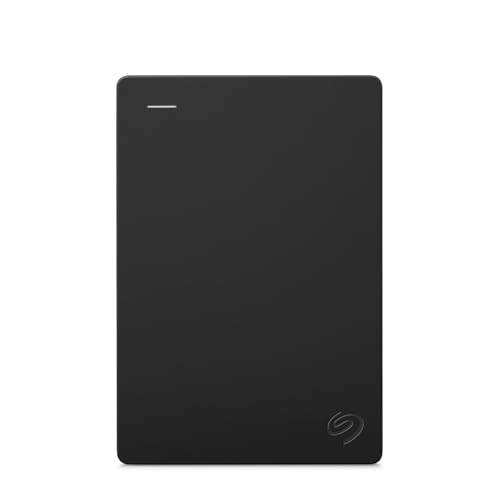
This is the default recommendation for console players and anyone who wants the safety net of Seagate’s one-year Rescue Service, which covers data recovery if the drive fails. Owners consistently praise its plug-and-play simplicity across PS4, PS5, Xbox, Mac, and Windows with no formatting headaches.
- Bundled Rescue Service adds meaningful insurance for a drive that stores irreplaceable game saves or family photos.
- Universally recognized brand with the widest compatibility list in this group.
- Priced nearly forty dollars above the cheapest 1 TB option here, which is hard to justify on specs alone.
Skip it if your only concern is the lowest cost per terabyte and you already own backup software you trust.
Seagate 2TB Portable (STGX2000400)
While technically a 2 TB model, it earns its place here because the price premium over the 1 TB version is only ten dollars—making it the smarter buy for almost everyone in this comparison. Owners report the same slim form factor and Rescue Service, just with double the runway before you need another drive.
- Marginal price difference over the 1 TB variant makes it the best value calculation on this list.
- Identical build quality and software benefits as its smaller sibling.
- Still uses USB-A only, so newer laptops without adapters get no benefit.
Skip it if you truly need a single terabyte and want to minimize spend, or if you already own a 2 TB drive.
Maxone 1TB Ultra Slim
A no-frills drive aimed at buyers who need basic external storage without paying for a recognizable logo. Owners like its compact profile and note that it handles large file transfers reliably for home backup tasks.
- Competitively priced and physically slim, sliding easily into a laptop bag.
- Works out of the box with Windows and macOS without special drivers.
- Warranty support and owner community are considerably thinner than established brands.
Skip it if you store sensitive work files and want the reassurance of a company with a long track record.
UnionSine 1TB Ultra Slim
Another budget-focused option that trims marketing costs to keep price low. It targets students and casual users who need a simple overflow drive for documents and media libraries.
- Lightweight and thin, comfortable for travel with a laptop.
- Solid transfer speeds for the price bracket, matching higher-cost drives on sustained sequential reads.
- Limited software bundle; you will need your own backup utility.
Skip it if you plan to connect it to a TV or media player regularly, as some owners report occasional recognition issues on smart TVs.
YOTUO 1TB USB-C (Black)
Notable for including both USB 3.0 and USB-C connectors, which removes the dongle problem for MacBook and modern Windows laptop users. Owners highlight the phone compatibility feature for direct Android file transfer.
- Native USB-C support at a mid-range price makes it future-proof for port-poor laptops.
- Works with a wide device list including smartphones, PS4, and Xbox One.
- The multi-device marketing means no single ecosystem gets dedicated software optimization.
Skip it if you exclusively use a desktop tower with front-panel USB-A ports and never touch C-type.
Toshiba Canvio Advance 1TB
Toshiba brings brand-name reliability and bundled backup software, which appeals to users who want a set-and-forget schedule for their files. The glossy finish comes in multiple colors, though it shows fingerprints quickly.
- Includes Toshiba’s backup utility for automatic scheduled saves.
- Long-standing reputation for drive reliability, backed by a multi-year warranty.
- Priced about fifteen dollars above comparable 1 TB options, and that premium buys software you can get free elsewhere.
Skip it if you prefer third-party backup tools already or find the glossy shell impractical for a drive that lives in a bag.
YOTUO 7-in-1 Multiport Hub
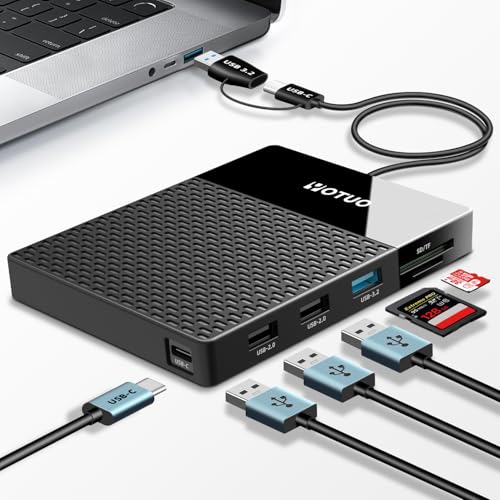
Unusual in this group because it doubles as a docking station with SD and microSD card readers plus additional USB ports. Photographers and content creators who transfer card data to a laptop will find genuine convenience here.
- Card readers eliminate the need for a separate dongle, saving desk space and port slots.
- Competitive pricing despite the added functionality compared to a plain drive alone.
- Extra electronics introduce more failure points than a simple drive; some owners report the hub ports drawing inconsistent power on bus-powered laptops.
Skip it if you already own a hub and simply need a storage target, as you are paying for features you will never use.
HWAYO 1TB Ultra Slim
The lowest-priced entry on this list, targeting anyone who wants one terabyte of external spinning storage for the absolute minimum cash. Reviews describe it as adequate for archiving old photos or serving as a secondary game library drive.
- Hard to beat on sticker price, often under sixty-five dollars.
- 2.5-inch form factor is compatible with most portable drive enclosures if you ever need a replacement shell.
- Brand recognition is minimal, which means fewer community-reported firmware fixes and less predictable long-term support.
Skip it if the data you are storing is difficult to replace; the savings are not large enough to offset the reduced confidence in vendor longevity.
Buying Guide
Connector Type and Device Compatibility
USB-A remains the most common port on desktops and older laptops, while newer machines increasingly ship with only USB-C or Thunderbolt. If your primary computer lacks a Type-A port, a drive like the YOTUO 1TB USB-C saves you from carrying a dongle. For console use, USB-A is still universal, so connector choice only matters if you plan to switch devices often.
Warranty and Rescue Services
Seagate’s Rescue Service covers one year of professional data recovery, which can be worth the premium if your drive holds unique photos or unrecoverable project files. Toshiba’s multi-year hardware warranty protects against mechanical failure but does not include recovery labor. Lesser-known brands typically offer one year of hardware replacement only. Match the warranty type to how easily the data could be re-created.
Physical Size and Bus Power
Every drive here is a 2.5-inch, single-cable, bus-powered unit, so none require an external adapter. The differences are in thickness and weight, which matter if you travel daily. Ultra-slim models like the Maxone or HWAYO slide into a laptop sleeve without creating a visible bulge, while multiport hub versions add height that can block neighboring ports on tightly spaced desktop towers.
Our Verdict
Top pick: the Seagate 2TB Portable at $129.99 delivers double the capacity for a trivial premium over the 1 TB version, plus the same Rescue Service. Budget pick: the HWAYO 1TB at $64.99 is the lowest-cost way to add a terabyte of reliable-enough spinning storage to any setup. Conditional winner: the YOTUO 7-in-1 Multiport Hub at $79.99 beats everything here if you are a photographer or content creator who regularly offloads SD cards and wants a single device that handles both tasks.
FAQ
Is a 1 TB hard drive still worth buying in 2026?
Yes, if you need bulk storage for media libraries, game archives, or cold backups at the lowest cost per gigabyte. Solid-state drives have dropped in price but still cost significantly more per terabyte, making mechanical drives practical for capacity-heavy, speed-insensitive workloads.
Can I use these drives on both Mac and Windows?
All eight models ship formatted for Windows (NTFS or exFAT). On a Mac you will need to reformat to APFS or exFAT for write access, or use third-party NTFS drivers. The Seagate and Toshiba models include software that handles this automatically during initial setup.
What is the real-world transfer speed I should expect?
Because all these drives use a 5400 RPM spindle over USB 3.0, sustained sequential transfer rates cluster in a narrow band regardless of price. You will not notice meaningful speed differences between the $64 and $120 options during file copies; the premium buys warranty, software, or connector variety instead.
Are bus-powered drives risky for long-term backup?
Bus-powered drives draw all their energy from a single USB port, so they lack the power headroom of desktop drives with external adapters. This is fine for occasional backup tasks, but if you plan continuous read-write operations over many hours—such as running a NAS or media server—a separately powered desktop model would be more durable.