Our Top Picks
 Sony WH-CH520 Wireless On-Ear Bluetooth Headphones with MicrophoneOne Size6.8 x 1.8 x 7.8 Inches0.3 PoundsCheck on Amazon




The best wireless headphones for working out depend on which half of the gym you live in. For most people mixing running, lifting and general gym time, the Soundcore V20i open-ear earbuds are the best overall pick: they hook over the ear rather than sealing the canal, so they stay put through sprints and rows while still letting you hear a spotter, a treadmill alert or traffic. If you want immersive sound and real noise cancelling for indoor lifting and cardio machines, the Soundcore Q20i is the value over-ear choice and the Beats Studio Pro is the premium version of the same idea. On a tight budget, the JOYWISE gym earbuds cover the basics for the least money. Everything below is organised around the five things that actually decide whether a pair survives your training: secure fit, sweat and water resistance, battery life, controls and comfort across a full session.
Top 3 Picks
Best overall: Soundcore V20i by Anker Open Ear Earbuds. The open-ear design solves the two biggest workout problems at once — nothing is jammed into your ear canal, so sweat has nowhere to pool and you keep situational awareness on roads and in busy gyms. The hook keeps them anchored through jumping, sprinting and floor work, and the charging case stretches listening across multiple sessions.
Best budget: JOYWISE Wireless Earbuds. A no-frills true-wireless set aimed squarely at gym use, with up to 16 hours of stated playtime and a price tier that makes them easy to replace. They will not match the fit engineering or battery of the mid-range options, but they get you training with music today.
Best premium: Beats Studio Pro. If your workouts are mostly indoors — lifting, rowing, machines — and you want active noise cancelling, a 40-hour published battery and premium build quality, this is the over-ear pick. It is not a sweat-proof design, so treat it as gym-floor equipment rather than rain-running equipment.
Quick Comparison
| Product | Best for | Form factor | Published battery | Sweat / water class | Controls | Price tier |
|---|---|---|---|---|---|---|
| Soundcore Q20i | All-round gym, travel, ANC value | Over-ear, closed back, foldable | ~40 h with ANC on, ~60 h off | No IP rating — sweat-avoidant | Physical buttons + app EQ | Mid-range |
| Sony WH-CH520 | Light everyday on-ear wear | On-ear, ~150 g class | Up to ~50 h | No IP rating | Physical buttons + app EQ | Mid-range |
| Beats Solo 4 | Premium on-ear portability | On-ear, ~217 g | Up to 50 h | No IP rating | On-ear button controls | Premium |
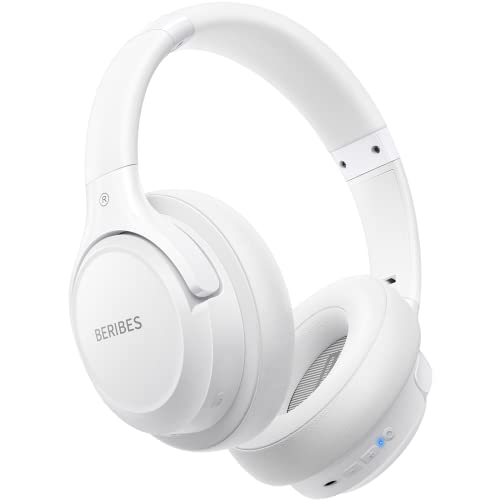
| BERIBES 65H | Budget over-ear battery life | Over-ear, foldable | Up to 65 h | No IP rating | Physical buttons, 6 EQ modes | Budget |
| JOYWISE Gym Earbuds | Cheap dedicated gym buds | True wireless in-ear | Up to 16 h stated | Sweat-resistant sport class | Touch controls | Budget |
| bmani Ear Buds | Secure ear-hook running | True wireless with over-ear hook | Up to 80 h with case | Sweat-resistant sport class | Touch controls, LED case display | Mid-range |
| Soundcore V20i | Open-ear running awareness | Open-ear true wireless | Roughly 8–10 h per charge, case adds several more | Sweat-resistant sport class | Touch controls + app EQ | Mid-range |
| Beats Studio Pro | Premium noise cancelling indoors | Over-ear, ANC | Up to 40 h | No IP rating | Physical + on-ear controls | Premium |
| PocBuds Sport Buds | Display-case sport buds | True wireless in-ear | Up to 80 h with case | Sweat-resistant sport class | Touch controls, digital display | Mid-range |
| Ortizan Open Ear | Budget open-ear awareness | Open-ear air conduction | Long-play class, multi-day with case | Sport IP rating cited | On-bud controls | Budget |
| GNMN ANC Ear Buds | Marathon battery earbuds | True wireless in-ear, ANC | Up to 96 h playback | Sweat-resistant sport class | Touch controls, dual display | Premium |
| Picun B8 | Extreme battery over-ear | Over-ear, foldable | Up to 120 h | No IP rating | Physical buttons, 3 EQ modes | Budget |
Two notes on reading that table. First, the IP ratings on budget and mid-range sport earbuds change between production runs and colourways, so treat “sweat-resistant sport class” as a floor — an IPX4-level splash and sweat rating — and confirm the exact figure on the current product page before you buy if you train outdoors in rain. Second, the battery figures for over-ear models are quoted with noise cancelling off unless stated otherwise; switching ANC on typically costs you a third of the runtime, which is why the Q20i and Studio Pro both land near the 40-hour mark with ANC engaged.
How We Chose
This roundup was assembled from published manufacturer specifications, category standards and the physical demands of different training styles, not from laboratory testing or personal use. The first filter was form factor and fit: a headphone that moves during a set is useless regardless of sound quality, so ear hooks, fins and open-ear arms were weighted heavily for running and high-intensity work, while over-ear designs were judged mainly for indoor lifting, machines and commute overlap.
The second filter was sweat and water resistance. Anything without an IP rating is treated in this article as sweat-avoidant rather than sweat-proof, and the buying advice reflects that — a fabric headband and protein-leather pads degrade quickly when soaked, while an IPX4-or-better sealed earbud can simply be wiped dry.
Third, battery life was converted into real training time rather than headline numbers, using a typical week of four to five sessions at 60–90 minutes each. Fourth, controls were judged on whether they can be operated with a sweaty hand mid-set: physical buttons beat touch surfaces for lifting, while touch is workable on earbuds where a tap does not move the whole headphone. Finally, each product was placed on an upgrade path — what you gain by spending more, and whether that gain is meaningful for the way you actually train.
1. Soundcore Q20i – Best for All-Around Gym and Travel Value
As an Amazon Associate we earn from qualifying purchases at no extra cost to you.

The Q20i suits the lifter or indoor-cardio regular who wants one pair of headphones for the gym, the commute and the flight home. It is a closed-back over-ear design with hybrid active noise cancelling, and it is the least expensive way in this roundup to get genuine ANC plus physical buttons.
Key specs
- Form factor: over-ear, closed back, foldable
- Noise cancelling: hybrid active noise cancelling with a transparency mode
- Published battery: roughly 40 hours with ANC on, about 60 hours with it off
- Charging: USB-C, fast-charge class — a short top-up returns several hours
- Controls: physical buttons for volume, track skip, play/pause and ANC mode
- App: Soundcore app with EQ presets, custom EQ and ANC switching
- Water resistance: no IP rating published
- Wired option: 3.5 mm aux input
- Colour: white
The case for the Q20i in a gym bag is mostly about the buttons and the battery. Buttons matter more than people expect: a touch panel on an over-ear cup is easy to mistime when your hands are chalky or wet, and an accidental track skip halfway through a heavy set is genuinely irritating. Physical controls remove that problem entirely. On battery, 40 hours with ANC engaged is roughly six weeks of training at five 75-minute sessions a week, so charging becomes a monthly habit rather than a daily one — and because the Q20i also accepts an aux cable, a flat battery never means a silent session.
Where it needs care is sweat. There is no IP rating here, which means the pads, headband and internal electronics have no published protection against moisture. That is fine for lifting, machines and mat work where your head stays largely dry, and it is fine for a treadmill session if you wipe the pads afterwards. It is not fine for outdoor running in the heat, HIIT circuits where you are dripping, or anything you would describe as soaked. Protein-leather pads are the first thing to fail on any over-ear headphone used this way: they crack, flake and start shedding onto your ears within months of repeated sweat exposure. If your training is genuinely sweat-heavy, an earbud or open-ear design further down this list is the smarter allocation of money.
Pros
- Active noise cancelling at a mid-range price tier — rare in this list
- About 40 hours with ANC on, roughly 60 hours off
- Physical buttons that work with wet or chalky hands
- Foldable with a 3.5 mm wired fallback and app-based EQ
Cons
- No IP rating — sweat exposure is a real risk to the pads and drivers
- Over-ear cups trap heat, which is uncomfortable in a warm gym
- Bulky compared with any earbud option here
- ANC and cup seal both reduce awareness of what is happening around you
Against the nearest alternative in this list, the Beats Studio Pro, the Q20i gives up build materials, spatial audio features and brand polish while keeping the same broad formula: over-ear, ANC, around 40 hours. Against the Sony WH-CH520, it trades 10 hours of battery and a lighter on-ear fit for actual noise cancelling and a more secure, more isolating seal. For most indoor gym users the Q20i is the better value of the three.
2. Sony WH-CH520 – Best for Lightweight On-Ear Everyday Wear
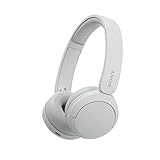
The WH-CH520 is for the person who wants one light, comfortable pair of headphones that handles the gym, the walk to work and the desk, and who does not need noise cancelling. It is an on-ear design, which means the cups rest against the ear rather than surrounding it.
Key specs
- Form factor: on-ear, closed back
- Published battery: up to about 50 hours
- Charging: USB-C with fast-charge class top-up
- Multipoint: connects to two devices at once
- Controls: physical buttons for playback, volume and calls
- App: Sony companion app with EQ adjustment
- Water resistance: no IP rating published
- Weight class: light for an on-ear — comfortably under 200 g
- Colour: white
On-ear headphones have one specific advantage in a gym: they are lighter and less clamped than over-ears, so long sessions on a bike or treadmill produce less heat build-up and less pressure around the jaw. The WH-CH520 leans into that — it is light enough to forget you are wearing it, and 50 hours of published battery means you charge it roughly once every two months at five sessions a week. Multipoint is the quietly useful feature here: your phone stays connected for music while your laptop stays connected for calls, with no re-pairing dance.
The trade-off is sound isolation and sweat. Without ANC, you hear the gym — the plates, the treadmill motors, the music someone else is playing — and you compensate by turning the volume up, which is not great for your ears over years of training. There is also no IP rating, and on-ear pads sit directly on the part of your head that sweats most during cardio, so the pads take the full hit. On-ear pads are also smaller and cheaper to think about replacing than over-ear pads, but they still degrade. For lifting and low-sweat cardio this is a non-issue; for a heavy sweaty session, it is a countdown.
Pros
- Up to 50 hours of published battery life
- Very light, low-clamp fit for long wear
- Multipoint pairing across two devices
- App EQ and a mid-range price tier
Cons
- No active noise cancelling
- No IP rating, and on-ear pads sit where you sweat
- On-ear designs leak sound and let gym noise in
- Less secure than any hooked or finned earbud when you move fast
Compared with the Beats Solo 4, the WH-CH520 offers the same 50-hour published battery and a similar on-ear fit for less money, giving up build materials, spatial audio features and the tighter premium feel. Compared with the Soundcore Q20i, it wins on weight and battery but loses noise cancelling and the more secure over-ear seal. If you want the lightest possible thing on your head, this is the pick; if you want quiet, it is not.
3. Beats Solo 4 – Best for Premium On-Ear Portability

The Solo 4 is for the buyer who wants a premium on-ear headphone that folds flat, weighs very little, and looks at home in the gym and on a plane. Beats positions it as an ultra-lightweight comfort design with a 50-hour battery, and it is one of the lightest headphones in this roundup at roughly 217 g.
Key specs
- Form factor: on-ear, foldable
- Published battery: up to 50 hours
- Weight: approximately 217 g
- Controls: on-ear button controls plus a dedicated voice-assistant button
- Connections: Bluetooth plus USB-C audio and a 3.5 mm analogue cable
- Audio features: spatial audio with head tracking on supported content
- Water resistance: no IP rating published
- Ecosystem: fast pairing on both major mobile platforms
What you are paying for at this tier is materials and feel. The Solo 4 uses a lighter, better-damped frame than budget on-ears, which matters in the gym because a headphone that shifts when you look down at a barbell is a headphone you take off. At 217 g it stays comfortable through a 90-minute session, and the fold-flat hinge makes it a genuinely small thing to throw in a gym bag. The 50-hour published battery is the same headline figure as the Sony WH-CH520, and the wired options — both USB-C audio and a 3.5 mm cable — mean you are never stuck without sound.
There are two caveats worth being blunt about. The first is that there is no active noise cancelling on the Solo 4; if your gym is loud and you want to disappear into your own music, the Studio Pro in this list is the Beats model that does that. The second is that, like every on-ear headphone here, it carries no IP rating. On-ear cups press directly onto the ear, which is where sweat accumulates fastest during cardio, and the pads will be the first component to show wear. For lifting, walking, cycling machines and travel this is a superb everyday headphone; for soaked outdoor running, it is the wrong category of product.
Pros
- About 217 g — genuinely light for a premium on-ear
- Up to 50 hours of published battery
- Folds flat for a gym bag or carry-on
- Wired USB-C and 3.5 mm fallbacks plus spatial audio
Cons
- Premium price tier without active noise cancelling
- No IP rating and no sweat protection
- On-ear fit can feel tight during very long sessions
- Pads are a wear item and cost more to replace than budget models
The nearest alternative in this list is the Sony WH-CH520, which matches the 50-hour battery and the on-ear format at a lower price tier but gives up the premium frame, the spatial audio features and the wired USB-C audio path. Against the Beats Studio Pro, the Solo 4 trades noise cancelling and over-ear cups for a much lighter, more portable shape. If you train indoors and travel often, the Solo 4 is the more versatile object; if your gym is loud, the Studio Pro wins.
4. BERIBES Bluetooth Headphones Over Ear 65H – Best for Budget Over-Ear Battery Life
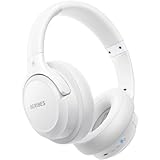
The BERIBES 65H is aimed at the buyer who wants the over-ear look, a big battery number and six EQ modes without spending much. It is a budget-tier, over-ear, wireless headphone with a built-in microphone and a stated 65 hours of playtime.
Key specs
- Form factor: over-ear, foldable
- Published battery: up to 65 hours
- Sound modes: six EQ presets
- Microphone: built-in for calls
- Connections: Bluetooth with a wired fallback in this class
- Controls: physical buttons on the cup
- Water resistance: no IP rating published
- Price tier: budget
Sixty-five hours is the reason to look at this model. At five 75-minute sessions a week you are looking at roughly ten weeks between charges, which is the kind of number that means you never think about the battery at all. The six EQ modes are a budget-tier way of covering different listening situations — a bass-forward setting for lifting, something flatter for podcasts between sets — and they are switched on the headphone itself rather than in an app, so there is no companion app to install. Physical buttons on the cup mean the controls work with sweaty hands.
The honest limitation is build and sealing. At the budget tier, over-ear pads are thinner, the headband is more plastic, and the cup seal is less consistent, which affects both bass response and passive noise blocking. None of that makes it a bad gym headphone — it makes it a headphone where the gym is one of several jobs. And as with every over-ear here, there is no IP rating: sweat will find the pads, and the pads will flake before anything else fails. If you sweat heavily, this is a “buy it, use it for a year, replace it” purchase rather than a long-term one — which is a reasonable thing to do at the budget tier.
Pros
- Up to 65 hours of stated battery — weeks between charges
- Over-ear fit at a budget price tier
- Six EQ modes, no app required
- Foldable with physical buttons and a built-in mic
Cons
- No IP rating and thinner pads that wear faster
- No active noise cancelling
- Less consistent cup seal than mid-range over-ears
- Build materials feel their price tier over time
Against the Picun B8, the BERIBES gives up roughly half the headline battery — 65 hours versus 120 — but sits in a similar budget bracket with a similar feature set, so the decision comes down to which shape and fit suits your head. Against the Soundcore Q20i, it saves money and adds 25 hours of battery but loses active noise cancelling, app EQ and the better-tuned sound that the mid-range tier buys. If ANC is not important to you and battery is, the BERIBES is the sensible budget over-ear.
5. JOYWISE Bluetooth Headphones Wireless Earbuds – Best for Cheap Dedicated Gym Buds

The JOYWISE earbuds are for the person who wants a pair of true-wireless buds they can leave in the gym bag permanently and not worry about. They are a budget-tier, in-ear, true-wireless design marketed specifically for gym use, with up to 16 hours of stated playtime.
Key specs
- Form factor: true wireless in-ear
- Published playtime: up to 16 hours
- Charging: charging case included
- Controls: touch controls on the buds
- Fit: in-ear tips, sport-oriented
- Water resistance: sweat-resistant sport class
- Price tier: budget
Sixteen hours of stated playtime in the budget tier almost always means the buds themselves hold a few hours and the case tops them up across the day, so plan on charging the case weekly rather than the buds daily. That is entirely workable for gym use. The advantage of a budget earbud over a budget over-ear for training is simple physics: nothing sits on your head, nothing traps heat, and a light in-ear bud with the right tip size stays put through most lifting and machine cardio without any clamping force at all.
The compromises are in fit consistency and materials. At this price tier, tip selection is usually limited to a couple of sizes, and if none of them seal properly you lose bass and the buds feel loose during fast movement. Touch controls on a cheap earbud can also be over-sensitive — brushing your ear while adjusting a dumbbell can pause your music. Both problems have workarounds: buy a pack of aftermarket silicone tips in mixed sizes, and check whether the touch zones can be reassigned or disabled in the app, if one exists. Sweat resistance in this class is a splash-and-sweat rating rather than something you can rinse under a tap, so wipe them dry before they go back in the case — charging a wet bud is how budget earbuds die early.
Pros
- Lowest price tier in this roundup
- True-wireless freedom — nothing on your head or around your neck
- Up to 16 hours of stated playtime with the case
- Sweat-resistant sport class rather than an unprotected design
Cons
- Limited tip sizes can mean an inconsistent seal
- Touch controls can be triggered accidentally
- No noise cancelling and modest passive isolation
- Build and battery longevity are budget-tier
Compared with the bmani ear-hook buds, the JOYWISE saves money but gives up the hook that keeps the bud anchored during sprinting, and gives up a much larger battery figure. Compared with the PocBuds sport buds, it gives up the display case and the longer total playtime. The JOYWISE is the entry point: buy it if you want to find out whether you actually prefer earbuds to headphones before spending mid-range money on the answer.
6. bmani Ear Buds with Over-Ear Hook – Best for Secure Ear-Hook Running
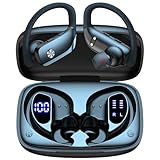
The bmani buds are for runners and high-intensity trainers who have had earbuds fall out mid-session and never want it to happen again. They are true-wireless in-ear buds with an over-ear hook that wraps around the top of the ear, plus an LED display case and a stated 80 hours of playtime.
Key specs
- Form factor: true wireless in-ear with flexible over-ear hook
- Published playtime: up to 80 hours with the charging case
- Case: LED display showing charge level
- Microphone: built-in for calls
- Controls: touch controls on the bud body
- Water resistance: sweat-resistant sport class
- Price tier: mid-range
The hook is the whole point. An ear hook transfers load from the ear canal to the outer ear, so the bud can sit lightly in the canal — enough to seal for bass, not enough to feel plugged — while the hook stops it moving when you sprint, jump or drop into a burpee. If you have ever had a bud work its way loose on a run and had to stop and reseat it with sweaty fingers, the hook is the fix, and it is the reason this category exists.
Eighty hours with the case is a large number for the mid-range tier and it is genuinely useful for people who train daily and forget to charge: even at two hours a day, that is well over a month of use before the case needs a cable. The LED display on the case removes the guessing game about whether you have enough charge for tomorrow’s session — a small feature that matters more than it sounds. The trade-offs are the ones common to hooked buds: the hook arm is a wear item that slowly loses tension over a year or two of heavy use, and the extra structure makes them slightly fiddlier to put in than a plain bud. Sweat resistance is sport-class, so wipe them after a session and let them dry before they go back in the case.
Pros
- Over-ear hook keeps the bud anchored through fast movement
- Up to 80 hours with the case — over a month of daily training
- LED display case shows remaining charge at a glance
- Sweat-resistant sport class with a built-in mic
Cons
- Hook arms lose tension over time and are not user-replaceable
- Fiddlier to insert than a plain in-ear bud
- No active noise cancelling
- Hook can interfere with sunglasses or a swim cap edge
Against the JOYWISE buds, the bmani costs more but solves the two problems that make cheap gym buds frustrating: it stays in and it holds a charge for weeks. Against the Soundcore V20i, it is the closed-canal option — more bass and more isolation, but no awareness of what is around you. If you run on roads or in shared spaces and want to hear traffic, the V20i is the better choice; if you run on a treadmill or a track and want full sound, the hook wins.
7. Soundcore V20i by Anker Open Ear Earbuds – Best for Open-Ear Running Awareness

The V20i is for the runner, cyclist or busy-gym user who wants music without closing off the world. It is a true-wireless open-ear design: the driver sits outside the ear canal and fires sound toward it, held in place by an ear arm, with nothing inserted into the ear at all.
Key specs
- Form factor: open-ear true wireless with ear arm
- Fit: nothing enters the ear canal — no tips, no seal
- Published battery: roughly 8–10 hours per charge class, with the case adding several more charges
- Controls: touch controls plus app-based EQ
- App: Soundcore app for EQ and control customisation
- Water resistance: sweat-resistant sport class
- Price tier: mid-range
Open-ear is a different listening experience and it is worth understanding before you buy. Because there is no seal, you do not get the bass pressure that in-ear buds deliver, and gym noise comes through at full volume. What you get instead is situational awareness: you can hear a car behind you on a road run, a training partner spotting you on a bench, or the announcement that your class is starting. For outdoor running this is not a nice-to-have — it is the main reason to choose the category. There is also a hygiene and comfort benefit: with no tip in the canal, there is nothing to trap sweat and nothing to work loose, so ear infections and the “plugged” feeling after an hour both disappear.
The arm does the retention work, and it is the part to inspect over time: the silicone or rubber arm keeps its grip well, but it can loosen slightly after a year of daily use, and the fit is more sensitive to ear shape than a tip-based bud. Getting the arm positioned correctly the first time takes a few tries; once you find the angle, it stays consistent. Battery is the other consideration — open-ear buds have smaller enclosures than over-ears, so plan on charging the case every few days if you train daily. Wipe the arms and drivers dry after a sweaty session before the buds go back in the case.
Pros
- Full situational awareness — safest option for outdoor running
- Nothing enters the ear canal, so no sweat pooling and no plugged feeling
- Ear arm holds position through sprinting and jumping
- App EQ and a mid-range price tier
Cons
- Weak bass compared with any sealed design
- Gym noise competes with your music at high volume
- Battery per charge is far shorter than the over-ear options here
- Fit is ear-shape dependent and takes a few attempts to dial in
Against the Ortizan open-ear model, the V20i costs more and buys app EQ, a more polished build and the Soundcore software ecosystem. Against the bmani hook buds, it is the awareness-versus-isolation choice: the V20i lets the world in, the bmani shuts it out. For road runners and anyone training in a crowded gym who needs to hear what is happening, the V20i is the pick of the two.
8. Beats Studio Pro – Best for Premium Noise Cancelling Over-Ear
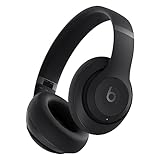
The Studio Pro is for the buyer who wants the best over-ear experience for indoor training and travel, and who is willing to pay premium-tier money and accept that the design is not sweat-proof. It is a premium over-ear headphone with active noise cancelling and up to 40 hours of published battery.
Key specs
- Form factor: over-ear, closed back, foldable
- Noise cancelling: active noise cancelling with a transparency mode
- Published battery: up to 40 hours
- Connections: Bluetooth, USB-C audio and 3.5 mm analogue
- Audio features: spatial audio with head tracking on supported content
- Controls: on-ear and physical controls
- Water resistance: no IP rating published
- Price tier: premium
In a gym, ANC is a genuinely useful feature rather than a marketing one. Commercial gyms are loud in a specific, annoying way — clanging plates, treadmill hum, a playlist you did not choose — and cancelling that low-frequency drone lets you listen at a lower volume, which is better for your ears over years of training. Transparency mode is the counterpart: flick it on between sets to hear a training partner or a coach without taking the headphones off. Forty hours of published battery with ANC engaged covers about six weeks of five weekly sessions, and the USB-C and 3.5 mm wired paths mean a dead battery is never a dead session.
The caveat is the same one that applies to every over-ear here, only more expensive: no IP rating, protein-leather-style pads, and a headband that will absorb sweat over time. At the premium tier, replacing pads costs meaningfully more than replacing a pair of budget earbuds entirely. If you sweat heavily, the sensible pattern is to use the Studio Pro for lifting, machines and travel, and keep a cheap sweat-resistant earbud in the bag for cardio. That two-device approach is usually cheaper over three years than repeatedly replacing premium pads.
Pros
- Active noise cancelling with a transparency mode
- Up to 40 hours of published battery
- Premium build, spatial audio and wired USB-C audio
- Comfortable over-ear fit for long indoor sessions
Cons
- Premium price tier
- No IP rating — sweat exposure is a real risk
- Over-ear cups trap heat during hard cardio
- ANC reduces awareness in a shared gym environment
Against the Soundcore Q20i, the Studio Pro delivers the same basic formula — over-ear, ANC, roughly 40 hours — with better materials, spatial audio and stronger noise cancelling, at a much higher price tier. Against the Beats Solo 4, it trades the light on-ear portability for better isolation and a more immersive sound. If your training is indoors and your budget allows it, the Studio Pro is the most complete over-ear here; if you want the same shape for less, the Q20i is the value answer.
9. PocBuds Bluetooth Headphones Wireless Earbuds – Best for Display-Case Sport Buds
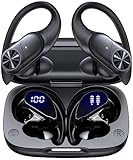
The PocBuds are for the mid-range buyer who wants sport earbuds with a big total battery figure, a case that shows you the charge level, and wireless charging on the case. They are a true-wireless in-ear sport design with a stated 80 hours of playtime, a digital display and a wireless charging case.
Key specs
- Form factor: true wireless in-ear, sport-oriented
- Published playtime: up to 80 hours with the case
- Case: wireless charging with a digital display
- Controls: touch controls on the buds
- Fit: sport tips or fins for retention in this class
- Water resistance: sweat-resistant sport class
- Price tier: mid-range
Wireless charging on the case sounds like a small luxury, but it changes behaviour: you drop the case on a charging pad next to your keys rather than hunting for a cable, which means the buds are charged when you actually want them. The digital display does something similar for planning — you know before you leave whether you have enough for a long session. Eighty hours total is in the same range as the bmani and comfortably above the budget options, so daily trainers will charge the case roughly once a month.
The performance question for any mid-range sport bud is fit and touch behaviour. With a proper tip or fin fit, in-ear buds give you the bass that open-ear designs cannot, and the passive isolation of a sealed canal reduces how much gym noise gets in — though not to the level of active noise cancelling. Touch controls are the usual weak point: on a sweaty ear, a stray brush can pause playback, and most budget and mid-range models offer limited remapping. If that irritates you, check whether the touch zones can be disabled before you commit. As always in this class, keep the buds dry before they go back in the case, and treat the sweat rating as protection against sweat and splashes, not against swimming or a rinse under a tap.
Pros
- Up to 80 hours of stated playtime with the case
- Wireless charging case with a digital charge display
- Sealed in-ear fit gives real bass
- Sweat-resistant sport class at a mid-range price tier
Cons
- Touch controls can be triggered accidentally
- No active noise cancelling
- Sealed fit blocks awareness outdoors
- Fit depends heavily on getting the right tip size
Against the bmani hook buds, the PocBuds win on case convenience — wireless charging and a display — while the bmani wins on retention for fast running, where a hook beats a tip. Against the GNMN buds, the PocBuds give up the much larger 96-hour figure and the dual-display arrangement but sit at a lower price tier. If you want a set-and-forget case and you mostly lift or do machine cardio, the PocBuds are the sensible mid-range choice.
10. Ortizan Open Ear Headphones – Best for Budget Open-Ear Awareness

The Ortizan open-ear model is for the budget buyer who wants the awareness benefits of an open-ear design without paying mid-range prices. It is an air-conduction, open-ear sport design using Bluetooth 5.3, with an IP rating cited on the listing.
Key specs
- Form factor: open-ear air conduction with ear arm
- Bluetooth: 5.3
- Fit: nothing enters the ear canal
- Water resistance: an IP rating is cited — sport models in this class typically land at IPX5 or better; verify the exact figure on the current listing
- Controls: on-bud controls
- Battery: long-play class, multi-day with the case
- Price tier: budget
The value proposition here is straightforward: you get the safety and hygiene profile of an open-ear design — nothing in the canal, no sweat pooling, full awareness of traffic and surroundings — for budget-tier money. Bluetooth 5.3 is the current mainstream wireless standard, and its practical benefit is a more stable connection and lower latency than older versions, which matters if you watch video on a treadmill or follow along with a guided session.
What you give up relative to the mid-range open-ear option is tuning and software. Air-conduction designs without app EQ tend to sound thinner, with limited bass and a fairly narrow sweet spot — sound leaks away if the arm is not positioned close to the canal opening. Getting the position right is a two-minute job that changes the experience more than any setting: nudge the driver closer to the ear opening and bass improves noticeably. Because the fit is arm-based rather than tip-based, it is also more forgiving of ear shape than a sealed bud, which is a real advantage for people who have never found an in-ear tip that stays comfortable. Keep the arms clean and dry, and inspect the joints periodically — that is where budget open-ear designs tend to loosen first.
Pros
- Open-ear awareness at a budget price tier
- Nothing enters the ear canal — comfortable for long sessions
- Bluetooth 5.3 connectivity
- An IP rating is cited, unlike the over-ear options here
Cons
- Thinner sound with limited bass, and no app EQ to correct it
- Position-sensitive — sound drops if the arm shifts
- Not for loud gyms, since nothing blocks ambient noise
- Budget-tier build and arm durability
Against the Soundcore V20i, the Ortizan costs less and gives up app EQ, tuning refinement and the more polished fit system. Against the bmani hook buds, it is again awareness versus isolation. If you are curious about open-ear running and do not want to spend mid-range money to find out, this is the low-risk entry point — and if you like the category, the V20i is the natural upgrade.
11. GNMN Active Noise Cancelling Ear Buds – Best for Marathon Battery Earbuds

The GNMN buds are for the frequent traveller or daily trainer who wants true-wireless convenience with an absurdly large total battery figure and noise cancelling in the buds themselves. They are a premium-tier true-wireless design with a stated 96 hours of playback and a dual battery display.
Key specs
- Form factor: true wireless in-ear
- Noise cancelling: active noise cancelling
- Published playback: up to 96 hours
- Case: dual battery display R