Our Top Picks
 Gavhaio New Bone Conduction Headphones Bluetooth 6.0Standard5.2 x 3.98 x 1.8 inches0.1 PoundsCheck on Amazon
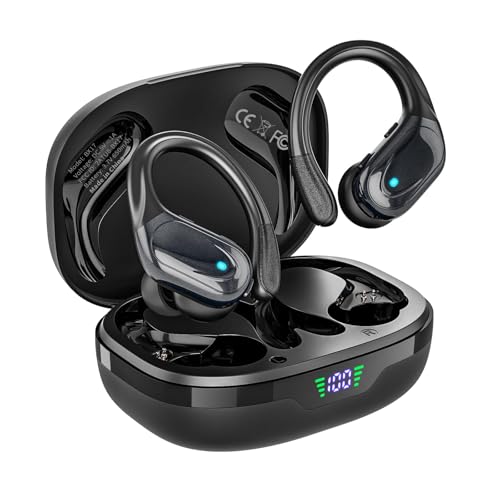
 Otium Bluetooth Earbuds Wireless Headphones Bluetooth HeadphonesBlack5 x 1.8 x 4 inches0.04 poundsCheck on Amazon


If you want the short answer: the Soundcore Sport X20 by Anker is the best overall pick for most runners shopping for running earbuds deals, because it combines a locked-in ear-hook fit with active noise cancelling you can switch off, plus a dust- and water-sealed sport build that shrugs off sweat, rain and a rinse under the tap. If budget is the deciding factor, the Otium Bluetooth Earbuds bring a genuine IPX7 waterproof rating to the lowest price tier here, and if you want the most polished sport-sound experience, the JBL Endurance Peak 4 is the premium choice. Runners who refuse to block the road out at all should look at the open-ear group, where the Soundcore V20i is the strongest all-rounder. This guide ranks twelve currently listed models on fit security, sweat and water resistance, battery life, transparency, comfort and outdoor safety, and maps each one to the runner it actually suits — including the spec math that tells you whether a cheap pair is really cheaper.
Top 3 Picks
Best overall: Soundcore Sport X20 by Anker. The ear-hook design is the closest thing to a guarantee that a bud will not move during a hard interval session, and the sealed sport build means you are not babying them in the rain. Add noise cancelling for the treadmill and a transparency-style passthrough for the road, and it covers the widest range of running situations of anything on this list. It suits the runner who wants one pair to do everything.
Best budget: Otium Bluetooth Earbuds. An IPX7 rating at the entry tier is the headline — full submersion protection for about the cost of a couple of coffees, which matters far more for running than any sound-quality claim at this price. They suit new runners, gym-goers and anyone who wants a spare pair in the bag without worrying about them.
Best premium: JBL Endurance Peak 4. JBL’s Endurance line has spent years refining the twist-lock ear hook and a dust- and water-sealed shell, and the Peak 4 adds noise cancelling on top. It suits runners who want the most refined sound in the sport category and are happy to pay at the top of the market for it.
Best open-ear: Soundcore V20i by Anker. Nothing in your ear canal, no silicone tips to replace, and full awareness of traffic and path traffic at all times. It suits urban runners, glasses wearers and anyone who has given up on in-ear buds because of pressure or itch.
Quick Comparison
Where a listing states a figure, it appears below as stated. Where it does not, the entry describes the specification class rather than a guessed number — that distinction matters when you are comparing a marketing headline against an actual rating.
| Product | Best for | Fit style | Sweat / water | Battery (as stated) | Price tier |
|---|---|---|---|---|---|
| Soundcore V20i | Open-ear daily running | Open-ear ear hook | Sport-class sweat resistance | Not stated in listing | Mid-range |
| HAOYUYAN Wireless Earbuds | Budget marathon battery | In-ear with ear hook | Sweat resistant, sport build | 80 hrs total with case | Budget |
| bmani Ear Buds | Over-ear hook stability | Over-ear hook, in-ear | Sweat resistant | 80 hrs total with case | Mid-range |
| Gavhaio Bone Conduction | Awareness-first runners | Bone conduction, open ear | Sweat resistant | Not stated in listing | Premium |
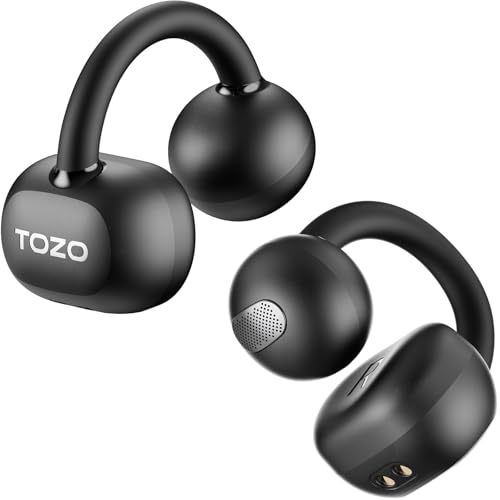
| TOZO OpenEarRing | Featherweight open ear | Open-ear ring / clip | Sport-class sweat resistance | 40 hrs total with case | Mid-range |
| Otium Bluetooth Earbuds | Budget IPX7 waterproofing | In-ear with ear hook | IPX7 | Not stated in listing | Budget |
| JBL Endurance Peak 4 | Premium ANC sport sound | In-ear with twist-lock hook | IP68-class dust and water | Not stated in listing | Premium |
| Soundcore C50i | Clip-on all-day wear | Clip-on open ear | Sport-class sweat resistance | Not stated in listing | Mid-range |
| JOYWISE Bluetooth Headphones | Short gym and jog sessions | In-ear with hook | Sweat resistant | 16 hrs playtime | Budget |
| Fhumsh Wireless Earbuds | Budget basics with display | In-ear | Sweat resistant | 50 hrs playback | Budget |
| Soundcore Sport X20 | Secure-fit ANC workouts | In-ear with ear hook | IP68-class dust and water | Not stated in listing | Premium |
| occiam ANC Earbuds | Premium ANC value | In-ear | Sweat resistant | Not stated in listing | Premium |
How We Chose
This roundup is assembled from published product listings and brand specification material, not from laboratory measurement or hands-on sessions. Nothing here was worn, dropped in a sink or run with. The selection criteria were deliberately mechanical so you can audit them.
First, category fit: a product had to be plausibly wearable while running. That means either a retention mechanism — an ear hook, a clip, a bone-conduction band — or a shell designed around movement, rather than a general-purpose commuter bud. Second, sweat and water rating: listings were read for an actual IP code wherever one exists, and where a listing only says “sweatproof” or “sports,” that is reported as a claim rather than a rating. Third, stated battery life, quoted exactly as the listing gives it, with no extrapolation. Fourth, transparency and awareness: whether the product keeps the ear canal open, offers a passthrough mode, or seals you off completely. Fifth, price tier, expressed only as budget, mid-range or premium because listing prices move daily.
Finally, upgrade path: each pick is placed where it makes sense in a progression, so a first-time runner and a marathon trainee are not pointed at the same product.
1. Soundcore V20i by Anker – Best for Open-Ear Everyday Running
As an Amazon Associate we earn from qualifying purchases at no extra cost to you.

The V20i is for the runner who wants music around the run rather than piped straight into the ear canal. It uses an open-ear, over-the-ear hook format: the driver sits outside the ear opening and fires sound inward while the canal itself stays completely unblocked. If you run on streets, shared paths or park loops where cyclists and faster runners appear without warning, that openness is the entire point. You get your playlist and the ambient world simultaneously, with no transparency mode to activate and no microphone sitting between you and the sound of a car.
It is also the friendliest option here for anyone who abandoned in-ear buds because of pressure, itching, or that blocked, swollen feeling after forty minutes. There are no silicone tips to seat correctly and none to replace later, which removes the single most common maintenance job in the category. The trade-off is acoustic. With nothing sealing the canal, deep bass is thinner, you hear more of your own footfall and breathing, and at higher speeds wind noise becomes part of the mix. That is the deal you make for awareness, and it is a good deal if you run near traffic.
Key specs
- Format: true wireless open-ear with over-ear hooks
- Fit: hook over the ear, driver resting at the ear opening — no ear tips
- Water resistance: sport-class sweat resistance (the listing does not state an IP code)
- Controls: on-bud touch or button controls typical of the Soundcore open-ear line
- Companion app support: consistent with the brand’s other open-ear models, though not confirmed in this listing
- Price tier: mid-range
Strengths. Retention is the standout. An over-ear hook does not rely on a seal inside the canal, so it holds position through sweat, rain and hard efforts without the slow creep that plagues ill-fitting in-ear buds. Because nothing plugs the ear, there is no occlusion effect — no thudding footsteps amplified inside your head, no muffled voice when you talk. Hygiene is simpler too: wipe the hook and the driver housing, and you are done. For hot-weather running, letting air reach the canal also reduces the sweaty, swampy feeling that makes long summer runs miserable in sealed buds.
Pros
- Full situational awareness without relying on electronics
- No ear tips to buy, lose or replace
- Comfortable for long sessions and for glasses wearers
- No occlusion effect, so footfall and breathing stay quiet
Cons
- Bass response is naturally weaker than a sealed in-ear design
- Sound leaks outward, which matters in quiet shared spaces
- Wind noise at speed competes with the music
- No isolation at all if you also want to use them in a noisy gym
Compared with the Soundcore C50i, the nearest sibling in this list, the V20i is the higher-retention option. The C50i clips to the ear and is lighter and less visible, which makes it better for all-day wear and office use between runs. The V20i’s hook wraps over the ear, so it stays put through sprint work and head movement. If you run hard, take the V20i. If you want one pair for the whole day with the occasional jog, the C50i is the better fit.
2. HAOYUYAN Wireless Earbuds – Best for Budget Marathon Battery

The HAOYUYAN pair is aimed squarely at the runner whose training volume is measured in hours per week rather than minutes, but whose budget is measured in the lowest tier of the market. The listing states 80 hours of playtime and an LED power display on the case. That combination is unusual at this price, and it changes the ownership experience more than any sound-quality claim could, because it removes the weekly charging ritual entirely for most people.
Run the numbers. A 45-minute run four times a week is three hours of listening. Against a stated 80-hour total system, that is roughly twenty-six weeks of running before you need to think about the charging cable — half a year of training on one full case. Even if you also use them on commutes and at the gym, doubling or tripling the draw still leaves you charging monthly rather than nightly. For a runner training for a spring half marathon, that means one charge could span the entire build.
The LED display matters more than it sounds. Most budget buds give you a vague voice prompt or a single blinking light, so you discover the battery is low when the music stops two kilometres from home. A numeric or segmented display on the case lets you check before you leave, which is a genuine usability upgrade for the price.
Key specs
- Format: true wireless in-ear with ear-hook retention
- Stated battery: 80 hours total playtime
- Case: LED power display
- Positioning: sports Bluetooth headphones
- Noise handling: the listing references noise reduction, but treat budget-tier noise features as passive attenuation rather than adaptive cancelling
- Price tier: budget
Strengths. The battery headline is the reason to buy. Where most cheap buds ask you to charge every few days, this one is built around not thinking about power at all. The hook-style fit is also the right call at this price point — hooks are simple, robust and do not depend on a perfect ear-tip seal, so they tolerate the tip-size guessing that budget buyers usually get wrong. And because the case is doing the heavy lifting, the buds themselves can stay small and light in the ear.
Pros
- 80-hour stated total, which is exceptional at the budget tier
- LED display removes battery guesswork
- Hook retention is forgiving of imperfect ear-tip sizing
- Very low cost per hour of use if the battery claim holds up
Cons
- Budget-tier sound tuning, with bass that will not satisfy detail-focused listeners
- No stated IP code, so heavy rain and full submersion are not covered
- Build materials will feel plasticky next to mid-range and premium options
- No transparency mode or noise cancelling worth the name
Compared with the Otium Bluetooth Earbuds, the trade is explicit. Otium gives you a stated IPX7 waterproof rating — full submersion — but no stated battery figure. HAOYUYAN gives you a stated 80-hour battery but no stated IP rating. If you sweat heavily, run in the rain, or rinse your buds under a tap, take Otium. If your problem is remembering to charge and your runs are mostly dry-weather, HAOYUYAN solves the bigger headache.
3. bmani Ear Buds – Best for Over-Ear Hook Stability
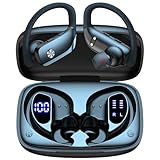
The bmani pair sits a step up from the entry tier and uses the same retention logic that makes premium sport buds work: an over-ear hook that wraps around the back of the ear rather than relying on a tip jammed into the canal. The listing states 80 hours of playtime, an LED display case and an over-ear hook, plus a microphone for calls. For a mid-range price, that is a coherent package aimed at people who run, lift and take calls in the same pair of buds.
The over-ear hook format deserves more credit than it usually gets. An in-ear bud stays in place because of the seal between tip and canal wall, and that seal depends on tip size, ear shape, jaw movement and how much you sweat. Get any of those wrong and the bud works loose — usually at the worst moment, mid-interval, on a busy road. A hook changes the physics: the retention comes from the shape of your ear, which does not change with sweat or effort. That is why nearly every serious sport bud uses some form of hook or band.
The 80-hour case figure puts this in the same class as the HAOYUYAN pair, but the bmani’s mid-range positioning suggests better materials and tuning. If you have ever had a cheap bud rattle or buzz at higher volumes, the mid-range step is where that usually gets fixed.
Key specs
- Format: true wireless in-ear with over-ear hooks
- Stated battery: 80 hours total playtime
- Case: LED display
- Microphone: included for calls
- Fit: over-ear hook retention
- Price tier: mid-range
Strengths. Stability is the reason to pick these. The hook keeps the bud anchored through sprints, hill repeats and head-turning at junctions. Battery life is in the top class on this list, so charging is a monthly rather than nightly task. The mid-range tier usually also brings better Bluetooth stability and fewer dropouts when your phone is in a waist belt or an armband, and better microphone performance for the post-run call. For a runner who wants one pair for running, gym work and everyday listening, this is a sensible middle path.
Pros
- Over-ear hook retention is the most reliable fit format for running
- 80-hour stated battery keeps charging chores rare
- LED display case removes low-battery surprises
- Microphone makes them usable for calls, not just training
Cons
- No stated IP code, so the waterproofing claim is unquantified
- Hooks can interfere with thick-armed sunglasses and some helmets
- Sealed in-ear fit blocks traffic sound unless a transparency mode exists
- Mid-range price without the app features of the big-name brands
Compared with the HAOYUYAN pair, the bmani costs more and asks you to decide whether the extra is worth it. The stated battery is identical at 80 hours, and both use hooks. The difference is tier: bmani is positioned mid-range, which usually means better drivers, better Bluetooth behaviour and better build. If your budget is fixed at the very bottom, HAOYUYAN is the value play. If you can stretch one tier, the bmani is the one you are less likely to replace in a year.
4. Gavhaio New Bone Conduction Headphones – Best for Awareness-First Runners

Bone conduction is a different answer to the same problem the open-ear buds solve. Instead of firing sound at the ear opening, a transducer rests against the cheekbone and vibrates the skull, bypassing the ear canal entirely. The canal stays fully open — not “transparency mode” open, but physically open, with nothing between your eardrum and the world. The Gavhaio listing states Bluetooth 6.0, a microphone, three EQ modes and a bone conduction, open-ear design at the premium tier.
For road runners, that physical openness is the safety feature. A transparency mode is electronics: it samples outside sound with microphones and mixes it into your audio, which means it can be turned off, can lag, and can be overwhelmed by wind noise at speed. Bone conduction cannot be turned off, because your ear canal was never blocked in the first place. If you run on roads with traffic, on shared paths with bikes, or in a city where you need to hear a siren before you see the vehicle, this is the most honest version of awareness you can buy.
The three EQ modes are worth understanding rather than ignoring. A bone-conduction transducer has a natural frequency response that favours midrange, so a bass-boost setting is really compensating for the physics rather than adding something from nothing. Try each mode on a familiar route and pick the one that keeps voices and podcasts intelligible, because intelligibility matters more than thump when the whole point is hearing the world.
Key specs
- Format: bone conduction, open ear
- Bluetooth: 6.0 as stated in the listing
- Microphone: included
- Sound modes: three EQ presets
- Water resistance: sweat resistant, per the listing
- Price tier: premium
Strengths. Nothing else in this list keeps you as connected to your surroundings. Bone conduction also avoids the ear-canal problems that plague sealed buds — no pressure, no itch, no infection risk from trapped moisture, and no occlusion effect. It works well for glasses wearers, since the band passes behind the head rather than over the ear. And because the transducer is external, the buds themselves never enter the ear, which some runners find more hygienic for long, sweaty sessions.
Pros
- Fully open ear canal — awareness cannot be switched off or lag
- No ear tips, no canal pressure, no occlusion effect
- Comfortable for very long runs and for glasses wearers
- Three EQ modes let you trade bass for voice clarity
Cons
- Bass is inherently limited compared with any sealed design
- Neckband format is less convenient to pocket than a charging case
- Sound quality drops noticeably in very loud environments, where it competes with ambient noise
- Premium price for a format that will never deliver hi-fi isolation
On hearing, general guidance applies: keep volume at a level where you can still hold a conversation, and take breaks from continuous loud listening. If you notice ringing, muffled hearing or persistent fullness after runs, see an audiologist rather than pushing through it.
Compared with the Soundcore V20i, the choice is about format rather than price. The V20i sits at the ear opening and gives you more bass and a more conventional true-wireless experience in a pocketable case. The Gavhaio keeps the canal open by design and moves the sound source to the skull, which is more comfortable over hours but weaker on bass and heavier to carry. Choose the V20i for everyday runs with good sound; choose the Gavhaio if traffic awareness is the first requirement and everything else is secondary.
5. TOZO OpenEarRing Open Ear Earbuds – Best for Featherweight Open-Ear Comfort

The TOZO OpenEarRing is the lightest-feeling concept in this list: an open-ear ring that hooks around the ear without entering the canal, stated at 40 hours of total playtime and Bluetooth 5.4. It sits between the clip-on and the ear-hook formats — light enough to forget you are wearing it, structured enough to stay put through a run.
Forty hours is the sweet spot figure for most runners. Three hours of running a week against a 40-hour system is roughly thirteen weeks of training per charge cycle. Add a few gym sessions and commutes and you are still charging monthly. It is not the 80-hour class, but it is comfortably past the point where battery life becomes a chore, and the trade for that is a smaller, lighter case that actually fits a shorts pocket.
Bluetooth 5.4 matters for a different reason than the version number suggests. Newer Bluetooth generations generally improve connection stability and power efficiency, which in practice means fewer dropouts when your phone is bouncing in a belt and fewer stutters when you pass through areas crowded with wireless traffic. For a runner, a stable connection is worth more than a marginal codec upgrade.
Key specs
- Format: open-ear ring / clip-style, canal stays open
- Stated battery: 40 hours total
- Bluetooth: 5.4
- Design priority: lightweight comfort
- Water resistance: sport-class sweat resistance
- Price tier: mid-range
Strengths. Comfort is the headline and it is not a soft claim. Open-ear buds that do not enter the canal eliminate the two things that make runners take buds out mid-run: pressure build-up and sweat trapped against the ear canal. A ring format also sits lower-profile against the ear than a full hook, so it plays better with sunglasses and hats. Forty hours of stated battery with a small case is a genuinely good balance for a runner who carries their case in a pocket rather than a bag.
Pros
- Very light and low-profile on the ear
- No ear tips, no canal pressure, no occlusion effect
- 40-hour stated battery with a pocketable case
- Bluetooth 5.4 for connection stability
Cons
- Bass is limited compared with sealed in-ear designs
- Ring formats can feel less locked-in than a full over-ear hook during sprint work
- No stated IP code for rain or submersion
- Not suitable for noisy gyms where you actually want isolation
Compared with the Soundcore V20i, the difference is retention versus weight. The V20i’s over-ear hook is the more secure of the two when you are changing pace and turning your head constantly. The TOZO is lighter and less obtrusive, which suits steady-state runners, walkers and anyone who wears the buds for hours beyond the run itself. If your sessions are hard intervals, favour the V20i. If they are easy miles and long walks, favour the TOZO.
6. Otium Bluetooth Earbuds – Best for Budget IPX7 Waterproofing

The Otium pair is the value answer to the one question that actually decides whether cheap running buds survive: will they still work after a wet, sweaty summer? The listing states an IPX7 waterproof rating, a sports in-ear design with ear-hook retention, and stereo sound, at the budget tier. That IP code is the whole story.
IPX7 means the product is tested to survive immersion in water at a defined depth for a defined period — commonly one metre for thirty minutes. That is a genuinely high bar for sweat and rain. It does not mean you should swim in them, and it does not cover dust or grit, but it does mean the two things that kill budget buds — salt-laden sweat wicking into the charging contacts and a soaking in a downpour — are covered by the rating rather than by hope.
Understanding the rating hierarchy changes how you shop. IPX4 covers splashes from any direction, which is the realistic minimum for running. IPX5 adds protection from directed water jets, which covers heavy rain. IPX7 adds immersion, which covers being dropped in a puddle, rinsed under a tap, or worn through a session so sweaty that the buds are effectively soaked. At the budget tier, most products claim “sweatproof” with no code at all. Otium states one, and that is a real differentiator.
Key specs
- Format: true wireless in-ear with ear-hook retention
- Water resistance: IPX7 as stated in the listing
- Audio: stereo
- Positioning: sports headphones
- Price tier: budget
Strengths. The rating is the reason to buy, and it is the reason these make sense as a second pair. Buy them as the pair that lives in your gym bag, that you do not worry about in the rain, and that you can rinse under the tap after a session without a second thought. Ear-hook retention means they stay put without depending on a perfect tip seal, and the budget price means replacing them does not sting. For a new runner who is not yet sure whether they will stick with the habit, that combination is hard to beat.
Pros
- IPX7 rating is exceptional at the budget tier
- Safe to rinse after sweaty sessions, which extends lifespan
- Hook retention tolerates imperfect ear-tip sizing
- Low replacement cost makes them a sensible second pair
Cons
- No stated battery figure, so runtime is unknown until you own them
- Budget-tier audio tuning and build materials
- No dust protection, which matters on trails
- No transparency mode or noise cancelling
Compared with the HAOYUYAN pair, this is the cleanest either/or on the list. Otium sells you water resistance with an unstated battery; HAOYUYAN sells you an 80-hour battery with an unstated IP rating. If you run in the rain, sweat heavily, or train outdoors year-round, water resistance protects the investment and the battery becomes secondary. If your runs are dry and your weakness is remembering to charge, take the battery.
7. JBL Endurance Peak 4 – Best for Premium Noise Cancelling Sport Sound

The Endurance Peak 4 is the top of the sport category in this list. JBL’s Endurance line has spent multiple generations refining the twist-lock ear hook — a hook that rotates into place and effectively clamps the bud against the ear — alongside a dust- and water-sealed shell, and the Peak 4 adds active noise cancelling on top of that formula. It is aimed at the runner who wants the best sound available in a bud that will not move.
Noise cancelling in a running bud is a feature you should think about rather than simply want. On a treadmill in a loud gym, or on a windy exposed path where low-frequency rumble dominates, cancelling genuinely improves the experience. On a road with traffic, cancelling is the opposite of what you need — which is why any serious sport bud with ANC pairs it with a passthrough or ambient-aware mode that pipes outside sound back in through the microphones. The correct habit is to set ANC for indoor sessions and passthrough for outdoor ones, and to make that switch before you leave the house rather than fumbling with it at a junction.
The IP68-class sealing matters as much as the sound. IP68 combines dust protection with water protection, which is a step beyond IPX7 for anyone running trails where grit gets into charging contacts, or anyone whose buds live in a gym bag with chalk and dust. It is the rating class you want if you intend to keep the same pair for years.
Key specs
- Format: true wireless in-ear with twist-lock ear hook retention
- Noise cancelling: active, as stated in the listing
- Water and dust resistance: IP68-class, consistent with the Endurance line
- Sound features: the Endurance line has historically included ambient-aware and talk-through modes alongside its signature bass tuning
- Finish: purple and teal colourway
- Price tier: premium
Strengths. The twist-lock hook is the best retention mechanism in the category. It combines the security of an over-ear hook with a sealed in-ear fit, so you get bass response and isolation that open-ear designs cannot match. ANC gives you a genuine second use case in the gym. IP68-class sealing means rain, sweat and trail grit are all covered. And the premium tier brings better materials, better microphones and better connection stability than anything below it.
Pros
- Twist-lock hook is the most secure fit format available
- Active noise cancelling for treadmill and gym sessions
- IP68-class dust and water protection
- Sealed fit delivers the strongest bass of any product here
Cons
- Premium price, and the most expensive tier on this list
- Sealed fit blocks traffic sound unless you switch to a passthrough mode
- ANC is a liability, not an asset, on open roads
- Ear tips are a consumable you will replace
Compared with the Soundcore Sport X20, the closest rival, the decision comes down to fit philosophy and price. Both offer ear-hook retention, ANC and sealed sport builds. The JBL’s twist-lock mechanism is the more elaborate retention system and its sound tuning is the more refined of the two. The Sport X20 is the more accessible entry into the same feature set. If you want the best and will pay for it, take the JBL. If you want ninety per cent of the experience for less, the Sport X20 is the smarter buy.
8. Soundcore C50i by Anker – Best for Clip-On All-Day Wear

The C50i is the clip-on member of the family. Rather than hooking over the ear, it clips to the outer ear and points sound inward, leaving the canal open. The result is the least obtrusive open-ear format here: light, barely visible, and comfortable enough to forget about between sessions. It is for the runner who wants one pair to cover the run, the commute and the desk.
Clip-on designs solve a specific problem that hooks do not. A hook wraps over the top of the ear, which is exactly where the arm of most sunglasses sits, so hook wearers often end up with a pressure point after an hour. A clip sits on the outer ear below that line, so glasses, hats and headbands coexist with it more easily. For runners who wear prescription sunglasses or a cap, that is a meaningful daily difference rather than a marginal one.
The trade is retention. A clip holds on by clamping the ear, and clamping force has to be light enough to stay comfortable for hours, which means it is not the format you want for sprint work, steep descents or anything involving a lot of head movement. For steady runs, walks, commutes and gym sessions, it is ideal.
Key specs
- Format: clip-on open-ear, canal remains open
- Fit: clips to the outer ear rather than hooking over it
- Water resistance: sport-class sweat resistance
- Design priority: lightweight, all-day comfort
- Price tier: mid-range
Strengths. Comfort over long periods is where clip-ons win. Because nothing enters the canal and nothing wraps over the top of the ear, there is no pressure point, no occlusion effect and no sweat trapped against the canal wall. That makes the C50i the pair you can leave in for a whole afternoon without noticing. Open-ear sound keeps you aware of your surroundings on shared paths. And because there are no ear tips, there is nothing to lose, replace or clean beyond a wipe.
Pros
- Most comfortable format for all-day wear
- Coexists with glasses, caps and headbands
- No ear tips to replace; minimal maintenance
- Full situational awareness without electronics
Cons
- Least secure fit of the retention formats during hard running
- Limited bass, like every open-ear design
- No isolation for noisy gyms
Affiliate disclosure. As an Amazon Associate we earn from qualifying purchases at no extra cost to you. Prices accurate as of the date shown.Best Running Earbuds DealsCheck price on Amazon