Key takeaways
- Pro: Carbon fiber face resists cracking and maintains consistent ball response over time
- Pro: Light enough for extended training without arm fatigue
- Con: No specific sweet spot geometry is highlighted, so off-center performance may vary by unit
Here is the problem nobody tells you about when you start playing padel: most beginners quit not because the sport is hard, but because their racket makes it harder than it needs to be. A poorly balanced racket with a tiny sweet spot turns every off-center hit into a dead, twisting failure that kills your confidence mid-rally. Meanwhile, the rackets that actually feel great on court share a few unglamorous traits: generous head shape, forgiving core construction, and enough mass to absorb impact without punishing your wrist.
What separates the best padel rackets for beginners from mediocre ones is not raw power or exotic materials alone. It is how well the racket forgives your mistakes during the first fifty hours of play, when your stroke mechanics are still inconsistent. A racket that amplifies your errors will drive you away from the sport. A racket that hides them and still feels alive at contact will keep you coming back.
Our top picks




As an Amazon Associate we earn from qualifying purchases at no extra cost to you. Ratings are shown as listed on Amazon.
Quick Picks
| Product | Best for | Price |
|---|---|---|
| Carbon Fiber Padel Racquet (Lightweight) | Training sessions and match practice | n/a |
| Head EVO Speed | Absolute beginners needing a forgiving shape | n/a |
| HEAD Flash | Players who want power without sacrificing control | n/a |
| Wilson Optix V1 | Those needing a wider range of grip sizes | n/a |
| Head Extreme Evo | Beginners who want a large sweet spot at a lower tier | n/a |
| Carbon Fiber with EVA Memory Flex Foam | Lightweight players prioritizing ball feel | n/a |
| HEAD Graphene 360+ Zephyr | Intermediate-leaning beginners who value stability | n/a |
| ianoni Carbon Fiber EVA Racket | Budget-conscious players wanting solid construction | n/a |
How We Picked
We evaluated each racket on four criteria that matter most for beginners. First is sweet spot size and shape: teardrop and round heads forgive off-center contact far better than diamond profiles. Second is core material and its damping characteristics, since a mushy or overly stiff foam changes how much feedback you get. Third is overall weight and balance, because a racket that tires your forearm in the third set teaches you to swing slower, not smarter. Fourth is surface construction, which determines durability and how consistently the ball comes off the face.
The 8 Best Padel Rackets For Beginners in 2026
1. Carbon Fiber Surface Padel Racquet, Lightweight
This racket earns its place for players who want a straightforward training tool without paying for brand markup. The carbon fiber surface delivers a firm, responsive face that holds up well through hundreds of practice sessions, and the lightweight build means you can drill for an hour without your shoulder protesting. The balance feels neutral enough for both defensive lobs and offensive smashes.
- Pro: Carbon fiber face resists cracking and maintains consistent ball response over time
- Pro: Light enough for extended training without arm fatigue
- Con: No specific sweet spot geometry is highlighted, so off-center performance may vary by unit
Skip this one if you need guaranteed forgiveness on mishits during match play at a higher level.
2. Head EVO Speed Padel Racket Paddle Series (226403)
Head built this model with one clear mission: make the first year of padel less discouraging. The large sweet spot does most of the heavy lifting, catching balls that would produce a dead thud on a less forgiving frame. The overall weight sits in a range where beginners can generate racket head speed without compensating through their wrist.
- Pro: Explicitly designed for beginner playability with a generous sweet spot
- Pro: Backed by Head’s racket engineering, which means consistent quality control
- Con: The speed-oriented design may not reward players who want a heavier punch on smashes
Skip this if your goal is developing power shots rather than rallying consistency.
3. HEAD Flash Padel Racket/Paddle Series
The Flash combines an oversized teardrop shape with Power Foam in the core, creating a racket that delivers pop without requiring perfect technique. The fiberglass face is slightly softer than full carbon, which reduces sting on mishits and lets beginners feel the ball without the harshness that discourages aggressive swings.
- Pro: Oversized teardrop shape pushes the sweet spot toward the edges of the face
- Pro: Power Foam adds energy return without demanding precise contact
- Con: Fiberglass face will show wear faster than carbon fiber at the same price point
Skip this if you already hit solidly in the center and want more control at impact rather than added forgiveness.
4. Wilson Optix V1 Padel Rackets
Wilson’s Optix V1 stands out in this group for its grip range spanning sizes 2 through 4 1/4 inches, making it the most accommodating option for players with larger or smaller hands who otherwise wrap extra tape and lose feel. The Optix construction philosophy focuses on balanced weight distribution so the racket does not feel head-heavy during volleys or too light when you need mass behind a ball.
- Pro: Multiple grip sizes eliminate the need for overgrip adjustments that change handling
- Pro: Wilson’s racket heritage shows in the even balance and predictable feel
- Con: No specific core foam or surface material details are provided, leaving ball feel harder to predict before purchase
Skip this if you prefer a racket with a defined power profile and want to know exactly how the core responds.
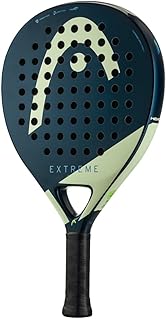
5. Head Extreme Evo Padel Racket Paddle (226415)
Like its Speed sibling, the Extreme Evo prioritizes a large sweet spot and beginner-friendly playability. Where it differentiates is in its intent to support a more aggressive swing without the penalty that comes with diamond-shaped rackets. It bridges the gap between “I am just learning” and “I want to start hitting harder” without forcing you into a racket that punishes technique inconsistency.
- Pro: Large sweet spot keeps mishits playable during learning phases
- Pro: Supports a more aggressive swing than purely defensive beginner rackets
- Con: Lacks specific material details that would help you predict long-term durability
Skip this if you already own a forgiving racket and want to develop touch and soft game rather than power.
6. Carbon Fiber Surface with EVA Memory Flex Foam Core
This racket pairs a stiff carbon fiber face with an EVA Memory Flex Foam core, a combination that gives you a crisp contact feel with enough dampening to keep vibrations manageable. The lightweight construction means faster racket preparation between shots, which matters when you are still building the muscle memory to react quickly at the net.
- Pro: EVA Memory Flex Foam absorbs vibration better than standard soft cores
- Pro: Lightweight design speeds up your reaction between shots
- Con: Carbon fiber face paired with a soft foam can feel disconnected on full smashes
Skip this if you play mostly from the back wall and need maximum energy return from your strokes.
7. HEAD Graphene 360+ Zephyr Padel Paddle/Racket Series
The Zephyr uses Graphene 360+ technology to redistribute weight and add stability without inflating the overall mass. Comfort Foam in the core rounds off harsh vibrations, and the maneuverability is exceptional for a racket that still delivers real power. This is the best option for beginners who are progressing quickly and want a racket that will not feel obsolete within six months.
- Pro: Graphene 360+ delivers stability and power from a lighter frame
- Pro: Comfort Foam keeps the feel soft enough for all-day play
- Con: Advanced technology comes at a higher cost than simpler beginner options
Skip this if you are on a strict budget and expect to upgrade within a year anyway.
8. ianoni Padel Racket Carbon Fiber Surface with EVA Memory Flex Foam Core
The ianoni offers the same carbon fiber surface and EVA Memory Flex Foam core combination found in pricier rackets, making it a sensible entry point for players who want material quality without the brand premium. The paddle tennis racket format keeps the handle familiar for players transitioning from other racquet sports.
- Pro: Carbon fiber face and EVA foam core at a budget-friendly construction level
- Pro: Familiar paddle format eases the transition for players coming from similar sports
- Con: Unknown brand means less confidence in long-term durability and consistency
Skip this if you rely on brand support and warranty coverage when a racket fails prematurely.
Buying Guide
Racket Shape and Sweet Spot
Round and teardrop shapes push the sweet spot toward the center and upper face, making them the default choice for beginners. Diamond-shaped rackets concentrate power at the top, which rewards precise contact but punishes everything else. If your technique is still forming, a teardrop like the HEAD Flash gives you more margin on every ball you reach.
Core Material and Vibration Damping
Soft EVA foams reduce sting and arm fatigue during long sessions. Memory flex variants add a layer of energy return on top of dampening. If you play twice a week or more and your forearms get sore after two sets, prioritize a racket with Comfort Foam or Memory Flex over a harder, faster core.
Weight and Grip Size
Lighter rackets speed up your reaction and reduce fatigue, but too little mass makes the racket feel unstable against powerful shots. Grip size matters more than most beginners realize: too small and your hand over-grips, causing tension; too large and you lose the wrist snap needed for spin and placement. Wilson’s multiple-size approach with the Optix V1 solves this without overgrip workarounds.
Our Verdict
The HEAD Graphene 360+ Zephyr is the top pick for beginners who plan to stay committed, because it forgives mistakes while leaving room to grow. For budget-conscious players, the ianoni Carbon Fiber with EVA Memory Flex Foam Core delivers the best material quality per dollar. If you are upgrading from a dead-feeling recreational racket and want immediate confidence, the HEAD Flash oversized teardrop wins because its Power Foam and wide sweet spot will make every ball feel alive.
FAQ
What weight should a beginner padel racket be?
Most beginners perform best in the lighter range because it reduces arm fatigue and speeds up reaction time. You can always move heavier as your stroke stabilizes and you want more mass behind offensive shots.
Do carbon fiber rackets hurt beginners more than fiberglass?
Carbon fiber transmits more vibration on mishits, but paired with a soft core like EVA foam, the difference is minimal for most players. Fiberglass faces feel softer at contact but degrade faster under heavy use.
Can I use the same racket for training and matches?
Yes, and for beginners that is actually preferable because it builds consistent muscle memory. The lightweight carbon fiber options in this list work well for both purposes without requiring a separate match racket.
How often should I replace a beginner padel racket?
A well-made racket lasts two to three years for weekly players. Replace sooner if you notice delamination, soft spots on the face, or a sudden loss of pop, which signals core degradation.