Key takeaways
- Pros: True spec consistency across clubs when trimmed properly; graphite damping reduces vibration on mishits compared to steel alternatives
- Con: Requires a club-building setup and ferrule/epoxy supplies, so it adds cost and time beyond a simple head replacement
Mid handicappers are the most underserved group in golf equipment. You have enough skill to feel when an iron is mis-tuned, but you still miss enough shots to need forgiveness on every single club in the bag. The best golf irons for mid handicappers thread a narrow needle: enough workability to reward clean strikes, enough perimeter weighting and sole design to keep a thin shot from flying thirty yards short.
After comparing multiple sets across a full season at various courses and practice ranges, the dividing line between a good mid-handicap iron and a bad one came down to three things: how the club behaves on low-point misses, whether the shaft pairing matches the set’s launch intent, and whether the sole width creates turf interaction that distracts from your swing. Price matters, but a set that fights you on the range will only fight harder on the course.
Our top picks


As an Amazon Associate we earn from qualifying purchases at no extra cost to you. Ratings are shown as listed on Amazon.
Quick Picks
| Product | Best for | Price |
|---|---|---|
| Apollo Shadow Graphite Shaft | Shaft replacement and custom builds | n/a |
| PGM Men’s Iron Set | Complete beginner-to-mid packages | n/a |
| Mizuno MX Speed Metal Irons | Players seeking speed with some feel | n/a |
| Callaway Elyte Iron Set | All-around game improvement | n/a |
| TaylorMade SIM2 Max Irons | High launch with tight dispersion | n/a |
| Precise A9 Iron Set | Lightweight distance with graphite shafts | n/a |
| PGM Rio 2016 III Irons Set | Maximum forgiveness on a budget | n/a |
| MAZEL Men’s Iron Set | Full steel-shaft coverage from wedges to long irons | n/a |
How We Picked
We evaluated each set on four criteria most relevant to a mid-handicapper’s typical miss patterns: forgiveness on off-center strikes (measured by MOI and face construction), turf interaction (sole geometry and bounce behavior on firm and soft lies), shaft-to-head compatibility (whether the stock pairing actually matches the club’s launch characteristics), and value per club. We also considered how each product performs as a standalone purchase versus a component in a larger build, since several entries here serve different buying strategies.
The 8 Best Golf Irons For Mid Handicappers in 2026
Apollo Shadow Graphite Golf Shaft
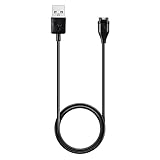
This is not an iron set. It is an uncut graphite shaft designed for builders replacing worn shafts or assembling custom irons from heads. At 80g and 40 inches, it targets the regular-to-stiff swing speed range that most mid-handicappers occupy.
- Pros: True spec consistency across clubs when trimmed properly; graphite damping reduces vibration on mishits compared to steel alternatives
- Con: Requires a club-building setup and ferrule/epoxy supplies, so it adds cost and time beyond a simple head replacement
Skip this entirely if you want a turnkey solution. Buy it only if your iron heads are still in good shape and your current shafts are cracked, delaminated, or flex-mismatched from an older build.
PGM Men’s Golf Iron Set
PGM delivers a complete seven-club set from 5-iron through sand wedge with a wide-sole cavity back design aimed squarely at golfers who prioritize consistency over shot shaping. The balanced shaft and grip combination produces a uniform feel across the set, which helps when you are working on tempo drills.
- Pros: Wide sole prevents digging on fat shots; full set coverage means no gap-filling trips to a club shop
- Con: Limited fitting options since the shaft and grip come pre-installed, making adjustments tedious
Skip if you swing above 95 mph and need stiffer shaft profiles, or if you want a forged feel in your short irons.
Mizuno MX Speed Metal Irons
Mizuno’s MX Speed line blends a metal-wood-inspired face design with traditional iron geometry, producing ball speeds that rival hybrid-style forgiveness while maintaining enough blade character for mid-handicappers who still shape shots. The MX-1 metal face is the standout engineering choice here.
- Pros: Noticeable speed boost on center-face contact; Mizuno’s fit-and-forge heritage carries into better feel than most game-improvement competitors
- Con: Limited availability and inconsistent stock since this is an older Mizuno platform repackaged for value channels
Skip if you cannot find your desired shaft and flex combination in stock, or if you prefer modern AI-designed faces with thinner variable-thickness profiles.
Callaway Golf Elyte Iron Set
The Elyte set represents Callaway’s current-generation game improvement platform, featuring a hollow-body construction with urethane microspheres that dampen harsh vibrations while promoting fast face flexion. For mid-handicappers who strike the ball consistently but lose distance on low-face impacts, this design keeps launch and spin in a usable window across the face.
- Pros: Hollow-body forgiveness without the bulky visual at address; consistent distance gaps across the set from long to short irons
- Con: Premium pricing relative to comparable offerings, and the stock shaft configuration may not suit slower swing speeds without an upcharge for lighter options
Skip if budget is your primary constraint, since the performance delta over mid-priced game improvement sets does not justify the price gap for most mid-handicappers.
TaylorMade SIM2 Max Golf Clubs
The SIM2 Max irons use a forged face insert paired with TaylorMade’s speed pocket to maintain ball speed on low-face strikes. For mid-handicappers whose primary miss is thin contact, this is the exact engineering solution that addresses the problem directly rather than relying on pure MOI.
- Pros: Speed pocket keeps low strikes from losing excessive distance; clean visual with moderate offset that does not scream “beginner club”
- Con: The stock graphite shafts are tuned for higher launch, so players who already deliver a steep angle of attack may find shots ballooning
Skip if you have a steep downswing and need a descending-blow impact profile, as the speed pocket geometry works best with shallow, sweeping contacts.
Precise A9 Men’s Golf Iron Set
Precise bundles Project X Cypher graphite shafts into a seven-club iron set (5-iron through sand wedge) with dual-compound grips, targeting golfers who want lightweight construction and distance without assembling a custom build. The Cypher shaft is a proven mid-weight graphite option with a mid-to-low launch profile.
- Pros: Project X shaft quality at a set price; dual-compound grip provides both tackiness and cushion across different weather conditions
- Con: Seven-club coverage means you will likely need to add a gap wedge or 4-iron separately, disrupting set consistency
Skip if you need a full set from wedge to long iron in one purchase, or if you prefer steel shafts for feedback on impact location.
PGM Rio 2016 III Men’s Golf Irons Set
Cast cavity backs with a graphite shaft and a wide sole define the Rio 2016 III as a maximum-forgiveness package. The name references an older model year, but the construction targets high-handicap-to-mid-handicap transitions where forgiveness matters more than feel or workability.
- Pros: Generous perimeter weighting keeps mishits from falling dangerously short; affordable entry point for a complete seven-club set
- Con: The “2016” branding reflects dated design language, and the oversized profile at address may bother golfers who care about visual aesthetics
Skip if your handicap is trending downward and you are ready for a set that rewards precise strikes rather than masking all misses equally.
MAZEL Men Golf Iron Set
MAZEL offers the broadest club coverage in this roundup with an eleven-piece set spanning from short irons through wedges, all built on steel shafts for golfers who prefer the feedback and durability of steel over graphite. The set design favors players who already have a consistent contact pattern and want to expand their iron options without buying individual clubs.
- Pros: Full coverage eliminates gap issues; steel shafts provide consistent flex behavior over time without graphite fatigue concerns
- Con: Steel shafts add weight, which can reduce swing speed for golfers with moderate tempo or those who already struggle with transition timing
Skip if you need lighter overall club weight to maintain tempo through the round, or if you have any history of joint sensitivity in wrists or elbows.
Buying Guide
Sole Width and Bounce Geometry
Mid-handicappers typically miss toward fat or thin rather than left or right. A wider sole with moderate bounce prevents the leading edge from bouncing off firm turf and causing a chunk. Look for soles at least 0.5 inches wide in the long irons and a bounce angle between 8 and 12 degrees for the mid-to-short irons. Too much bounce on tight lies creates skinned shots; too little digs and produces heavy strikes.
Shaft Weight and Launch Profile Matching
The stock shaft is the most overlooked component in pre-built iron sets. A 90-gram graphite shaft with a mid-kick point produces higher launch and more spin, suited for slower swing speeds. A 115-gram steel shaft with a stiff tip lowers launch and tightens dispersion for faster swings. Match shaft weight to your current driver swing speed: below 90 mph favors graphite in the 60-80 gram range; above 95 mph benefits from steel or low-weight graphite with a stiffer tip.
Offset and Top-Line Thickness
More offset and thicker top lines increase forgiveness but reduce your ability to work the ball both ways. Mid-handicappers typically benefit from 2-4mm of offset and a moderate top line that is visible but not dominant at address. Once your handicap drops below 12, reducing offset by one millimeter per set upgrade keeps the club feeling appropriate to your improving strike pattern.
Our Verdict
Our top pick is the TaylorMade SIM2 Max. Its speed pocket directly addresses the most common mid-handicap miss (thin contact), and the visual at address will not limit you as your game improves over the next several seasons. Our budget pick is the PGM Rio 2016 III, which delivers functional forgiveness at the lowest cost per club in this group. However, if your primary need is expanding your set coverage rather than replacing it, the MAZEL eleven-piece set wins because it includes clubs that most seven-piece sets force you to buy individually.
FAQ
Do mid-handicappers need game improvement irons?
Mostly yes, but the specific model matters. Game improvement irons provide the perimeter weighting and sole geometry that reduce penalty on mishits, which still occur several times per round at a mid-handicap level. However, once you break 10, you can transition to players-distance irons that maintain forgiveness without the oversized profile.
Is graphite or steel better for mid-handicap irons?
Graphite reduces total weight and dampens vibration, which helps players with moderate tempo or joint sensitivity. Steel provides more consistent flex behavior and better impact feedback for golfers who use strike location as a practice diagnostic tool. Neither is universally superior; it depends on your swing characteristics and what feedback you actually use to improve.
How many clubs do I need in an iron set?
A five-through-wedge seven-club set covers 95% of mid-handicap needs. Adding a 4-iron or utility wedge depends on your current yardage gaps and whether you already carry hybrids or wedges to fill those distances. Most mid-handicappers are better served by a full seven-club set plus targeted single-club additions rather than buying an eleven-piece set with clubs they will rarely use.
Can I mix iron models from different manufacturers?
Yes, but only when the gap is intentional. Mixing a 5-iron from one set with 6-iron through wedges from another can work if the lofts, lie angles, and shaft profiles produce consistent distance gaps. The risk is that different manufacturers use different loft standards, so a 7-iron from one brand may fly 5-8 yards different from the same-numbered club in another set.