Key takeaways
- Follow the care label. Cotton velvet may be sensitive to water, heat, and agitation; some lined panels require professional cleaning. Don’t assume a removable-looking lining is washable.
- Handle creases gently. Let panels hang for a few days, then use the care-label-approved steaming method if needed. Avoid pressing directly onto the velvet pile, which can flatten or mark it.
- Expect the hardware to take the load. Loose brackets, bent rods, and worn rings are common problems with heavy curtains. Check supports periodically, especially after opening and closing the panels every day.
- Protect the hem and pile. Floor-pooling fabric collects dust and can wear at the edge. Keep panels from rubbing against rough window hardware or being caught in the sash.
Best Cotton Velvet Blackout Curtain Panels for Bedrooms: Quick Picks by Situation
The best cotton velvet blackout curtain panels for bedrooms are lined, wide enough to cover the window with extra fabric at the sides, and heavy enough for a sturdy rod—not simply labeled “blackout.” Choose lined cotton velvet when you want a soft, substantial drape and better light control; choose a less expensive polyester velvet-style panel if budget and easier care matter more than natural-fiber content.
One important distinction: many curtains described as cotton velvet have a cotton pile or face with a polyester backing, lining, or blend. Product specifications vary, so check the fiber content of both the face fabric and the lining before buying. “Blackout” also has no single guaranteed performance level across all brands; construction and how closely the curtains cover the opening make a major difference.
Our top picks


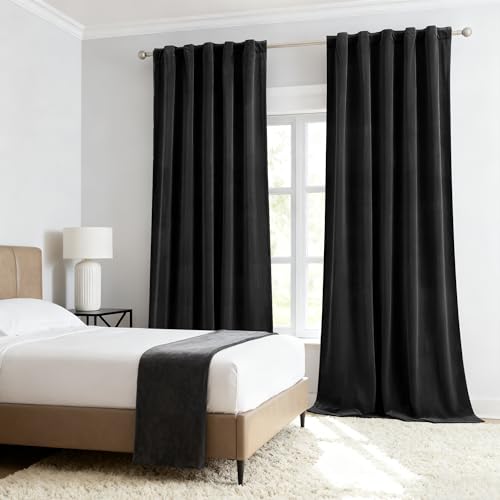
As an Amazon Associate we earn from qualifying purchases at no extra cost to you. Ratings are shown as listed on Amazon.
Compare the Specs That Affect Bedroom Performance
The figures below are planning targets, not specifications for a particular product. They help you compare listings on equal terms. A pair of panels may have a combined listed width, while others give the width of each individual panel—check which one you are seeing.
| Decision factor | Useful target or range | Why it matters |
|---|---|---|
| Panel width | About 1.5–2 times the rod width, total | Extra fullness improves the drape and reduces gaps when curtains are closed. |
| Panel length | 84, 96, or 108 inches are common options | Choose by measuring from the rod or track to the intended hem position. |
| Fabric weight | Compare listed weight per panel; roughly 3–6 lb per panel is a useful heavy-curtain planning range, not a universal cotton-velvet standard | Heavier curtains need stronger rods and supports and can be harder to draw. |
| Light-blocking construction | Look for a continuous opaque backing or a dense, fully lined panel | Unlined velvet can still admit substantial light through the fabric. |
| Thermal construction | Inspect the lining and edge coverage; don’t assume a specific temperature reduction | A lining can slow heat transfer, but gaps around the window remain pathways for light and drafts. |
| Hanging method | Rod pocket, back tabs, rings, or a track-compatible heading | Some styles slide less easily or sit closer to the rod, affecting use and light gaps. |
Choose by Room and Priority
| Your situation | Best fit | Trade-off to expect |
|---|---|---|
| Bright streetlights or early sunrise | Fully lined or blackout-backed panels, wide enough to overlap the window at both sides | Edges still leak light unless the rod extends beyond the frame or you add a wraparound rod. |
| Cold-feeling bedroom or drafty window | Substantial lined panels that reach close to the floor and cover the frame generously | Curtains can reduce drafts and heat exchange at the window but will not replace proper window sealing. |
| Small room or narrow window | One correctly sized pair in a lighter shade, mounted high and wide | Very dark, bulky fabric can visually dominate a compact room; pale fabric may show more glow at seams. |
| Frequent daily opening | Grommets, rings, or a smooth track, with a rod rated for the curtain’s weight | Rod-pocket headings can bunch and drag, especially with heavy velvet. |
| Tight budget | Polyester velvet-style curtains with a sewn-in blackout lining | They may not have the hand or fiber content of cotton velvet, but can be easier to maintain. |
How to Size Panels for Actual Coverage
Measure the rod or track, not just the glass. For a fuller look, aim for total panel width about 1.5 times the rod width; use closer to 2 times if you want a rich, gathered appearance and have room for the fabric when open.
Worked example: For a 60-inch-wide rod, 1.5 times coverage means 90 inches of total curtain width. If each panel is 50 inches wide, two panels provide 100 inches—enough fullness. If the curtains must close over a wider wall section, measure that full span instead and recalculate. When the panels are open, allow space beside the window for the stacked fabric so it does not block as much glass.
For length, measure from the point where the curtain will hang—under the rings, from the rod pocket, or from the track—to the desired finish. A hem that just skims the floor is usually easier to keep clean than fabric pooling on it. Account for the heading style: the same nominal panel length can hang differently depending on where its rod pocket or tabs sit.
Blackout, Lining, and Thermal Claims
A dense velvet face can reduce light, but the lining is often the deciding layer. Look for explicit construction details: a full-width opaque lining sewn across the panel is more useful than a vague “room darkening” claim. If the seller gives a light-blocking percentage, confirm whether that describes the fabric sample or the finished curtain; the latter still cannot account for light leaking around the edges.
For a bedroom that needs strong darkness, cover the window frame generously, extend the rod beyond the frame, and consider a return or wraparound rod to bring the curtain closer to the wall. A ceiling track can help with top gaps. For maximum darkness, a separate blackout shade behind the curtains is often more effective than paying extra for a heavier face fabric alone.
Lined curtains can add a layer between the room and the window, which may help moderate heat exchange. Results depend on the window, fit, lining, and air gaps; treat claims of specific energy savings or temperature drops cautiously unless they are backed by relevant testing. Keep fabric away from heaters and follow the manufacturer’s clearance guidance.
Check Weight and Hanging Hardware Before Ordering
Cotton velvet and its lining can make a full pair much heavier than lightweight curtains. Verify the listed weight if available, then check the rod’s load rating and the number of brackets recommended for its span. A long rod holding heavy panels may need a center support, but place it so it does not obstruct the curtains from closing fully. Use wall anchors or mount brackets into studs as appropriate for the wall and hardware.
Heading style affects everyday use. Grommets and rings usually move more freely, while rod pockets create a gathered look but can be less convenient to open and close. Back tabs hide the rod and give a tailored finish, though they may also slide less easily. If you use a ceiling track, confirm that the panel heading accepts the track’s gliders or hooks before purchasing.
Ownership: Cleaning, Creases, and Wear
- Follow the care label. Cotton velvet may be sensitive to water, heat, and agitation; some lined panels require professional cleaning. Don’t assume a removable-looking lining is washable.
- Handle creases gently. Let panels hang for a few days, then use the care-label-approved steaming method if needed. Avoid pressing directly onto the velvet pile, which can flatten or mark it.
- Expect the hardware to take the load. Loose brackets, bent rods, and worn rings are common problems with heavy curtains. Check supports periodically, especially after opening and closing the panels every day.
- Protect the hem and pile. Floor-pooling fabric collects dust and can wear at the edge. Keep panels from rubbing against rough window hardware or being caught in the sash.
Bottom Line
For the strongest combination of bedroom darkness and a plush look, prioritize a fully lined cotton-velvet panel with clear fiber-content information, a suitable hanging method, and enough width to overlap the window. For frequent use, favor easy-gliding rings, grommets, or a compatible track and make sure the rod can support the load. For a smaller room or limited budget, a lined polyester velvet-style curtain can be a practical alternative. In every case, careful measuring and controlling edge gaps matter as much as the fabric label.