Key takeaways
- Preheat fully rather than relying only on the indicator light; allow an extra two to five minutes for a large cavity to stabilize.
- Leave space around pans so moving air can reach the food. Crowding is a common cause of pale or unevenly browned results.
- Use the middle rack first, then adjust up or down based on whether the top or bottom browns too quickly.
- Reduce the recipe temperature by about 25°F when converting a conventional-oven recipe to convection, unless the recipe already specifies a convection temperature.
- Rotate a pan once during long cooking if the oven’s airflow produces a persistent hot spot.
- Use a perforated air-fry basket for crisp food, but place a lined tray below it to catch grease and crumbs.
The best convection ovens are the ones whose capacity, airflow, controls, and installation fit match the way you cook: a compact countertop model suits occasional meals, a large air-fryer toaster oven suits frequent batch cooking, and a built-in convection oven is the better choice for full-size pans and family dinners.
Our top picks
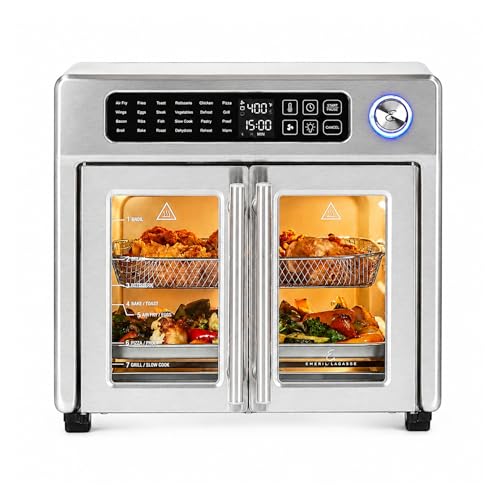
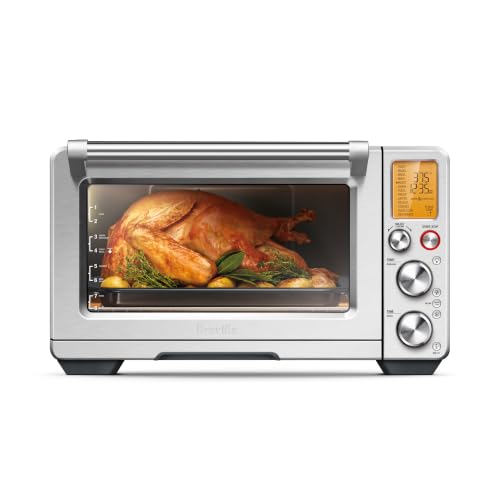
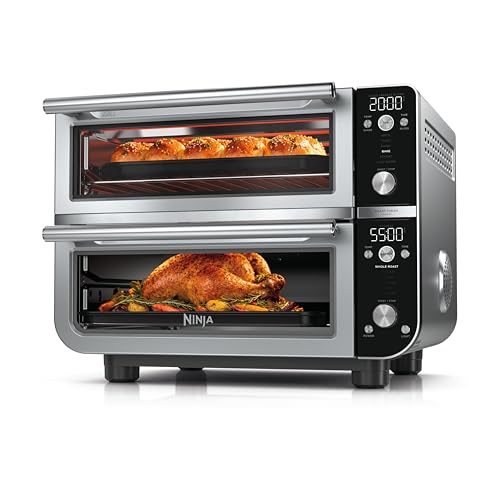
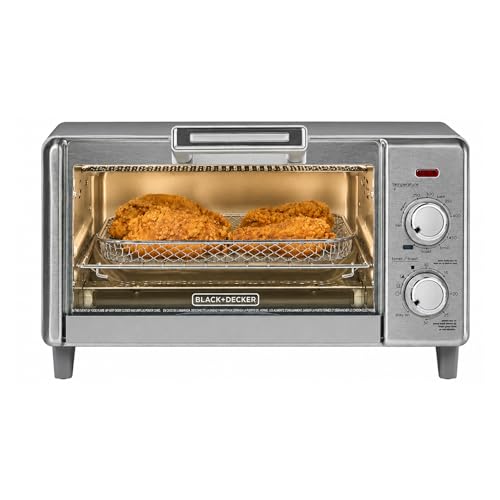
As an Amazon Associate we earn from qualifying purchases at no extra cost to you. Ratings are shown as listed on Amazon.
Best convection ovens by cooking situation
| Best for | Recommended oven type | Typical capacity | Typical preheat time | Approximate price range |
|---|---|---|---|---|
| Small kitchens, dorms, and occasional use | Compact countertop convection toaster oven | 0.5–0.8 cubic feet; 9-inch pizza or 4–6 slices | 4–8 minutes | $80–$180 |
| Daily cooking for one to three people | Mid-size countertop convection oven | 0.8–1.0 cubic feet; 12-inch pizza | 5–10 minutes | $150–$350 |
| Batch roasting and air frying | Large countertop oven with air-fry mode | 1.0–1.2 cubic feet; 13-inch pizza or 9-by-13-inch pan | 6–12 minutes | $250–$500 |
| Family meals and large cookware | Built-in single convection wall oven | 4.5–5.5 cubic feet | 8–15 minutes | $1,000–$3,500 or more |
Capacity figures are useful only when paired with rack dimensions. A claimed 1.0 cubic foot countertop oven may still reject a tall casserole if its usable interior height is limited. Before buying, measure your largest baking dish, the available counter depth, and the clearance needed around the oven for ventilation.
Best countertop convection oven for most households
Large countertop oven with dedicated fan and air-fry modes
For frequent cooking, this is usually the most versatile category. Models such as the Breville Smart Oven Air Fryer Pro and comparable large-format ovens combine standard bake, convection bake, roast, broil, toast, reheat, dehydrate, and air-fry settings. The appeal is not simply the number of programs; it is the ability to choose gentler circulation for cakes and stronger airflow for fries, wings, and vegetables.
Look for at least two usable rack positions, a fan that can be turned off for delicate baking, and enough clearance for a 9-by-13-inch pan or a 13-inch pizza. A large cavity can cook more food, but it also takes longer to heat and may consume more electricity than a compact model. It is a strong choice when the oven will replace a conventional oven several times a week.
The main ownership drawback is counter space. These ovens can be roughly 16–22 inches wide, 14–18 inches deep, and 10–14 inches high. Leave the manufacturer’s specified ventilation clearance rather than pushing the unit tightly beneath cabinets.
Best compact convection oven for limited space
Compact toaster oven with simple mechanical or digital controls
A compact oven is the sensible choice for a small household that mainly reheats leftovers, bakes frozen foods, makes toast, and roasts small portions. Its shorter cavity usually preheats quickly and can be easier to clean. The trade-off is limited rack height: a small oven may fit a 9-inch pizza but not a tall Dutch oven or a full-size baking sheet.
Mechanical dials are inexpensive and quick to operate, while digital controls provide more precise temperature and time settings. Whichever style you choose, prioritize a clearly marked temperature range, an automatic shutoff, an interior light, and a removable crumb tray. A basic convection fan is sufficient for everyday roasting; paying extra for many preset programs is less valuable if you mostly use two or three settings.
Best built-in convection oven for full-size cooking
Single wall oven with true convection
A built-in oven is the better answer when you regularly cook multiple dishes, use standard sheet pans, or want a permanent appliance rather than another countertop device. A single wall oven generally provides about 5 cubic feet of interior capacity, multiple rack positions, stronger insulation, and a more stable cooking environment than most countertop models.
“True convection” normally means a heating element surrounds the fan at the back of the cavity. This can distribute heat more evenly than a fan that merely circulates air from the upper or lower heating elements. It still does not make every rack position identical: the rack nearest a heating element may brown more quickly, and dark pans absorb more heat than shiny aluminum pans.
Built-in ovens require accurate cabinet measurements, a suitable electrical circuit, and professional installation in many homes. Confirm cutout width, height, depth, door clearance, and electrical requirements before ordering. A nominal 30-inch oven does not mean the cabinet opening is exactly 30 inches.
What separates the best convection ovens?
Temperature consistency and fan behavior
Temperature consistency matters more than a display that changes in one-degree increments. A useful oven should recover quickly after the door opens and avoid large swings during long baking cycles. Convection reduces hot spots, but high fan speed can dry the surface of cakes or blow parchment and lightweight foil around.
Choose a model with separate settings for conventional bake, convection bake, and air fry. Convection bake is usually the balanced option for meat, vegetables, and cookies. Air fry uses more aggressive airflow and a perforated basket, which improves browning but can create more noise and mess.
Rack positions
At least three rack levels provide meaningful flexibility. The middle position is the safest starting point for cakes and casseroles. The upper position is useful for broiling and fast browning, while the lower position is better for pizza or foods that need stronger bottom heat. In a small oven, two closely spaced levels may look versatile on paper but offer little room for tall cookware.
Preheat speed
Preheat time depends on cavity size, starting temperature, selected mode, and the target temperature. A small countertop oven may reach 400°F in five minutes, while a large built-in oven may need 10–15 minutes. Some fast-preheat modes use the top and bottom elements aggressively; they are convenient, but use the normal bake mode afterward if the manufacturer instructs you to switch modes.
Controls and useful automation
Digital controls are worthwhile when they provide readable remaining-time displays, independent temperature and time adjustment, delayed start, and a reliable cancel button. Smart connectivity is optional rather than essential. It cannot compensate for poor airflow, an inaccurate sensor, or an oven that is too small for your cookware.
Cleaning features
A removable crumb tray is essential in a countertop oven. Nonstick interior coatings make wiping easier, but abrasive pads and oven cleaner can damage them. For a built-in oven, steam-clean cycles help with recent spills; high-heat self-clean cycles remove heavier residue but create intense heat and odor and may accelerate wear on door seals and electronic components if used unnecessarily.
Decision matrix: which convection oven fits you?
| Your situation | Best fit | Prioritize | Acceptable compromise |
|---|---|---|---|
| Limited counter space and cooking once or twice weekly | Compact countertop model | Small footprint, fast preheat, easy crumb removal | Smaller pizza and limited rack height |
| Daily meals for two or three people | Mid-size convection toaster oven | 12-inch pizza capacity, three rack positions, adjustable fan | Cannot cook several full-size dishes at once |
| Frequent frozen food, vegetables, and batch air frying | Large air-fry convection oven | Large basket, powerful fan, washable accessories | More noise, counter depth, and cleaning |
| Regular baking, roasting, and family-size cookware | Built-in wall oven | True convection, insulation, rack spacing, service support | Higher installation cost and less portability |
How to get more even results
- Preheat fully rather than relying only on the indicator light; allow an extra two to five minutes for a large cavity to stabilize.
- Leave space around pans so moving air can reach the food. Crowding is a common cause of pale or unevenly browned results.
- Use the middle rack first, then adjust up or down based on whether the top or bottom browns too quickly.
- Reduce the recipe temperature by about 25°F when converting a conventional-oven recipe to convection, unless the recipe already specifies a convection temperature.
- Rotate a pan once during long cooking if the oven’s airflow produces a persistent hot spot.
- Use a perforated air-fry basket for crisp food, but place a lined tray below it to catch grease and crumbs.
Durability and ownership realities
The parts most likely to show wear are the door gasket, crumb tray, heating elements, fan motor, and control panel. Grease buildup can restrict airflow and create smoke, while crumbs left near heating elements can scorch. Clean the tray after each messy session, wipe spills after the oven cools, and inspect the door seal if heat seems to escape.
A worked space check prevents many disappointing purchases. If your counter is 24 inches deep, an oven that measures 20 inches deep may still require several additional inches behind it for ventilation and a power cord. Measure the complete operating footprint, not just the product’s headline dimensions. For a built-in model, have the cabinet opening and electrical supply verified before purchase.
Final recommendation
For most homes, the best convection ovens are mid-size or large countertop models with three rack positions, selectable fan modes, a removable crumb tray, and enough space for the cookware you already own. Choose a compact model when speed and footprint matter most, a large air-fry model when you cook in batches, and a built-in true-convection oven when full-size capacity and permanent installation justify the cost. The right fit will produce more even cooking than simply choosing the oven with the longest feature list.