Key takeaways
- Large driveways, parking areas, and fleet washing: Prioritize 4–5 GPM or more and a belt-drive pump. Higher flow helps a compatible surface cleaner cover ground faster. The Simpson ALH4240 is a practical 4 GPM benchmark; for very large flatwork, compare higher-flow commercial machines rather than simply buying more PSI.
- Daily mixed residential and commercial jobs: A 3,500–4,000 PSI, 4 GPM belt-drive unit is a balanced starting point. Look for a triplex pump with available replacement parts, a familiar engine platform, and local service support.
- Infrequent work or tight transport space: A lighter direct-drive machine such as the PS60843 is easier to load and store. Its lower flow and shorter hose are trade-offs; it may be slower on broad surfaces and require more repositioning.
- Remote jobs with limited support: Favor a common engine, a pump your local shop services, and accessible wear parts over a marginal increase in maximum PSI. A machine that can be repaired quickly is more valuable than one with impressive specifications but scarce parts.
Best Commercial Pressure Washers for Contractors: Picks by Job Type
The best commercial grade pressure washer for contractors is a belt-drive, gas-powered machine with a triplex pump, roughly 3,500–4,000 PSI, and at least 4 GPM for regular all-day cleaning; choose a higher-flow unit for large flatwork and a lighter direct-drive model for mobile, intermittent work.
PSI is the force available to break soil loose; gallons per minute (GPM) determine how quickly that soil gets rinsed away. For jobsite productivity, flow often matters more than chasing the highest pressure rating. Match the machine to the surface and cleaning method, and use the nozzle, detergent, or surface cleaner intended for the work.
Our top picks
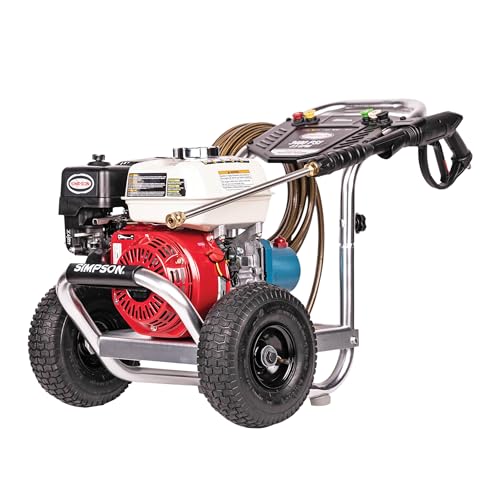


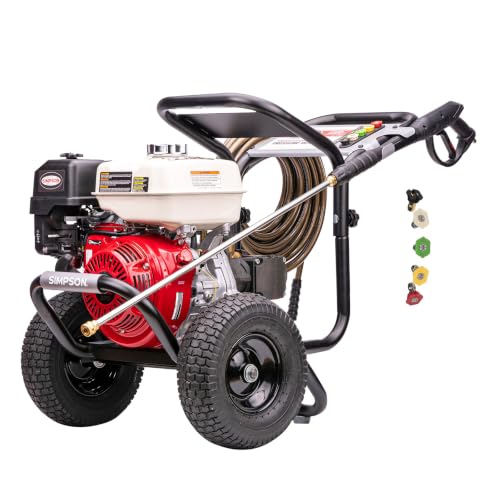
As an Amazon Associate we earn from qualifying purchases at no extra cost to you. Ratings are shown as listed on Amazon.
Contractor-oriented models to compare
The figures below are representative published configurations, not guarantees that every dealer or model-year package includes identical accessories. Confirm the exact engine, pump, hose, and warranty with the seller before buying.
| Model | Rated output | Drive and pump | Hose / weight | Best fit |
|---|---|---|---|---|
| Simpson ALH4240 | 4,200 PSI; 4.0 GPM | Honda GX390; belt-drive triplex | 50 ft; about 130 lb | Frequent heavy-duty work where a skid or cart can be transported securely |
| NorthStar 3,500 PSI, 4.0 GPM belt-drive washer | 3,500 PSI; 4.0 GPM | Honda GX390 configuration; belt-drive triplex | Typically 50 ft; weight varies by package | Contractors prioritizing serviceable components and steady daily use |
| Simpson 4200 PSI, 4.0 GPM belt-drive models | Up to 4,200 PSI; 4.0 GPM | Honda GX390 on select configurations; belt-drive triplex | Commonly 50 ft; verify model-specific weight | Comparing dealer-supported belt-drive packages and accessories |
| Simpson PowerShot PS60843 | 3,500 PSI; 2.5 GPM | Honda GX200; direct-drive triplex | 25 ft; about 70 lb | Smaller crews, lighter transport, and shorter or less frequent jobs |
Specifications and package details can change, especially across similarly named versions. Treat hose length and weight as purchase-check items, not assumptions based on a product-family name.
Choose by the work you do most
- Large driveways, parking areas, and fleet washing: Prioritize 4–5 GPM or more and a belt-drive pump. Higher flow helps a compatible surface cleaner cover ground faster. The Simpson ALH4240 is a practical 4 GPM benchmark; for very large flatwork, compare higher-flow commercial machines rather than simply buying more PSI.
- Daily mixed residential and commercial jobs: A 3,500–4,000 PSI, 4 GPM belt-drive unit is a balanced starting point. Look for a triplex pump with available replacement parts, a familiar engine platform, and local service support.
- Infrequent work or tight transport space: A lighter direct-drive machine such as the PS60843 is easier to load and store. Its lower flow and shorter hose are trade-offs; it may be slower on broad surfaces and require more repositioning.
- Remote jobs with limited support: Favor a common engine, a pump your local shop services, and accessible wear parts over a marginal increase in maximum PSI. A machine that can be repaired quickly is more valuable than one with impressive specifications but scarce parts.
What the specifications mean on a jobsite
PSI and GPM: use them together
At 4 GPM, a washer moves 240 gallons per hour while the trigger is open. At 2.5 GPM, it moves 150 gallons per hour. That 90-gallon-per-hour difference can affect rinsing speed and surface-cleaner productivity, but it also raises water-supply demands. Confirm the site can provide the required flow; a supply that cannot keep up can starve the pump and cause damage.
Use appropriate pressure and nozzle distance for each material. High pressure can scar wood, damage mortar, force water behind siding, or strip coatings. For delicate surfaces, reduce pressure, use a wider spray angle, and test an inconspicuous area first.
Pump construction and drive type
A triplex pump is generally the serviceable choice for recurring commercial work: its design allows professional repair and component replacement. Pump brand and model matter, so ask whether seals, valves, and a complete rebuild kit are readily available. A belt drive runs the pump at lower speed than many direct-drive arrangements and can be a good fit for prolonged use, but belts need inspection and eventual replacement.
Direct-drive machines are compact and usually less expensive. They suit shorter duty cycles and easier transport, but continuous daily operation can place more stress on the pump. Neither design makes a washer maintenance-free; follow the manufacturer’s duty-cycle and service guidance.
Engine reliability, fuel, and portability
Honda GX-series engines are widely used on contractor equipment, and replacement or service options are often easier to find than for less common engines. That is not a substitute for checking the specific engine model, dealer network, warranty terms, and parts availability in your area. Briggs & Stratton and other established manufacturers also offer engines in this category; compare the exact package rather than assuming every engine in a brand performs alike.
Gas consumption varies with engine size, load, throttle setting, and idle time, so a single runtime figure is rarely dependable. For estimating, use the engine manufacturer’s fuel-consumption data for the exact model and calculate: usable tank capacity ÷ gallons per hour under your expected load. Reduce unproductive idling, and never refuel a hot engine or operate gas equipment in an enclosed space.
Weight affects more than lifting. A 130-pound machine may be manageable on a suitable cart but awkward to load into a pickup alone. Check the full operating weight, wheel and frame design, tie-down points, and whether the unit will ride in a truck, trailer, or skid setup. A longer hose reduces machine repositioning, but adds weight and can be more cumbersome to coil.
Ownership costs: the parts that wear first
For daily use, plan for engine oil and air-filter service, pump-oil checks where applicable, inlet-screen cleaning, and inspection of hoses, fittings, and spray components. Abrasive water, poor filtration, freezing, and running the pump without adequate supply can shorten pump life. Unload the pressure before disconnecting accessories, and use the specified winterizing procedure if the unit may freeze.
Common wear items include nozzle tips, quick-connect O-rings, hose assemblies, belts on belt-drive machines, and pump seals or valves. Keep spare tips and compatible O-rings on the truck; a damaged tip can change the spray pattern and cleaning performance. Do not leave the machine bypassing for long periods with the trigger released, since recirculating water can heat up. Follow the manual’s guidance on relief, shutdown, and allowable bypass time.
Before you buy
- Confirm rated PSI and GPM, not just maximum or “surge” figures.
- Verify pump type, drive type, engine model, and parts availability.
- Check hose length, hose pressure rating, machine weight, and transport dimensions.
- Ask what is included: spray tips, detergent injection, unloader, surface-cleaner compatibility, and warranty coverage.
- Make sure the water source can sustain the machine’s required inlet flow.
For most contractors working regularly, a 4 GPM belt-drive washer with a triplex pump and a widely supported engine is the strongest all-around starting point. Move to a lighter direct-drive unit if portability and occasional use matter more than production speed; move to higher flow when large-area work makes rinse rate the bottleneck.