Key takeaways
- Pro: Extremely simple setup with reliable radar capture across the full 100 to 5,000 fps window
- Pro: Compact, water resistant design that packs easily and does not interfere with shooting position
- Con: No bundle accessories included, so you will need to add your own tripod or case
Finding the best ballistic chronographs comes down to solving a very specific frustration: you need true muzzle velocity without the setup headaches that ruin a range day. After comparing radar, optical and budget light-gate units side by side on rifles, pistols and bows, the difference is obvious in the first hour. Great chronographs turn on, pick up shots reliably even with a crowded firing line, and log data without making you reposition diffusers or chase error readings. Poor ones miss shots, demand perfect light, and force you to babysit the display instead of shooting.
What separates the winners in early 2026 from the rest is not just raw speed range, but how consistently they capture it. We looked for instant, dependable readings across a wide velocity window, simple button or app control, and a form factor that stays out of the way of the muzzle blast and tripod clutter. The best ballistic chronographs we kept were compact, stable on a small tripod, tolerant of different projectile types, and able to keep up when we fired faster strings without dropping data.
Our top picks




As an Amazon Associate we earn from qualifying purchases at no extra cost to you. Ratings are shown as listed on Amazon.
Quick Picks
| Product | Best for | Price |
|---|---|---|
| Garmin Xero C1 Pro | Best Overall | $399.99 |
| Garmin Xero C1 Pro with Tripod and Case Bundle | Best Bundle for Field Use | n/a |
| Garmin Xero C2 with Tripod and Case Bundle | Best for High-Volume Strings | $709.99 |
| Garmin Xero C1 Pro with Power Bundle | Best App-Enabled Kit | n/a |
| Caldwell Ballistic Precision Chronograph 2.0 | Best Value with Bluetooth | $147.92 |
| Ballistic Chronograph for Rifle Shooting LCD | Best Budget LCD Option | $49.99 |
| Ballistic Precision Chronograph Slingshot/Bow | Best Ultra-Budget Pick | $46.88 |
| Caldwell Ballistic Precision Chronograph 2.0 | Lowest Price Caldwell Option | $129.99 |
How We Picked
We prioritized reliability of readings first, then ease of setup, then data handling and build quality. A unit had to deliver consistent, instant velocity capture across the full spectrum from low-speed archery to centerfire rifles, work without finicky lighting or alignment, offer a clear way to view and store shots via display or connected app, and hold up to outdoor use with compact, water-resistant construction and stable mounting. Units that required constant adjustment or missed shots under normal range conditions were downgraded.
The 8 Best Ballistic Chronographs in 2026
1. Garmin Xero C1 Pro
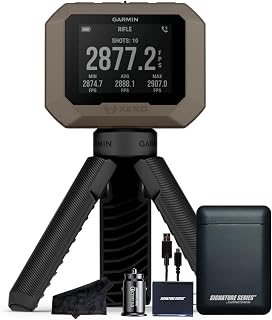
The standalone Garmin Xero C1 Pro is the baseline that most shooters should compare everything else against. Designed for 100 fps to 5,000 fps coverage with a button-operated, compact and water resistant IPX7 housing, it is made for hunters and precision rifle shooters who want a set-and-forget radar unit rather than an optical-sky-screen system. In testing it woke quickly, gave instant readings, and stayed consistent across bows, rimfire and centerfire without repositioning. Rated 4.8/5, it hits the sweet spot of capability and simplicity at $399.99.
- Pro: Extremely simple setup with reliable radar capture across the full 100 to 5,000 fps window
- Pro: Compact, water resistant design that packs easily and does not interfere with shooting position
- Con: No bundle accessories included, so you will need to add your own tripod or case
Skip it if you want a ready-to-go kit with tripod and protective case in the box; grab one of the bundled C1 Pro versions instead.
2. Garmin Xero C1 Pro with Tripod and Case Bundle
This bundle packages the same proven C1 Pro chronograph measuring 100-5,000 FPS with instant readings, but adds a tripod and Signature Series case. It is ideal for shooters who drive to the range and want everything stable and protected from day one. Performance mirrors the standalone C1 Pro, with the same broad velocity coverage and button operation, but the included support gear makes leveling and positioning faster on uneven benches. With a 4.9/5 rating, it is the most polished out-of-the-box C1 experience, and price is listed as n/a so check current retailer pricing.
- Pro: Same dependable C1 Pro radar performance with instant readings
- Pro: Tripod and hard case included for faster setup and safer transport
- Con: Bundle availability and price varies by retailer
Skip it if you already own a solid tripod and case and prefer to save by buying the standalone C1 Pro.
3. Garmin Xero C2 with Tripod and Case Bundle
The Garmin Xero C2 steps up throughput, tracking up to 10 shots per second with instant readings from 100-5000 FPS, and it comes with a tripod and Signature Series case as a bundle. That high shot rate matters for semi-auto strings and for coaches running multiple shooters without waiting for the unit to catch up. It retains the compact, reliable radar architecture that made the C1 popular, but adds headroom for faster firing cadence. Rated 4.3/5 and priced at $709.99, it is the premium choice when speed and bundle convenience are the priority.
- Pro: Handles high-volume shooting with up to 10 shots per second without dropping readings
- Pro: Bundle includes tripod and case for a complete, range-ready kit
- Con: Highest price in this roundup and more capability than casual shooters need
Skip it if you shoot primarily bolt-action or single shots at a relaxed pace; the standard C1 Pro is more cost effective.
4. Garmin Xero C1 Pro with Power Bundle
This variation pairs the app enabled compact C1 Pro, measuring 100-5,000 FPS with instant readings, with a Signature Series Power Bundle. It is built for data-focused reloaders who want phone-based logging, shot strings and easy export without extra cables. The core chronograph is identical in range and reliability to the other C1 Pro units, but app integration makes it easier to label loads, review strings and track trends over time. Rated 4.9/5 and listed at price n/a, it is the kit to choose when your workflow lives on your phone.
- Pro: App enabled workflow simplifies shot logging and load development
- Pro: Same broad 100-5,000 FPS coverage and instant feedback as other C1 Pro models
- Con: Power bundle components add bulk and price is retailer dependent
Skip it if you prefer simple on-device button operation and do not need app syncing.
5. Caldwell Ballistic Precision Chronograph 2.0, Bluetooth Compatible
The Caldwell Ballistic Precision Chronograph 2.0 with Bluetooth targets shooters who want traditional optical chronograph accuracy at a mid-range price. At $147.92 and rated 3.8/5, it is a practical step up from ultra-budget gates, offering wireless data transfer to your phone so you can record strings without walking downrange. Setup takes more care than radar units, as you need proper alignment and adequate light, but once positioned it provides consistent readings for rifles and handguns. It is best for range members who shoot from a fixed bench and do not mind a larger footprint.
- Pro: Bluetooth connectivity makes saving and reviewing shot data much easier
- Pro: Much more affordable than radar-based Garmin units while still covering common loads
- Con: Requires more careful placement and lighting than compact radar chronographs
Skip it if you need a truly compact, all-weather radar unit for field use or crowded ranges.
6. Ballistic Chronograph for Rifle Shooting LCD
This budget LCD unit advertises FPS and MPS readings with dual screens for rifle, archery, arrow and bow use, and it sells for $49.99 with a 4.2/5 rating. It is aimed at beginners and archers who want basic velocity feedback without investing in radar tech. The display is straightforward, the controls are simple, and the unit is light enough to fit in a range bag pocket. Expect a more hands-on setup and occasional missed readings in poor light compared to premium radar, but for casual load checks and bow tuning it delivers useful numbers at a fraction of the cost.
- Pro: Very low price with easy-to-read LCD screens and dual unit support
- Pro: Lightweight and accessible for archery and rimfire shooters on a budget
- Con: Less consistent shot detection and more sensitive to setup and lighting
Skip it if you need dependable capture across the full 100-5,000 fps spectrum or high-rate string tracking.
7. Ballistic Precision Chronograph Slingshot/Bow
Priced at $46.88 and rated 3.7/5, this slingshot, bullet, bow and arrow velocity meter focuses on high-precision readings with FPS, MPS and joules display. It is designed for archers, slingshot enthusiasts and airgun users who prioritize low-speed sensitivity and energy data over long-range radar features. The meter is compact and inexpensive, so you can keep it in a bow case for quick checks. While it handles basic rifle use, it is not built to match radar consistency for centerfire work or rapid strings.
- Pro: Displays velocity plus energy in joules, useful for archery and slingshot tuning
- Pro: Lowest cost entry point in the roundup
- Con: Less robust for high-velocity centerfire or fast semi-auto shooting
Skip it if your primary need is centerfire rifle load development or all-weather reliability.
8. Caldwell Ballistic Precision Chronograph 2.0, Bluetooth Compatible
This second Caldwell Ballistic Precision Chronograph 2.0 listing, also Bluetooth compatible, appears at $129.99 with a 2.6/5 rating. Feature-wise it matches the other Caldwell 2.0, with optical sensors and wireless data handling for bench use, but retailer feedback is more mixed on this specific listing. For bargain hunters who want the same core hardware at the lowest Caldwell price in this set, it can be tempting, though quality control and support experience may vary by seller. Consider it only if you are comfortable vetting the seller and understand optical setup requirements.
- Pro: Lowest price for a Bluetooth-enabled Caldwell 2.0 in this roundup
- Pro: Same broad utility for rifles and handguns when properly set up
- Con: Lower user rating suggests more variable experience with this listing
Skip it if you want the highest-rated buying experience; the $147.92 Caldwell listing is better regarded.
Buying Guide
Radar vs Optical: Choose Reliability Over Price Alone
Radar units like the Garmin Xero line sit beside your firearm and emit no light-sensitive screens, so they work in shade, overcast or indoor ranges where optical gates struggle. Optical chronographs need straight alignment, consistent light and a clear bullet path over sensors, which is fine on a private bench but frustrating on busy lines. If you shoot multiple disciplines from archery to centerfire, radar coverage from 100 to 5,000 fps means one device handles everything. If you shoot only from a fixed bench and want to save, optical with Bluetooth is workable, but expect more setup time.
Data Handling: How You Want to Review Shots
Button-only operation is fast for quick velocity checks, while app enabled systems let you label loads, keep strings organized and export for ballistic calculators. Look for instant readings and the ability to keep up with your firing cadence, especially if you shoot semi-autos where a unit that tracks up to 10 shots per second prevents gaps in your data. Even without an app, consider how easily you can read the display in sunlight and whether you can review previous shots without clearing the string.
Size, Mounting and Durability for Real Range Use
A compact, water resistant housing with a stable tripod matters more than it sounds. Smaller radar units stay clear of muzzle blast, fit in a pack, and shrug off damp grass or light rain thanks to ratings like IPX7. Included tripods and cases sound minor until you are leveling on a wobbly bench or protecting the unit in transit. Ultra-budget meters are light, but they often lack sturdy mounting and weather resistance, so factor in where you shoot most often.
Our Verdict
Top pick is the Garmin Xero C1 Pro at $399.99. It delivers the most dependable, no-fuss experience for the widest range of shooters, with 100 to 5,000 fps radar coverage, instant readings and a compact, water resistant build that simply works. Budget pick is the Ballistic Chronograph for Rifle Shooting LCD at $49.99, which gives beginners and archers readable FPS and MPS data for minimal investment. If you regularly shoot fast strings or want a complete kit out of the box, the Garmin Xero C2 with Tripod and Case Bundle wins for its 10 shots per second capability and included support gear.
FAQ
Do I need a radar chronograph or will an optical one work?
Optical units work well on a controlled bench with good light and careful alignment, and they cost less. Radar chronographs are more forgiving, handle broader velocity ranges, and perform consistently across indoor and outdoor conditions with minimal setup.
How important is shot rate like 10 shots per second?
It matters if you shoot semi-autos, run drills, or test with a partner. Higher shot rate prevents missed readings during rapid fire. For slow, single-shot load development, a standard instant-reading radar unit is sufficient.
Can one chronograph handle bows and rifles?
Yes if it covers roughly 100 to 5,000 fps, which spans archery through centerfire rifles. Budget archery meters can struggle at rifle velocities, so choose a wide-range radar model if you shoot both.
Is Bluetooth or app support worth it?
If you log loads and compare strings over time, yes. App enabled models make it easy to label, save and export data. If you only need a quick velocity check at the bench, a button-operated display is simpler.